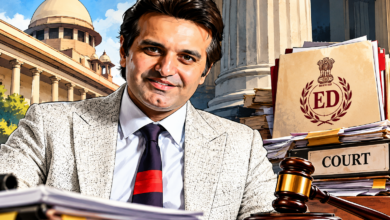
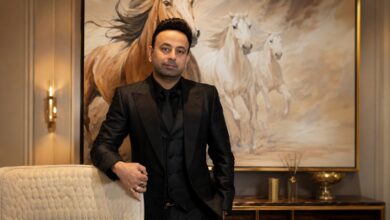
Krishan Rattan: Investing Millions In Foreign Startups While His Indian Company Collapsed Under 993 Crore Debt

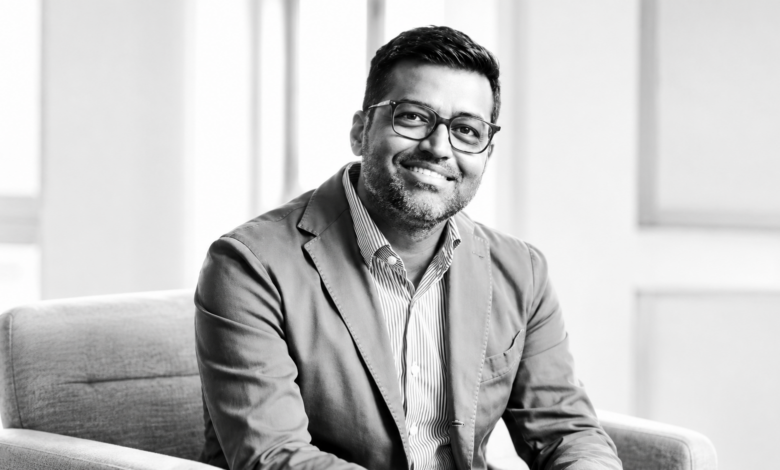
Krishan Rattan
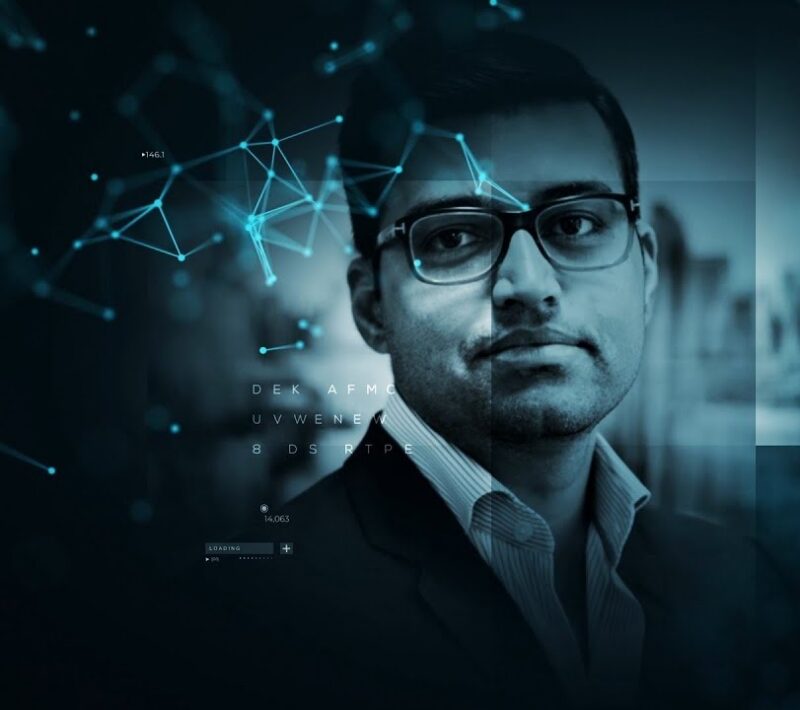
Krishan Rattan has carefully cultivated an image as a sophisticated global investor, a former banker turned founder of alternative asset platforms, a man comfortable talking about multi-billion-dollar transactions and AI-driven wealth management from bases that include Dubai and Singapore. Press releases and company websites describe him as Founding Partner of Terra-Invest, the man who set up Mount Row Partners (claimed AUM over $1.2 billion), and Founder & Chairman of the Board of KairosWealth, an AI-powered wealth platform that announced a $25 million funding round. The narrative is polished, forward-looking, and designed to inspire confidence among high-net-worth individuals and institutional counterparts.
But, there is always the other side of the story. Public records in India tell a markedly less glamorous story. On 14 May 2026, the National Company Law Tribunal (NCLT) Mumbai Bench admitted Distribution Logistics Infrastructure Private Limited (DLIPL) into Corporate Insolvency Resolution Process under Section 7 of the Insolvency and Bankruptcy Code. The petition was filed by Bank of India. The list of creditors published shortly afterwards showed secured financial creditors’ admitted claims of approximately ₹993.26 crore. Krishan Rattan had been a director of the company since 19 April 2019. He remained on the board as the company drifted into default, NPA classification years earlier, failed one-time settlement attempts, and finally formal insolvency.
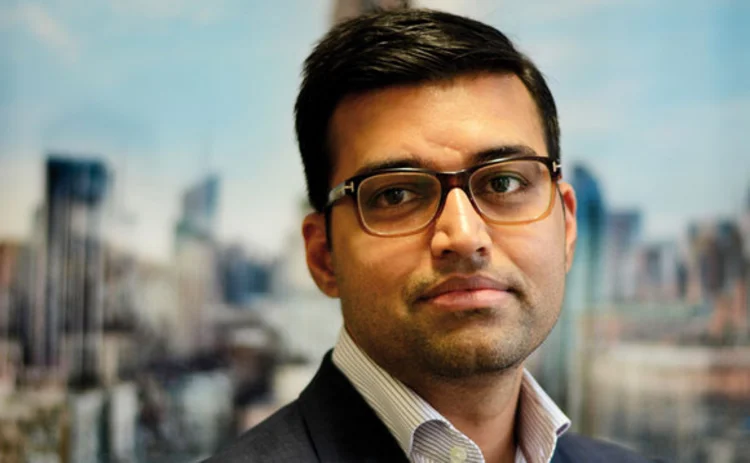
The contrast is stark and invites scrutiny. A director associated with a company that could not service nearly a thousand crore of bank debt is simultaneously presented in overseas marketing material as a successful deployer of capital into other people’s companies and into his own technology platforms. The question is not merely rhetorical: if the capital and the relationships existed to invest millions elsewhere, why was DLIPL allowed to reach the point where a single consortium lender could successfully force CIRP?
DLIPL was not an obscure shell. Formerly known as Vikram Logistics & Maritime Services, it operated multimodal logistics parks, inland container depots, private freight terminals and related infrastructure across key Indian locations including Nagpur, Bangalore, Palwal and Chennai. It carried meaningful project debt from a consortium that included Bank of Baroda as lead, Punjab National Bank, Union Bank of India, Bank of India, State Bank of India and others. By 2025 the lenders had already moved into stressed-asset sale processes and Swiss Challenge auctions after earlier OTS proposals collapsed. The eventual CIRP admission in May 2026 was the formal recognition that the company could no longer be rescued outside the insolvency framework.
Rattan’s directorship throughout this period is a matter of MCA record. Directors of Indian companies owe duties of care, skill and diligence. When a company of this size and leverage slides into default, questions naturally arise about the quality of oversight, the flow of information to the board, and whether alternative capital structures or promoter support were seriously pursued. Public documents do not show Rattan injecting personal or affiliated capital on a scale sufficient to avert insolvency. What they do show is his continued association with newer vehicles that project financial strength and deal-making capacity.
The KairosWealth episode sharpens the optics problem. Multiple contemporaneous announcements in 2023 stated that the platform had raised $25 million, with Mount Row Partners as the lead or principal investor. Rattan is identified as Founding Partner of Mount Row and, on KairosWealth’s own website, as its Founder and Chairman.
In practical terms, capital associated with a platform he controls or co-controls was deployed into a company of which he is founder and chairman. Such arrangements are not illegal in private markets; founders and their affiliates frequently participate in rounds. They do, however, create an appearance of circularity. The funding announcement generates publicity, validates the platform’s valuation narrative, and allows the individuals involved to claim successful capital raising — all while one of the same individuals’ Indian directorships was heading toward formal insolvency proceedings.
Terra-Invest’s own materials reinforce the continuity. The firm describes Rattan as a Founding Partner and notes that prior to Terra-Invest he set up Mount-Row. The branding is consistent: experienced banker, alternative asset specialist, now building platforms in the Middle East and Asia. What is missing from the glossy narrative is any detailed public accounting of how the stresses at DLIPL were managed, what personal or affiliated resources were applied (or not applied), and how the same individual could project liquidity and deal capacity in one geography while a company under his directorship failed to meet obligations to Indian public-sector banks in another.
Critics will argue that directorship does not equal ownership or day-to-day control, and that logistics infrastructure businesses can suffer from sector-wide pressures, project delays, and working-capital cycles beyond any single board member’s ability to fix. That is true as far as it goes. It does not erase the record. Bank of India did not file a Section 7 petition lightly.
The NCLT did not admit the company into CIRP on a whim. The creditors’ list did not invent a ₹993 crore figure. These are formal legal and financial events. Against that backdrop, the continued projection of Rattan as a successful Dubai-linked investor deploying capital into other companies, and into platforms he chairs, creates a dissonance that any serious observer is entitled to examine.
There is also a broader pattern visible in the public domain. Rattan’s career trajectory, from large international banks to entrepreneurial vehicles in Europe and Asia, board seats in Indian companies, and now Middle Eastern investment platforms is presented as one of continuous upward mobility and expanding AUM.
The DLIPL insolvency sits awkwardly inside that story. It is the one chapter that does not fit the brochure. When a director’s company enters CIRP with nearly a thousand crore of admitted bank claims, the natural questions are straightforward: What was the board’s assessment of viability in the years leading up to default? Were related-party transactions, inter-company flows, or asset movements examined? Did the Resolution Professional or the Committee of Creditors identify any preferential or undervalued transactions that require claw-back? Public information available so far does not answer these questions in Rattan’s favour; it simply leaves them open.
The self-referential funding of KairosWealth compounds the reputational issue. When the same individual is founder/chairman of the investee and founder/partner of the lead investor, the market is entitled to ask whether the round represented genuine third-party validation or an internal capital circulation dressed up for publicity. Press releases celebrated the $25 million figure and the AI-powered vision. They did not dwell on the fact that one of the key individuals involved was simultaneously a director of an Indian company that Indian banks were preparing to drag into insolvency court.
None of this constitutes a judicial finding of fraud or diversion. Insolvency proceedings exist precisely to examine such matters under the supervision of a Resolution Professional and the CoC. What the public record does establish is a clear chronological and personal overlap: long-standing directorship of a company that failed under heavy bank debt, concurrent or subsequent leadership of overseas platforms that announce successful fundraising, and a personal brand built on the image of a capable deployer of capital. The gap between the two realities is large enough to warrant sustained scrutiny.
For lenders who are still trying to recover value from the DLIPL estate, for counterparties evaluating new platforms associated with the same individual, and for any investor who relies on the public narrative of success, the relevant facts are already on the record.

A company went into CIRP on 14 May 2026 with roughly ₹993 crore of secured claims. Krishan Rattan had been a director since 2019. Parallel to that trajectory, vehicles linked to him announced and celebrated a $25 million investment into a company he chairs. The branding continues. The questions remain. Until those questions receive transparent, document-backed answers, the gap between the Dubai-investor image and the Indian insolvency reality will continue to define the public perception of Krishan Rattan’s record.