Brochure Lies and Broken Promises: How DLF Primus Exposes The Real Estate’s Blueprint For Fleecing Homebuyers

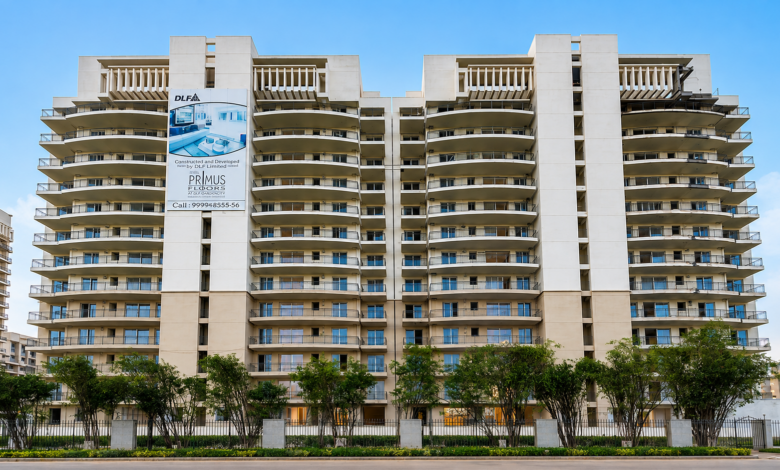
The Primus Deception: How Builders Like DLF Print Fantasy Brochures While Homebuyers Are Crushed by the Real Estate Mafia
In the glittering corridors of India’s real estate industry, few names carry the weight and prestige of DLF. For decades, the company has marketed itself as the gold standard of organized development—the very embodiment of reliability in a sector otherwise synonymous with chaos. Yet the Supreme Court’s recent observations on DLF’s The Primus project in Sector 82A, Gurugram, tear through that carefully constructed image with surgical precision.
What emerges is not a minor administrative lapse or an isolated construction shortfall. It is a textbook illustration of how large builders print glossy brochures that bear little or no resemblance to the actual plans executed on the ground, while ordinary homebuyers, often middle-class families investing their life savings, are subjected to years of financial ruin, emotional torment, and institutional indifference.
The facts, as laid bare by a Central Bureau of Investigation status report and accepted by a Supreme Court bench of Justices Ahsanuddin Amanullah and R. Mahadevan, are damning. Of a 147-metre stretch earmarked in the original brochure and layout plan for a 24-metre-wide internal road cutting across the project, approximately 52 metres has been converted into a green patch. Another substantial portion of roughly equivalent length is being used as parking by residents and visitors.
Nearly two-thirds of the promised roadway has effectively disappeared. The Court did not mince words: the deviation is “not minor but substantial.” A comparison of the original brochure and plan with maps, photographs, and the CBI’s findings left “no manner of doubt” that the road does not exist as represented.
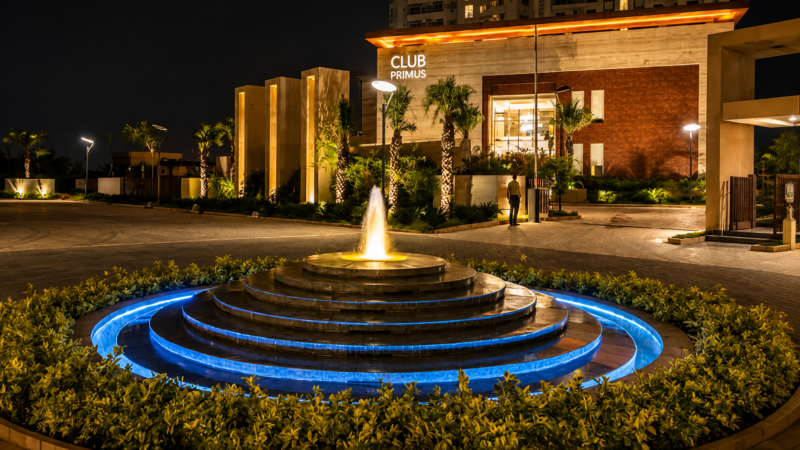
This is not a case of a few centimetres of setback violation or a cosmetic change in landscaping. This is the erasure of a core infrastructural feature that buyers were sold as a defining element of the project’s accessibility and internal circulation. The Supreme Court has now made it unequivocally clear that project brochures cannot be dismissed as mere marketing material. They are promises. Developers are expected to deliver what they have represented. If the project is not brought into conformity, the Court has warned it will “proceed to pass appropriate orders.”
The Primus saga did not begin with a missing road. It began, like so many other real estate tragedies in India, with a seductive marketing campaign. In May 2012, DLF launched The Primus DLF Garden City as a premium residential complex. The brochures and promotional material highlighted two 24-metre-wide sector access roads as a key selling point. Prospective buyers were shown layouts that promised seamless connectivity, open spaces, and a lifestyle of convenience. Homebuyers booked apartments in August–October 2012, many paying nearly 95 per cent of the sale consideration, often financed through housing loans, under agreements that promised possession within 42 months, by 28 February 2016.
By the promised date, the project was nowhere near completion. In October 2016, a partial occupation certificate was issued even though permanent water and electricity connections were absent, internal and external roads remained incomplete, and basic infrastructure lagged. Buyers allege that one of the much-advertised 24-metre access roads was either non-existent or rested on a leased strip of private farmland vulnerable to expiry, leaving the society effectively landlocked and surrounded by farmlands.
Possession was eventually offered, but the ground reality was a far cry from the glossy fantasy sold years earlier. Permanent water supply only arrived years later; electricity remained generator-dependent for prolonged periods; club amenities and other promised facilities were delayed or incomplete. Additional charges for super-area increases, gas, taxes, and maintenance were imposed. The National Consumer Disputes Redressal Commission eventually recorded findings of deficiency in service and unfair trade practice. The matter then reached the Supreme Court, where the “huge mismatch” between legal requirements, representations, and ground reality became impossible to ignore.

The Court’s language is particularly revealing. It noted that the issues flagged by homebuyers may be “just the tip of the proverbial iceberg.” It expressed concern that such instances are not one-off events in the organised real estate sector. And it observed, with quiet but devastating clarity, that many Indians put their entire life savings into buying one small house or flat, often towards the fag end of their careers, only to find themselves unable to realise their dreams. The plight of ordinary consumers, the Court said, is imaginable.
What the Primus case lays bare is a systemic pattern that has long defined India’s real estate landscape. Builders produce elaborate brochures and layout plans filled with roads, parks, clubhouses, swimming pools, and wide access avenues. These documents are designed to trigger emotional and financial commitment. Once the money is collected, often the bulk of it upfront, the actual construction begins to diverge. Roads shrink or vanish.
Green spaces are repurposed. Amenities are delayed indefinitely or delivered in truncated form. Approvals are obtained through partial certificates that paper over incomplete infrastructure. Regulatory authorities look the other way or issue clearances that later prove hollow. Homebuyers, already locked in with heavy EMI burdens and no alternative housing, are left to fight a multi-year legal battle that drains what remains of their resources and spirit.
This is not mere inefficiency. It is a form of organised predation. The real estate mafia, comprising large developers, compliant officials, and a regulatory architecture that often prioritises project completion certificates over actual delivery, operates with a cynical understanding of power asymmetry. The builder has capital, legal teams, political access, and the ability to wait out litigation. The homebuyer has a single flat, a loan, ageing parents or young children, and the desperate need for a roof. Every month of delay multiplies the buyer’s suffering while the developer continues to collect maintenance charges, impose additional levies, and market the next project with equally optimistic brochures.
In the Primus case, the CBI’s preliminary findings on the internal road are merely the latest confirmation of a deeper betrayal. The original plan showed a continuous 24-metre-wide thoroughfare. What exists today is a fragmented stretch where green landscaping and parked vehicles have colonised the majority of the earmarked length.
The Court has asked why this deviation was not rectified despite repeated opportunities. It has directed the CBI Director to assign additional inspectors so that the preliminary enquiry can be completed expeditiously. It has told the Haryana government and its officials that further indulgence will not be shown if necessary steps are not taken. And it has reiterated that the entire project must be completed “in all respects” in accordance with the representations made in the brochure.
Yet even this judicial intervention comes after more than a decade of buyer suffering. The original possession date was February 2016. Partial occupation was granted in late 2016. Consumer complaints were filed in 2017. The NCDRC order came in 2023.
The Supreme Court ordered a CBI probe in early 2026. The latest observations on the road deviations arrived in September 2026. For the affected families, this timeline is not a sequence of legal milestones; it is a decade of EMI payments on incomplete homes, of tanker water and generator electricity, of uncertainty about whether the society would ever have proper access roads, of legal fees, of stress-related illness, and of the slow erosion of the dream that once drove them to sign the buyer’s agreement.
The harassment is multi-layered. Financially, buyers pay the bulk of the price years before they receive a liveable unit, then continue to service loans while also paying for temporary arrangements. Emotionally, the constant gap between promise and delivery breeds anxiety, marital strain, and a sense of betrayal. Legally, the path from district forums to the National Commission to the Supreme Court is exhausting and expensive; many buyers simply give up. Socially, they become reluctant to speak openly for fear of being labelled troublemakers or of inviting retaliatory pressure from the developer’s machinery. The real estate mafia thrives precisely because it understands that most homebuyers lack the stamina, resources, or institutional support to sustain a prolonged fight.
What makes the brochure practice especially insidious is its calculated nature. Layout plans and promotional material are not casual sketches. They are professional documents prepared by architects and marketing teams, vetted by legal departments, and used to induce contracts.
When a 24-metre road is shown cutting across the project, buyers reasonably assume that the road will exist in that form. When two sector access roads are advertised as key features, buyers plan their lives around connectivity. When the actual construction converts large portions of that road into landscaping and parking, the representation becomes a falsehood. The Supreme Court’s insistence that brochures are binding promises is a necessary corrective, but it also underscores how long the industry has operated on the opposite assumption—that glossy paper is just marketing and that post-facto deviations can be managed through partial certificates and regulatory goodwill.
The Primus case also raises uncomfortable questions about the role of statutory and regulatory authorities. The Court itself flagged the need to examine whether those meant to safeguard ordinary consumers performed their duties or whether collusive approvals and administrative lapses facilitated the mismatch.
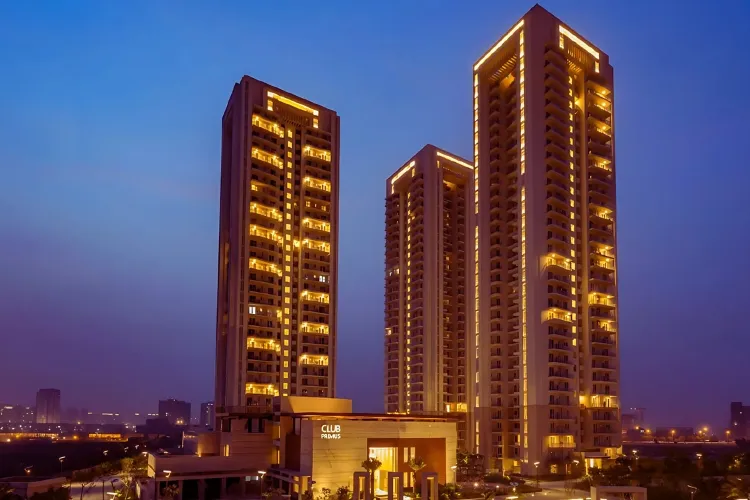
When a partial occupation certificate is issued without permanent utilities and complete infrastructure, when layout deviations of this magnitude persist for years, and when homebuyers must reach the Supreme Court before a serious investigation is ordered, the protective machinery has clearly failed. In a functional system, the District Town Planner’s confirmation of incomplete infrastructure should have triggered corrective action rather than prolonged inaction. In a functional system, the disappearance of a major internal road would not require a CBI enquiry ordered by the apex court.
The broader implication is grim. If a project associated with one of India’s largest and most established developers can exhibit such substantial deviations from its own brochure, what hope do buyers have in lesser-known or less scrutinised projects? The “tip of the iceberg” observation is not rhetorical flourish; it is an acknowledgment that the Primus story is likely representative of a widespread culture of over-promising and under-delivering. Across Gurugram, Noida, Greater Noida, Mumbai, Bengaluru, and other urban centres, similar complaints of missing amenities, altered layouts, delayed possession, and incomplete infrastructure form a familiar chorus. The difference is that most never reach the Supreme Court and therefore never receive even the limited scrutiny that Primus has now attracted.
Homebuyers are not unreasonable. They do not demand perfection. They demand honesty. They demand that the road shown in the brochure exists as a road. They demand that the possession date is treated as a commitment rather than a flexible target. They demand that occupation certificates are issued only when the project is genuinely habitable. They demand that regulatory bodies act as guardians rather than facilitators of developer convenience.
When these basic expectations are repeatedly violated, the relationship ceases to be commercial and becomes extractive. The real estate sector, instead of enabling the middle-class dream of home ownership, becomes a mechanism for transferring life savings into the hands of entities that then deliver a diminished product while the buyer absorbs the cost of the shortfall.
The Supreme Court’s current posture offers a rare moment of accountability. By treating brochure representations as enforceable promises, by ordering an independent CBI enquiry, by expanding the investigative team, by refusing further indulgence to state authorities, and by threatening appropriate orders if conformity is not achieved, the Court has signalled that the old rules of the game may no longer apply. Whether this signal translates into systemic change depends on sustained judicial vigilance, genuine regulatory reform, and the willingness of homebuyers to continue organising and litigating despite the personal cost.
For now, the families who bought into The Primus remain trapped between the fantasy of the brochure and the reality of green patches and parked cars where a proper road should have been. Their story is a cautionary tale written in the language of layout plans, occupation certificates, and Supreme Court orders.
It is also an indictment of an industry that has for too long treated ordinary Indians as sources of capital rather than citizens entitled to the homes they paid for. Until builders are forced to print only what they intend to build, and until regulators are forced to enforce what the law already requires, the real estate mafia will continue to thrive—one glossy brochure and one harassed homebuyer at a time.
The Primus case is not merely about one missing road in one Gurugram project. It is about the gap between the India that is sold and the India that is delivered. Closing that gap is not optional. It is the minimum demand of justice for every family that has poured its savings into the promise of a home.