Six Dead In Satya Niketan. Delhi Has Rules For Buildings, Fire Safety And Occupancy. It Has Inspectors Too. So How Do Unsafe Buildings Keep Operating Until They Kill Someone?
The Satya Niketan building collapse has once again raised a question Delhi cannot keep avoiding: if illegal construction, unauthorised conversions and missing safety clearances can allow unsafe buildings to operate for months or years in crowded neighbourhoods, what mechanism is supposed to catch them before people die?

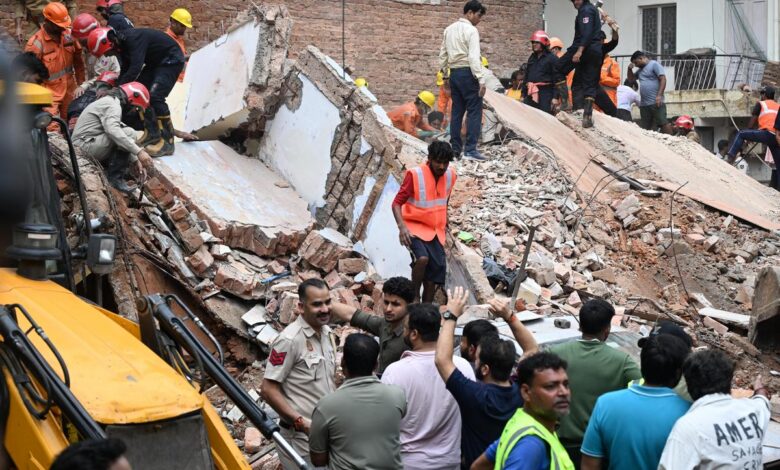
Six people are dead and 11 have been rescued after a roughly 50-year-old multi-storey building collapsed in Delhi’s Satya Niketan area on Sunday afternoon, raising fresh questions over how an ageing structure came to be used as a paying guest accommodation while construction work was still underway.
The building, located near Delhi University’s South Campus, collapsed around 1.30 pm while repair and construction work was being carried out. The property, known as Hostel Daze, had around 30 rooms, with plans to accommodate two to three students in each room.
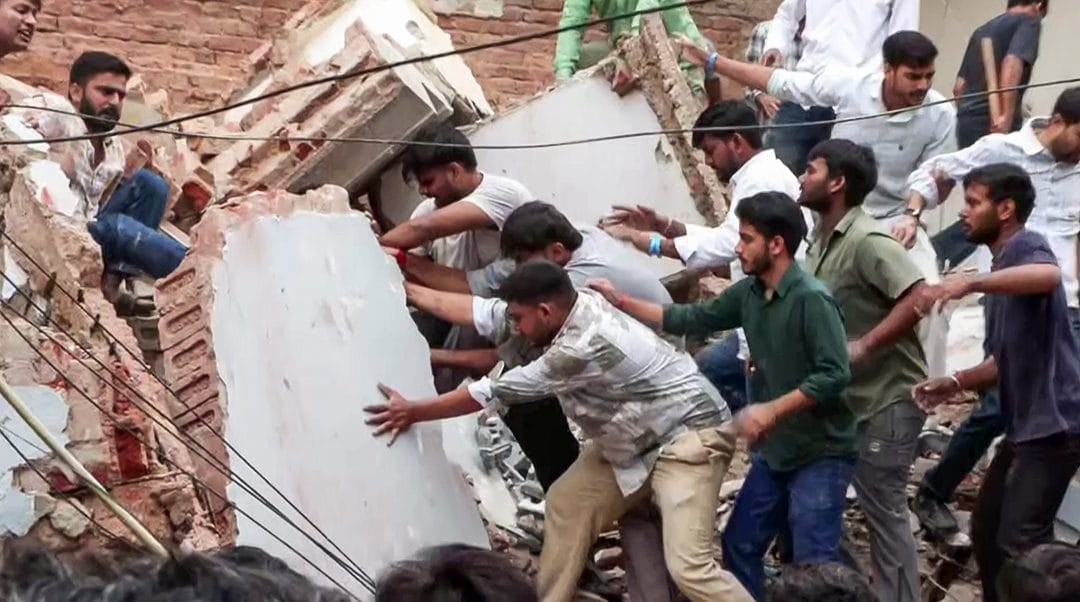
Rescue teams from the Delhi Police, Delhi Fire Service, National Disaster Response Force and Delhi Disaster Management Authority worked through the night. Eleven people were eventually rescued, although one of those pulled from the debris was brought dead, taking the death toll to six.
Police have registered a case against the building owner, Hari Ram Bansal, and others, while a magisterial inquiry has also been ordered. The authorities are now looking into what led to the collapse and who may be responsible.
But the investigation cannot stop at what happened when the building came down. The more uncomfortable question is what happened before it came down.
A decades-old structure had been converted into a student PG, tenants had moved in, and construction work was reportedly still taking place inside the building. Labourers were working in the basement even as Delhi dealt with days of heavy rain and waterlogging.
If those conditions existed in plain sight, the question is not simply why the building collapsed. It is who was supposed to notice that it was unsafe and why they didn’t.
From Old Structure To Student PG
The building did not suddenly become a hostel on the day it collapsed. It had been undergoing a transformation for months.
The roughly 50-year-old structure was described by locals as a dilapidated building before renovation work began. Its location, however, made it commercially attractive. Satya Niketan is close to Delhi University’s South Campus, with a steady demand for accommodation from students looking for rooms near their colleges.
The property was eventually turned into a paying guest accommodation called Hostel Daze, with around 30 rooms. The plan was reportedly to house two to three students in each room. By August, tenants had started moving in.
But the makeover was apparently not complete.
Construction work was still being carried out when the building collapsed, with labourers working in the basement. A local resident also alleged that a wall was being removed as part of the work and said Bansal continued to visit the property.
That detail matters because this was no longer simply an old building standing unused. It was an occupied property undergoing construction at the same time. And that raises the first regulatory question: what exactly was the building approved to be, and what had it actually become?
A residential building being used to house dozens of paying students is not necessarily illegal merely because it is a PG. But when the use of a property changes, rooms are added or altered, structural work is undertaken and a building is effectively turned into a commercial accommodation facility, the question of permissions becomes unavoidable.
In Satya Niketan, that question now sits alongside a much more basic one: who checked the building before students were allowed to move in?
The Basement Was Already A Problem
There were warning signs around the building even before it collapsed.
Delhi had been dealing with continuous rain for two days, and Satya Niketan was no exception. The sloping terrain in the area contributes to waterlogging, while locals said water had accumulated in the basement of the building.
Yet work continued.
“Labourers were working in the basement even during the rain. Waterlogging is common in the basements of buildings here, and they could also be trapped,” a local resident told PTI.
Two labourers were among the 11 people rescued from the debris. One of them died.
Another resident, Priyanka, who said she had lived in the area for 20 to 22 years, described a neighbourhood where houses have increasingly been converted into paying guest accommodation.
“Buildings here are being constructed up to five or six floors,” she said, adding that many houses had been converted into boys’ PGs while their owners moved elsewhere. According to her, some owners simply operate the properties remotely, collect rent online and do not regularly visit them.
Another local said Bansal had moved to Gurugram around two decades ago, although he continued to visit the property. He said some work was being carried out in the basement and that a wall was being removed.
None of these details, by themselves, establishes what caused the building to collapse. That is for the investigation to determine.
But they do establish something else.
The building was being altered. It was being occupied. Construction was still underway. And the basement was reportedly vulnerable to waterlogging. Those are precisely the circumstances in which inspections, building approvals and safety checks are supposed to matter.
So the next question is simple: were they carried out?
What Was This Building Actually Approved For?
One of the most important questions surrounding the Satya Niketan collapse is also one of the most basic: what was the building legally permitted to be used for?
The property was a residential building, but it had been turned into a paying guest accommodation for students. That distinction matters because converting a residential premises into a larger accommodation facility can bring questions of sanctioned building plans, permissible use, structural alterations, fire safety and other statutory requirements into play.
The issue is not that every PG is automatically an unauthorised commercial establishment. It is whether the building being used as Hostel Daze matched the permissions and plans under which the property existed.
That question becomes more important given what was happening inside the building. Around 30 rooms were reportedly planned, with two to three students in each. Tenants had already moved in by August, even though construction work had not finished.
If structural changes were being made while the building was occupied, the authorities would need to establish what work was sanctioned, whether the building plan permitted those changes and whether any fresh approvals or inspections were required.
There is another issue that cannot be brushed aside: the building was reportedly being used for a purpose different from the ordinary residential use of the property.
And this is where Delhi’s enforcement system needs to provide answers rather than simply point to the FIR registered after the collapse.
- Who sanctioned the building?
- Who approved its use?
- Was the conversion into a PG inspected?
- Were structural alterations approved?
- Was there a fire-safety clearance where required?
- And most importantly, when was the property last inspected before six people ended up under its debris?
The answers to those questions will tell us considerably more about the Satya Niketan disaster than the FIR alone.
The Hotel Fire That Raises The Same Question
Satya Niketan is not an isolated story.
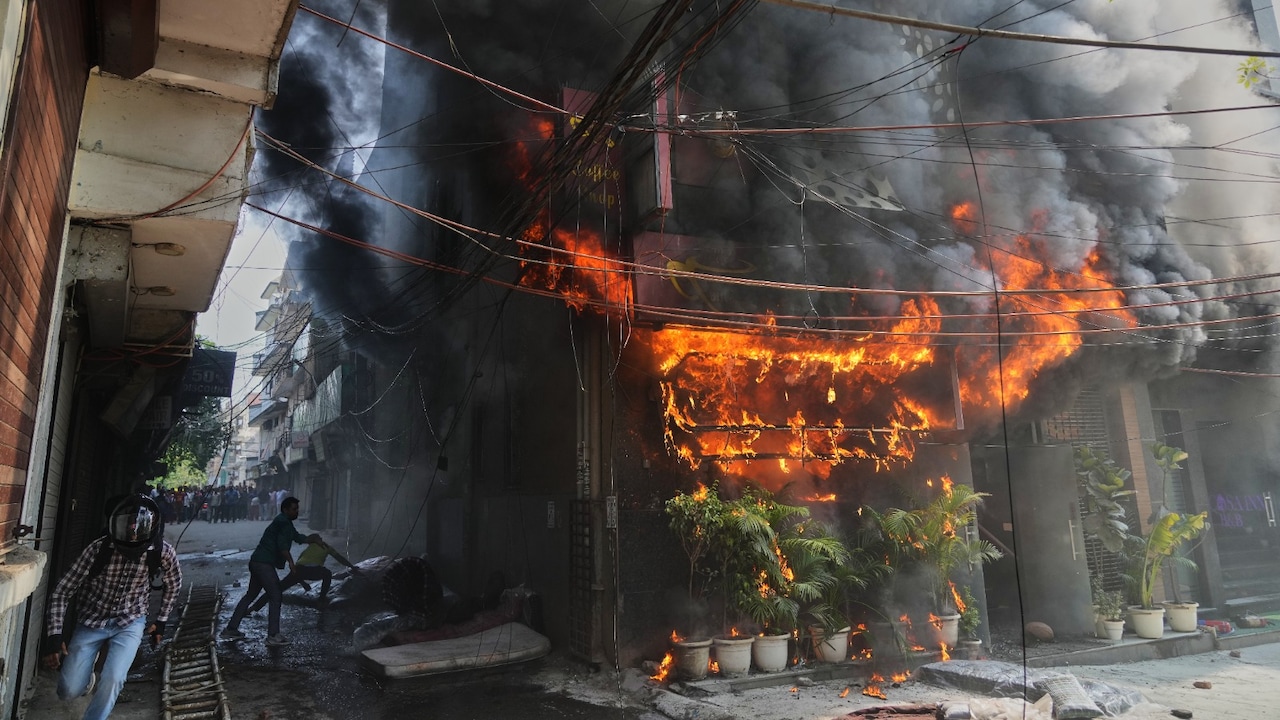
A few months earlier, another Delhi property exposed a different version of the same regulatory problem. In June, a fire at a hotel in Hauz Rani, near Malviya Nagar, killed 23 people, including foreign nationals who had reportedly come to Delhi for medical treatment.
The details of that case are important because the property was not simply operating without any contact with the authorities. It had a licence from the Delhi Tourism Department.
The problem was what happened beyond that licence.
The property had reportedly been licensed as a six-room bed-and-breakfast accommodation. By the time of the fire, it was operating 26 rooms. Investigators also found questions around fire-safety compliance, including the absence of a valid Fire NOC.
The Delhi Tourism Department’s own guidelines require applicants for such accommodation to obtain statutory clearances, including fire-safety approval and relevant building documents. The guidelines also make clear that the tourism licence does not replace those statutory permissions.
That distinction is crucial.
A property can have a licence and still have problems with the building itself. A government department can approve one aspect of its operation without certifying everything that happens inside it.
And when the permitted use, number of rooms, structure or safety arrangements change, someone has to notice.
That is what makes the Hauz Rani fire relevant to Satya Niketan.
In one case, a building was being converted into student accommodation while construction was still underway. In the other, a property licensed for six rooms was reportedly operating 26.
Different buildings. Different disasters.
But the same uncomfortable question keeps returning: Who checks whether a property continues to operate within the limits of the permissions it has been given?
The NOC That Can Exist On Paper – Or Not At All
This is where the word NOC becomes important.
A No Objection Certificate can sound like a simple stamp of approval, but it is only meaningful if the underlying safety requirements are actually checked and continue to be met. A fire NOC, for instance, is not a blanket declaration that a building can never become unsafe.
The Hauz Rani hotel fire showed why that distinction matters. The property had a tourism licence, but reports after the fire raised questions over the absence of a valid Fire NOC and other safety deficiencies.
Delhi’s rules place responsibility on property owners to obtain the necessary statutory clearances. But that raises a practical question: what happens after an approval is granted or when an owner simply operates without obtaining one?
Buildings change.
Walls are removed. Rooms are added. Basements are altered. Residential properties become PGs. PGs expand into larger accommodation facilities. Additional floors or structures can appear.
The approval attached to the original building does not automatically answer what happened later.
That is why the real test of regulation is not the number of forms, licences or NOCs that exist in government files. It is whether someone is checking the building that actually exists on the ground.
In Satya Niketan, the authorities now have to establish what permissions the property had, what work was being carried out, whether that work was authorised and whether the building complied with the applicable safety requirements.
Because if the answer is that the paperwork was never complete, the obvious question is even more troubling: How did an occupied student accommodation facility continue operating in the first place?
The Inspection Nobody Wants To Talk About
The most explosive allegation surrounding the Satya Niketan collapse did not come from the building owner or the authorities. It came from the neighbourhood.
As television crews descended on the site, one local resident tried to explain what he said was a familiar part of the area’s building culture: inspections by authorities could allegedly be managed through payments.
The allegation, if true, would go far beyond one collapsed building. It would point to a system in which rules exist, inspections take place, but enforcement can allegedly be negotiated on the ground.
It is an allegation that needs to be properly investigated, not simply repeated as fact.
But it also raises a question that the authorities cannot avoid: if illegal construction and unauthorised alterations are happening openly across a densely populated neighbourhood, how are they escaping detection?
Residents themselves appear to know where the problems are.
Priyanka, who has lived in the area for decades, described houses being converted into boys’ PGs, with owners moving elsewhere while continuing to collect rent online. Another resident said Bansal himself had moved to Gurugram years ago but continued visiting the property.
If such conversions are visible to people living next door, they should not be invisible to the agencies responsible for regulating buildings.
And that brings us to the uncomfortable gap between inspection and enforcement.
An inspection that identifies a violation but produces no meaningful action is of little use. A notice that is never followed through is not enforcement. And a system that wakes up only after a building collapses is not prevention.
The question, therefore, is not merely whether an official visited Satya Niketan at some point. It is what they saw, what they recorded, what they did about it – and whether anyone followed up.
Everyone Has A Department. Who Has The Responsibility?
Delhi does not lack agencies responsible for buildings and public safety. The problem is what happens when responsibility is divided between them.
The Municipal Corporation of Delhi deals with building plans, construction and unauthorised structures. The Delhi Fire Service deals with fire-safety requirements and clearances. The police investigate criminal violations. The Delhi Disaster Management Authority and NDRF come in when a disaster has already happened.
On paper, there is no shortage of institutions.
But a building does not exist in departments. It exists on a street.
Someone builds it. Someone changes it. Someone rents it out. Someone converts it into a PG. Students move in. Workers enter the basement. Walls are altered. Floors are added or repurposed. And at every stage, the question should be: who is checking?
The Satya Niketan case exposes the weakness of a system where each authority may have a defined responsibility, but the public is left trying to understand who was responsible for the building as a whole.
The same problem surfaced after the Hauz Rani hotel fire. There were questions involving the property’s tourism licence, fire-safety clearance, the number of rooms it was actually operating and the building’s compliance with other requirements. The subsequent debate inevitably turned towards which authority was supposed to have detected which violation.
That is precisely the problem.
When something goes wrong, agencies can explain their individual mandates. But before disaster strikes, somebody has to connect the dots.
Because an MCD approval cannot make an unsafe building safe. A tourism licence cannot substitute for a Fire NOC. And an NOC cannot protect occupants if nobody checks whether the building still matches the conditions under which it was granted.
The real failure, therefore, may not lie in the absence of rules. It may lie in what happens between the rule being written and somebody enforcing it.
Action After The Deaths
The authorities have now swung into action.
Delhi Police have registered a case against the building owner and others, while a magisterial inquiry has been ordered to establish what led to the collapse and fix responsibility. The Municipal Corporation of Delhi has also ordered immediate action against illegal buildings and warned that officials found responsible for allowing violations to continue could face consequences.
That is necessary. But it also raises the question that follows almost every such disaster in Delhi: why does enforcement become urgent only after people are dead?
If the building was being used as a student PG, if construction was continuing inside it and if structural work was being carried out in the basement, these were not conditions that appeared in the seconds before the collapse. They existed beforehand.
The same problem was visible in the Hauz Rani hotel fire. After 23 people died, investigators and authorities began examining the property’s licences, room count, fire-safety compliance and other violations. The questions were finally being asked.
But the purpose of regulation is to ask those questions before a fire starts or a building collapses.
An FIR can investigate a disaster. An inquiry can establish responsibility. Demolition orders can clear illegal structures but none of them can bring back the people who were killed
The Last Bit, The Question Delhi Keeps Answering Too Late
The Satya Niketan collapse and the Hauz Rani hotel fire were different disasters. One involved an ageing building being used as student accommodation; the other involved a hotel that had reportedly expanded far beyond the six rooms for which it had been licensed.
But both cases point towards the same uncomfortable gap between what Delhi’s rules require and what happens on its streets.
There are building plans. There are occupancy requirements. There are fire-safety rules. There are licences and NOCs. There are inspectors and enforcement agencies.
And yet buildings can change their use, expand beyond their permitted capacity, undergo structural alterations or operate without the required clearances while people continue to live and work inside them.
That is where the system has to be examined. The real question raised by Satya Niketan is therefore not whether Delhi has enough rules. It is whether anyone is making sure those rules mean something before the building becomes a crime scene.