From Panama Papers To Paradise Papers: Why Does Krishan Rattan’s Investment Network Have Compromised Connections?

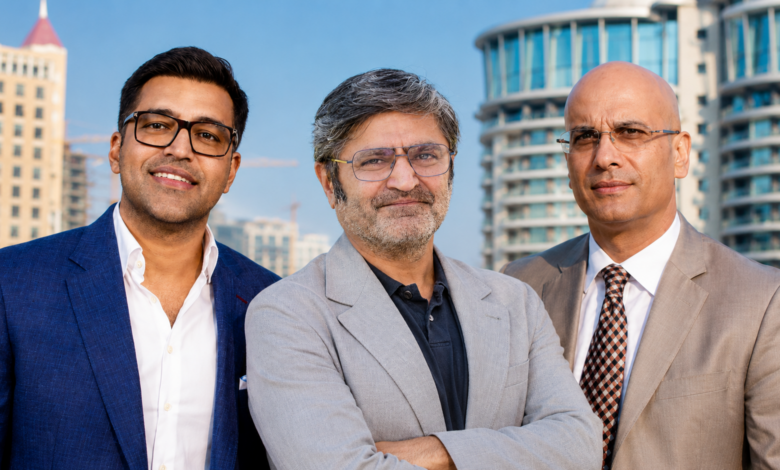
Krishan Rattan’s Network Under the Microscope: Why Do His Corporate Partners Keep Appearing Around Offshore Records, Distressed Companies and Contested Deals?
There is a fundamental difference between investigating a businessman and accusing him of a crime. The former requires following the paper trail. The latter requires evidence. And in the case of Krishan Rattan, the paper trail is becoming increasingly difficult to ignore.
Krishan Rattan presents himself publicly through the language familiar to modern alternative-investment entrepreneurs: investment management, private equity, cross-border capital, technology, emerging markets and sophisticated international networks. But for investors, founders and the wider startup ecosystem, the more important question is not what a professional biography says about an individual.
It is who sits around him. Who are his partners? Where have those partners previously operated? What companies have they been associated with? What happened to those companies? And, perhaps most importantly, what do international databases, Indian corporate records and documented financial disputes say about the network behind the polished investment narrative?
The answers do not establish that Krishan Rattan committed any criminal offence. They do, however, create a sufficiently complicated network to justify serious scrutiny. And that scrutiny becomes particularly important because two individuals connected to Rattan, Rahul “Sonny” Lulla and Ajoy Veer Kapoor, appear separately in the International Consortium of Investigative Journalists’ Offshore Leaks Database, in the Paradise Papers and Panama Papers respectively.
That fact should not be sensationalised into an allegation of criminality. But neither should it be hidden behind corporate biographies.
The first connection: Krishan Rattan and Rahul “Sonny” Lulla
One of the most significant corporate intersections between Rattan and the Lulla family concerns Distribution Logistics Infrastructure Private Limited, or DLI. Public corporate records identify Rahul Lulla and Krishan Rattan as directors of DLI. Rattan’s appointment is recorded from April 19, 2019, while Lulla had been a director for substantially longer.
That relationship becomes important because DLI subsequently entered the insolvency process. According to public insolvency records and reporting, the National Company Law Tribunal’s Mumbai Bench admitted DLI into the Corporate Insolvency Resolution Process in May 2026 following proceedings initiated by Bank of India. Provisionally admitted secured financial-creditor claims were reported at approximately ₹993 crore.
Nearly ₹1,000 crore is not a footnote. It is a number that should immediately attract the attention of banks, investors, regulators, and anyone evaluating the governance credentials of the people who once sat around the company’s boardroom table.
Then comes the Paradise Papers
Rahul “Sonny” Lulla is not merely a name associated with DLI. The ICIJ Offshore Leaks Database identifies “Lulla – Rahul Sonny” as an officer in records sourced from the Paradise Papers. The database specifically identifies two Cayman Islands entities:
- GGIC Greenbacker Funding Ltd.
- King Tech Holdings Ltd.
ICIJ records Lulla as a director of both entities. The database states that the relevant Appleby Paradise Papers data is current through 2014.
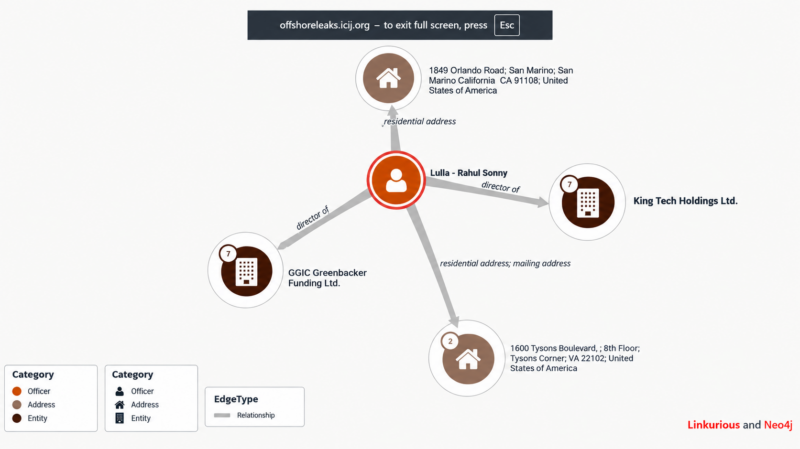
Rahul “Sonny” Lulla appears in the ICIJ Paradise Papers database as a director of two Cayman Islands entities. That is a documented fact. And the second documented fact is that Lulla and Krishan Rattan were both associated with DLI’s board. That creates a legitimate investigative question about Rattan’s professional network. Not an allegation, but definitely a question.
What happened at Infrastructure India?
The Lulla connection becomes considerably more consequential because Rahul Lulla was also a key figure at Infrastructure India plc, a London-listed investment vehicle that focused heavily on Indian infrastructure. A London Stock Exchange RNS record identifies Rahul “Sonny” Lulla as CEO and a person discharging managerial responsibilities at Infrastructure India plc. The company record also documents his shareholding transactions.
The investigation also reported that Indian police were examining a whistleblower complaint alleging that Lulla had fraudulently siphoned millions of dollars. Lulla denied wrongdoing. Rahul Lulla was the subject of serious allegations in connection with Infrastructure India, which he denied. Yet from an investor’s perspective, the question does not disappear simply because an allegation remains an allegation.
If a person has been a director or executive of a company involved in a major financial controversy, and that same person later becomes professionally connected with another investment entrepreneur, investors are entitled to ask:
- Was the historical controversy examined?
- Was enhanced due diligence undertaken?
- Were counterparties informed?
- What safeguards were put in place?
These are normal institutional-investment questions. They are not character assassination.
And then there is Ajoy Veer Kapoor
The second connection takes us from the Paradise Papers to the Panama Papers.
Ajoy Veer Kapoor was part of the founding team of Augustya, alongside Krishan Rattan and Vasavi Vittal. The relationship is not based merely on a social connection or an unverified database. A 2020 announcement concerning Australian-listed education technology company KNeoMedia explicitly described Krishan Rattan, Ajoy Veer Kapoor and Vasavi Vittal as the founding team of Augustya. KNeoMedia said the team had investment-management and private-equity experience and described the arrangement as a low-cost route into the Indian market.
That makes Ajoy Veer Kapoor’s background relevant to anyone examining Rattan’s network. Because Ajoy Veer Kapoor appears in another ICIJ investigation. The ICIJ Offshore Leaks Database identifies Ajoy Veer Kapoor in the Panama Papers data. More specifically, ICIJ identifies Kapoor as a beneficiary of YASU MANAGEMENT LIMITED, a British Virgin Islands company incorporated on February 3, 2006. The database associates the record with the United Arab Emirates.
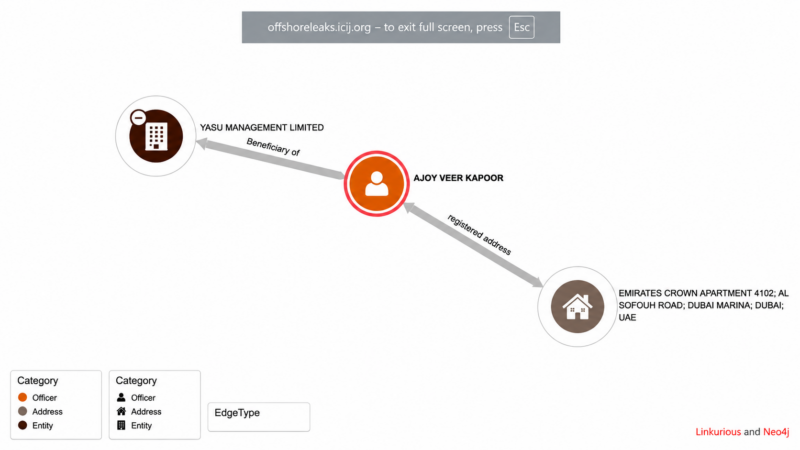
Ajoy Veer Kapoor has a documented appearance in the Panama Papers database as a beneficiary of a BVI entity. And Ajoy Veer Kapoor was simultaneously part of a business venture with Krishan Rattan. That is precisely where the story becomes relevant to investors.
Is this merely coincidence?
This is perhaps the most important question.
One offshore database connection can be coincidence. One failed business can be unfortunate. One controversial executive relationship can be professional history. One insolvency can be explained by market conditions. But sophisticated investors do not evaluate risk by looking at isolated events. They evaluate patterns.
The pattern around Krishan Rattan deserves examination because his corporate relationships span multiple sectors and jurisdictions.
There is Augustya.
There is DLI.
There is the wider Lulla relationship.
There is the Panama Papers appearance of Ajoy Veer Kapoor.
There is the Paradise Papers appearance of Rahul Lulla.
And there are other corporate relationships involving Rattan that have subsequently attracted litigation or financial scrutiny. None of this proves a conspiracy. But the accumulation of documented relationships makes one question unavoidable:
How rigorous was the due diligence behind these relationships?
That is the question investors should ask. “Was everyone sufficiently scrutinised?”
The startup ecosystem should care about this
This issue is bigger than one businessman. India’s startup ecosystem increasingly depends on networks of angel investors, family offices, private-equity professionals, venture capitalists, strategic advisors and cross-border investment platforms. Reputation is therefore an economic asset. A founder taking money from an investor is not merely receiving capital. The founder is effectively accepting the investor’s network, governance culture, counterparties and reputation.
If that investor’s own network contains people associated with offshore databases, distressed companies or major financial disputes, founders deserve to know. Similarly, limited partners committing capital to investment vehicles deserve to understand who is actually involved. This is especially important in a market where “global investor”, “alternative asset manager”, “private equity professional” and “family office” can sound reassuring without necessarily telling investors anything about governance.
The DLI problem makes the questions more immediate
The Rattan-Lulla relationship deserves additional attention because DLI’s eventual insolvency places their directorships into a concrete financial context. Public corporate records list both Rahul Lulla and Krishan Rattan as directors. DLI ultimately entered CIRP. The creditors’ claims were close to ₹1,000 crore. The company had previously operated within India’s infrastructure and logistics ecosystem and carried substantial institutional debt.
What happened inside the company during the period when Krishan Rattan sat on the board?
Was the board adequately informed about the company’s financial position?
What restructuring alternatives were considered?
What was communicated to lenders?
What was the relationship between the company’s promoters, management and financial advisers?
Were related-party transactions adequately scrutinised?
And did directors exercise appropriate oversight as the financial position deteriorated?
These are not accusations.
They are the questions that should arise whenever a highly leveraged company eventually enters insolvency.
The investor question is ultimately about transparency
The broader concern is not that Krishan Rattan knows controversial people.
Finance is a small world. People move between investment banks, private-equity firms, startups, family offices and advisory businesses. The same individuals can appear repeatedly across transactions. That is normal. What is not normal, or at least should not be normal, is for investors to be expected to accept a carefully curated professional narrative without asking what exists outside it.
The ICIJ records create one layer. Indian company records create another. Insolvency proceedings create another. Corporate announcements create another. Put them together and a much more complicated picture emerges. It definitely establish the need for scrutiny.
The uncomfortable question for Krishan Rattan
What due diligence did you conduct before entering business relationships with people whose names appear in major offshore-leak databases?
Did you know about Kapoor’s Panama Papers connection when Augustya was formed? Did you know about Lulla’s Paradise Papers record? What was your understanding of the underlying structures? Were these matters disclosed to business partners and investors? What governance controls existed at DLI while you served as a director? What did you know about DLI’s financial stress? And what lessons did you draw from those experiences before moving into newer investment platforms?
These questions are particularly relevant because Krishan Rattan’s business identity is built around sophisticated capital allocation. The higher the sophistication claimed by an investor, the higher the standard of transparency investors should reasonably expect.
The broader lesson: networks matter as much as numbers
The startup ecosystem often celebrates the founder.
It celebrates the valuation. It celebrates the fundraising announcement. It celebrates the prestigious investor. But it rarely spends enough time examining the network behind the investor.That needs to change. Capital is not neutral. The people bringing capital into a startup bring histories, relationships, reputational risks and governance practices with them.
The Krishan Rattan network illustrates why that matters.
Rahul “Sonny” Lulla appears in the ICIJ Paradise Papers database as a director of two Cayman Islands entities.
Ajoy Veer Kapoor appears in the ICIJ Panama Papers database as a beneficiary of a BVI company.
Kapoor and Rattan were identified as part of the founding team behind Augustya.
Rattan and Lulla were directors of DLI, which subsequently entered insolvency proceedings with approximately ₹993 crore in provisionally admitted secured financial claims.
And Lulla was also a central executive at Infrastructure India, around which serious allegations were reported and denied.
Why does a businessman selling the image of sophisticated global capital repeatedly find himself professionally connected to individuals whose histories demand unusually careful due diligence?
That question cannot be answered by a company website. It cannot be answered by a LinkedIn profile. And it certainly cannot be answered by calling every uncomfortable association a coincidence.
It requires documents. It requires disclosures. It requires timelines. It requires understanding who owned what, who controlled what, who sat on which board, what investors were told, what lenders knew and what happened when the money stopped working. For investors, founders and the broader startup ecosystem, that is the real warning.
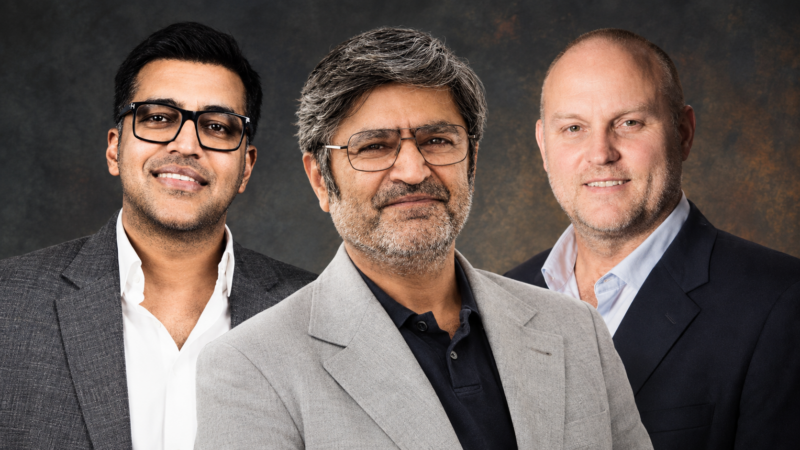
A network is not evidence of wrongdoing.
But a network is evidence of where the questions should begin. And in Krishan Rattan’s case, there are now enough documented corporate intersections, offshore-database records and distressed-company histories to justify asking those questions in public.
Not because guilt has been established, but because transparency has not yet answered everything that the record invites investors to ask.