19 Charge-Sheets, 31 Cases and a Homebuyer Reckoning: What the CBI’s Builder–Bank Investigation Says About the Price of the Indian Housing Dream
By 23 September 2026, the Central Bureau of Investigation (CBI) has reached its 19th charge-sheet in the nationwide investigation into alleged cheating of homebuyers and suspected builder–financial-institution collusion. The 18th charge-sheet involved MKHS Housing LLP and two Indiabulls-named entities in connection with a Rajarhat, West Bengal project. The 19th, filed on 3 September 2026, concerns Earthcon Universal Infratech Pvt. Ltd. and its directors in the Casa Royale project in Greater Noida. The CBI has said 31 other cases remain under investigation

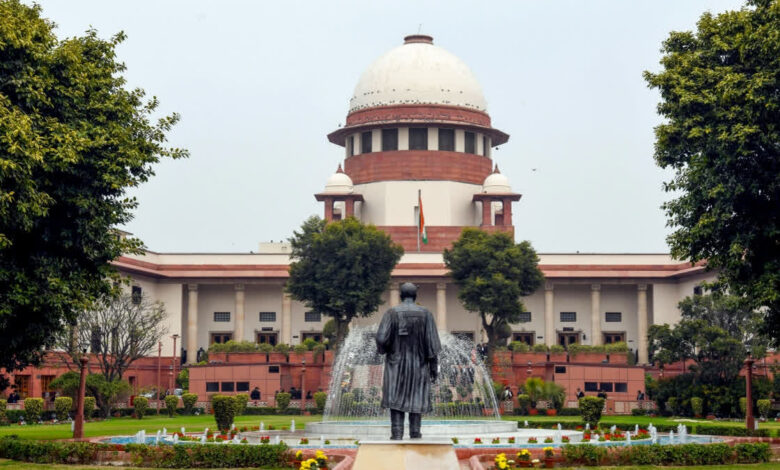
There is an uncomfortable truth buried beneath the routine language of a government press release: the documents do not describe isolated builder-customer disagreements. Across different cases, the CBI has alleged patterns involving false assurances, deceptive representations, diversion or misuse of project funds, cheating of homebuyers and, in several cases, suspected participation of bank or financial-institution officials. The Supreme Court had intervened in this broader dispute after petitions by more than 1,200 homebuyers and had directed investigation into an alleged builder–bank nexus.
And that is why the latest charge-sheet should not be read as one more press release.
It should be read as another page in a much larger record.
A homebuyer is not buying a speculative stock. He is buying a roof. Often with decades of savings, a housing loan, registration costs, taxes and an EMI schedule that does not care whether a developer has completed the building. When the apartment does not arrive, the buyer can be left carrying the most absurd combination in modern commerce: an unpaid-for future home, a fully functioning bank loan and a litigation file.
The CBI’s own releases repeatedly use the same core language: the accused builder companies and directors allegedly induced buyers and investors through false assurances and fraudulent representations and obtained financial benefits through illegal or deceptive means. In several cases, the agency has also alleged criminal conspiracy and criminal breach of trust, and in cases involving public servants it has invoked the Prevention of Corruption Act.
The pattern is serious enough to demand scrutiny.
It is also important to be precise: a charge-sheet is not a conviction. It is the investigating agency’s case placed before a court. Every allegation must ultimately survive judicial scrutiny.
But that legal caution should not become a convenient excuse for administrative slowness.
From “developer dispute” to alleged system failure
The Supreme Court record gives this investigation an unusually significant institutional backdrop.
The Court’s proceedings recorded that, pursuant to its directions, 22 regular cases were registered on 28 July 2025. The CBI subsequently reported that three of those investigations had been completed and charge-sheets filed: Rudra Buildwell Constructions Pvt. Ltd. — KBNOWS Apartments; Dream Procon Pvt. Ltd. — Victory Ace; and Jaypee Infratech Ltd. — Orchards. The Supreme Court then directed the trial court to consider those charge-sheets and proceed in accordance with law.
That matters.
Because the central issue is no longer whether allegations exist. They plainly do.
The real question is how quickly the investigative material becomes evidence tested in a courtroom, how quickly assets are traced, how quickly the role of financial intermediaries is established or eliminated, and how quickly victims move from complainants to actual beneficiaries of justice.
The Supreme Court’s intervention itself followed allegations concerning home-loan/subvention structures in which homebuyers claimed that EMIs were being demanded even though possession of the apartments had not been delivered. The Indian Express reported that more than 1,200 homebuyers were involved in the petitions that triggered the Court’s intervention.
That is a scale at which “consumer grievance” becomes a public-interest question.
The 18 company names before Earthcon: a widening investigative map
The CBI’s public releases and subsequent reporting identify a long list of developer entities in this investigation. Importantly, the number of charge-sheets and the number of companies are not identical, because individual charge-sheets can involve multiple builder entities. The AVJ matter, for example, named AVJ Developers (India) Pvt. Ltd., AVJ Developers Pvt. Ltd. and Kesar Builders Pvt. Ltd.
The public record through the 19th charge-sheet includes the following developer/company names:
| Developer / entity | Key publicly identifiable principals or directors | Additional public-record issues located |
|---|---|---|
| Rudra Buildwell Constructions Pvt. Ltd. | Raj Kumar; Vaibhav Aggarwal are reflected in corporate records as directors. | CBI case relates to KBNOWS Apartments. A Supreme Court-recorded status report identifies it as one of the first three completed investigations. Consumer litigation over KBNOWS apartments is also on record. |
| Dream Procon Pvt. Ltd. | Pramod Goel; Krishan Kumar Gupta. | Victory Ace, Noida. CIRP commenced in 2019; later NCLAT proceedings included homebuyers complaining about delayed construction and claims. |
| Jaypee Infratech Ltd. | Manoj Gaur was erstwhile Managing Director/promoter figure associated with the company. | One of India’s most litigated real-estate insolvency cases. NCLAT records prolonged CIRP, Supreme Court intervention in Chitra Sharma and the exclusion of erstwhile promoters from participating in the resolution process under Section 29A. |
| AVJ Developers (India) Pvt. Ltd. | Vinay Jain; Vipin Aggarwal. | CBI charge-sheet alleged builder-bank conspiracy involving AVJ Developers (India), AVJ Developers Pvt. Ltd., Kesar Builders Pvt. Ltd., bank officials and alleged proxy buyers. The company is also reflected in CIRP records. |
| CHD Developers Pvt. Ltd. | Gaurav Mittal is identified as a director in NCDRC proceedings. | NCDRC proceedings involved allegations of non-delivery, deficiency of service and unfair/restrictive trade practices in the 106 Golf Avenue project. |
| Sequel Buildcon Pvt. Ltd. | Anoop Kumar Srivastava, Manoj Kumar Singh and Dilip Kumar appear in company records. | CIRP was admitted by NCLT in June 2023; NCLAT proceedings followed. |
| Logix City Developers Pvt. Ltd. | Shakti Nath and Davender Mohan Saxena are reflected as directors; Vikram Nath appears in historical records. | CIRP commenced in August 2022. Subsequent NCLAT litigation concerned large creditor claims, including homebuyer-related claims. |
| Manju J Homes India Ltd. | Rajesh Kumar Jodhani, Aditya Aggarwal, Shubham Jain and Sanjay are reflected in corporate records. | CBI charge-sheeted the company, directors and SBI officials in a Ghaziabad housing case alleging conspiracy, cheating, criminal breach of trust and forgery-related offences. |
| Shubhkamna Buildtech Pvt. Ltd. | Piyush Tiwari, Diwakar Sharma and Deep Tewari are reflected in corporate records. | CBI alleged false assurances and diversion of funds in a Noida/Greater Noida project. Insolvency litigation has also generated disputes over creditor status, including a recent NCLAT ruling involving Noida/GNIDA claims. |
| Ninex Developers Ltd. | The accessible CBI release reports the company and one director but does not name that individual in the release itself. | CBI’s 11th charge-sheet alleged false assurances, deceptive representations, collection of funds and wrongful loss to homebuyers/investors. |
| Decent Buildwell Pvt. Ltd. | Ram Agrawal and Amit Tyagi appear in corporate records. | The Shri Radha Aqua Gardens buyers’ association was before NCLT in insolvency proceedings; the CBI subsequently charge-sheeted the company and a director. |
| Rudra Buildwell Projects Pvt. Ltd. | Nitin Dua and Mukesh Khurana appear as directors. | IBBI records show insolvency proceedings, including an admitted CIRP later withdrawn, and subsequent NCLT/NCLAT litigation. |
| Ithaca Estate Pvt. Ltd. | Individual names were not identified in the accessible CBI announcement reviewed. | CBI filed a charge-sheet in Bengaluru and separately investigated alleged roles of HDFC Bank, ICICI Bank and Indiabulls Housing Finance officials in the related housing-project matter. |
| LGCL Urban Homes (India) LLP | Girish Puravankara and Rashmi Puravankara appear as designated partners in corporate records. | The LLP is reflected as being under CIRP. CBI’s Bengaluru action named the LLP and a director, alongside financial-institution officials in the broader matter. |
| Saha Infratech Pvt. Ltd. | The accessible CBI release identifies the company and a director but does not disclose the individual in the text. | CBI’s 16th charge-sheet alleged conspiracy involving HDFC Bank and ICICI Bank officials and invoked IPC provisions plus the Prevention of Corruption Act. |
| Ozone Urbana Infra Developers Pvt. Ltd. | Vasudevan Sathyamoorthy is Managing Director; Sathyamoorthy Sai Prasad is a director. | The most extensive parallel enforcement record located. ED provisionally attached ₹423.38 crore of immovable property. ED said its investigation concerned about ₹927.22 crore collected from around 1,351 homebuyers and alleged diversion/layering through group companies and personal/family-linked accounts. |
| MKHS Housing LLP | Srikant Sikaria, Kamal Chopra and Subhadeep Pal appear as designated partners in corporate records. | CBI’s 18th charge-sheet concerns the LLP and Indiabulls-linked entities in the Rajarhat project. Separately, a Delhi court record in an NI Act case records a dispute involving Indiabulls Distribution Services and MKHS, including dishonoured cheques and prima-facie findings regarding particular accused persons; that is a separate proceeding and should not be conflated with the CBI charge-sheet. |
| Earthcon Universal Infratech Pvt. Ltd. | The 19th CBI announcement names the company and its directors, but the accessible public release reviewed does not set out their names. | Charge-sheet filed in relation to the Casa Royale project, GH-10, Sector-1, Greater Noida, alleging deceptive representations, cheating, conspiracy and criminal breach of trust. |
A critical qualification about the names
The corporate-record names in the table are not automatically a list of people convicted, and in several cases they are not even proof that every current or historical director was individually charge-sheeted in the CBI case. The CBI’s public statements often say “the company and its directors” without publishing the complete accused list.
For publication, the actual charge-sheet and cognizance order in each RC should be checked against the MCA director history before printing a director’s name next to a specific criminal allegation.
That distinction is not cosmetic. It is the difference between investigative journalism and careless naming.
The Ozone Urbana file is particularly difficult to ignore
Of all the parallel records located in this investigation, the Ozone Urbana matter presents one of the clearest paper trails for the scale of the alleged financial problem.
The Enforcement Directorate said it provisionally attached immovable properties worth ₹423.38 crore in October 2025. The agency said its investigation arose out of multiple FIRs as well as a CBI FIR registered pursuant to the Supreme Court’s directions.
More significantly, the ED’s “reasons to believe” recorded in the attachment order stated that Ozone Urbana Infra Developers and its main promoter S. Vasudevan had collected approximately ₹927.22 crore from around 1,351 homebuyers, while alleging that project money was diverted through group companies, inter-corporate deposits and associated/personal accounts. The ED also said it had conducted searches at 10 premises earlier in the investigation.
A recent Karnataka High Court record from September 2026 reproduces extensive material relating to the connected proceedings. It records multiple homebuyer complaints, allegations of delayed delivery and non-payment of promised pre-construction EMIs, and the CBI’s investigation into Ozone Urbana and unnamed officials of Indiabulls Housing Finance, now known as Sammaan Capital. The court record also reproduces the ED’s allegations concerning the ₹927.22 crore figure and the ₹423.38 crore provisional attachment.
Those are allegations in enforcement proceedings, not judicial findings of guilt.
But the figures are too large to dismiss as ordinary customer dissatisfaction.
₹927.22 crore. 1,351 homebuyers. ₹423.38 crore provisionally attached. Ten premises searched. Multiple FIRs. A CBI investigation.
At that point, the question is not whether the matter deserves attention.
It is why the public is expected to regard it as just another real-estate dispute.
Jaypee: the insolvency story that became a national homebuyer case
The Jaypee Infratech litigation demonstrates another side of the problem: sometimes the legal crisis becomes so large that the development itself is engulfed in insolvency proceedings.
NCLAT records show that Jaypee Infratech entered CIRP after an application by IDBI Bank was admitted in 2017. Homebuyers approached the Supreme Court seeking protection. In the Chitra Sharma proceedings, the Supreme Court revived the insolvency process and held that the erstwhile promoters could not participate in the resolution process in light of Section 29A.
The later NCLAT record also records Manoj Gaur’s position as erstwhile Managing Director and personal guarantor and confirms the long sequence of appellate litigation surrounding the resolution of Jaypee Infratech and the interests of homebuyers.
This is not merely a story about an unfinished tower.
It is a story about what happens when a large real-estate system gets entangled in debt, insolvency, creditor claims, promoter disputes and homebuyer litigation.
The brochures promise possession.
The legal records promise process.
The homebuyer waits.
AVJ: the alleged builder–bank mechanism gets more complicated
The AVJ case is important because the CBI’s allegations reportedly went beyond a simple developer-versus-buyer dispute.
The agency’s charge-sheet named AVJ Developers (India) Pvt. Ltd., AVJ Developers Pvt. Ltd., Kesar Builders Pvt. Ltd., their directors, officials of Bank of India, UCO Bank and ICICI Bank, as well as alleged proxy homebuyers.
According to the CBI’s account, the alleged mechanism involved false assurances, bank officials allegedly bypassing norms, alleged proxy buyers obtaining loans and routing of funds through sister concerns.
That is precisely why the larger investigation matters.
If the allegations in individual cases are ultimately proved, the public-interest problem is not simply “bad builder behaviour.”
The harder question is how the money moved, who authorised it, what internal checks existed, who signed the approvals, what representations were made to lenders, whether loan proceeds were used for the stated construction purposes, and which individuals benefited.
That is where a genuine forensic investigation begins.
The insolvency trail is impossible to overlook
One striking feature across the cases is the sheer number of companies that have separately appeared in insolvency proceedings.
Logix City Developers’ CIRP began in August 2022, with later litigation concerning creditor claims.
Sequel Buildcon entered CIRP in June 2023.
Rudra Buildwell Projects has a history of NCLT/NCLAT proceedings, including an admitted CIRP and subsequent withdrawal proceedings.
Decent Buildwell faced insolvency proceedings initiated by homebuyers’ association and individual purchasers.
LGCL Urban Homes is reflected in corporate records as being under CIRP.
AVJ Developers (India) is likewise reflected in CIRP records.
Shubhkamna’s insolvency litigation has now reached the NCLAT level in disputes involving the status of governmental development authorities as creditors.
No one of those proceedings proves a criminal offence.
But taken together with the CBI’s criminal investigation, they explain why the homebuyer crisis cannot be reduced to one agency or one legal remedy.
RERA does not replace criminal investigation. Insolvency does not replace criminal investigation. Consumer proceedings do not replace criminal investigation.
Where there are allegations of deliberate deception or diversion of funds, all of those tracks can have different purposes.
MKHS and the Indiabulls connection: what the 18th charge-sheet actually says
The 18th CBI action is especially notable because it brings a different corporate configuration into the investigation.
The charge-sheet concerns:
M/s MKHS Housing LLP;
M/s Indiabulls Distribution Services Ltd., now Indiabulls Nests Ltd.; and
M/s Indiabulls Investment Advisors Ltd., now Indiabulls Urban Residency Ltd.,
along with their directors/officials.
The CBI says the case relates to a Rajarhat housing project in North 24 Parganas, West Bengal, and alleges that the accused builder company and its directors, allegedly in conspiracy with NBFC officials, induced homebuyers/investors through false assurances and fraudulent representations and obtained financial benefits through deceptive means.
The public-record corporate structure of MKHS currently reflects Srikant Sikaria, Kamal Chopra and Subhadeep Pal as designated partners.
There is also a separate Delhi proceeding involving Indiabulls Distribution Services Ltd. and MKHS Housing LLP.
In that proceeding, the court record states that MKHS required funds for its Rajarhat project, entered into an Inter-Corporate Deposit Agreement, and issued four post-dated cheques of ₹25 lakh each. Two cheques were presented and returned for insufficient funds. The court record also describes the involvement of particular designated partners and signatories and records a prima-facie finding in the Section 138 proceedings.
Again, that proceeding is separate from the CBI criminal investigation.
But it is precisely this kind of documented cross-corporate litigation trail that deserves careful forensic mapping.
Who contracted with whom?
Who financed whom?
Who guaranteed what?
Where did the money move?
What was the stated purpose?
What happened to it?
And which officials, if any, approved or facilitated the transactions?
A serious investigation should answer those questions with bank statements, ledgers, emails, board minutes, loan files, mortgage records, project accounts, related-party transactions and ultimate-beneficiary analysis.
Not with another generic press release.
The 19th charge-sheet makes the story even harder to dismiss
The investigation did not stop at MKHS.
On 3 September 2026, the CBI filed its 19th charge-sheet against Earthcon Universal Infratech Pvt. Ltd. and its directors in connection with the Casa Royale housing project at Plot GH-10, Sector-1, Greater Noida.
The CBI alleged that the builder and its directors induced homebuyers and investors through false assurances and fraudulent representations and obtained financial benefits through illegal and deceptive means. It invoked IPC provisions relating to criminal conspiracy, cheating and criminal breach of trust. The CBI said 31 other cases remained under investigation.
In other words, the 18th charge-sheet was not the closing chapter.
It was followed almost immediately by another.
What the “31 other cases” really means
The number 31 should not be treated as a decorative statistic.
It means that the 19th charge-sheet still leaves a large investigative workload ahead of the CBI.
And the cases are geographically dispersed.
Delhi-NCR.
Greater Noida.
Gurugram.
Ghaziabad.
Bengaluru.
West Bengal.
Other locations covered by the Supreme Court-directed investigation.
That geographic spread matters because financial flows do not respect state boundaries.
A developer can be incorporated in Delhi, build in Noida, borrow from a lender headquartered elsewhere, route funds through another company, and sell apartments to buyers living several states away.
A fragmented investigation produces fragmented truth.
A forensic investigation should therefore map entity → director → project → lender → loan product → bank account → beneficiary → related party → landowner → contractor → shell/group company → asset.
That network map may be more revealing than any individual FIR.
The uncomfortable part: “charge-sheeted” is not the same as “convicted”
There is an easy journalistic temptation in cases like these—to write “fraudster”, “cheat” or “criminal” immediately after a charge-sheet is filed.
That is not responsible reporting.
The correct terminology is:
CBI alleged.
CBI investigated.
CBI charge-sheeted.
ED alleged.
A court took cognizance or passed an order.
An insolvency tribunal admitted a proceeding.
A consumer forum ordered or recorded relief.
And finally, a criminal court decides guilt.
Those are not interchangeable events.
A charge-sheet is serious.
An arrest is serious.
An attachment is serious.
An NCLT admission is serious.
A conviction is something else entirely.
That distinction must survive even in aggressive investigative journalism.
But the legal presumption cannot become an excuse for endless delay
There is another danger.
The presumption of innocence is sometimes misunderstood as a presumption that the system need not hurry.
It should be exactly the opposite.
Because if the allegations are false, the accused deserve a speedy adjudication.
If the allegations are true, the victims deserve a speedy adjudication.
Delay benefits neither side.
The Supreme Court itself has already directed trial courts to move on completed charge-sheets.
The answer therefore cannot be another five-year cycle of investigation, supplementary investigation, procedural adjournments, insolvency proceedings, appeals and applications while buyers continue paying EMIs.
The questions investigators should now answer
A tightened investigation should go beyond merely filing charge-sheets.
It should establish, case by case:
Where did the homebuyers’ money go?
Which accounts received it?
Which related-party entities received it?
Were project funds transferred outside the project?
Which directors approved the transfers?
Which lenders released the money?
Were bank or NBFC officials aware of project progress, construction status and end-use of funds?
Were pre-EMI/subvention commitments genuine and enforceable or merely sales incentives?
Did loan proceeds reach the intended project?
Were units sold, mortgaged, transferred or encumbered multiple times?
Were related parties used as conduits?
What assets remain traceable today?
What amount can actually be recovered for homebuyers?
That last question is perhaps the most important.
A charge-sheet does not refund a buyer.
A press conference does not refund a buyer.
A prosecution does not, by itself, refund a buyer.
Asset tracing and recovery do.
The public deserves a consolidated “homebuyer fraud map”
The CBI should publish—or make available to the Supreme Court and affected victims—a consolidated status matrix showing, for every case:
| Measure | What should be disclosed |
|---|---|
| FIR | RC number, date, jurisdiction |
| Project | Project name, location, promoter |
| Accused | Company, directors, officials and other accused |
| Charges | Exact statutory provisions |
| Funds | Amount collected and alleged diversion |
| Lenders | Banks/NBFCs involved |
| Searches | Date and number of locations |
| Attachments | Agency, date, value |
| Charge-sheet | Date filed and court |
| Cognizance | Date |
| Trial | Current stage |
| Assets | Traced/frozen/attached |
| Recovery | Amount actually recovered |
| Victims | Number of identified homebuyers |
| Timeline | Next procedural milestone |
That would do something a press release cannot: allow victims to see whether their case is actually progressing.
The bigger indictment is not one builder—it is the architecture
The public record does not justify declaring every developer named in the CBI investigation guilty.
It does justify asking a larger question:
How many safeguards failed before an ordinary buyer could lose money, possession, years and peace of mind?
In the cases reviewed, the alleged mechanisms recur often enough to be uncomfortable:
a project is marketed;
a buyer pays;
a lender finances;
construction lags or fails;
EMIs continue;
companies enter litigation or insolvency;
buyers approach courts and regulators;
investigating agencies enter years later;
and only then does the full financial architecture begin to emerge.
That is not a healthy housing ecosystem.
A functioning real-estate market should not require a buyer to become a forensic accountant, insolvency practitioner, criminal investigator and constitutional litigant merely to discover what happened to the money paid for a home.
A direct demand for faster investigation and trial
The CBI should now move from serial charge-sheet announcements to measurable completion of the investigation.
Every remaining case should have a clearly recorded investigative deadline.
The financial trail should be mapped independently of the builder’s own records.
Bank and NBFC officials should be examined wherever the evidence supports such examination.
Assets should be traced before they disappear into layers of corporate ownership.
Related-party transfers should be subjected to forensic scrutiny.
The role of every director should be established individually rather than by corporate association alone.
And once investigation is complete, the criminal trials should be conducted with tight scheduling and minimal avoidable adjournments, subject of course to the procedural and constitutional rights of every accused and victim.
The Supreme Court should be kept informed through structured status reports.
Homebuyers should be treated as victims whose participation and access to information matters, not as spectators waiting outside the courthouse.
And where allegations are ultimately proved, recoverable assets should be pursued with the same urgency that was once applied to collecting the buyers’ money.
Because the question is no longer merely:
“How many charge-sheets has the CBI filed?”
The question is:
“How many homebuyers have got their money, their homes and their lives back?”
Until that number rises meaningfully, the celebration of the 19th charge-sheet should remain muted.
Editorial conclusion
The CBI investigation has now produced a substantial documentary trail across multiple developers, projects, lenders and jurisdictions. The agency says it has filed 19 charge-sheets and is still investigating 31 other cases in this broader stream.
The record contains allegations.
It contains insolvency proceedings.
It contains consumer litigation.
It contains regulatory proceedings.
It contains banking-related allegations.
In the Ozone matter, it contains an ED provisional attachment of ₹423.38 crore and allegations involving ₹927.22 crore collected from approximately 1,351 homebuyers.
In the Jaypee matter, it contains years of Supreme Court and insolvency litigation.
In the MKHS matter, it has now reached a charge-sheet involving not merely a builder but multiple Indiabulls-named entities.
And in the latest Earthcon case, the investigative file has already crossed the 19th charge-sheet mark.
There is therefore more than enough material for scrutiny.
What there cannot be is complacency.
The Indian homebuyer has already paid the price of delay. The justice system should not make him pay it twice.
Strong legal/publication disclaimer
Disclaimer: This article is based on publicly available CBI releases, court records, insolvency records, regulatory material and established media reports available up to 23 September 2026. The criminal allegations described above remain allegations unless and until established by a competent court. A CBI charge-sheet represents the investigating agency’s allegations and evidentiary case; it is not a conviction. The filing of a charge-sheet, FIR, attachment order, insolvency proceeding, consumer complaint or regulatory proceeding should not be reported as proof of criminal guilt. No individual should be described as “convicted” unless a competent court has actually recorded a conviction. Where this article refers to directors or company principals drawn from corporate records, that identification does not by itself mean that every such individual has been personally charge-sheeted or found criminally liable. Readers and publishers should verify the underlying charge-sheet, cognizance order and latest court status before publishing any allegation against a named individual.