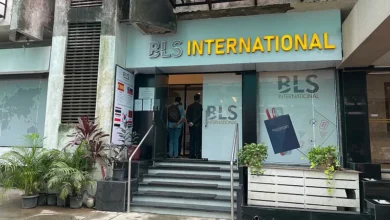
Sachin Mittal & His Web of Loan Applications
Different Apps. Different Screens. Different Loan Offers. But the Same Corporate Spine Keeps Appearing.

There is a particular kind of fintech story that sounds reassuring until someone follows the money.
The vocabulary is polished: digital lending, financial inclusion, technology platform, automated underwriting, lending-as-a-service, multiple lending partners. The consumer sees an app. The lender sees a borrower. The regulator sees a regulated entity. The technology company sees a distribution network.
And somewhere in between sits the uncomfortable question: what exactly happens when a financially desperate person meets an expensive short-term loan delivered through a maze of brands, platforms and partner entities?
The public record surrounding Sachin Mittal, Naman Finlease, Loanwalle and Fintech Cloud deserves precisely that question.
This is not a story that can responsibly be reduced to “one man, one app, one scam.” The evidence does not establish that. What the record does establish is more complicated—and in some ways more revealing: Naman Finlease has been judicially connected with Loanwalle; multiple current lending brands publicly disclose Naman Finlease and Fintech Cloud in their operating structure; Fintech Cloud presents itself as a Lending Service Provider/Lending-as-a-Service business working with regulated lenders; and a Karnataka High Court record from 2023 contains an extraordinary historical lending term of 1% interest per day.
That combination does not prove illegality.
But it creates a sufficiently serious public-interest trail that regulators and investigators should be asking far more questions than the glossy fintech language usually invites.
The number that should stop everyone: 1% a day
Forget the marketing jargon for a moment.
A Karnataka High Court judgment in Naman Finlease Private Limited v. State of Karnataka, dated 19 July 2023, records that Naman Finlease said a borrower had obtained a loan of ₹25,000 through the Loanwalle app, which the company described in the litigation as its creation. The judgment records the sanctioned interest as 1% per day, with repayment due on 3 January 2023.
That is not an anonymous social-media accusation.
It is a figure appearing in a High Court judgment describing the parties’ own litigation record.
And 1% per day is not a trivial number.
At a simple, non-compounding mathematical annualisation:
1% × 365 days = 365% per annum.
If that daily rate were compounded every day, the mathematical effective annual rate would be approximately 3,678%.
That is not an assertion that the contractual arrangement used daily compounding. The court record cited here establishes the 1% per-day rate, not a daily-compounding formula. But even without compounding, the arithmetic tells its own story.
This is where financial journalism must stop being impressed by words such as “instant,” “digital” and “seamless.”
A loan does not become inexpensive because the paperwork happens through an app.
A moneylender does not become sophisticated merely because the collection notice arrives by SMS.
And a 365%-per-year simple mathematical rate does not become gentle because the interface has rounded corners and a blue “Apply Now” button.
The ₹50,000 borrower: the economics become brutal very quickly
Take the structure proposed in the scenario under investigation.
A borrower is approved for ₹50,000.
A 10% upfront fee is deducted.
The borrower therefore receives only:
₹50,000 − ₹5,000 = ₹45,000
Now assume interest of 1% of the ₹50,000 principal per day.
For 30 days:
₹50,000 × 1% × 30 = ₹15,000 interest
Therefore:
Principal due: ₹50,000
Interest: ₹15,000
Total repayment: ₹65,000
The borrower has actually received ₹45,000 in cash and is required to repay ₹65,000.
That is ₹20,000 of financing cost on ₹45,000 of cash received in approximately one month—a 44.44% cost in 30 days.
Annualised on a simple basis using 365/30:
approximately 540.7% per year.
And if the same 30-day cash-flow relationship were mathematically rolled over repeatedly, the effective annualised cost would be roughly:
8,670% per year.
That latter number is an illustrative effective annualisation of the cash flows, not a statutory APR quotation and not a claim about what any particular lender contractually charged.
The point is simpler.
Once a consumer pays a substantial fee on money that is never actually credited to him and then pays daily interest on the full sanctioned principal, the economic difference between “amount sanctioned” and “amount received” becomes critical.
That is exactly why the RBI’s digital-lending framework places emphasis on transparent disclosure of the lender, loan amount, APR, tenure, monthly repayment and other charges in multi-lender arrangements.
But there is an important correction: not every ₹40,000-to-₹65,000 example can be attributed to 1% daily interest
Investigative journalism also has to attack bad arithmetic when it finds it.
The often-repeated example of a ₹40,000 loan turning into ₹65,000 payable in one month, while simultaneously saying that a 10% upfront deduction plus 1% daily interest is the complete explanation, does not mathematically reconcile.
If ₹40,000 is the sanctioned principal and the fee is 10%, the consumer receives:
₹36,000
At 1% simple daily interest for 30 days, interest is:
₹12,000
So the total would be approximately:
₹52,000, before any other charges.
It does not become ₹65,000 merely from those two assumptions.
That discrepancy is not a footnote. It is exactly the sort of discrepancy investigators should pursue.
Was there another fee?
A late charge?
A renewal charge?
Insurance?
Platform fees?
Ancillary service charges?
A different interest calculation?
A settlement amount?
Multiple overlapping loans?
A refinancing transaction in which an old loan was effectively closed through a new loan?
The answer cannot be guessed. The complete Key Fact Statement, sanction letter, disbursement ledger, repayment ledger and bank statement have to answer it.
The web of applications is not merely a metaphor
The most interesting part of this story is not that one app exists.
It is that the same corporate and technology names repeatedly appear behind different consumer-facing loan brands.
The current public-facing terms for Fundsbull state that the brand is legally registered under Naman Finlease Private Limited, in a joint venture with Fintech Cloud Private Limited, while its lenders are described as financial institutions including banks and NBFCs that sanction, process and disburse loans through the platform.
The current terms for CredMyLoan similarly state that the brand is legally registered under Naman Finlease in a joint venture with Fintech Cloud and that partner financial institutions, including banks and NBFCs, sanction and disburse loans through the platform. Its website also prominently identifies Naman Finlease and Fintech Cloud in its operational disclosures.
That is not a trivial coincidence.
It is a repeatable structure.
Different consumer-facing names, recurring institutional relationships
| Consumer-facing brand/platform | Publicly disclosed relationship |
|---|---|
| Loanwalle | Karnataka High Court record identifies the Loanwalle app as the app through which Naman Finlease said the ₹25,000 loan was disbursed and described it as its creation. |
| Fundsbull | Terms state brand under Naman Finlease, in joint venture with Fintech Cloud. |
| CredMyLoan | Terms state Naman Finlease/Fintech Cloud relationship; site identifies Naman and Fintech Cloud. |
| Other disclosed digital-lending brands in the wider network | Public platform disclosures reviewed in the investigation repeatedly identify Naman Finlease as NBFC/powered-by partner and Fintech Cloud as technology/LSP partner. |
This needs to be stated carefully.
A common technology partner does not automatically prove common ownership of every app. A common NBFC partner does not automatically prove that every loan originated under the same management. And a founder’s association with one company does not automatically make him legally responsible for every act of every company connected to it.
But when the same names keep reappearing across the consumer interface, financing entity and technology layer, the obvious investigative question is not “Why so many apps?”
It is:
What exactly is the economic and operational architecture connecting them?
Who owns the customer-acquisition channel?
Who decides which lender is shown first?
Who controls the underwriting rules?
Who receives the platform fee?
Who controls the collections technology?
Who appoints or supervises recovery agents?
Who receives the borrower’s consent data?
Who determines whether a distressed borrower is offered a fresh loan rather than a sustainable repayment solution?
And, critically:
Does the same borrower move from one app to another inside the same ecosystem when the first loan becomes difficult to repay?
That question needs data, not adjectives.
Fintech Cloud: the “cloud” sits on top of very physical money
Fintech Cloud describes itself as a Loan Service Provider/Lending-as-a-Service business and publicly markets technology and infrastructure for digital lending, including origination, underwriting, disbursement, collections and related functions.
That business model is perfectly capable of being legitimate.
In fact, that is precisely why it deserves forensic scrutiny.
A technology layer can make lending faster, cheaper and more scalable. It can also make the customer relationship increasingly fragmented.
The borrower may see Brand A.
The sanction letter may refer to NBFC B.
The technical platform may belong to Company C.
The collection system may be operated by a service provider D.
And the data trail can pass through several contractual layers.
From the customer’s point of view, however, there is only one painful reality:
the EMI has to be paid.
The sophistication of the corporate structure does not reduce the burden on the borrower.
It can, however, make accountability harder to trace unless the underlying contracts and ledgers are examined.
The Karnataka High Court case is where the story becomes much more serious
In the Naman Finlease / Loanwalle litigation, the borrower complained to police alleging harassment. The complaint was registered as Crime No. 289/2023, with allegations under IPC provisions including cheating, intentional insult and criminal intimidation, as well as offences under the Information Technology Act. The police subsequently froze the company’s bank account.
The High Court ultimately set aside the account freeze because the police had not complied with the statutory procedure governing seizure/freezing of property under Section 102(3) of the CrPC.
That procedural victory should not be distorted into something it was not.
The judgment did not amount to a judicial declaration that every underlying allegation by the borrower was false.
Nor does a police complaint by itself prove the allegations.
That distinction is essential.
Yet the existence of the complaint, the loan terms recorded in the judgment, the alleged harassment and the resulting criminal investigation create a public record that deserves scrutiny rather than dismissal.
The court’s disposition was procedural. The public-interest question remains substantive:
What was the actual customer experience behind the ₹25,000 Loanwalle transaction, and was the recovery process compliant with the rules governing regulated lenders and their agents?
RBI has already identified exactly this danger
The RBI’s 2025 Digital Lending Directions are remarkably relevant to this model.
Where a Lending Service Provider works with multiple regulated entities, the framework requires the digital interface to present loan offers in a manner allowing fair comparison, including the regulated entity’s name, loan amount, tenor, APR, monthly repayment obligation and applicable penal charges, with a link to the Key Fact Statement.
The RBI also expressly prohibits the use of dark patterns or deceptive patterns to push a borrower toward a particular loan product.
Why does that matter?
Because the entire problem of a multi-app, multi-lender ecosystem is transparency.
If ten products are presented on one screen, the borrower should be able to understand that he is choosing between ten economically different liabilities—not choosing between ten colourful logos.
And the lender cannot hide behind the technology company.
The RBI’s position is that the regulated entity remains responsible for outsourced activities. Its recovery-agent directions specifically prohibit intimidation or harassment, public humiliation, intrusion into the privacy of family members, referees and friends, threatening or anonymous calls, persistent calling and recovery calls before 8 a.m. or after 7 p.m.
That is important because the economics of a very expensive short-duration loan can turn collection pressure into the most consequential part of the business.
And then come the consumer complaints
There is another part of the evidentiary record that should neither be worshipped nor ignored.
Public complaint portals contain allegations relating to Naman Finlease/Loanwalle, including claims involving repeated collection demands, contact with employers or former employers, high repayment amounts and alleged debt-trap experiences.
These are consumer-generated complaints and have not been independently authenticated as court findings.
But several complaints pointing to similar themes are not something a serious compliance department should simply laugh away.
They are leads.
A responsible investigation should ask:
Were the complained-of calls actually made?
From whose numbers?
Which recovery agency was authorised?
Was the borrower contacted through third-party references?
Were employers or colleagues contacted?
Was the timing of the calls compliant with RBI rules?
Were call recordings preserved?
Were WhatsApp messages deleted?
What did the recovery-agent agreement permit?
What did the lender’s audit trail show?
This is how allegations become evidence—or collapse under scrutiny.
Everything else is noise.
The most revealing comparison may be between then and now
There is a particularly striking point in the public record.
The 2023 Karnataka High Court judgment records a 1% per-day interest rate in the Loanwalle transaction.
The current Loanwalle website, by contrast, advertises a far more conventional structure for its presently marketed personal-loan product: 35% fixed APR, with a stated processing fee and longer-tenure examples.
That difference matters.
But it should not be used carelessly.
It does not prove that the current Loanwalle operation is charging 1% a day.
Nor does it prove that the current product is unlawful.
What it does demonstrate is that historical pricing and current marketing cannot simply be treated as interchangeable.
So the investigative question becomes:
When did the pricing structure change, for which products, through which legal entities, and what happened to the old portfolio?
Were historical borrowers migrated?
Were old loans refinanced?
Were overdue loans rolled into new products?
Were fees capitalised?
Did effective yields decline as regulation tightened?
What did the partner NBFCs report?
These are questions capable of producing documentary answers.
The Sachin Mittal trail does not end with Loanwalle
Separately from the Loanwalle litigation, Sachin Mittal himself appears in a significant criminal proceeding recorded by the Delhi High Court.
In Sachin Mittal v. State (NCT of Delhi), decided on 28 March 2024, the court dealt with FIR No. 84/2023 registered by the Special Cell under IPC sections including 420, 467, 468, 471, 384, 506 and 120-B. The prosecution case concerned alleged fraudulent home loans involving approximately ₹6.80 crore in two transactions.
The prosecution alleged that a ₹3.80 crore loan was routed through accounts and that money subsequently reached the Naman Finlease account, where the prosecution attributed a role to Mittal as director and major shareholder. The prosecution further alleged that multiple other fraudulent home-loan cases had emerged and referred to 16 alleged victims and seven FIRs.
That is a serious allegation.
It is also an allegation.
Mittal’s defence contested the prosecution narrative and disputed the claimed connection to the alleged fraudulent transactions, including arguing that the supposed victims and properties did not establish the prosecution’s case against him.
The Delhi High Court ultimately granted him regular bail after noting that the investigation had been completed and a chargesheet filed; bail itself was not a determination of guilt or innocence.
That distinction cannot be buried just because it weakens a dramatic headline.
It strengthens the journalism.
The really awkward fact: the criminal case was still not finished
Publicly available e-Courts information showed the State v. Sachin Mittal matter as pending as of 10 June 2026.
The case record indicated that supplementary investigation was still underway, the investigating officer sought additional time, and the court directed the investigation to be expedited and the DCP concerned to monitor it. The next hearing was listed for 20 November 2026.
This is where the system’s biggest weakness becomes visible.
A criminal case involving serious allegations should not languish indefinitely in a zone where the public hears fragments of the allegation but has no final adjudication.
Either the evidence supports the prosecution or it does not.
If the evidence is sufficient, the trial should move forward expeditiously.
If the evidence is insufficient, the legal process should say so.
What the public does not need is an endless middle ground in which allegations become permanent internet folklore while the judicial process moves at a different speed.
The ₹1,050-crore sequel makes the questions even more uncomfortable
Just when the older story is still working its way through the legal system, the corporate story has acquired another chapter.
On 11 September 2026, Indiabulls Limited disclosed a proposed transaction under which it would acquire 70% of Fintech Cloud for ₹1,050 crore, implying a total equity valuation of approximately ₹1,500 crore. The transaction was proposed through a scheme-based structure and remained subject to regulatory and other conditions.
The filing also disclosed that Fintech Cloud’s reported revenue for FY2025-26 was approximately ₹133.77 crore, with profit before tax of approximately ₹30.31 crore. The same filing shows no reported revenue for FY2023-24 and FY2024-25, before the reported FY2025-26 revenue.
Do the arithmetic.
₹1,500 crore implied equity value / ₹133.77 crore revenue
≈ 11.2× revenue
₹1,500 crore implied equity value / ₹30.31 crore PBT
≈ 49.5× PBT
Those are not accusations.
They are simply the numbers disclosed by the company.
And they raise obvious diligence questions.
What exactly caused revenue to move from disclosed nil in the earlier two financial years to ₹133.77 crore in FY2025-26?
How much of that revenue is recurring?
How much comes from a small number of large customers?
What are the margins after technology costs, employee costs, customer acquisition, collection and compliance costs?
What is the contractual life of the revenue?
How much depends upon a particular NBFC relationship?
How much is fee income?
How much depends upon the performance of the underlying lending ecosystem?
And most importantly:
What does the buyer believe it is actually purchasing?
Technology?
Distribution?
Customer acquisition?
Risk infrastructure?
A lending network?
A recurring LSP revenue stream?
Or the future value of the entire digital-lending architecture?
The acquisition filing says what the transaction is worth to the parties.
It does not answer why.
That is what due diligence is for.
₹130 crore of LSP revenue does NOT prove a ₹500 crore or ₹1,000 crore loan book
This is another place where an investigative article must resist the temptation to make a spectacular but unsupported inference.
Fintech Cloud is described as an LSP/technology business, not simply as a traditional NBFC earning interest on its own balance sheet. Its reported ₹133.77 crore revenue therefore cannot by itself be reverse-engineered into a specific loan-book size.
A ₹133 crore LSP revenue number might arise from technology fees, servicing fees, origination or other contractual payments. The precise mix has to be established from contracts and accounts.
So the assertion:
“₹130 crore revenue means partner NBFCs must have loan books worth hundreds of crores earning 1% daily”
is not a proven financial conclusion.
But it points toward exactly the right investigation.
The real question is bigger:
How much money passed through this ecosystem?
Investigators should obtain, for every material partner and product:
- total sanction volume;
- total disbursement volume;
- average ticket size;
- average tenure;
- effective APR;
- fees deducted at source;
- renewal and rollover frequency;
- number of repeat borrowers;
- gross collection;
- write-offs;
- delinquency;
- recovery-agent expenditure;
- LSP fees;
- incentive arrangements;
- borrower-level cash-flow records; and
- the identity of the actual regulated lender for every loan.
That data would tell the public what a ₹133.77 crore technology-and-services business is actually sitting on top of.
That is far more meaningful than guessing the size of the loan book from the revenue line.
The real issue is not whether technology is involved. It is where accountability sits.
A digital lending chain can contain:
Borrower → App → LSP → Technology vendor → NBFC/Bank → Collection agency
The borrower, however, experiences it as one transaction.
This creates what can be called the accountability-fragmentation problem.
The brand can say:
“We are only the platform.”
The technology provider can say:
“The lender made the credit decision.”
The NBFC can say:
“The technology was outsourced.”
The recovery agent can say:
“We acted on instructions.”
And the consumer is left looking at four logos while trying to understand why ₹45,000 received has become ₹65,000 payable.
That is precisely why RBI regulations emphasise responsibility of regulated entities for their outsourced activities and detailed disclosure in digital lending.
The regulatory question is not whether outsourcing is permitted.
It is whether outsourcing has become a convenient way to outsource accountability.
What investigators should demand from the Mittal ecosystem
A serious investigation should not begin with a television panel.
It should begin with documents.
The investigating agencies, regulators and courts should seek, wherever legally appropriate:
1. Every loan agreement and KFS
Not screenshots.
Not marketing pages.
The actual contractual documentation delivered to borrowers, including APR, fees, penal charges and repayment schedules.
2. Full borrower-level ledgers
For sampled loans:
sanctioned amount → fees → amount actually disbursed → interest charged → penalties → repayments → renewals → closure
This would immediately reveal whether the consumer’s cost matched the headline rate.
3. The complete app-and-brand map
Which brand operated under which legal entity on which date?
Which NBFC was partnered with it?
Which technology provider supplied the infrastructure?
Who owned the domain?
Who owned the app account?
Who controlled the customer database?
Who controlled the collections platform?
The September 2026 research record already shows why this mapping matters: several brands publicly identify combinations of Naman Finlease and Fintech Cloud.
4. Recovery-agent evidence
Call recordings.
WhatsApp logs.
SMS records.
Dialler records.
Agent lists.
Vendor contracts.
Escalation instructions.
Complaint records.
And logs showing whether contacts were made with relatives, referees, employers or colleagues.
The RBI’s recovery-agent directions make clear that intimidation, humiliation and intrusion into the privacy of borrowers’ families and associates are prohibited.
5. Multi-app repeat borrowing
This may be the most important dataset of all.
If a borrower took Loan A from one branded interface, then Loan B from another, and Loan C from a third, investigators should establish:
Were these genuinely separate commercial relationships, or were they different front doors to the same customer-acquisition and lending ecosystem?
A database-level analysis—not a press statement—can answer this.
6. Partner NBFC economics
For every lender:
How much was disbursed?
How much was collected?
What was the effective yield?
What fees were retained by the platform?
What fees were paid by the lender?
What percentage of borrowers renewed?
How many loans were funded by fresh borrowing?
That would convert the “loan-app story” into a measurable financial model.
7. Corporate diligence behind the ₹1,500-crore valuation
The proposed Indiabulls transaction makes this particularly important.
The valuation report, investment-banking materials, customer concentration, revenue contracts, litigation disclosures, compliance reports, internal audit reports and quality-of-revenue analysis should be independently examined before anybody treats the implied ₹1,500 crore valuation as a settled economic reality. The transaction itself remained subject to stated conditions and approvals.
One common goal? The evidence does not yet justify that blanket conclusion—but the consumer economics deserve scrutiny
The most provocative way to describe this story is:
Multiple products. Multiple brands. Multiple NBFC relationships. One common goal: squeeze the desperate borrower.
That is a powerful line.
But as journalism, it needs to be treated as a question to be tested, not a fact already proven.
The public record presently establishes something more defensible:
There is a networked digital-lending architecture in which Naman Finlease and Fintech Cloud repeatedly appear in public-facing lending disclosures, while historical judicial records show unusually high-cost lending in at least one Loanwalle transaction.
Whether those structures were used merely to improve financial access—or whether certain products, pricing practices or collection methods crossed into abusive or unlawful territory—is a matter for documentary investigation and adjudication.
That distinction is not weakness.
It is the difference between investigative journalism and propaganda.
The village moneylender metaphor fits—but only as a warning
There is an old cinematic image of the moneylender sitting with a ledger while a financially distressed borrower keeps returning because the old debt can no longer be paid.
The digital version is far more efficient.
There is no dusty ledger.
There is an app.
There is no visible counter.
There is an OTP.
There is no need to return to the moneylender’s shop.
The refinancing proposition can arrive directly on the phone.
The branding looks modern.
The infrastructure is scalable.
The collection operation can be outsourced.
The lender can be one entity.
The platform another.
The app another.
And the borrower can still end up trapped in the same basic economic problem:
borrow today to survive; borrow again tomorrow to close yesterday’s liability.
That analogy must not be mistaken for proof that the modern platforms are legally equivalent to traditional moneylenders.
But it does expose a serious consumer-protection principle:
Technology can modernise the mechanism of lending without modernising the underlying economics of debt.
The public deserves answers, not another rebranding exercise
There is nothing inherently wrong with fintech.
There is nothing inherently wrong with Lending Service Providers.
There is nothing inherently wrong with multiple NBFC partnerships.
And there is nothing inherently wrong with a founder building a large financial-technology business.
But once a historical judicial record contains 1% per-day lending, once the same corporate names repeatedly appear across multiple digital-lending brands, once recovery practices become the subject of police complaints, once a founder faces a separate serious criminal prosecution, and once a ₹1,050-crore transaction values the technology company at an implied ₹1,500 crore, the appropriate response is not applause.
It is due diligence.
It is data.
It is audit trails.
It is timely investigation.
And ultimately, it is adjudication.
The regulatory architecture is already moving in that direction. RBI’s 2025 framework specifically addresses multi-lender LSP arrangements, borrower comparison, APR transparency and deceptive interface practices.
What remains is execution.
The question hanging over Sachin Mittal’s web of loan applications
Perhaps the most important question is not whether Loanwalle was one app.
It was.
Nor whether Naman Finlease is an NBFC.
It is, according to the company’s own disclosures and RBI listings.
Nor whether Fintech Cloud operates in the digital-lending technology/LSP space.
Its own corporate material says that it does.
The real question is:
How many consumer-facing doors lead into the same underlying lending architecture—and what was the true cost of walking through them?
That is a question that can be answered.
The answer lies in the loan ledgers.
The bank statements.
The KFS documents.
The partner agreements.
The app databases.
The recovery logs.
The fee schedules.
The valuation papers.
The complaints.
The FIRs.
And, ultimately, the court record.
Until those pieces are brought together, the public is left with a strange contradiction: a highly sophisticated digital lending ecosystem operating with increasingly sophisticated regulatory language, while some of the historical numbers attached to its lending story look startlingly old-fashioned in their harshness.
A 1% daily rate does not need sensationalism.
The arithmetic is already sensational enough.
What should happen now?
The answer should not be another press release.
Investigations involving serious allegations should be completed on a time-bound basis, subject to due process. Supplementary investigation should not drift indefinitely. Evidence should be preserved. Borrower complaints should be independently tested. Recovery-agent practices should be audited. Partner NBFCs should be required to demonstrate exactly which products were offered, at what APR, with what fees and through which LSP or brand.
Where evidence supports prosecution, trials should proceed expeditiously.
Where evidence does not support an allegation, the law should say so equally clearly.
And where regulators identify genuine compliance failures, action should be swift rather than ceremonial.
The public interest is not served by either a witch-hunt or a whitewash.
It is served by facts, forensic accounting, transparent regulatory scrutiny and a final judicial determination.
Because fintech may be built in the cloud.
Debt is not.
Debt lands in a human being’s bank account, salary cycle, family budget and sometimes his ability to sleep at night.
That is why the web surrounding Sachin Mittal, Loanwalle, Naman Finlease and Fintech Cloud deserves to be examined not as a clever piece of financial technology—but as a large-scale consumer-credit system whose true economics and accountability should withstand the harshest possible scrutiny.
Disclaimer
This article is an investigative opinion piece based on publicly available court records, regulatory materials, corporate disclosures, company websites and other published sources reviewed through 24 September 2026. Allegations reported herein remain allegations unless and until established by a competent court or other lawful adjudicatory process. The existence of an FIR, complaint, arrest, investigation, regulatory proceeding or judicial observation must not be construed as proof of guilt. Bail is not acquittal and an investigation is not a conviction.
In the Delhi FIR No. 84/2023 matter discussed above, the records reviewed for this article did not identify any conviction of Sachin Mittal; the e-Courts status reviewed as of 10 June 2026 showed the criminal case as pending, with supplementary investigation still underway.
This article does not assert that every company, app, NBFC, employee, partner or individual mentioned is guilty of any offence merely because of a corporate, technological or historical association. Current Loanwalle pricing should not be conflated with the historical 1%-per-day rate recorded in the 2023 Karnataka High Court matter. Consumer-complaint websites are not substitutes for adjudicated evidence.
Sachin Mittal, Naman Finlease, Fintech Cloud and other relevant entities should be afforded a meaningful right of reply to any specific factual allegation, and any substantive response or documentary rebuttal should be considered in subsequent reporting.
Public interest demands tighter scrutiny, faster investigation and expeditious trials where legally warranted—not selective enforcement, not institutional delay, and not the permanent circulation of untested allegations.