Can Reliance Jio Simultaneously Pitch Itself To Global Investors As A Technology Giant While Its Billionaire Owner Is Being Publicly Accused By Elon Musk Of Benefiting From A System That Delays A Potential Competitor’s Entry Into India?
Reliance Jio wants a ₹10.3 lakh crore valuation, global investors and recognition as a technology giant. Meanwhile, Elon Musk is publicly questioning whether Mukesh Ambani's influence is obstructing Starlink's Indian entry. The government denies discrimination. So what exactly is happening behind India's satellite broadband battle?

Mukesh Ambani’s Reliance Jio is preparing to make one of the biggest entrances in Indian stock market history. With a proposed initial public offering of approximately ₹30,000 crore and a valuation potentially reaching ₹10.3 lakh crore, Jio Platforms is positioning itself as something far more ambitious than India’s largest mobile telecom operator.
It wants investors to recognise it as a technology powerhouse, one whose future extends into artificial intelligence, cloud infrastructure, digital services and next-generation connectivity. And the Ambani family is taking that message directly to the world’s biggest investors.
According to the latest Akash Ambani and Isha Ambani have personally participated in international investor roadshows across the Americas, Europe and Southeast Asia. The company is now conducting domestic roadshows, with major mutual funds and institutional investors reportedly showing considerable interest.
The proposed IPO is particularly significant because Jio’s existing international investors are reportedly not looking for an exit. Meta, Google, Saudi Arabia’s Public Investment Fund, KKR, Silver Lake, Mubadala and several other global investment institutions already have exposure to Jio Platforms. Meta’s affiliate Jaadhu Holdings holds approximately 9.98%, while Google International owns around 7.73%.
Rather than selling their holdings, some existing investors reportedly want to increase their exposure.
The proposed offering is expected to consist entirely of newly issued shares, without an offer-for-sale component. That means the proceeds would flow into Jio Platforms instead of providing an exit for existing shareholders. Reliance Industries is expected to retain approximately 66.4% ownership after the listing.
According to pricing details previously reported, the proposed price band is ₹1,065 to ₹1,119 per share. At the upper end, the offering could raise approximately ₹30,200 crore. The issue is reportedly scheduled to open for public subscription on October 21 and close on October 23, with trading expected to begin on October 28. These dates and pricing details remain subject to change.
If completed at the reported size, Jio’s offering would surpass Hyundai Motor India’s ₹27,800 crore IPO in 2024.
But the size of the offering is only one part of the story.
The more consequential question is what investors are being asked to value. Jio’s enormous subscriber base, established telecommunications infrastructure and expanding digital ecosystem give it a formidable commercial foundation.
Yet the argument for treating Jio as a technology company rather than a conventional telecom operator depends on the future profitability of businesses beyond mobile connectivity.
That distinction matters because technology valuations often incorporate expectations of expansion, innovation and new revenue opportunities that have not yet fully materialised.
Jio’s pitch therefore rests not simply on what it has already built, but on what it believes it can become.
And one of the markets shaping that future is satellite broadband, where Reliance’s ambitions are intersecting with those of another billionaire who has become increasingly vocal about the obstacles facing his company in India.
That billionaire is Elon Musk.
The Musk-Ambani Fight Has Moved Beyond Social Media
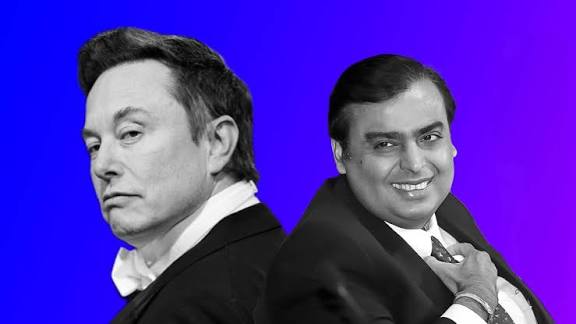
While Akash and Isha Ambani have been courting international investors for Jio’s proposed public listing, Elon Musk has been publicly questioning whether India’s regulatory system is allowing his satellite internet company, Starlink, to compete fairly.
And Musk has stopped being diplomatic about it.
On October 7, 2026, Musk accused unnamed powerful business interests of obstructing Starlink’s entry into India to protect their existing market positions.
He argued that preventing satellite broadband services from reaching underserved populations would deprive millions of Indians of opportunities for education, business and connectivity.
The accusation are serious. It suggested that commercial interests might be influencing the regulatory process governing one of the world’s largest potential satellite internet markets.
But Musk did not provide documentary evidence establishing that any particular company or individual had interfered with Starlink’s approvals.
The Indian government rejected the allegations. The Ministry of Communications maintained that India’s regulatory framework for satellite communication services was fair and non-discriminatory.
It explained that Starlink, Jio Satellite Communications and Eutelsat OneWeb were at broadly the same stage of regulatory compliance, with security assessments and spectrum-related requirements still to be completed before commercial services could begin.
That explanation, however, did not end the confrontation.
On October 8, Musk directly brought Mukesh Ambani into the dispute.
He questioned why Starlink was still unable to begin operations in India despite what he described as five years of efforts to comply with the country’s regulatory requirements. Musk claimed that Starlink was already licensed in more than 165 countries and asked whether Ambani was effectively the person controlling decisions in India.
The implication was unmistakable. Musk was publicly questioning whether one of India’s most influential industrialists enjoyed a degree of power capable of affecting a foreign competitor’s market entry.
The confrontation quickly acquired a political dimension. Congress leader Rahul Gandhi responded to Musk’s remarks by suggesting there were other influential figures he had yet to discover. Musk acknowledged the response, describing the situation as troubling.
By October 9, the exchange had become even more pointed.
Musk sarcastically addressed Mukesh Ambani as ‘Prime Minister Ambani’ and asked whether Starlink would be permitted to compete in India. He accused Ambani of wanting to preserve a monopolistic position, while arguing that Starlink could help connect remote communities, support education and provide communications during natural disasters.
The Indian government continued to reject the suggestion of preferential treatment. Telecom Minister Jyotiraditya Scindia said India did not permit monopolies in any sector.
There is, however, an important distinction between Musk’s accusation and the regulatory position established by the available evidence.
Starlink has already secured a licence to operate in India. What remains unresolved is its ability to commence commercial operations, which depends on completing security compliance requirements and receiving the necessary spectrum assignment. The government’s position is that these conditions apply to all three licensed satellite operators, not exclusively to Starlink.
That distinction does not make the delay irrelevant. Nor does it establish that the delay is the result of political or corporate interference.
It raises a more specific question: if the rules are being applied equally, what precisely remains unresolved, and why has the process taken so long?
There is another complication that makes this dispute more interesting than a straightforward confrontation between an American technology company and an Indian telecom incumbent.
Reliance Jio and Bharti Airtel both announced agreements with SpaceX in March 2025 to help distribute Starlink services in India, subject to regulatory approvals. In other words, Jio is not merely a potential competitor to Starlink. It has also positioned itself as a potential commercial partner.
That makes Musk’s public attack on Ambani particularly striking.
A company that has entered into a distribution arrangement with Starlink is now being publicly associated by Starlink’s founder with allegations of obstructed competition. The existence of that agreement does not eliminate possible conflicts of commercial interest, but it complicates the suggestion that Reliance is simply trying to keep Starlink out of India.
For Jio, the timing is particularly sensitive. Its leadership is presenting the business to global investors as a technology platform with enormous growth potential, while Musk is drawing international attention to the regulatory conditions under which its future competitors may operate.
None of this establishes that Reliance has improperly influenced government decisions. But it does put an important question on the table.
When one of India’s most powerful corporate groups seeks a trillion-rupee-scale public valuation, how closely should investors examine the competitive and regulatory environment supporting its future growth?
Why Starlink’s Entry Matters To Reliance Jio
To understand why Elon Musk’s confrontation with Mukesh Ambani matters, it is necessary to look beyond their public exchanges and examine the businesses they` `are building. Starlink is not simply another internet service waiting to enter India. Its arrival could introduce a different way of delivering broadband in a country where connectivity has largely been built around terrestrial telecom networks.
Reliance Jio’s success has been built on precisely that model. It invested heavily in mobile infrastructure, disrupted the market with inexpensive data and accumulated a subscriber base exceeding 500 million. Its broadband ambitions extend beyond mobile services into fixed wireless access, enterprise connectivity and digital platforms. Starlink, meanwhile, uses satellites in low Earth orbit to deliver internet connectivity through specialised user terminals, making it particularly relevant in locations where laying fibre or building conventional network infrastructure is difficult or expensive.
The two technologies are not interchangeable. Satellite broadband is unlikely to replace terrestrial networks across densely populated Indian cities, where conventional mobile and fibre infrastructure can serve large numbers of customers efficiently. But it could compete for business in remote locations, isolated communities, industrial sites, maritime operations and other areas where conventional connectivity is limited.
That distinction matters in a country with India’s geographical diversity. A satellite operator does not need to reproduce Jio’s entire network to find a commercially meaningful market. It needs to identify customers for whom existing connectivity is inadequate, expensive or unavailable.
Starlink’s entry could also expand the overall broadband market by bringing previously underserved customers online. But as satellite technology develops and its costs change, the potential overlap with established telecom operators could increase.
This is where the commercial interests begin to intersect.
Reliance has not been sitting out the satellite communications market. Jio has partnered with SES, the Luxembourg-based satellite operator, to develop connectivity services using medium Earth orbit and geostationary satellite technology. Bharti Airtel, meanwhile, has backed OneWeb, which is now part of Eutelsat Group. Both Indian telecom groups have recognised that satellite connectivity could become an important part of the country’s communications infrastructure.
Musk’s Starlink is therefore entering a market in which major domestic incumbents already have their own satellite ambitions.
The competition is not necessarily a simple contest for the same customers. Satellite services can complement terrestrial networks, provide backhaul connectivity and support businesses that need coverage in remote locations. Partnerships between satellite operators and telecom companies can make commercial sense even when their interests overlap elsewhere.
In March 2025, Reliance Jio and Bharti Airtel announced agreements with SpaceX to facilitate the distribution of Starlink equipment and services in India, subject to regulatory approvals. These arrangements demonstrated that cooperation and competition can coexist in this market.
But a distribution agreement is not the same thing as an unrestricted right to compete. Nor does it eliminate the possibility that established operators could have commercial reasons to prefer a particular regulatory framework.
For Jio, satellite connectivity represents both an opportunity and a potential source of competition. For Starlink, India offers access to an enormous population and a market in which satellite broadband could find customers well beyond major urban centres.
That makes the regulatory question more consequential than a disagreement between two billionaires.
If Starlink enters the market and develops a commercially viable service, it could put pressure on existing providers in selected segments, encourage new investment and expand connectivity options. If its entry is delayed, established operators may retain their existing advantages for longer, although the extent of any such benefit would need to be demonstrated rather than assumed.
The important question is not whether Jio and Starlink are competitors in every part of the broadband market. They are not. It is whether the rules governing satellite communications allow both companies to pursue their commercial ambitions on comparable terms.
To understand why that question became contentious, we need to go back to the regulatory decision that first brought Ambani and Musk into a direct confrontation: who should receive satellite spectrum, and how should it be allocated?
The Spectrum Battle And The Decision That Went Against Jio’s Preference
The dispute between Reliance Jio and Starlink did not begin with Musk’s recent accusations. Its roots lie in a much more technical argument about spectrum allocation, one with potentially significant commercial consequences for India’s telecom industry.
Spectrum is a limited public resource used to transmit communications signals. Traditional mobile operators generally acquire spectrum through auctions, committing substantial sums for the frequencies they need to provide services. Satellite broadband operates differently, with international coordination and technical considerations influencing how frequencies are assigned.
The question confronting India was whether satellite communications spectrum should also be auctioned or allocated through an administrative process.
For Elon Musk’s Starlink, administrative allocation was the preferred approach. Satellite operators argued that their services were different from conventional terrestrial mobile networks and that administrative assignment was consistent with international practice. An auction, they argued, could introduce unnecessary costs and barriers into a sector that requires substantial investment in satellite infrastructure.
Reliance Jio Took The Opposing Position.
In 2024, Jio argued before the Telecom Regulatory Authority of India (TRAI) that satellite broadband providers offering commercially comparable services should not receive spectrum through a process that differed from the one imposed on terrestrial telecom operators. The company maintained that satellite services could compete with conventional networks, including in fixed wireless access, and argued that auction-based allocation was necessary to maintain a level playing field.
Reliance’s position was formally documented in submissions to the regulator. In October 2024, the company challenged TRAI’s approach to satellite spectrum assignment, arguing that the regulator had prematurely concluded that administrative allocation was appropriate. Jio also questioned whether the legal framework adequately addressed the use of satellite spectrum for commercial broadband services.
This was not merely an abstract dispute about regulatory procedure. The method of allocation could affect the cost of entering the market, the financial burden on operators and the competitive relationship between satellite providers and companies that had invested heavily in terrestrial telecom infrastructure.
An auction could require satellite operators to compete financially for spectrum, potentially raising the cost of entry. Administrative allocation, by contrast, could allow the government to assign frequencies under a prescribed framework, with charges and operating conditions determined through regulation.
The two approaches therefore carried different commercial implications.
In October 2024, the government announced that satellite spectrum would be allocated administratively rather than through auctions. The decision aligned with the approach Starlink had advocated and went against Jio’s stated preference.
That is an important fact in assessing Musk’s broader allegations. On this specific policy question, the government did not adopt the approach sought by Reliance.
The disagreement continued through regulatory consultations and further submissions. The debate also spotlighted a broader problem: satellite broadband does not fit neatly into the regulatory categories developed for conventional telecom networks. Satellite operators can provide coverage across large geographical areas without replicating the tower-by-tower infrastructure of a terrestrial network, but they remain subject to spectrum coordination, licensing and security requirements.
The policy decision did not, by itself, allow Starlink to start selling services to Indian customers.
By October 2026, the government was still requiring satellite operators to complete the necessary compliance procedures before commercial operations could begin. The Department of Telecommunications had to address spectrum assignment and applicable charges, while security-related requirements remained part of the approval process.
In October 2026, the Digital Communications Commission approved a proposed spectrum charge of 5% of adjusted gross revenue for satellite communications operators, according to contemporaneous reporting. Commercial launches nevertheless remained dependent on the completion of the required regulatory steps.
That brings us to the distinction at the heart of the current controversy.
The historical record shows that Reliance opposed administrative allocation and that the government ultimately chose it. It also shows that Starlink’s entry remained subject to regulatory requirements after that policy decision.
Neither fact alone establishes whether the remaining process has been administered consistently or whether any company has improperly influenced it.
Those questions require a closer examination of the approval timeline, the specific conditions imposed on each operator and the reasons the government has given for outstanding requirements.
For investors evaluating Jio, this history is relevant because regulatory policy can shape the competitive environment in which the company operates. But the evidence must be examined carefully: a policy that benefits one business does not automatically prove that it was designed to benefit that business.
The next question, therefore, is not simply who won the spectrum argument. It is why the companies that have obtained licences are still waiting to launch, what remains outstanding, and whether the same requirements are being applied to all of them.
Five Years, Multiple Approvals And A Launch Still Waiting
There is one important detail in Elon Musk’s complaint that deserves closer examination. Starlink has not been waiting for a single licence that the Indian government has simply refused to grant. Its entry into India has involved multiple regulatory steps, and the distinction between receiving a licence and being permitted to begin commercial operations is central to understanding the dispute.
Starlink’s history in India goes back several years. In 2021, the company began accepting pre-orders for its satellite internet service before obtaining the necessary authorisation to operate. The Department of Telecommunications subsequently advised the public not to subscribe to Starlink services being advertised in India, as the company did not yet have the required permissions.
That episode is relevant because it establishes that the regulatory relationship did not begin with the current dispute. Starlink had attempted to build a presence in the Indian market before completing the necessary approvals, and the government had intervened to prevent the service from being sold prematurely.
The process subsequently moved forward. Starlink secured a key telecommunications licence in 2025, followed by progress on regulatory authorisation for its satellite operations. But obtaining permission to operate as a licensed service provider did not automatically resolve every condition required for a commercial launch.
By October 2026, Starlink, Jio Satellite Communications and Eutelsat OneWeb had secured the relevant Global Mobile Personal Communication by Satellite licence and obtained clearances from the space regulator. Yet none could begin commercial services until the government finalised the spectrum framework, formally assigned frequencies and completed the required security vetting.
This is the distinction that has become lost in the public confrontation. Musk argues that Starlink has spent years complying with Indian requirements and questions why it still cannot begin operations. The government, meanwhile, maintains that the process is not complete and that the outstanding requirements are applicable to satellite operators generally.
There has been progress on at least one important issue. The Digital Communications Commission approved a proposed spectrum charge of 5% of adjusted gross revenue for satellite operators in September 2026, moving the sector closer to a final operating framework. But a decision on the charging mechanism is not the same as the formal assignment of spectrum to an individual operator, nor does it substitute for outstanding security requirements.
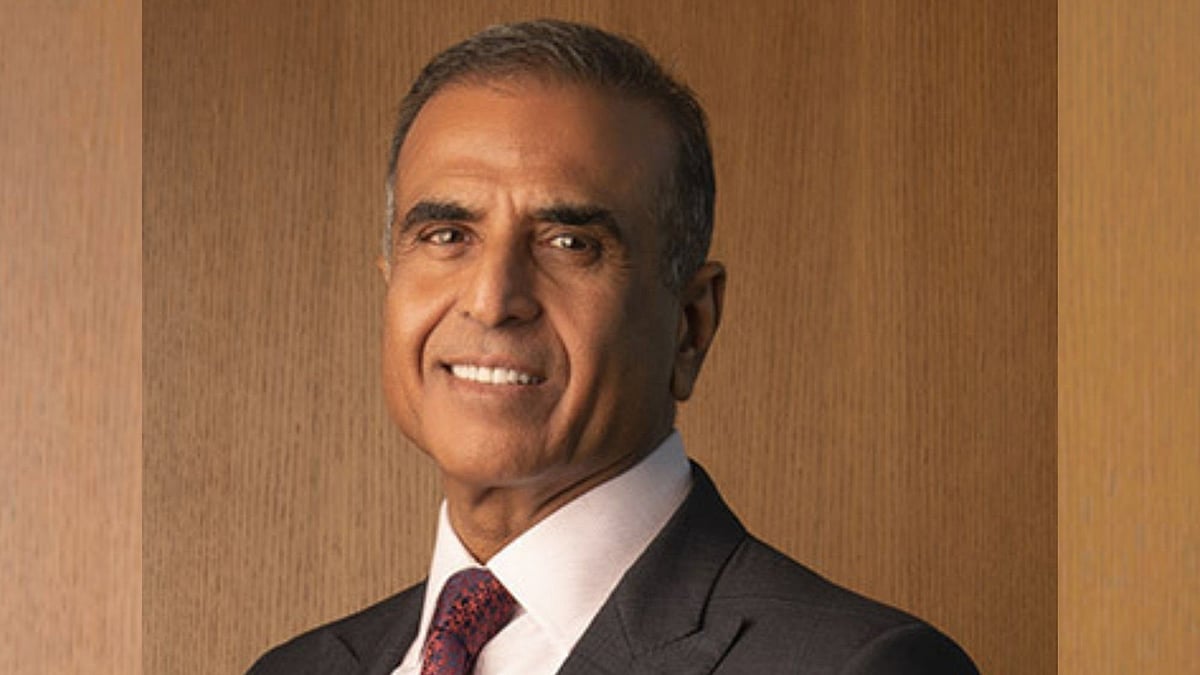
The comments of Bharti Enterprises chairman Sunil Bharti Mittal are particularly relevant here. In remarks, Mittal said satellite communication services were awaiting the remaining government approvals. He also said that OneWeb, Starlink and Jio Satellite Communications had obtained the relevant licence and space-regulator clearance, while formal spectrum assignment and security vetting remained necessary.
Mittal’s comments matter because Bharti is not a disinterested observer. Its group has a major interest in OneWeb, a potential competitor to Starlink and a participant in the same regulatory process. Yet Mittal also acknowledged that his own company’s satellite services were awaiting approvals.
That complicates the argument that Starlink alone is being kept out to protect Reliance Jio. If multiple operators are waiting for the same broad regulatory steps, the government’s explanation cannot be dismissed without examining the details of each case.
But neither can the question of unequal treatment be settled simply by pointing out that the same categories of approval apply to everyone.
The crucial issue is whether those requirements are being completed at comparable speeds and under comparable conditions. Are the outstanding security assessments equally advanced? Have the operators submitted the same categories of documentation? Have any additional conditions been imposed on one provider but not another? Has the government explained the reasons for the delay and provided a clear timeline for completion?
These are questions that can be answered only through the regulatory record, not through competing claims on social media.
There is also a difference between a delay that results from legitimate security requirements and one that creates an unintended commercial advantage for established players. A security review may be entirely justified, but a prolonged and unexplained approval process can still affect competition by preventing a new service from reaching customers.
That is why transparency matters. The government does not need to waive legitimate security requirements to demonstrate that the process is fair. It needs to explain what remains outstanding, apply the relevant standards consistently and provide as much clarity as national-security considerations permit.
The regulatory record therefore presents a more nuanced picture than Musk’s public accusations suggest. Starlink has made progress towards entering India, but its commercial launch remains subject to outstanding requirements. Other satellite operators are also awaiting the completion of the regulatory process, while the government maintains that it is applying a common framework.
The unanswered question is whether the remaining process is proceeding fairly, consistently and within a reasonable timeframe.
And for investors preparing to value Jio as a technology company, that question matters because regulation can shape the competitive conditions under which its future businesses develop.
What Exactly Is Jio Asking Global Investors To Believe?
For all the attention surrounding Musk’s accusations, the immediate financial story remains Jio Platforms’ proposed public listing. The company is preparing to raise approximately ₹30,200 crore, potentially making it India’s largest IPO to date. But the more consequential figure is the valuation attached to the offering.
Reuters reported on October 9 that Jio Platforms was targeting a valuation of approximately ₹10.3 lakh crore, or $106 billion, with a proposed price band of ₹1,065 to ₹1,119 per share. That valuation was below the roughly $131 billion expected when draft IPO papers were filed in June.
The revision matters. It suggests that even a company of Jio’s size and strategic importance is not insulated from changing market conditions. Reuters attributed the lower valuation in part to a broader correction in equities following an increase in crude oil prices linked to the Iran war.
Nevertheless, the proposed valuation would place Jio among India’s most valuable listed companies. It would also give public-market investors a direct opportunity to invest in Reliance’s telecommunications and digital-services business, rather than gaining exposure to it indirectly through Reliance Industries.
The attraction is understandable. Jio had approximately 524.4 million customers as of March 2026. For the financial year ended March 2026, revenue from operations increased 14.6% to ₹1.47 lakh crore, while profit rose 15.1% to ₹30,050 crore, according to Reuters.
These are substantial numbers. They provide a concrete financial foundation for the IPO and demonstrate that Jio is not asking investors to value an unproven business on the basis of future promises alone.

But they also reveal the central question facing the company. How much of its proposed valuation is supported by the established economics of its telecommunications business, and how much depends on expectations about the digital and technology businesses it hopes to build?
Jio Platforms houses a broad collection of businesses and capabilities, including mobile services, fixed broadband, cloud, entertainment, enterprise technology and artificial intelligence offerings. Its scale gives it an established distribution network, access to a vast customer base and the ability to introduce new services to existing users.
That is a meaningful advantage. A technology company that already has hundreds of millions of customers does not have to build its distribution from scratch. It can potentially introduce additional services, encourage greater spending per customer and use its infrastructure to serve businesses as well as individual consumers.
The opportunity, however, should not be confused with guaranteed future earnings.
Artificial intelligence, cloud infrastructure and enterprise technology are competitive markets that require continuing investment. Their commercial value depends on customer adoption, pricing, operating costs and the ability to generate sustainable profits. A large customer base may provide an advantage, but it does not automatically translate into successful monetisation across every new business.
Investors therefore need to examine the financial evidence behind the company’s broader technology ambitions. Which businesses are already generating meaningful revenue and profits? Which are still developing? How much additional capital will be required to expand them? And what assumptions about future growth are embedded in the proposed valuation?
The proposed use of the Reliance Jio IPO proceeds also deserves attention.
Reuters reported that Jio Platforms plans to use up to ₹27,500 crore of the net proceeds to repay or prepay borrowings of its telecom subsidiary, Reliance Jio Infocomm. This means the offering is not simply a fundraise for an entirely new set of technology ventures. A substantial part of the proceeds is intended to strengthen the financial position of the existing telecommunications business.
That may improve the subsidiary’s balance sheet and reduce its borrowing burden. But it also means investors should distinguish between money being raised for debt repayment and money being invested directly in new growth opportunities.
The distinction is important because the IPO’s valuation depends on the earnings and future prospects of the business being listed, not simply on the amount of capital it raises.
The ownership structure is another factor. Reliance Industries is expected to retain approximately 66.4% of Jio Platforms after the offering, leaving the parent company with a controlling stake. The public listing will create a separate market valuation for Jio, but it will not remove the influence of the Reliance group over the business.
That brings us to the question at the heart of this article.
Jio’s technology ambitions extend into areas where regulation, infrastructure access and competition can influence commercial outcomes. Satellite communications are one example. The company’s existing position in mobile connectivity is another. Its ability to expand into cloud, enterprise services and AI will also depend on investment, market demand and competition from domestic and international providers.
None of this means that Jio’s valuation is unjustified or that its technology ambitions are merely promotional. Its subscriber base, financial performance and existing infrastructure provide substantial evidence of a business with considerable scale.
But a public-market valuation is ultimately a statement about the future as well as the present. Investors are being asked to assess not only what Jio earns today, but what it can earn as its businesses expand and new technologies become commercially significant.

That is why the competitive environment matters. If regulatory decisions affect which companies can enter a market, how quickly they can operate or what conditions they must satisfy, those decisions can influence the growth opportunities available to Jio and its competitors.
The question is not whether Jio should be held responsible for every regulatory decision affecting the telecom sector. There is no evidence presented here that the company improperly influenced Starlink’s approval process.
The question is whether investors examining Jio’s future prospects should also examine the rules governing the markets in which it intends to compete.
A valuation of ₹10.3 lakh crore demands scrutiny of the business, the financial assumptions and the competitive conditions surrounding it. That scrutiny should apply whether the company is a conventional telecom operator, a digital-services platform or a technology group with ambitions across several industries.
7. Does The Regulatory Process Give Incumbents An Advantage?
There is a difference between a government deliberately favouring a powerful business and a regulatory system that, through its rules, delays the arrival of a competitor. The first requires evidence of preferential treatment or intervention. The second can occur even without any improper conduct. For India’s satellite broadband market, the question is whether the regulatory process is transparent, consistently applied and capable of explaining why companies remain unable to begin commercial operations.
That is the question Elon Musk has forced into the public domain, even if his allegations against Mukesh Ambani remain unproven.