WHEN A POLICE OFFICER’S COUNTER-CASE MOVES FASTER THAN A WOMAN’S COMPLAINT: HOW CAN DELHI POLICE ALLOW SUCH SERIOUS QUESTIONS TO GO UNANSWERED?
The SC/ST Act cannot become a shield against scrutiny. The allegations against ACP Vivek Bhagat, the counter-FIR against a woman journalist, the handling of evidence and the apparent disparity in police action demand an impartial, time-bound investigation.

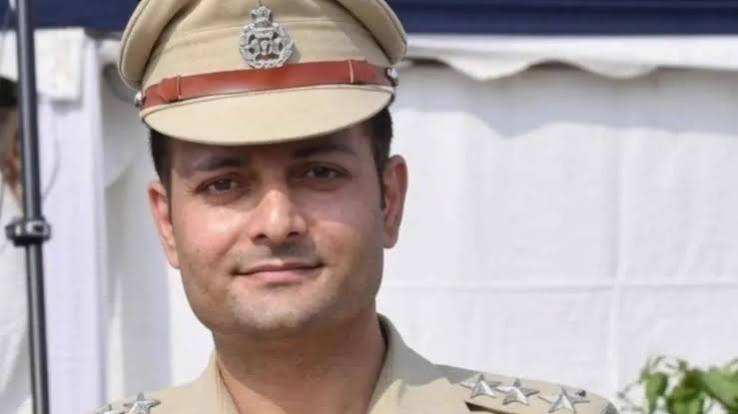
There is a fundamental question that Delhi Police must answer—not with another press statement, not with bureaucratic assurances, and certainly not by expecting the public to accept the registration of an FIR as proof of guilt.
When a woman journalist alleges sexual harassment by a serving police officer, what happens to her complaint? Is it promptly registered and investigated through an impartial process? Are CCTV recordings preserved? Are witnesses examined? Is the officer’s conduct scrutinised with the same urgency and seriousness that the police would demand if the complainant were an ordinary citizen?
And when that same officer subsequently accuses the journalist of caste-based abuse and initiates criminal proceedings against her, why should the public not demand an exceptionally rigorous examination of the sequence, the evidence and the possibility of retaliation?
These are not imaginary questions. They arise from the reported sequence of events surrounding Assistant Commissioner of Police Vivek Bhagat and the woman journalist who accused him of sexual harassment during a protest in Delhi on October 3, 2026.
The New Indian Express and other news organisations have reported that Delhi Police registered a case against the journalist and two others on Bhagat’s complaint, alleging casteist remarks, humiliation, defamation and obstruction of official duties. The journalist’s separate complaint concerning alleged sexual harassment was reported to be under inquiry, with the matter transferred to the Crime Branch. The two sets of allegations remain unresolved.
The distinction matters enormously. A police officer is entitled to protection against caste-based abuse, just as every person is. A woman journalist is equally entitled to have allegations of sexual harassment investigated without intimidation, prejudice or institutional indifference.
What neither side is entitled to is a presumption of guilt or innocence based solely on a uniform, a complaint, a social-media post or the speed with which the machinery of criminal law begins to move.
The question confronting Delhi Police is whether both complaints are receiving genuinely equal treatment—or whether the circumstances have created a reasonable apprehension that one complaint may be functioning as a counterblast to the other.
That question requires evidence, transparency and independent scrutiny. Anything less would be an insult to the public’s right to demand accountable policing.
October 3: Two competing accounts and one urgent demand for evidence
According to the reported contents of the FIR, Bhagat was deployed on law-and-order duty near Buta Singh Roundabout during a protest in the Jantar Mantar area on October 3.
Bhagat alleges that, at approximately 2:30 p.m., the journalist made derogatory comments about his Meghwal or Megh community while looking at his nameplate and questioning his appointment as an ACP. The complaint attributes caste-related statements to her and alleges that the remarks were made in public view.
The journalist, meanwhile, alleged sexual harassment and inappropriate touching by the officer during the handling of protesters. News reports also refer to allegations of manhandling in the course of the police action.
These are competing accounts of serious events. The reported FIR records Bhagat’s allegations; it does not establish that the alleged casteist remarks were actually made. Likewise, the journalist’s complaint does not by itself establish that sexual harassment occurred.
The answer must come from evidence—not from the rank of the complainant, the social position of the accused, the political affiliations of protesters or the volume of online support enjoyed by either side.
Yet the chronology presents questions that cannot responsibly be brushed aside.
According to submissions reported during the Supreme Court proceedings, the journalist’s counsel argued that no FIR had been registered on her sexual-harassment complaint even as the counter-case proceeded. The journalist’s case, according to reporting, had been sent to the Crime Branch for inquiry. The difference between an inquiry into a complaint and the formal registration of an FIR is legally significant, and the authorities should explain the procedural status of each matter clearly.
If one complaint is advanced promptly while the other remains at a preliminary stage, the police must be prepared to explain why. If the difference results from the applicable law, evidence or procedural requirements, those reasons should be recorded. If it results from neglect, bias or an abuse of authority, the consequences must be equally clear.
A police department cannot reasonably expect the public to ignore an apparent imbalance merely because it has a procedural explanation ready. Nor should the public conclude that the counter-case is fabricated merely because it was registered after the sexual-harassment allegation. The timeline is a legitimate line of investigation—not, by itself, a verdict.
The central issue is not which complainant can generate the most damaging headline. It is whether Delhi Police is investigating both allegations with the same seriousness, independence and urgency.
The SC/ST Act is a vital protection—not an instrument beyond scrutiny
The Scheduled Castes and the Scheduled Tribes (Prevention of Atrocities) Act, 1989, exists to address grave forms of caste-based discrimination, humiliation, intimidation and abuse. Its purpose is important, its protections are substantive, and complaints disclosing offences under the Act must not be casually dismissed.
That very importance makes the present controversy especially sensitive.
A law intended to protect people from caste-based oppression cannot be treated casually, cynically or selectively. Its credibility depends on proper enforcement. If the evidence establishes caste-based humiliation, the fact that the accused is a journalist—or that she has made a separate allegation against the complainant—cannot excuse the conduct.
But the converse is equally fundamental.
The seriousness of a statute cannot confer immunity from scrutiny upon the person invoking it.
A complaint under the SC/ST Act deserves investigation in accordance with the law. The complainant’s official position does not make every allegation self-proving. An officer’s uniform cannot substitute for corroboration, and the filing of a criminal case cannot turn an accusation into an established fact.
The same standard applies in reverse. The journalist’s professional status does not place her above the law. If credible evidence establishes that she deliberately made casteist remarks with the legally required intent and in the circumstances covered by the Act, the allegation must be assessed according to law.
That is the difference between defending the rule of law and defending an individual irrespective of the evidence.
The danger here is not simply that an FIR might be false. The danger is that the public may lose confidence in a system in which the same institution is called upon to investigate allegations against one of its own officers while simultaneously pursuing a complaint initiated by that officer against his accuser.
Even an investigation conducted honestly can lose credibility if its structure, timing and procedures create an avoidable appearance of institutional partiality.
The appropriate response is not to condemn the SC/ST Act or presume that Bhagat has misused it. It is to make the evidentiary process so transparent, impartial and properly supervised that neither genuine caste-based abuse nor a knowingly false counter-allegation can escape scrutiny.
Question One: Has ACP Vivek Bhagat’s caste-status documentation been properly verified?
One specific matter requires a careful, formal and legally appropriate answer: the verification of the caste status on which the invocation of the SC/ST Act depends.
The authorities should verify the relevant official records through the competent issuing authority and the appropriate service-record channels. If a caste certificate forms part of the officer’s service documentation, its authenticity and relevant details should be checked and the result documented in the case file.
This demand must be understood precisely. A person’s caste identity must not be questioned merely because that person has been accused of wrongdoing. Neither a surname nor a professional designation establishes that a certificate is false. There is no justification for a public campaign built on speculation about an individual’s caste status.
However, where a statutory complaint depends on a person’s membership of a protected community, the investigating authorities should be able to demonstrate that the relevant foundational facts have been verified through the proper process.
The check must be routine, confidential where appropriate, and conducted without prejudice.
If the records confirm the relevant status, that question should be settled and should not be used to distract from the remaining investigation. If a genuine documentary discrepancy emerges, it must be addressed by the competent authority under the applicable procedure.
The principle is straightforward: neither presume that the complainant’s claim is false nor treat it as beyond verification.
The rule of law requires evidence on both sides of the dispute.
Question Two: Where is the evidence of the alleged caste-based abuse?
The most important question is not who claims to have been insulted. It is what the evidence establishes.
Bhagat’s complaint reportedly attributes caste-related remarks to the journalist near Buta Singh Roundabout. That allegation must be tested through a systematic examination of available material.
The investigating agency should identify all CCTV cameras covering the location and the surrounding approach routes, obtain the original recordings and record any gaps in coverage. It should establish whether police personnel, journalists, demonstrators or other bystanders recorded the incident on mobile phones or other devices.
Every relevant recording should be preserved in its original form. Investigators should establish its source, timestamp, continuity and authenticity, and conduct forensic examination where necessary. Edited clips, extracts circulated on social media and recordings stripped of their surrounding context should not be treated as substitutes for examination of the original evidence.
If a recording contains the alleged exchange, investigators must determine precisely what was said, who said it, who could hear it, the circumstances in which it was said and whether the statutory requirements of the invoked provisions are satisfied.
If a recording does not contain the alleged words, that fact must also be evaluated fairly. The absence of a recording is not necessarily proof that an event did not occur; equally, the existence of an FIR does not establish that it did.
Police personnel present at the location should be interviewed individually. Their accounts should be documented and compared against the available recordings and contemporaneous records. Independent witnesses should be identified and approached without pressure from either side.
The sequence of events also needs reconstruction. Where was Bhagat standing? Where was the journalist? What was the distance between them? Who was present at the time? What was happening immediately before and after the alleged exchange? Did the words reportedly spoken match the words reproduced in the complaint? Is there any independently recorded evidence of the alleged public humiliation?
These are elementary questions in an evidence-led investigation.
An allegation of caste-based abuse should neither be trivialised nor accepted merely because it has been written into an FIR. It should be tested against the best available evidence.
There is no honour in a superficial investigation. If casteist abuse occurred, a weak inquiry may allow the perpetrator to escape accountability. If the allegation is knowingly fabricated, a weak inquiry may subject an innocent person to unjust criminal proceedings.
Either outcome would represent a failure of law enforcement.
Question Three: Was the sexual-harassment complaint investigated with comparable urgency?
The counter-case cannot be properly evaluated without examining what happened to the journalist’s original complaint.
According to published reporting, she alleged inappropriate touching and sexual harassment while covering the police action at the October 3 protest. Her complaint was reportedly transferred to the Crime Branch, and statements of women complainants had been recorded, with CCTV footage identified for examination.
During the Supreme Court proceedings on October 15, senior advocate Indira Jaising argued that no FIR had been registered on her client’s sexual-harassment complaint, while a case had been registered on Bhagat’s complaint. The Supreme Court subsequently directed that no coercive action be taken against the specific journalist in the counter-case.
Those proceedings do not prove that the journalist’s allegations are true. They do, however, make the status and handling of her complaint a matter of immediate public importance.
Delhi Police should clarify, in legally permissible terms:
- When was her complaint first received, and what steps were taken on each subsequent date?
- What was the recorded reason for the procedural course adopted?
- What evidence was preserved, and when were the relevant recordings collected?
- Which officers were assigned to investigate the allegations against Bhagat?
- Were any potential conflicts of interest identified and addressed?
- What steps were taken to ensure that witnesses could give their accounts without intimidation or institutional pressure?
These are not demands for preferential treatment. They are demands for ordinary procedural accountability.
The law must not make an allegation of sexual harassment automatically true because it is made by a woman. Equally, it must not make that allegation easier to disregard because the person accused wears a police uniform.
A woman reporting alleged sexual harassment by a serving police officer faces an obvious institutional imbalance. That imbalance makes independence and documented decision-making particularly important.
If the evidence does not support the allegation, a fair investigation should establish that conclusion. If it does support the allegation, the authorities must not allow rank, reputation or professional relationships to become obstacles to further lawful action.
Either way, delay without explanation is not an acceptable substitute for investigation.
Question Four: Did the registration and handling of the counter-FIR comply with the law?
Another issue requires precision. The public debate must distinguish between whether an FIR could lawfully be registered and whether the subsequent investigation is justified by the evidence.
The SC/ST Act contains specific provisions concerning intentional humiliation and caste-based abuse in public view. The FIR must be examined against the actual language of the complaint and the essential ingredients of each provision invoked. The additional provisions of the Bharatiya Nyaya Sanhita concerning obstruction of a public servant, defamation and common intention must likewise be examined on their own legal requirements.
Media reports have also identified Sections 3(1)(p) and 3(1)(q) among the SC/ST Act provisions cited in the case. Because these provisions concern false or malicious proceedings and false information in specified circumstances, the investigating agency should explain the factual and legal basis for their invocation, if they form part of the FIR under investigation.
In particular, the authorities must not prejudge the journalist’s sexual-harassment complaint as false merely because the officer disputes it. Whether a complaint was knowingly fabricated is a separate question requiring evidence and application of the relevant legal ingredients.
The Supreme Court’s decision in Prathvi Raj Chauhan v. Union of India and Section 18A of the SC/ST Act are also relevant. The law does not establish a universal requirement that police conduct a preliminary inquiry before registering every FIR under the Act. Therefore, it would be incorrect to demand a preliminary inquiry as an automatic prerequisite in every such case.
But the absence of a mandatory preliminary inquiry does not convert registration into a finding of guilt. The legal ingredients of the offences, the evidence collected, and the applicable procedural safeguards remain matters for lawful investigation and judicial scrutiny.
The proper questions are whether the information disclosed the elements of the offences invoked, whether the applicable statutory procedure was followed, whether the records were properly maintained and whether the investigation is being conducted without bias.
If the provisions have been applied correctly, the police should be able to explain their basis. If they have been applied incorrectly, the error must be corrected through the lawful process.
Neither blind acceptance nor politically convenient denunciation is an adequate substitute for legal analysis.
Question Five: Why should the police be allowed to investigate allegations against their own personnel without meaningful independent scrutiny?
Delhi Police has reportedly transferred the complaints to the Crime Branch. That may provide separation from the officers directly involved in the original incident, but a transfer within the same police organisation does not, by itself, resolve every concern about independence.
The concern is structural, not personal.
When a police officer is accused by a citizen, the institution must establish whether the complaint is being investigated impartially. When that officer also initiates proceedings against the complainant, the need for visible safeguards becomes even more compelling.
An independent review does not presume that the police are corrupt or that the officer is guilty. It recognises that public confidence depends not only on whether an investigation is impartial but also on whether the process is sufficiently transparent to withstand reasonable scrutiny.
On October 15, the Supreme Court directed that no coercive action be taken against the specific woman journalist whose complaint concerning alleged molestation was pending consideration. The Court also allowed suggestions to be submitted regarding possible members of a committee to examine allegations of sexual violence against women journalists, and indicated that it was considering whether an independent committee should be constituted.
That is an important development, but it is not a final determination of the allegations against Bhagat, and it does not mean that an independent committee has already been constituted by a final order.
The authorities should now ensure that the process is not reduced to a procedural contest over which complaint is investigated first.
A credible arrangement should include an investigation led by officers meeting the statutory requirements, with supervision by personnel who have no material involvement in the events or the handling of the complaints. An independent committee, if constituted by the Court or another competent authority, should have a clearly defined remit, appropriate access to evidence and a mechanism for reporting findings within a fixed period.
Where legally appropriate, a senior woman police officer and an experienced, independent judicial or investigative expert should form part of the oversight mechanism for the sexual-harassment allegations.
The objective must be to protect all parties’ procedural rights, preserve evidence and prevent intimidation or interference—not to provide immunity to any complainant or accused person.
If the complaint was knowingly false, the law must act against the person responsible
There is a crucial difference between a complaint that cannot ultimately be proved and a complaint that was deliberately fabricated to injure another person.
An allegation may fail because evidence is unavailable, witnesses are unreliable or the legal ingredients of the offence are not established. Those circumstances do not automatically prove that the complainant lied.
But where a properly conducted investigation establishes that a person knowingly initiated criminal proceedings without any just or lawful ground, with the intention of causing injury, the authorities must consider the consequences under the applicable law.
Section 248 of the Bharatiya Nyaya Sanhita, 2023, addresses the false charge of an offence made with intent to injure. Its application depends on proof of the statutory requirements; it is not a mechanism for punishing everyone whose complaint is closed or whose allegations remain unsubstantiated.
Accordingly, if reliable evidence establishes that the caste-abuse complaint was knowingly fabricated for revenge or retaliation, ACP Vivek Bhagat must not receive immunity merely because he is a police officer. The competent authorities should initiate the appropriate proceedings for a false charge under Section 248 and consider other criminal or civil remedies where their legal requirements are satisfied.
The same rule must apply if evidence establishes that the journalist knowingly made a false sexual-harassment allegation or deliberately fabricated evidence. The applicable legal process must be followed in that event as well.
The standard cannot change according to the identity, caste, rank, gender or occupation of the person concerned.
A counter-case that is eventually found to be false must carry consequences where the law provides for them. An allegation of sexual harassment that is established must likewise carry the consequences prescribed by law.
This is what equal justice requires.
The caste certificate question must be resolved by records, not insinuation
The demand for verification of Bhagat’s caste certificate and related official records must be handled with particular care.
If a caste certificate or equivalent official record is relevant to the invocation of the SC/ST Act, the investigating authorities should confirm the relevant status through the competent issuing authority and the official records. This should be a documented evidentiary exercise conducted in accordance with the applicable rules.
It must not become an attempt to discredit an individual merely because he has been accused. Nor should anyone assume that caste status can be inferred reliably from a surname, appearance or personal opinion.
If the relevant records are authentic and undisputed, the question should be closed without delay. If a material discrepancy is identified, it should be referred to the competent authority for determination.
What the public is entitled to demand is a properly documented investigation—not speculation, insinuation or a campaign against a protected community.
The same evidentiary discipline should govern every allegation in this case, including claims about what was said at the protest and whether the digital evidence is authentic.
The statute itself requires a time-bound and competent investigation
The investigation cannot be allowed to drift indefinitely.
Rule 7 of the Scheduled Castes and the Scheduled Tribes (Prevention of Atrocities) Rules, 1995, provides for investigation by a police officer not below the rank of Deputy Superintendent of Police. It requires the appointed investigating officer to consider experience, ability and a sense of justice, and directs that the investigation be completed on a priority basis within thirty days, with the report forwarded through the prescribed chain.
This statutory framework is not a decorative administrative instruction. It exists to ensure that allegations under the Act receive appropriate attention and competent handling.
The authorities should publicly clarify the appointment of the investigating officer, the procedural status of the case and the measures adopted to preserve evidence. Any departure from the applicable requirements should be documented and explained.
The sexual-harassment allegations also require a time-bound investigation under the applicable criminal law and procedures. Where separate investigating teams are handling the two matters, there must be an appropriate mechanism to preserve relevant common evidence while maintaining lawful independence and preventing one investigation from prejudicing the other.
A two-track case involving allegations of caste abuse and sexual harassment cannot be properly concluded through selective speed, unexplained delay or competing press statements. It requires coordinated evidence preservation, independent assessment and prompt decisions.
The objective should be a legally sustainable conclusion—not the rapid production of a headline, a charge-sheet or an administrative declaration of vindication.
An officer’s uniform is not a substitute for accountability
The most serious concern in this case is the power imbalance that emerges when allegations are made against a serving police officer.
Police officers require protection against genuine abuse, obstruction, threats and caste-based humiliation. Their work can be difficult and dangerous, and the law must protect them when they are subjected to unlawful conduct.
But a police officer also exercises public power. That power carries obligations that go beyond those imposed on an ordinary complainant. Officers are expected to uphold the law, record complaints appropriately, preserve evidence and act without fear or favour.
They cannot demand that citizens trust the police simply because the police say they should.
Where an officer is accused of wrongdoing and then becomes the complainant in a criminal case against the same person, the institution must guard against even the possibility that official machinery could be used to intimidate, silence or discredit a complainant. It must demonstrate that the complaint against the officer is being investigated on its merits.
If there is evidence of retaliation, the responsible persons must be held accountable. If there is no evidence of retaliation, the investigation should establish that as well.
The gravest outcome would be a process in which the complainant is intimidated into silence before the allegation is properly assessed, or in which the officer’s counter-allegation is dismissed without examining evidence of caste-based abuse.
Neither outcome serves justice. Both undermine public confidence.
The test of an impartial police force is not whether it protects its own. It is whether it can investigate its own personnel with the same rigour, fairness and legal discipline that it applies to everyone else.
What Delhi Police and the government must do now
First, preserve the original CCTV footage, mobile-phone recordings, police logs, duty rosters, contemporaneous communications and all other relevant electronic or documentary material. The chain of custody must be documented, and any allegation that a recording is manipulated or AI-generated must be tested through proper forensic analysis rather than speculation.
Second, disclose the procedural status of both complaints to the extent permitted by law. Authorities should explain why each case has followed its particular procedural route, identify any material delay and state what investigative steps have been taken.
Third, verify through the competent authority the relevant caste-status documentation, if it is material to the applicability of the invoked provisions. This must be a formal record check—not an assumption of wrongdoing.
Fourth, ensure that the SC/ST Act investigation is conducted by an officer meeting the statutory rank and appointment requirements, and that the sexual-harassment complaint receives independent, evidence-based consideration without conflicts of interest.
Fifth, consider a genuinely independent oversight mechanism, consistent with any directions of the Supreme Court and the powers of the competent authorities. The mechanism should be time-bound, transparent in its mandate and capable of examining the handling of both complaints without presuming the guilt of either side.
Sixth, ensure that the trial and further criminal proceedings, if instituted, progress expeditiously. Speed must not come at the expense of a fair hearing, the right to challenge evidence or the presumption of innocence. But procedural fairness must not become a convenient excuse for indefinite delay.
Finally, if the investigation establishes deliberate fabrication of evidence, a knowingly false criminal charge, obstruction of justice or misuse of official position, the authorities must initiate appropriate proceedings under the relevant law. Responsibility should attach to the individual whose misconduct is established, irrespective of rank or institutional affiliation.
The Supreme Court’s intervention makes accountability more urgent
The Supreme Court’s order of October 15 must not be misrepresented. The direction against coercive action was interim protection for the specific journalist whose case was brought before the Court. It was not a declaration that the FIR was false or that Bhagat had committed sexual harassment.
Nevertheless, the Court’s intervention demonstrates the importance of addressing the immediate protection concerns raised in the proceedings. Its consideration of an independent committee is also a reminder that allegations concerning police conduct toward women journalists cannot be resolved merely by asking the same institution to pronounce upon its own credibility.
The next step should be a properly structured process that protects the complainant’s rights while safeguarding against unsubstantiated accusations against the officer.
If the Court constitutes an independent committee, the authorities should cooperate fully. If a different independent mechanism is directed or lawfully established, it should have the necessary access to evidence and a clear timetable.
The investigation must answer the questions that matter: what happened at the protest, what each party said or did, what the recordings and witness accounts establish, why the complaints followed different procedural paths and whether any person deliberately abused the legal process.
The country does not need a premature declaration of victory by either side. It needs a credible finding based on evidence.
Justice cannot be selective—and the law cannot be a weapon
The present controversy should never be reduced to a contest between a woman journalist and a police officer, or between allegations of sexual harassment and allegations of caste-based abuse.
Both forms of alleged wrongdoing are serious. Both deserve careful investigation. Neither can be used to silence scrutiny of the other.
The SC/ST Act must protect people from caste-based atrocities. It must not be trivialised by those who assume that a police officer’s complaint is automatically true. Equally, it must not be casually dismissed by those who believe that an allegation becomes retaliatory merely because it follows another complaint.
Likewise, allegations of sexual harassment must be investigated properly. They cannot be ignored because the accused is an officer of the law, and they cannot be treated as established solely because they have attracted public attention.
There is a simple principle here: the law must protect the vulnerable, investigate the powerful and hold every person accountable where the evidence and legal requirements justify it.
If ACP Vivek Bhagat’s caste-abuse allegations are substantiated, the law should take its course. If the sexual-harassment allegations against him are substantiated, the law should take its course there as well. If either complaint is proved to have been deliberately fabricated to injure another person, that must attract the appropriate legal consequences.
Until then, the police must resist the temptation to turn a developing investigation into a public-relations exercise.
Delhi Police owes the public clear answers about the chronology, the evidence, the statutory provisions invoked and the safeguards against conflicts of interest. It owes the journalist a fair investigation of her complaint. It owes Bhagat a fair investigation of his complaint. It owes the public a process that can withstand scrutiny.
The government must ensure that accountability is not sacrificed to institutional loyalty. Enforcement agencies must move quickly, but not carelessly. Courts must receive properly investigated cases without avoidable delay. And anyone who knowingly abuses the process of law—whether by fabricating allegations, suppressing evidence or misusing official authority—must face the consequences prescribed by law.
A uniform does not place anyone above the law. A complaint does not make anyone guilty. A statute is not a substitute for evidence. And a police department’s credibility cannot survive on the expectation that the public will never question the way it treats its own.
The question is not whether Delhi Police should protect an officer or a journalist. It is whether the institution will protect the truth, investigate both allegations fairly and demonstrate that criminal law is being used to deliver justice—not to secure an advantage in a dispute.
That is the standard the public has every right to demand.
EDITORIAL DISCLAIMER
This article discusses reported allegations and raises questions concerning procedural fairness, investigative independence and public accountability. The journalist’s allegations of sexual harassment against ACP Vivek Bhagat remain allegations pending investigation and judicial determination. The counter-allegations of caste-based abuse, humiliation, defamation and obstruction against the journalist and the other named persons also remain allegations and have not been established merely by registration of an FIR.
As of October 15, 2026, the reporting reviewed for this article does not establish that any party has been convicted by a court in relation to these allegations. The Supreme Court’s direction that no coercive action be taken against the specific journalist is an interim protective order, not a final determination of the merits of either complaint.
This article does not assert as an established fact that the counter-FIR is false, malicious or retaliatory, or that ACP Vivek Bhagat has committed the alleged sexual offence. It calls for those questions to be investigated impartially and on the basis of admissible evidence.
If a competent investigation establishes that a person knowingly initiated a false criminal charge with the intent and in the circumstances specified by law, the authorities should consider appropriate proceedings, including under Section 248 of the Bharatiya Nyaya Sanhita, 2023, subject to its statutory requirements and applicable procedure. If evidence establishes any of the substantive allegations made by either side, the relevant legal consequences should follow.
All individuals concerned retain their rights under law, including the presumption of innocence and the right to a fair investigation and trial.