Why Does India Keep Discovering Unsafe Food After It Has Already Reached Consumers? Bisleri Is The Latest Name In A Long List Of Food Safety Controversies
A bottle of drinking water, a packet of spices or a familiar health drink should not require consumers to conduct their own safety investigations. Yet, from Bisleri to MDH, Everest and Bournvita, one controversy after another has raised an uncomfortable question about what reaches Indian households and why the problems are so often discovered afterwards.

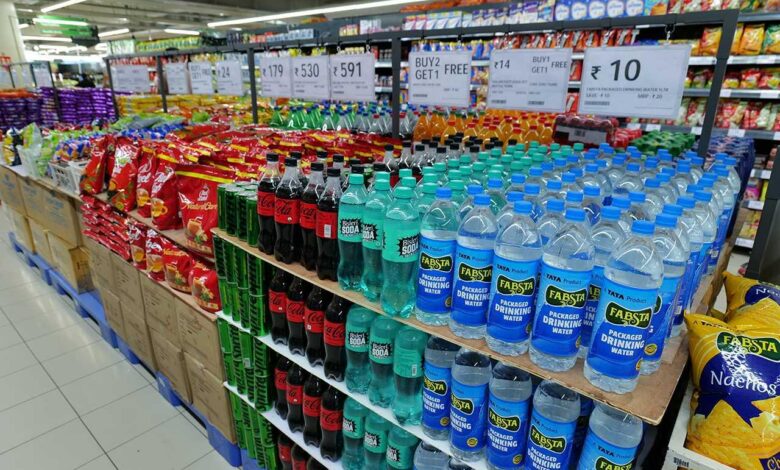
The latest controversy involving Bisleri has brought India’s packaged drinking water industry under scrutiny, but the case is more complicated than a straightforward product safety violation.
On November 22, 2026, the Food Safety and Standards Authority of India (FSSAI) sanctioned prosecution against Bisleri International after a sample from its Goa manufacturing facility was declared unsafe. The dispute centres on Batch No. GO 270, manufactured in September 2025, and involves two separate laboratory findings: bromate and polycyclic aromatic hydrocarbons (PAHs).
According to the company’s account, six samples were collected on September 30, 2025. Five initially met the applicable standards, while the sixth recorded bromate at 12 micrograms per litre against the prescribed limit of 10. Following Bisleri’s appeal, the referral laboratory found bromate below its limit of quantification but detected PAHs at 0.144 micrograms per litre.
Bisleri subsequently arranged independent testing, which it says confirmed that bromate was within permissible limits.
It also maintained that it had submitted the results to FSSAI in February 2026 and received no further communication. The regulator, however, treated the referral laboratory’s findings as the basis for declaring the sample unsafe and prohibiting the sale of the identified batch.

What Exactly Are Indians Being Exposed To?
The two substances at the centre of the Bisleri controversy are chemically different, and understanding that distinction is important. Bromate is not normally present in water in significant quantities. It can form during the ozonation process, a disinfection method used in water treatment, when ozone reacts with naturally occurring bromide. The process is intended to eliminate microorganisms, but if treatment conditions are not properly controlled, it can produce bromate as an unwanted by-product.
The concern is that bromate has been associated with cancer in animal studies. The World Health Organization (WHO) has established a provisional drinking-water guideline of 10 micrograms per litre, the same threshold cited in the Bisleri case. The limit is intended to restrict exposure, not suggest that a single marginal exceedance automatically results in illness.
PAHs present a different problem. Polycyclic aromatic hydrocarbons are a large family of compounds generated through processes such as incomplete combustion of coal, oil, wood and other organic material. They can enter water through environmental contamination, industrial sources and certain materials used in water distribution systems. Some members of this chemical family are recognised carcinogens, although their toxicity varies considerably.

From A Bottle Of Water To A Packet Of Spices
The Bisleri controversy is not an isolated episode in India’s food safety debate. Over the past few years, several familiar consumer brands have faced scrutiny over the quality, composition, safety or claims associated with their products. The controversies have differed in nature, but they have repeatedly exposed how difficult it can be for consumers to independently establish what is inside the products they buy.
In 2024, MDH and Everest found themselves at the centre of an international food safety controversy after Hong Kong’s Centre for Food Safety detected ethylene oxide in selected spice products and suspended their sale. Singapore also ordered a recall of an Everest fish curry masala product over the same chemical.
Ethylene oxide is used as a sterilising agent in certain industrial applications, but its presence in food is a serious concern because of its carcinogenic properties. The episode triggered scrutiny of India’s spice exports and raised questions about testing standards, contamination controls and the systems used to monitor products before they leave manufacturing facilities.
The Bournvita controversy that emerged in 2023 involved a different issue. A social media examination of its nutritional composition drew attention to sugar content and claims associated with its positioning as a health drink. The National Commission for Protection of Child Rights subsequently sought an explanation from the manufacturer, Mondelez India, over concerns relating to its labelling and advertising. The company disputed several allegations and defended its product’s nutritional positioning.
Patanjali, meanwhile, faced proceedings over misleading advertisements and claims made about its products. In 2024, the Supreme Court intervened in the matter involving the company’s claims about medicines and the alleged disparagement of modern medicine.
These cases cannot be clubbed together as instances of food adulteration. But they expose different weaknesses in how products are tested, marketed and presented to consumers. Whether the concern is a chemical contaminant, excessive sugar or an exaggerated health claim, the consumer is often left trying to understand the problem after it has already become public.

Why Does The Problem Surface After Products Reach The Market?
India’s food safety system is not without inspections, testing laboratories or enforcement mechanisms. The problem is whether these mechanisms can identify violations early enough, across an industry that manufactures and distributes an enormous range of products. The distinction becomes important when a contamination concern emerges only after a product has reached consumers or attracted attention from authorities overseas.
The MDH and Everest episode illustrates this complexity. While Hong Kong and Singapore flagged selected products over ethylene oxide, FSSAI announced in May 2024 that it had found no traces of the chemical in approximately 300 samples collected from spice manufacturing facilities in India. The regulator suggested that contamination could have occurred at another stage, including transportation, storage or handling. This left an important question about where along the supply chain the contamination had entered.
India’s food safety framework relies on a combination of inspections, sampling, laboratory analysis and action against non-compliant businesses. However, sampling is necessarily selective. A test result from one batch does not establish the safety of every batch produced by a company, just as a compliant sample cannot guarantee that every product leaving a facility meets the prescribed standards.
The timing of detection also matters. A product may pass through manufacturing, packaging, warehousing, transportation and retail distribution before a sample is collected and analysed. By the time a laboratory identifies a problem, some of that stock may already have been sold or consumed.
This is where the gap between testing a product and preventing its exposure becomes significant. The question is not simply how many samples are collected, but whether surveillance is sufficiently frequent, targeted and fast to identify problems before they become public health concerns.
The scale of the monitoring effort has, however, increased. According to figures released by the Ministry of Health and Family Welfare in March 2026, risk-based inspections conducted by FSSAI and state authorities rose from 11,904 in 2022–23 to 26,267 in 2024–25. More than 5.18 lakh enforcement food samples were analysed across states and Union Territories over the three-year period.
These figures indicate an expanding inspection effort, although they do not, by themselves, establish how effectively violations are being prevented or detected before products reach consumers.
There is also an institutional complication. FSSAI establishes food safety standards and coordinates the national framework, while state authorities carry much of the responsibility for field-level enforcement. The effectiveness of the system therefore depends not just on the central regulator, but on the capacity of individual states to conduct inspections, collect samples, process laboratory results and follow through on violations.

FSSAI Has The Power, But How Does Enforcement Work?
The Food Safety and Standards Authority of India was established under the Food Safety and Standards Act, 2006, with the responsibility of setting science-based standards for food products and regulating their manufacture, storage, distribution, sale and import.
It was intended to bring India’s fragmented food safety laws under a single framework. Nearly two decades later, however, the question is how effectively that framework works once a violation is identified.
The law gives the regulator and designated enforcement authorities several tools. Food safety officers can collect samples, inspect premises, examine records and initiate proceedings when products are found to be non-compliant. Depending on the nature and severity of the violation, authorities can issue improvement notices, suspend or cancel licences, order recalls, impose financial penalties or initiate prosecution.
The distinction between unsafe and substandard food is particularly important. A product that does not meet prescribed quality standards is not automatically classified as unsafe. Under Section 59 of the Act, manufacturing, storing, selling or distributing unsafe food can attract imprisonment and financial penalties, with the punishment depending on the consequences of the violation. Section 51, meanwhile, deals with substandard food and provides for monetary penalties.
The framework therefore does not lack enforcement provisions. What matters is how consistently they are applied, how quickly investigations are completed and whether the action taken actually prevents the same problems from recurring.
There is also a division of responsibility. FSSAI sets national standards and coordinates the system, but state food safety departments undertake much of the field-level enforcement. This means the effectiveness of the law depends on laboratories, inspectors and administrative capacity across individual states, not simply decisions taken at the national level.

The Repeat Offender Problem
India’s food safety law provides for penalties, prosecutions and even imprisonment, but the more difficult question is whether enforcement changes the behaviour of businesses that repeatedly fall short of prescribed standards. A penalty imposed after a violation is established may close one case, but it does not necessarily prevent the same company, manufacturer or product category from appearing in another investigation.
Government figures released in March 2026 offer an indication of the scale of enforcement. Between 2022–23 and 2024–25, authorities analysed 5,18,559 food samples across the country. During the same period, 88,192 cases were decided with penalties, 3,614 convictions were secured and 1,161 licences were cancelled. These are substantial enforcement numbers, but they also raise questions about what happens after the action is taken.
The law does recognise the problem of repeat offences. Section 64 of the Food Safety and Standards Act provides for twice the punishment for a subsequent conviction for the same offence, subject to the maximum punishment prescribed. Yet, establishing whether companies repeatedly violate standards requires more than counting annual penalties or prosecutions. It requires tracking violations across manufacturers, facilities, products and batches, and examining whether corrective measures have actually worked.
The difficulty is that aggregate enforcement figures do not tell us how many businesses have been penalised more than once, how many have repeated the same violation or how often licences are restored after corrective action. Without that information, the public can see how many cases authorities have processed, but not necessarily whether the underlying practices have changed.
The issue is therefore not simply whether India has laws to punish food safety violations. It is whether those laws create a sufficiently strong incentive for businesses to prevent violations in the first place. The recall framework under
Section 28 also requires food businesses to withdraw products they believe do not comply with the Act and notify the competent authorities

India’s Food Industry Has Changed. Has Its Testing System Kept Pace?
India’s food industry has undergone a significant transformation. Packaged foods, ready-to-eat meals, bottled beverages, processed dairy products and branded spices have become an increasingly familiar part of household consumption. For manufacturers, this has created opportunities to expand distribution, build national brands and reach consumers far beyond their original markets. For the food safety system, however, it has created a much larger and more complicated monitoring exercise.
The challenge begins with the supply chain. A packaged food product may involve raw materials sourced from several suppliers, processing at one facility, packaging at another location and distribution through warehouses before reaching a supermarket shelf. Each stage introduces variables that can affect product quality and safety. Contamination can originate in raw materials, emerge during processing or enter through inadequate storage and transportation.
The scale of the industry also makes uniform monitoring difficult. India has millions of food business operators, ranging from large multinational manufacturers and established domestic brands to small processors, street vendors and local retailers. They operate with vastly different levels of infrastructure, technical expertise and quality control.
A system that depends heavily on periodic inspections and selective sampling must therefore make difficult decisions about where to direct its limited resources. High-risk products and manufacturing processes require closer scrutiny, but identifying those risks demands reliable data, trained inspectors and laboratories capable of processing samples quickly.
This is where the expansion of the food industry becomes relevant to the Bisleri controversy. The question is no longer simply whether a manufacturer has testing procedures in place. It is whether the wider system can independently verify those procedures across an increasingly complex supply chain.
The numbers show that India has been expanding its testing infrastructure, although questions about its reach and staffing remain. As of early 2026, FSSAI had notified 252 food testing laboratories and 24 referral laboratories. Another 305 mobile food testing units, known as Food Safety on Wheels, had been deployed across 35 states and Union Territories.
Yet, parliamentary data also revealed that 320 of FSSAI’s 822 sanctioned posts were vacant as of January 1, 2026. State food safety departments had 2,997 Food Safety Officers against 4,208 sanctioned positions. The infrastructure exists, but the shortage of personnel raises questions about how consistently it can be deployed across the country.

The Consumer Is The Last Person To Find Out
For most consumers, buying packaged food or drinking water is an act of routine trust. A familiar brand, an established retail outlet, a printed manufacturing date and an FSSAI licence number are usually enough to complete the purchase. Very few people have the means, technical knowledge or access to independent laboratories to verify whether a product actually meets the standards printed on its packaging. They depend on the manufacturer to maintain quality and on the authorities to identify violations.
That dependence becomes particularly significant when a safety concern emerges after products have entered circulation. By the time a sample is collected, tested and declared non-compliant, the product may already have travelled through distributors, retailers and online delivery platforms. Some of it may have been consumed, while the remaining stock could be spread across multiple locations. Identifying the affected batch and communicating the risk quickly therefore becomes just as important as detecting the original violation.
There is also a difference between having a regulatory licence and having a guarantee that every product is safe. An FSSAI licence establishes that a food business is registered or licensed under the applicable framework. It should not be interpreted as a certification that every batch has been independently tested and cleared.
For consumers, however, that distinction is rarely obvious. Most people cannot distinguish between a laboratory finding involving one batch, a broader manufacturing problem and a confirmed public health risk. They are left relying on official announcements, company statements and product recalls to decide what they should continue buying.
The burden of uncertainty ultimately falls on the person who has the least ability to investigate it.

The Difference Between A Notice And A Safer Food Supply
India does not necessarily need another layer of food safety rules. It needs to make the existing system work more effectively between the moment a product is manufactured and the moment it reaches a consumer. That requires more than collecting samples and issuing notices. It requires identifying the source of contamination, tracing affected batches, ensuring recalls are completed and checking whether manufacturers have corrected the processes that caused the problem.
The government has already acknowledged the importance of risk-based inspections, under which businesses are inspected according to the risks associated with their operations. FSSAI has also expanded its testing network, with 252 notified food laboratories, 24 referral laboratories and 305 mobile testing units reported in March 2026. These are useful additions, but their effectiveness depends on how frequently they are deployed, how quickly samples are analysed and whether findings translate into timely action.
The Bisleri episode offers a practical example of why follow-through matters. On November 24, Goa’s FDA said the disputed batch was no longer available in the market and announced intensified surveillance of packaged drinking water brands. It also said that more than 80 packaged water samples had been analysed in Goa since April 2025.
The immediate batch may have disappeared from circulation, but the wider exercise raises a more important question: what did the investigation establish about the source of the problem, and what measures will prevent a recurrence?
Ultimately, a successful food safety intervention should be measured not by the number of notices issued or samples tested, but by whether unsafe products are identified early, removed quickly and prevented from reappearing.

What Is Actually On India’s Shelves?
India’s food safety debate is often reduced to the latest brand controversy. One month it is packaged water, another it is spices, a health drink or a product making questionable nutritional claims. The companies and products change, but consumers repeatedly find themselves trying to interpret laboratory findings, regulatory announcements and corporate explanations after a concern has already surfaced.
A food label can tell buyers what a manufacturer claims to be selling. It cannot, by itself, tell them whether every batch has been tested adequately, whether contamination has entered somewhere along the supply chain or whether a problem has been detected in time.
For a country with an expanding packaged food and beverage market, that is an uncomfortable position to be in. Consumers should not have to wait for a controversy, a foreign laboratory report or a public announcement to begin questioning what they are eating and drinking.
The larger question remains: why does India keep discovering unsafe food after it has already reached consumers?