After Animal’s Toxic Masculinity, Is Ranbir Kapoor The Right Choice To Portray The Serenity And Compassion Of Lord Ram?
From Animal to Ayodhya: Why Ranbir Kapoor's Ram Casting Has Divided Indian Audiences?

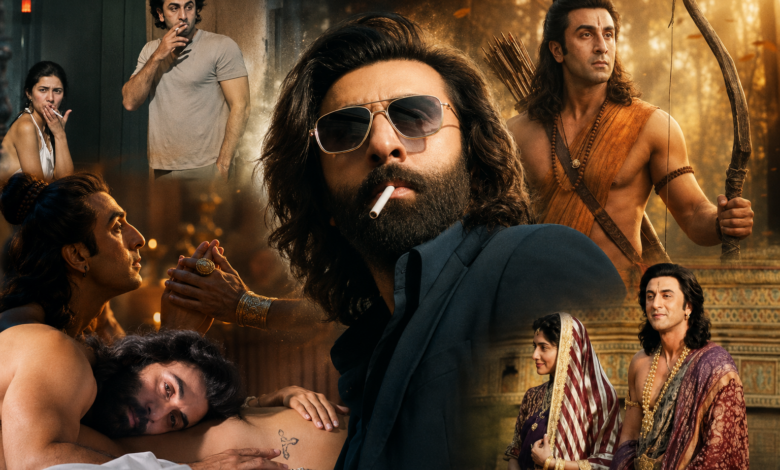
The Ram Question: Why Ranbir Kapoor’s Casting Has Ignited a National Debate
When the news broke that Ranbir Kapoor would step into the role of Lord Ram in Nitesh Tiwari’s upcoming Ramayana, reactions split almost instantly into two camps. One side pointed to his undeniable range as an actor. The other paused, not out of malice, but out of an emotion harder to name: discomfort. This piece delves why that discomfort exists, what it says about how Indian audiences relate to mythological cinema, and whether the conversation around it is fair, foolish, or somewhere in between.
Casting Has Always Shaped How Epics Are Remembered
Cinema history offers a consistent lesson: casting can make or break an epic before a single frame is edited. Audiences don’t just watch a performance; they inherit a memory of the performer, and that memory colors everything that follows.
Shah Rukh Khan will forever carry traces of Raj from Dilwale Dulhania Le Jayenge. Amitabh Bachchan’s screen persona is still shadowed by Vijay, the angry young man of the 1970s. Prabhas, for an entire generation, is Baahubali, a role so definitive that his subsequent films are still measured against it.
This is not a flaw in audience psychology. It is how branding and cinematic memory function. Actors do not exist in a vacuum; they exist in the accumulated residue of every character they’ve played, especially the ones that struck a cultural nerve. Which brings us to Ranbir Kapoor. Right now, for a significant section of the audience, he is not primarily “Ranbir the actor”; but he is Ranbir who played Ranvijay Singh Balbir in Animal. That association is fresh, recent, and unusually intense. It is the lens through which many viewers are now trying, and struggling to picture him as Ram.
One of them is Shiv Sagar, the grandson of legendary director and producer Ramanand Sagar, who created the iconic 1987 television series Ramayan. Shiv Sagar, has shared his review of the film’s trailer. While Mr Shiv praised the film’s VFX and appreciated the casting of Sai Pallavi and Yash as main leads of Maa Sita and Raavan, he was critical of Ranbir Kapoor’s casting as Lord Ram. And there are many people who share the similar thoughts. But what is the reason of connecting Ranbir with Animal??

Here’s a thought experiment worth sitting with: if Animal had released eight years ago instead of 2023, would the reaction to this casting news be as charged as it is today?
Probably not.
The core issue isn’t necessarily the role itself, but it’s proximity. Audiences haven’t had the time or distance to emotionally “reset” between Animal’s raw, unapologetically toxic masculinity and the serene, dharmic restraint that Ram represents in Indian cultural memory. When a screen image is still this fresh, the brain doesn’t easily let go of it. That’s not irrationality. That’s how associative memory works, in cinema as much as anywhere else.
Why Ram Is Not “Just Another Role”
Nobody debates casting choices for a detective thriller with the intensity reserved for casting Lord Ram. Nobody organizes public discourse around who should play a corporate lawyer or a small-town cop. But Ram is different, and pretending otherwise misunderstands the entire cultural context.
Lord Ram is not merely a fictional protagonist. For hundreds of millions of people, he is a civilizational figure, a moral compass invoked in daily life, festivals, architecture, law, and personal conduct. He is not simply “a character” that a studio owns the rights to interpret. He is inherited, communal, and deeply personal to those who grew up with the Ramayana as more than a story.
This is precisely why producers who choose to bring such a figure to screen inherit a responsibility that goes beyond standard casting logic. It isn’t enough to ask, “Who can act this role convincingly?” The more complicated, more culturally loaded question is: “Who can the audience believe, emotionally and spiritually, as this figure, without the noise of an unrelated screen image intruding on that belief?”
Casting for mythology, in other words, is not just an artistic decision. It is a perception-management decision. And that is a genuinely higher bar.
Ranbir Kapoor’s Talent Isn’t the Question
Let’s be clear about something the discourse often glosses over: Ranbir Kapoor’s acting ability is not in serious dispute. From Rockstar to Barfi! to Sanju to Animal itself, he has repeatedly demonstrated a rare capacity for emotional transformation on screen. Few actors of his generation match his range.
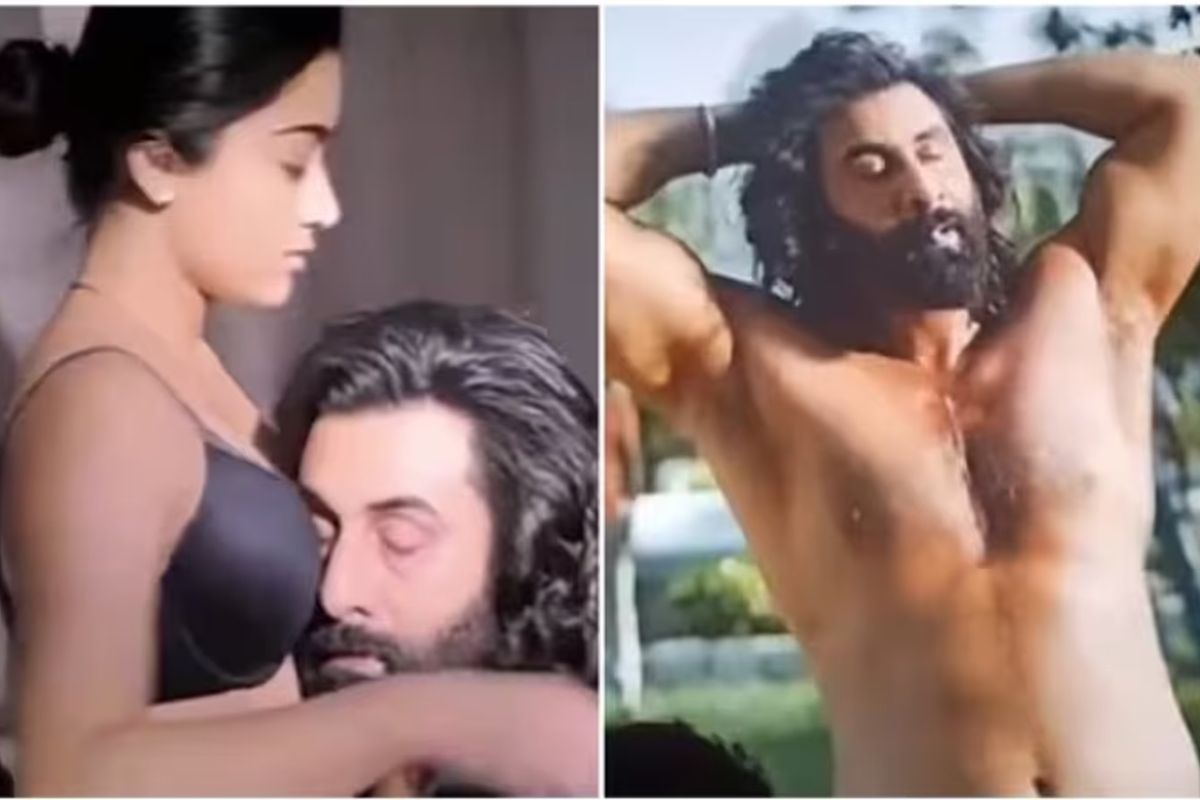
But Animal did something unusual; it created one of modern Bollywood’s most divisive masculine screen images. The film split audiences and critics alike, drawing both admiration for its craft and sharp criticism for the version of masculinity it glorified. Whatever one’s opinion of the film, it’s hard to deny that it left an unusually strong, unusually recent imprint on how audiences currently perceive Ranbir Kapoor as a screen presence.
This is where the real question emerges, and it is a legitimate one, not an irrational knee-jerk reaction: can audiences cleanly separate an actor from a character that recently defined him so forcefully?

That is fundamentally different from asking whether he can act the part. Everyone concedes that he can. The audience isn’t interrogating his talent. They’re interrogating their own ability to believe him, to sit in a theatre and feel, without hesitation, that they are watching Ram, not an echo of Ranvijay Balbir in different clothing.
Those are two separate questions, and conflating them is where much of the public conversation goes wrong in both directions; both for those dismissing the concern outright, and for those escalating it into something more inflammatory than it needs to be.
The Discourse Has a Defamation Problem
It’s worth naming something uncomfortable about how this debate has unfolded online: a portion of the criticism has crossed from legitimate cultural questioning into territory that is neither fair nor accurate.
What the Filmmakers Actually Owe the Audience
If there’s a fair question to ask in all this, it isn’t really about Ranbir Kapoor at all. It’s about the filmmakers and producers who made the casting call.
Did they weigh the cultural residue of Animal against the emotional register required for Ram? Did they anticipate that timing, the sheer recency of that other role would create friction for a section of the audience? Or did they cast purely on acting merit, trusting that skill alone would be sufficient to override screen memory?
None of these questions have obvious answers, and none of them require condemning the choice as objectively wrong. Filmmaking is inherently a bet on audience psychology, and sometimes that bet pays off precisely because an actor defies expectations — Amitabh Bachchan playing gentle, soft-spoken characters after his “angry young man” years is proof that image transformation is possible, even profitable. Ranbir Kapoor could very well deliver a Ram performance that recalibrates public memory entirely.
But the responsibility to anticipate audience resistance, and to make peace with the fact that some resistance was foreseeable, sits with the people who made the casting decision, not with the audience for having a reaction rooted in recent, vivid cinematic memory.
A Balanced Way to Read the Moment
The most honest framing of this entire controversy isn’t “Ranbir Kapoor deserves criticism” or “Ranbir Kapoor deserves blind support.” It’s something quieter and more structural: did the filmmakers adequately account for the cultural baggage that audiences inevitably, unavoidably bring into the theatre with them?
Mythological cinema doesn’t operate in a neutral space. It operates inside centuries of belief, memory, and reverence, and every casting decision within that space is, whether producers like it or not, also a decision about managing collective perception.
Ranbir Kapoor may go on to deliver a Ram performance that silences every doubt. Actors have overcome heavier odds before. But the debate itself, the discomfort, the questions, the hesitation, isn’t proof of an unreasonable audience. It’s proof that mythological casting is one of the last spaces in Indian cinema where the audience still insists that belief has to be earned, not simply cast.
That, more than anything, is the real story here.