Lenskart’s ‘Clear Vision’ Meets Regulatory Eye Test: Will ED’s Scrutiny Bring Clarity Or Blur The Future?

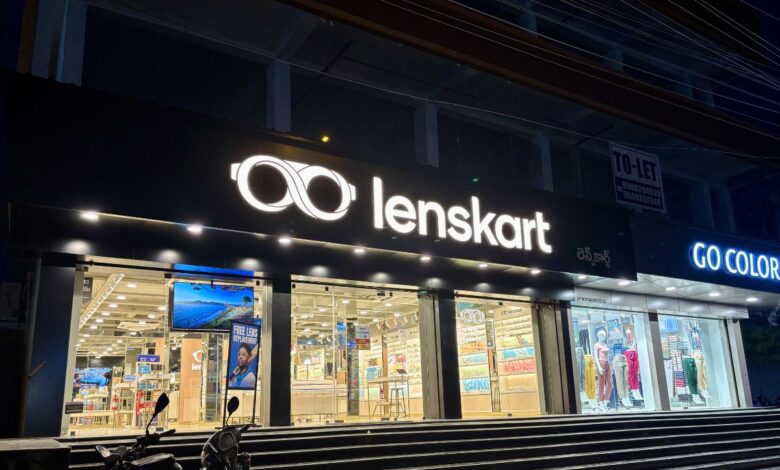
The hype around Lenskart’s IPO has been almost blinding: a blockbuster valuation, celebrity endorsements, and even founder controversies hogging headlines. Yet behind the blockbuster numbers lurks a host of worrying signals. An ED (Enforcement Directorate) investigation is probing Lenskart’s foreign transactions, and the company’s own IPO filings quietly flag it as a major risk. In plain terms, every time Lenskart tries to buy an overseas asset, it needs a “permission slip” from the ED, the very agency investigating it.
Worse, the ED has denied this permission (a No-Objection Certificate, or NOC) twice already. Yet Lenskart’s international expansion (like its deals in Japan and Spain) soldiered on via a legal loophole that says “if the ED simply doesn’t reply in time, the request is ‘deemed granted.'” That loophole is now the rock under Lenskart’s global strategy, which can be termed as a foundation the company itself warns might not hold.
In a sign that not all is rosy, the prospectus calls this a “central risk”. Between sky-high valuations (a P/E near 220) and these regulatory red flags, retail investors should be very cautious. After all, India’s recent tech IPOs have taught harsh lessons.
Paytm’s stock plunged 27% on Day One.
Nykaa rocketed then crashed (up ~78% on debut but now down ~65% from the issue price).
Mamaearth (Honasa Consumer) was 7.6x oversubscribed yet listed only ~2% above its IPO price.
Lenskart is following the same script of hype but with even shakier footing.
Here is a deep-dive into the real red flags; the unspoken risks that even lay investors need to know before pulling the trigger.
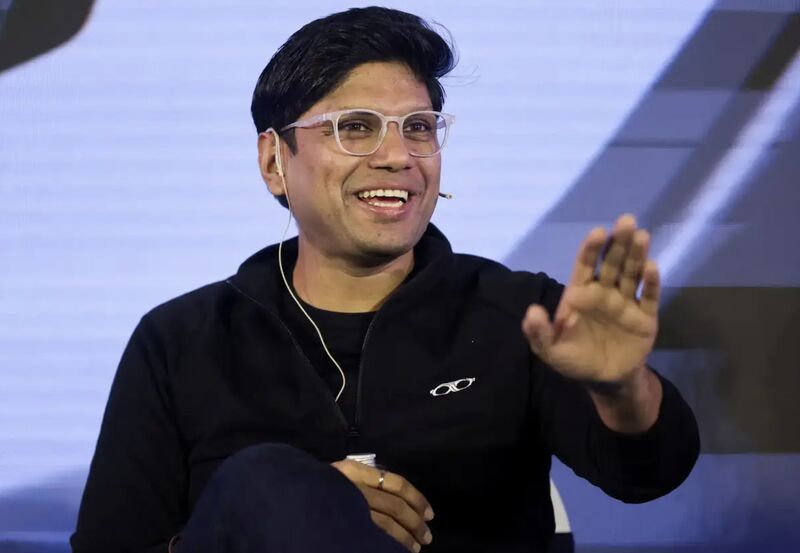
The ED Investigation: A Shadow Over Lenskart’s Global Plans
Lenskart is in the ED’s sights for procedural delays in foreign-exchange filings. In July 2022, the ED issued a show-cause notice under Section 37 of FEMA (Foreign Exchange Management Act) to Lenskart, demanding details of its imports, exports, remittances and bank accounts. In short, the ED wants to know if Lenskart followed all FEMA rules for overseas transactions. Lenskart says it responded promptly and provided the requested documents (reply on Aug 16, 2022).
But there’s a catch. Any Indian company doing overseas direct investment (ODI), essentially, buying or funding a foreign business must get a No Objection Certificate (NOC) from the ED first. In Lenskart’s case, that means even acquisitions it already owns still legally require ED sign-off. The prospectus candidly spells this out: “our Company requires a no-objection certificate from the ED to undertake any overseas direct investment (ODI)”. In other words, Lenskart’s growth strategy abroad (buying eyewear chains like Japan’s Owndays or Spain’s Meller) cannot legally proceed without the ED’s explicit ok..
As one finance influencer quipped, Lenskart’s move to buy any foreign company is “like needing a permission slip from the principal of the school that’s accusing you of breaking the rules”. The paradox is stark: Lenskart wants to buy success abroad, but the ED must bless each move even as it investigates Lenskart’s paperwork.
Recent developments show the tension. Lenskart says it filed “several applications” for these NOCs. But by June 14, 2023 and again on November 18, 2023, the ED denied the NOCs. After the November notice, the ED demanded more documents, which Lenskart supplied by January 9, 2024. Even as late as May 2025, the ED sent queries (answered by Lenskart on May 13, 2025). The investigation is ongoing.
This means Lenskart is effectively expanding its empire on borrowed time. Every time it tries to acquire (or hold) a foreign lens or frames company, it runs the risk of legal pushback. If the ED ever turns off the “deemed granted” tap, new deals could freeze or be reversed. Even completed deals might be challenged. Lenskart’s RHP bluntly warns investors not to assume this will continue: “While our Company has availed this provision in the past, we cannot assure you that we will be able to continue doing so in the future.”. If that sounds like faint praise, consider the alternative: no NOC, no expansion.
The NOC Loophole: Permission by Default
So how has Lenskart managed deals like Owndays and Meller with no ED blessing? The secret is India’s “deemed granted” rule. If a company formally requests the NOC and the ED neither approves nor rejects within a set period, the NOC is automatically considered granted. Technically, Lenskart still walked the ED’s talk by applying for permission; the ED simply failed to act (or responded late), letting time elapse. Only then did Lenskart go ahead with its plan, which is a legal grey zone at best.
This loophole is literally mentioned in the DRHP, and management clearly knows it’s a precarious one as Lenskart has been using this rule to make cross-border acquisitions. But it’s a house of cards. As the RHP itself says (again, disclaiming any guarantee): “we cannot assure you that we will be able to continue [deeming NOCs granted] in the future.”. Put another way, Lenskart’s entire “world domination” strategy rests on a temporary default permission.

Investors should read that warning carefully. The RHP essentially means (pun intended) that “We have been lucky so far, but if the rules change, our foreign empire could stall.” The “Bull” case might be that this is just paperwork – pay a fine and move on. The “Bear” case is grimmer as the ED can, at its discretion, pull the plug on Lenskart’s core growth engine overnight. Imagine building skyscrapers with plans approved on a technicality, only to be told later the permit was never valid. That’s the risk here.
Key Red Flag is Lenskart needs an ED NOC for each overseas deal. The ED denied two NOCs outright, and Lenskart is banking on “deemed granted” instead. In the RHP’s words, “our Company requires a no-objection certificate from the ED to undertake any overseas direct investment”. With the ED probe unresolved, every step of Lenskart’s international expansion remains uncertain.
Risk Factors Raised by Lenskart Itself
Beyond the ED headache, Lenskart’s own filings contain numerous cautionary notes – often buried in legalese. Here are the headlines for investors:
- Regulatory Uncertainty: As discussed, the ED inquiry under FEMA is explicitly noted. Lenskart acknowledges “requests for information” and says it “cannot assure you that no regulatory or other actions will be initiated”. In plain language, penalties or sanctions could be coming, which “could adversely affect their business, reputation, results of operations, financial condition and cash flows”.
- Overseas Investment Risks: It stresses that any “procedural lapse” in its Import/Export Data Processing (IDPMS) filings has already drawn ED notice. More directly, it confirms that delays in filing exports/imports is under scrutiny, leading to a requirement of ED NOCs for all future ODIs.
- Historical Losses: Even though it recently turned a profit, Lenskart admits it “has incurred losses in the past”. The charts reveal those losses were hefty: roughly ₹63.8 crore in FY23 and ₹10.1 crore in FY24, before a small profit of ₹297 crore in FY25. Those thin margins mean any hiccup could swing the company back into the red.
- Underused Factories: Lenskart’s factories are far from full-throttle. Its own data shows only ~47.9% capacity utilization for FY2025 (just 55.1% in Q1 2026). The RHP warns that “inability to maintain or improve our capacity utilization levels… could have an adverse effect on our business”. In other words, even with huge installed capacity (27.45 million lenses/year), Lenskart is making only ~13.16 million lenses, leaving half the machines idling. Underused machines and dusty frames on the shelf illustrate the challenge of scaling profitably. Even at full price, Lenskart’s shares trade at a P/E of ~228 – a premium rarely seen outside untested tech IPOs.
- Supply Chain Dependence: A quarter of costs go to raw materials (lenses, frames, etc.). The prospectus notes any delay or shortage of these could hurt operations. With much importing from China (over 40% of frame sourcing comes from China according to older data), trade tensions or supply issues could pinch.
- High Valuation: While not explicitly a “risk factor” in the filing, it’s glaring. At the top of the IPO band (₹402/share), Lenskart’s price-to-earnings ratio is ~228x (using FY25 profit). By contrast, the benchmark Nifty index trades around ~20x earnings. The company quietly flags “volatile markets” and general “market and industry conditions” as risks, but the sheer premium being paid is essentially sitting outside the prospectus text as a flashing caution.
- Industry Competition: The eyewear market is mostly unorganized (about 77% by value, says RedSeer). Lenskart’s organised chain competes with countless small optical shops that can undercut prices. The filing notes intense competition from these nimble players could limit growth.
- Ambitious Expansion Spend: Lenskart hasn’t been shy about spending IPO proceeds. Over ₹2,400 crore of the fresh issue will go towards new stores and running costs. While expansion can drive revenue, burning cash on marketing and real estate hopes the growth outpaces the costs. If not, profit evaporates.
In short, the company’s own documents light up dozens of warning signs. It admits reliance on unfinished investigations, calls out profitability struggles, and highlights every uncertainty from raw material supply to the vagaries of real estate leasing. These aren’t mere footnotes: they’re spelled out to warn you. A cautious investor should “smell the caution”, when a prospectus spends pages explicitly listing how things could go wrong.
Crunching the Numbers: Growth vs. Profit
Beyond the written warnings, the financial statements tell their own story. Lenskart is growing; its net revenues jumped from ~₹3,788 crore in FY23 to ₹6,652 crore in FY25. That’s ~57% growth over two years. But growth alone doesn’t pay the bills.
- Profit Margins Are Tiny: Only in FY25 did Lenskart eke out a profit (₹297 Cr on ₹6,652 Cr revenue, ~4.5% PAT margin). In FY23 it lost ₹63.8 Cr, FY24 lost ₹10.2 Cr. So the current profit is not exactly a profit bonanza – it’s a rounding error on a large top line. If growth slows or costs jump, that ₹297 Cr can vanish quickly.
- Cash Burn & Cash Flows: Lenskart claims positive operating cash flow (₹1,230 Cr in FY25). That sounds great, but note that a big chunk of that likely comes from working capital shifts (collecting money from customers before paying suppliers), rather than pure profit cash. In other words, cash flow is buoyed by the business collecting fast but paying more slowly, which can’t last forever.
- Debt & Funding: It’s effectively equity-financed. By FY25 it had just ₹345 Cr in debt on ₹6,108 Cr equity. Little debt means low financial risk on paper, but also implies they’ve been funded by endless equity rounds (SoftBank, PremjiInvest etc.) instead of profits.
- Valuation Multiples: As mentioned, the IPO is pitched at ~228x trailing earnings. For context, even high-growth consumer IPOs rarely exceed P/E 100x unless they lose a ton of money (eg. Paytm had negative earnings). The median P/E of BSE-listed firms is ~20x. So investors are betting on many years of blistering profit ramp-up. If Lenskart doesn’t quickly justify that, the correction could be brutal.
- Unit Economics: The prospectus shows that of each ₹100 of revenue, roughly ₹25-26 goes to raw materials (lenses, frames). Advertising, rent, salaries, and stores take the rest. In fact, gross margins (revenue minus direct costs) hover around 60-62%. After all other costs, the net margin was <5%. Any inefficiency or price-cutting by competitors could squeeze these margins further.
- Burn Rate on Expansion: Much of the IPO money is earmarked for expansion. While this can boost future revenue, it also raises the burn rate today. For instance, Lenskart said it will spend ₹272 Cr of fresh capital on new stores and ₹591 Cr on lease/rental expenses. Those investments will only start paying off years later – a delicate balancing act.
All this financial data suggests Lenskart is far from comfortably profitable. It’s still essentially a high-growth startup. Retail investors hoping for a safe earnings stock would be mistaken. The profit is barely there, the valuation is stratospheric, and much depends on sustaining rapid growth. It only takes a small hiccup (a downturn, a failed expansion, or regulatory trouble) to wipe out the thin profit margin.
What Other IPOs Tell Us: Don’t Bet the Farm on Hype
India’s recent IPO history is littered with cautionary tales. Unsophisticated investors often chase sizzle and forget to check the steak. Here’s how similar high-profile IPOs fared:
- Paytm (Nov 2021): This was India’s largest IPO (~$2.5B). It was oversubscribed, yet the stock tanked 27% on debut. By mid-2025 it still traded well below its ₹2,150 issue price (around ₹1,304 on Nov 2025). Despite heavy growth, Paytm posted massive losses and a business model analysts questioned. The key lesson is big names and heavy hype didn’t save investors who bought at the top. Lenskart investors should note Paytm’s undervalued stock even years later.
- Nykaa (FSN E-Commerce, Oct 2021): The cosmetics retailer blasted off with a 78% first-day pop. But within four years the stock has slid over 65% from that IPO peak. In short, long-term investors who celebrated the listing returned to breakeven or worse. While Nykaa had better profits than Lenskart, it shows that a golden debut can sour. Overvaluation and market volatility can erase initial gains.
- Mamaearth (Honasa Consumer, Nov 2023): Market darling with social media fame. Its IPO was oversubscribed ~7.6x (huge demand), but listing day was flat as only ~2% above issue price. The company was still loss-making, even as its marketing-heavy brand enthralled social media. Today (late 2025) Mamaearth trades not far above its issue price. This teaches that retail investor mania doesn’t guarantee good returns – you might pay too much on day one for too little gain.
Rule of Thumb: The “IPO darling” often becomes an investor nightmare. Even companies you think you know from shopping or daily life can end up disappointing post-IPO, because their sky-high valuations already baked in years of growth. Lenskart’s case is similar where a popular brand and heavy retail buzz, but with warning signs that real-world problems could easily fizzle the short-term excitement.
Putting it bluntly, don’t be blinded by the lens. High-profile IPOs in recent years have had a poor batting average. If Lenskart’s IPO flies 20-30% higher on listing day (like many tech listings), retail investors may applaud, but decades of data suggest such pops often evaporate. In fact, even before listing, Lenskart’s grey-market premium was volatile: it hit +₹108 (implying ~+27% jump) then fell back to near zero just before debut, a sign of uncertainty. It eventually listed below issue price on BSE. The wary could see this as an early warning.
Lessons for Retail Investors
- High Hype = High Risk: All these companies had eye-popping valuations at IPO. Paytm’s P/E was astronomical (27x gross profits), Nykaa’s P/E 153x, Mamaearth’s P/E ~1000x for FY22 profits. Investors charged in, but few exits made money quickly. Lenskart’s ~220x is right in that range of “too high to handle.”
- Look for Real Assets & Profits: Among those IPOs, companies with solid profits held up better. Paytm had none; Mamaearth went from loss to tiny profit; Nykaa was profit-tinged but ran heavy marketing. Lenskart only just broke even. When in doubt, note that retail shopping habits don’t always translate to profits.
- Beware Founder Hype: Lenskart’s founder is charismatic and newsworthy (sometimes to a fault). Remember Paytm’s Vijay Shekhar Sharma, who called his listing price a “token of love” even as his stock plunged. Or Zomato’s heavy promotions hiding slim margins. An IPO splash and founder PR tour often mask long-term fundamentals.
Statistically Speaking: Valuation and Numbers
Beyond anecdotes, the numbers don’t lie:
- Price/Earnings Ratio: At ₹402 max issue price, Lenskart’s P/E for FY2025 (based on PAT₹297 Cr) is 228x. By comparison, established retail giants in India trade in the teens. This means investors are pricing in decades of growth. Even for a high-growth stock, a P/E > 200 is a warning flag.
- Sales Growth: Lenskart’s revenue grew 22.6% YoY (FY24→FY25). That’s strong, but slowing from the 43% jump in FY23. (Growth often decelerates for mature companies). Slower growth ahead seems likely as markets saturate.
- Profit Growth: Turning a loss into a profit (negative→₹297 Cr) sounds great, but at this scale it’s a rounding difference. For instance, one more quarter of losses would wipe out that profit and then some. Over the 3 months to June 30, 2025, Lenskart actually made a ₹6.12 Cr profit (vs a ₹109.6 Cr loss year-ago quarter). Such volatility quarter-to-quarter shows the stability is low.
- Burn Rate: Even after the profit, the company is still spending heavily. Its consolidated expenses (for FY25) were ₹6,619 Cr, up 19% YoY. At this rate, even small hiccups in sales or cost overruns can turn profits negative quickly.
- Share of Wallet: In FY25, over 70% of revenues came from optical products (eyeglasses), ~20% from contact lenses. Diversification beyond eyewear is minimal. This concentration means eyewear industry risks hit Lenskart hard.
- Assets vs Liabilities: Cash on hand (as of June 30, 2025) was ₹1,020 Cr. This cash burn seems high given ₹591 Cr of fresh capital is earmarked just for “lease and rental expenses”. If sales dip, that cash reserve could drain quickly.
In sum, the financial math says that Lenskart needs very high future growth to justify its IPO price. If growth or margins slip even slightly, the equity will look overpriced (and that usually means share price falls). Savvy investors will note that at least Paytm, after years of cash burn, still hasn’t justified its IPO price. Mamaearth, despite a marketing blitz, hasn’t given a lasting return. Lenskart is currently priced as if it were immune to those pitfalls, which looks optimistic given all the listed risks.
Informed Perspective: Buyer Beware
For the general public (smart, social media-savvy but not full finance wizards), here are the plain takeaways:
- The “ED Lens” Risk: It’s real. Lenskart’s own documents scream it out that without ED’s nod, its global expansion cannot legally proceed. The ED has already stalled them twice. That’s not a minor technicality, but it’s core to how the company grows. If the ED rules strictly or changes the game, Lenskart might have to abandon or unwind costly overseas deals. This would instantly douse some of the biggest dreams baked into its valuation.
- A Satirical Note on Distractions: In a textbook diversion, lots of media chatter focused on Lenskart’s IPO party or a beauty guru’s spat, while the ED issue simmered quietly. Investors ought to remember that Corporate PR often highlights flashy controversies and hides the boring-but-dangerous stuff. It’s as if the founder said “Look at the rabbit!”, while some regulatory cat quietly prowls behind the curtain. We’re not accusing anyone of intentional misdirection, but history shows that cynical tactics (stir up one scandal, downplay another) can happen. Always peel back the onion layers.
- High Hopes, High Risks: Lenskart is a D2C darling, everyone uses glasses. But being beloved by customers doesn’t equal steady profits. Modern retail is brutal. The filing points out that many rivals (thousands of local opticians) can undercut price. Also, Lenskart depends heavily on third-party manufacturers for its products, adding supply-chain risk. A single bad quarter could erase what’s been made and then some.
- The Payoff Needs Time: When investing, think like a loan; what payoff are you getting? Here, you’re essentially loaning money to Lenskart at a huge valuation. The payoff (future earnings and growth) is predicted but far off. Many IPO investors got burned betting on faster payback. Retail investors should ask: Is Lenskart’s story so certain that we’re happy to pay 200+ times earnings? If you hesitate, that itself is a red flag.
- Portfolio Prudence: For someone’s life savings, it may be wiser to leave some stars to fall to earth first. Tech and startup IPOs can be thrilling on Day One (list at +20%, +30%), but often only the insiders or smart funds lock in those gains. Many retail investors see big day-one drops instead. If you decide to invest, be prepared for volatility and only use money you won’t need in the near term.
In a nutshell, Proceed with extreme caution. The data in front of us is clear. Lenskart is priced like a dream, but there are plenty of nightmares in its filings. A little skepticism now could save a lot of heartburn later.
These examples (and others) highlight a pattern:
- Market Euphoria Inflates Valuations. By the time retail gets in, IPO prices often already include a rosy future.
- Listing Day and Aftermath Can Be Bumpy. The first trading day is usually volatile. Paytm and Nykaa started falling almost immediately or shortly after, erasing so-called “listing gains.”
- Retail Gets the Raw End. Typically, big investors or insiders with pre-IPO shares or connections lock in profits early. When stock dips, retail holders see losses.
Lenskart’s case is perhaps riskier than even those. It has the ED wildcard that none of the above had. While Paytm had regulatory issues (digital lending woes) and Nykaa had some margin questions, no other recent IPO required monthly “permission slips” from a law enforcement agency to execute its core strategy. That adds an unprecedented twist. If the ED issue deepens, Lenskart’s post-IPO journey could resemble not just a typical tech IPO slide, but the kind of regulatory jam seen in cases like OYO or Suguna Foods, where stock value cratered on bad news.
The Big Picture…
We don’t pretend to know Lenskart’s destiny. Maybe the ED will find minor infractions, impose a fine, and let the company continue (the “fine-as-chalk-dust” outcome). The bulls will say it’s just bureaucracy, who cares, and the global dream is intact. That’s possible – but it’s a bet on luck, not certainty. On the other hand, the “bear” scenario is sober: this issue could crush their international ambitions, and that in turn could plummet the share price.
We present this not to doom Lenskart but to illuminate the blind spots. The tone has to stay respectful. The founders built a beloved brand and we should acknowledge that. It’s serious business. But, sometimes, a glasses company may need glasses of its own to see these problems clearly.
For the public eye, let’s be frank. If you buy Lenskart expecting a low-risk stock in the eyewear game, think again. It’s early days, with more smoke than mirrors in some corners. The regulatory maze here is especially labyrinthine. It really feels like Lenskart is saying, “We put on these cool shades to see far ahead – but maybe we should have checked if someone else removed them.”
At the end: A Blurry Road Ahead?
Lenskart may well thrive as it is a leader in a large, growing market. But at IPO-time, everything is not crystal clear. The ED’s involvement puts a unique haze on Lenskart’s outlook. It’s uncertain whether the path to global growth will be smooth or bumpy. The company’s own paperwork warns that this uncertainty could materially affect results. On top of that, financials show a business only just turning corner on profitability (thin margins and heavy spending), and a valuation that assumes perfection.
Retail investors are often told only invest in what you understand. We understand that Lenskart sells glasses and has built an online retail platform. What they haven’t fully explained (except in small print) is that their acquisitions abroad are still waiting on bureaucratic approval. In investing, “risk” is just the other side of “reward.” Lenskart’s case has many numbered risk factors. Buyers (and sellers) should weigh these carefully.

So will the ED give Lenskart a clear path to grow? Or will the investigation cast such a shadow that it blurs the company’s vision? As of now, it’s no guarantee either way. But ignoring this uncertainty could be very costly.
This report is for informational purposes only and does not constitute investment advice. Investors should do their own due diligence.