Nemo Judex In Re Sua: Can India’s Supreme Court Blanket-Ban Its Own Mirror?
When the third pillar of democracy orders schoolchildren not to look at its cracks, it may be doing more than protecting its dignity — it may be burying a national conversation it cannot afford to avoid.

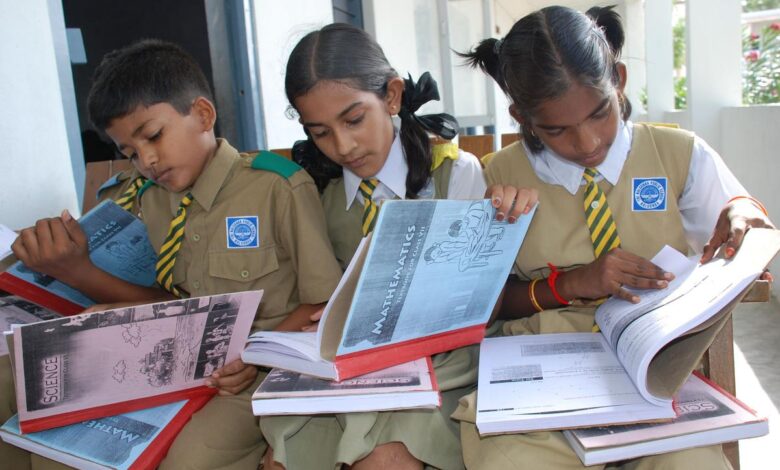
On February 23, 2026, the National Council of Educational Research and Training (NCERT) released the second part of its Social Science textbook for Grade 8, titled Exploring Society: India and Beyond, part of a new series of textbooks designed under the National Education Policy 2020. The textbook had appeared in two parts, with the first part having been released in mid-2025.
Within days of its release, the textbook found itself at the centre of one of the most charged constitutional debates India has witnessed in years; not because of anything radical or subversive in its pages, but because a few paragraphs in one chapter dared to discuss something that institutions rarely welcome being taught to children: that the judiciary, too, is fallible.
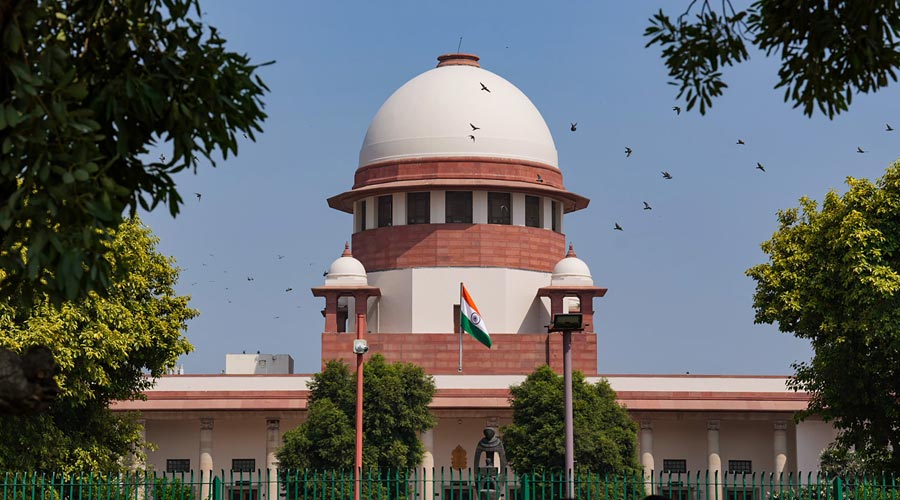
The Supreme Court imposed a complete blanket ban on any further publication, reprinting or digital dissemination of the NCERT’s Class 8 Social Science book, citing “offending” contents on corruption in the judiciary. A bench headed by Chief Justice Surya Kant issued show-cause notices to the NCERT Director and the Secretary of the Department of School Education, raising the spectre of criminal contempt proceedings. Terming the chapter “a deep-rooted conspiracy to malign the Judiciary,” the Supreme Court on February 26 imposed a blanket ban on the book and ordered seizure of all physical copies and immediate takedown of its digital versions.
The episode would perhaps have remained an administrative squabble had it not collided, within the same news cycle, with a far more inconvenient set of numbers tabled on the floor of Parliament, just thirteen days before the ban was ordered.
8,630 Complaints and a Wall of Silence
On February 13, 2026, the Union Government informed the Lok Sabha that the office of the Chief Justice of India has received 8,630 complaints against sitting judges over the last ten years, with 2024 and 2025 recording the highest numbers in the decade. The disclosure came in response to a written question posed by Dravida Munnetra Kazhagam MP V.S. Matheswaran, who had sought a detailed database of complaints, including on specific allegations such as corruption, sexual misconduct, and other forms of serious impropriety against members of the higher judiciary.
The data reveals a 51% increase in complaints from 729 in 2016 to 1,102 in 2025, with the highest number recorded in 2024 at 1,170. The lowest in the decade was 518 in 2020, almost certainly an artefact of the COVID-19 pandemic rather than any genuine decline in grievances.
What makes this data explosive is not the numbers themselves, but what accompanies them, which includes a deafening, institutional silence about outcomes. The parliamentary response did not clarify how many complaints were processed, dismissed, or resulted in disciplinary action. No breakdown was offered by subject, whether the complaints related to corruption, harassment, or other misconduct, nor any disposal categories such as dismissed, referred for inquiry, closed, or resignation advised.
The government’s position, as articulated by Minister of State for Law and Justice Arjun Ram Meghwal, was essentially that complaints go into a black box. Addressing the mechanism for handling these grievances, the Minister clarified that the judiciary operates under an “in-house procedure,” under which the authority to receive and adjudicate complaints rests exclusively with the Chief Justice of India and the Chief Justices of the respective High Courts. The government maintained that complaints received through the Centralised Public Grievance Redress and Monitoring System (CPGRAMS) are merely forwarded to the CJI or the concerned High Court Chief Justices for appropriate action.
Meghwal did not respond to the MP’s question about whether the government intends to introduce new guidelines to ensure better documentation, monitoring, and accountability for such complaints, emphasising the judiciary’s autonomy.
The In-House Procedure: A Fortress Without Windows
The mechanism through which judicial misconduct complaints are handled in India is known as the “in-house procedure,” a non-statutory framework adopted in 1997. The ‘In-House Procedure’ developed by the Supreme Court to inquire into complaints against judges is not statutorily backed. It is not based on any articulated rules or norms of judicial conduct that serve as a substantive basis to determine misconduct. The procedure to initiate inquiry and conduct the inquiry is indeterminate and vests excessive discretionary power with the Chief Justice of the Supreme Court.
This is not a fringe activist’s critique. These are the findings of the International Commission of Jurists (ICJ), which published a comprehensive report in February 2025 titled Judicial Independence in India: Tipping the Scales. The ICJ report highlights the erosion of judicial independence in India and finds that the selection and appointment of judges, transfer of judges, judicial accountability mechanisms, and post-retirement employment of judges all present significant structural weaknesses. Among its key recommendations, the ICJ urged India to “adopt a code of judicial conduct and establish a statutory mechanism to address complaints against judges to ensure a system of judicial accountability that is insulated from the executive.”
The in-house procedure is, in essence, a system where judges investigate themselves, report to themselves, and decide, in secrecy whether their colleagues have misbehaved. There is no statutory backing, no external oversight, and no requirement to publish outcomes. A Parliament answer supplies counts, not outcomes, no break-up by subject, no disposal categories, and no indication of how many complaints were anonymous, duplicative, or plainly frivolous. This is precisely the framework that the Latin maxim nemo judex in re sua, no person shall be a judge in their own cause, was designed to prevent.
The principle is foundational to natural justice. It disqualifies a decision-maker when they have a personal stake in the outcome. Applied to institutions, it demands that oversight of an institution cannot, by design, rest entirely with that institution itself. Yet that is precisely the architecture of judicial accountability in India today.
The NCERT Textbook: What the Chapter Actually Said
Much of the fury directed at the NCERT textbook has been generated by parties who are unlikely to have read the chapter carefully, or at all. The 18-page chapter opens with a quote honouring the judiciary, details its structure, highlights landmark cases protecting fundamental rights, and devotes only four pages to challenges and barely one page to corruption. This is the passage that triggered a suo motu contempt proceeding, the seizure of a school textbook, the professional blacklisting of three academics, and a directorial apology from NCERT.
The Campaign for Judicial Accountability and Reforms (CJAR) noted with anguish that the Supreme Court’s order banning the Class 8 NCERT textbook and barring its authors was passed without adherence to natural justice. The affected parties, including authors Prof. Michel Danino, Ms Suparna Diwakar, and Mr Alok Prasanna Kumar, were neither given notice nor adequate opportunity to present their case. The principle of audi alteram partem was not followed.
The three academics caught in the crossfire are not obscure provocateurs. Michel Danino is an academic who has edited several textbooks, including those for CBSE, taught Indian civilisation and culture at several institutions, was a guest professor at IIT Gandhinagar between 2011 and 2017, and was awarded the Padma Shri in 2017. Suparna Diwakar is a co-founder of the Indian School of Development Management. Alok Prasanna Kumar is a lawyer and co-founder of the Vidhi Centre for Legal Policy.
The Supreme Court said that either the three persons did not have “reasonable knowledge about the Indian judiciary,” or they knowingly misrepresented facts, and directed all governments and universities to disassociate the three of them and not assign any responsibility involving public funds. These are sweeping professional sanctions, imposed without hearing, against people whose curriculum work was part of a collective institutional process mandated by the NEP.
The Supreme Court also mandated that any future chapter on the subject must receive clearance from a committee that includes a former judge. This means the judiciary determines whether its criticism is legitimate, blacklists academics whose work fails this test, and mandates that judges approve future curriculum, eliminating external scrutiny that legitimacy requires and inverting the accountability fundamental to democratic governance.
Counsel for the academics pointed out that as per the New Education Policy, textbooks for Class 6 and 7 also deal with issues faced by the legislature, the Election Commission of India, and other institutions, and the judiciary was not singled out. The CJAR made the same observation: challenges facing the legislature and executive that include corruption are discussed in Classes 7 and 8 textbooks without controversy.
A Decade of Scandals the Classroom Did Not Invent
One could be forgiven for imagining that if the chapter was false, the Supreme Court’s fury would carry greater moral authority. But the documented record of judicial misconduct in India is not a matter of contested opinion, but it is a matter of public record.
In 2011, Justice Soumitra Sen of the Calcutta High Court became the first judge in independent India to be impeached by Parliament over misappropriation of funds. In 2017, the Central Bureau of Investigation (CBI) did initiate a probe into an alleged bribery scandal involving a former Odisha High Court judge, I.M. Quddusi, related to influencing judicial orders on private medical colleges.
In 2018, RK Mittal, a Railway Claims Tribunal judge, was found to have colluded with lawyers to misappropriate Rs 50 crore intended for accident victims’ compensation. Mittal was dismissed, and in 2025, 24 of his properties were seized by federal authorities.
In March 2025, a fresh controversy erupted when a fire at the residence of Delhi High Court Judge Justice Yashwant Varma revealed large quantities of unaccounted cash, prompting calls for his impeachment and renewed debate on judicial accountability. The incident triggered a crisis severe enough that the Supreme Court’s own press release in March 2025 placed in the public domain that an internal process had been set in motion and that work allocation could be withheld — in effect, acknowledging publicly that something had gone seriously wrong.
In November 2011, former Supreme Court Justice Ruma Pal had delivered a scalding critique of the higher judiciary, listing what she called the “seven sins” of the institution: turning a blind eye to the injudicious conduct of a colleague; hypocrisy; secrecy in the appointment of judges; plagiarism; arrogance; professional incompetence; and nepotism.
None of this was invented by three NCERT textbook writers. It was documented, reported, and in several cases adjudicated by courts themselves.
The Global Standard India Has Refused to Meet
India’s resistance to an independent judicial accountability mechanism increasingly places it in the company of outliers rather than democracies it aspires to emulate.
The Judicial Appointments Commission under the Constitutional Reform Act 2005 in the UK conducts transparent, merit-based selections of judges using published criteria. In 2023–24, it conducted approximately 35 selection exercises, received nearly 7,000 applications, and recommended 867 appointments. The key aspect that India’s collegium system lacks is codified selection criteria and public justification for recruitment.
The Judicial Conduct and Disability Act of 1980 in the US and the Canadian Judicial Council in Canada are responsible for investigating complaints of judicial misconduct through codified procedures, maintaining judicial independence, and involve participation of judges, lawyers, and laypeople to enhance their credibility.
On the specific question of whether contempt proceedings can be used to protect courts from criticism, the global trajectory is unambiguous. The United Kingdom abolished the offense of scandalising the court in 2013 through Section 33 of the Crime and Courts Act, emphasising that respect for the judiciary is undermined by criminal offences that provide special protection from criticism. Canada’s Ontario Court of Appeal in R v Kopyto held that the same offence violated freedom of expression under Section 2 of the Canadian Charter of Rights and Freedoms, reasoning that courts earn public regard through merit, not through suppressing questioning.
The European Court of Human Rights in Kyprianou v Cyprus identified a structural problem also present in the Indian Supreme Court’s orders: when the judge who is the subject of criticism also adjudicates the contempt charge, fair-trial guarantees are violated.
India struck down its own National Judicial Appointments Commission (NJAC) in 2015, a reform that would have introduced a degree of external oversight into judicial appointments. Although the NJAC aimed to bring transparency to the appointment process, it was struck down by the Supreme Court, leading to debates on judicial independence versus accountability. The court deemed external oversight a threat to independence. Critics have long argued, with considerable force, that a body that controls its own appointments, handles its own misconduct complaints in private, and can punish those who discuss its failings through contempt, is not independent — it is unaccountable.
The Contempt Architecture: When Silence Is Enforced by Law
India’s Contempt of Courts Act, 1971, has a provision for “scandalising the court”, a colonial-era holdover that most common law countries have long abandoned. Senior advocate Prashant Bhushan was found guilty of contempt by the Supreme Court in 2020 for tweets critical of the Chief Justice. In Re: Prashant Bhushan (2020), the Supreme Court found a senior advocate guilty of publicly criticising the judiciary.
During the hearing on the NCERT textbook, the CJI said, “I will not allow anyone on the earth to taint the integrity and defame the entire institution.” The court clarified that it was not opposed to any legitimate criticism of the judiciary, but don’t you think that its conduct, of the ban, the contempt notices, and the blacklisting, perhaps told a different story?
The UN Office of the High Commissioner for Human Rights has documented that even the possibility of surveillance creates a chilling effect on freedom of expression. Citizens must now calculate whether discussing a Supreme Court order might expose them to contempt liability, transforming critique from a democratic practice into a risk calculation.
Lawyer Ummar Jamal wrote pointedly: “Removing references to judicial corruption from educational material does not remove corruption from the judiciary itself.” And advocate Prashant Bhushan observed: “The more the judiciary tries to suppress discussion or restrict access to information, the more distrust is likely to grow in the minds of citizens.”
Both observations go to the heart of what the Supreme Court appears not to understand about the dynamics of institutional legitimacy: banning books does not erase reality. It merely ensures that reality is discussed more loudly, and in less measured terms, outside the classroom.
At The End, What Is Left Is A Question of Structural Design?
The phrase nemo judex in re sua is not merely an elegant Latin aphorism. It is a structural principle that democratic legal systems have, over centuries, recognised as non-negotiable. When an institution is both the subject of scrutiny and the adjudicator of that scrutiny, the result is possibly not independence, but it is impunity dressed in the language of independence.
India’s judiciary handles complaints against itself through an uncodified internal procedure. It controls who can write about it in school textbooks. It retains the power to hold in contempt anyone who, in its own estimation, has scandalised it. And it struck down the one reform, NJAC that might have created a mechanism of external check.
An investigative journalist noted a particularly sharp discrepancy: in a case before the Delhi High Court concerning corruption and misconduct complaints against a former Acting Chief Justice of the Madras High Court, the Supreme Court Registry stated on affidavit that it did not maintain data in the format sought. Yet year-wise data was furnished to Parliament, raising serious questions about whether there is a discrepancy in the Registry’s position and what it actually records.
This inconsistency in data exists for Parliament but not for a journalist’s RTI — is not a bureaucratic glitch. It can be perceived a portrait of selective disclosure that corrodes the very confidence the Supreme Court claims to be protecting.
As of 2024, the total number of pending cases across all types and levels of the judiciary exceeded 51 million, including over 169,000 court cases pending for more than 30 years in district and high courts. Case pendency is estimated to cost India between 1.5% and 2% of its Gross Domestic Product. India’s ranking in the World Justice Project’s Rule of Law Index 2023 places it at 111 out of 142 countries in civil justice and 93 in criminal justice — figures that no textbook ban will improve.
The irony is almost unbearable: an institution that could not clear its own backlog in anything less than three centuries, according to a 2018 NITI Aayog projection, has found the bandwidth to mount a suo motu contempt proceeding, order a nationwide book seizure, and professionally blacklist three Padma Shri-level academics, because a few pages of a schoolbook said what the numbers already confirm.
Democracies derive their legitimacy not from the immunity of their institutions, but from the accountability of those institutions to the people they serve. The judiciary is the third pillar of that democracy; the final guarantor of constitutional rights, the last resort of the ordinary citizen against the overreach of the powerful. It is, of all institutions, the one that most urgently needs to model the standards it enforces on others.
CJAR has urged the Supreme Court to revoke the ban on the textbook and permit healthy public discussion of the judiciary’s accomplishments alongside its challenges, rather than consigning them to whispers for fear of contempt.
Teaching children that institutions, all institutions, including the judiciary have challenges and require corrective action is not subversion. It is civics. It is, in fact, the foundational act of preparing a democratic citizenry. The argument that an impressionable 13-year-old will lose faith in the judiciary upon learning that it faces corruption challenges is both patronising and implausible. What will genuinely erode a child’s faith and, critically, an adult citizen’s faith is watching a court ban a book because the book told the truth.
The institution that claims to protect independence has demonstrated the insecurity that undermines it. When courts control what is taught about courts, they eliminate the external scrutiny that legitimacy requires.
Nemo judex in re sua. No person, and no institution, shall be the judge of their own cause. It is a principle old enough to be taught in a Class 8 textbook. It is, apparently, too dangerous to be allowed there.