Byju’s Billion-Dollar Reversal: The Saga of Paper Fortunes and Courtroom Clowns
In the hushed halls of a Delaware bankruptcy court, a surprising order scribbled out a staggering $1 billion judgment against Byju Raveendran, only to say, essentially, “Oops, never mind.” The founders of Think & Learn Pvt. Ltd., Byju’s holding company, proudly announced that the court admitted no actual damages had ever been proven and struck down the November 20 judgment. In plain English, the court confessed it never established why Raveendran should pay a penny, so it reset the board: the clash over missing cash will resume in January 2026 with a fresh accounting of who owes what.
This reversal, which is a rare win for the ailing ed-tech legend came after Raveendran’s lawyers filed “fresh submissions” demonstrating that the original $1 billion figure was nothing more than hot air. One can almost hear gavel pounding as a $1 billion sum vanishes with a bureaucratic dust-off; as the Delaware court explicitly “withdrew references to the $1 Bn figure,” clarifying that the first trial never quantified any loss. In effect, Byju’s founder bought himself a reprieve, not by paying, but by insisting the math wasn’t done yet. Now, both sides must return in January 2026 to argue anew whether the lenders suffered any harm at all.
The Rise of India’s Edtech Unicorn (and Its Fall)
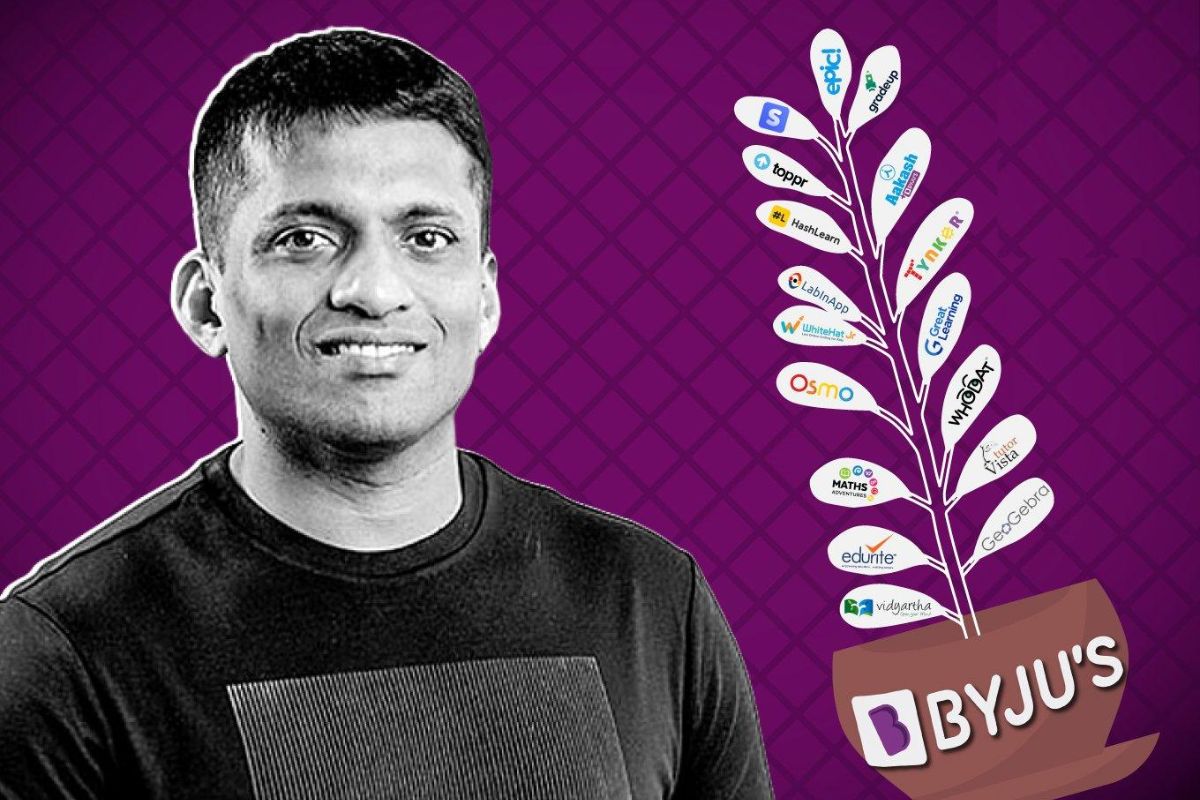
Only a few years ago, Byju’s was the archetype of startup success. Valued at over $22 billion by late 2021, it gobbled up rivals (Topo, Great Learning, Epic) and brand-named schools like Aakash Education in deals totaling over $3 billion. Billions loaned for ambitious acquisitions were “ploughed back” into Think & Learn, the company insisted, funding expanded operations from Bengaluru to Boston. It seemed the VC-fueled rocket ship would never quit.
But the crash was dramatic. By 2024, a reputation for growth had morphed into one of chaos: analysts blamed Byju’s collapse on “years of aggressive expansion, opaque financial practices and rising debt,” with auditors flagging late filings, undisclosed revenue tweaks, and mounting losses at acquired units. In that context, a $533 million loan became a totem of confusion: lenders alleged that money was spirited away; founders insisted every cent went into the business. The meltdown wiped out 85,000 jobs, disrupted 250 million students’ learning, and eroded “tens of billions” in enterprise value. The edtech juggernaut had become an unraveling saga of suits and searches.
The Debt and the Missing $533 Million
The immediate crisis traces back to a $1.2 billion loan in 2021. According to court filings, roughly half of that loan—some $533 million could not be traced by late 2023. GLAS Trust, acting for foreign creditors, dubbed this the “Alpha Fund” and claimed the money had been “diverted” from Byju’s Alpha (Singapore) to the personal coffers of Byju’s founders.
Byju Raveendran and cofounders vehemently denied any theft. “False, misleading and defamatory” was one choice phrase they used. In fact, filings by Rave’s team outline an elaborate money trail showing exactly where each dollar went. FirstIndia reconstructed this path: the loan was rerouted through a series of offshore vehicles (Camshaft Capital, OCI, Revere, and Singapore firms BIPL and BIGL) before entering Think & Learn under board-approved, FEMA-compliant transfers. Once inside, the funds were injected into Byju’s subsidiaries. For example, Think & Learn’s U.S. and global units (Tangible Play, WhiteHat Jr., Great Learning, Byju’s Beta, GeoGebra, etc.) received a combined ~$400 million to expand operations.
Importantly, each step was documented. Byju’s made board resolutions, got lender consents, and logged KYC checks all the way down the chain. Bank statements from Delaware’s discovery process appear to confirm every transfer. Even Kerala’s High Court has taken notice: in a Dec 5, 2025 contempt hearing, it insisted GLAS, RP (resolution professional) and EY justify why evidence was hidden. The crux: GLAS had possessed these bank docs “all along” but claimed ignorance of the trail in Indian courts. Now Byju’s backers insist the findings demolish the diversion story – the money never escaped the company, it only got redeployed into Think & Learn’s infrastructure and acquisitions.
All this evidence underpins Byju’s counterattack. Raveendran’s lawyers have pledged to submit “clinching evidence” proving GLAS and the RP misled courts about the $533m. They have already drafted a $2.5 billion lawsuit against those parties, claiming reputational harm and shareholder value destruction. In their narrative, the lenders’ failure to present the fund trail, plus dubious FEMA filings (omitting $1.42 billion of overseas transactions), indicate collusion between the RP and the lenders to seize control of Byju’s on false pretenses. The evolving picture is of a company where even regulatory filings and board meetings were allegedly gamed by one side, while the other side was left scrambling.
The Delaware Courtroom Drama
Under this melodrama, the Delaware case became Byju’s first battleground. In mid-2023, GLAS and other creditors hauled Byju’s into the U.S. District Court in Wilmington for breach of that $1.2 billion Term Loan. By late 2023, they won a summary judgment confirming TLPL (Think & Learn) had defaulted – a green light for damages. But when the case reached the damage phase, Byju’s lawyers balked at a fall 2025 hearing. They requested a delay to hire counsel and gather evidence, but the court proceeded ex parte in November 2025.
That fateful November default judgment imposed a $1,012,381,322 penalty on Raveendran personally, labeling him uncooperative and alleging he had ignored subpoenas about the missing $533m. Byju’s side complained bitterly that they were denied a fair chance: the court gave them just a few days (and denied an extension after he quickly hired an attorney), so he refused to appear. “I needed more time,” Rave insisted, but the judge pressed on. The result was a six-page decree meant to be final.
In December 2025, a hearing to correct errors turned the story on its head. The Delaware court said the default verdict was flawed as no damages had actually been assessed. All references to the $1 billion figure were struck out. The judge ordered a full damage trial in early January, in effect admitting the original judgment had been premature. In the words of one report: “the court explicitly withdrew references to the $1 Bn figure” and reset the case to focus on “whether the plaintiffs suffered any quantifiable harm”. Byju’s had successfully argued that earlier statements were shaped by incomplete and “distorted” information.
So for now, Raveendran has not been declared liable for a single dollar. His advisors boast that he will demonstrate the creditors “suffered no damage whatsoever” while the creditors intentionally misled courts. Some Delaware watchers quip that the missing $1 billion is on a lender’s tab book, evaporated by a procedural hiccup. The only problem left is who pays the legal fees – oh wait, that default judgment might still list a nominal amount. (We’ll find out in January. Or whenever the pandemic of paperwork lifts.)
The Aakash Rights Issue: A Proxy Game
If Delaware’s gavel was dramatic, Bengaluru’s boardrooms are no quieter. Byju’s takeover of Aakash Educational Services (2021 acquisition for ~$1 billion) has become an intricate subplot. TLPL still owned about 25.7% of Aakash, but that stake is teetering after a recently announced ₹250 crore rights issue. Byju’s Singapore vehicle Beeaar Investco was slated to subscribe its share.
Surprise is, instead of Beeaar’s money, a UAE-based entrepreneur stepped in. Filings show Bisy Philip, wife of Dubai tech executive Rajendran Vellapalath, quietly bought the exact 32.2 million new shares (₹16.09 crore) that were meant for Beeaar. Beeaar’s name doesn’t appear on the registry; Philip’s does, for exactly Beeaar’s slice. This sleight of hand has everyone speculating. Did Beeaar renounce its rights in favor of Philip? Experts say yes, because under Indian law, a shareholder can legally transfer rights to a third party, with board approval. Aakash’s board (now dominated by majority holder Manipal Edu) apparently signed off on the substitution, but has given no public explanation.
Who is Bisy Philip? She is Vellapalath’s wife. Vellapalath’s Dubai firm is already accused by GLAS of “asset stripping” Byju’s U.S. units (Epic and Tangible Play) – he even faces potential sanctions in Delaware for allegedly siphoning software and data. Both he and Philip are listed as “excluded” from bankruptcy protection, meaning lenders can chase them separately. Some observers wonder if Philip is a proxy for Raveendran or simply an independent investor sensing opportunity. The formalities (a renunciation letter and shareholder approval) were likely in place, but the vagueness is enough to keep lawyers busy.
Amid this rights-issue drama, TLPL’s own ₹25 crore slot was frozen. Aakash management raised eyebrows at possible FEMA violations because TLPL is controlled by foreign creditors. The brother, Riju Raveendran, rushed to the NCLT in Bengaluru in late November to block a ₹192-crore funding facility (DCBs) that would let TLPL pay for its Aakash shares. The tribunal refused his plea without prejudice, but the saga isn’t over: if TLPL’s entitlement lapses, its Aakash stake could plunge below 5%, all while domestic partners and foreign funds wrestle in court.
And it’s not just boardroom politics. A separate fight involves Qatar’s sovereign fund. Qatar Investment Authority lent $150 million to Aakash’s parent, taking TLPL’s Aakash stake as collateral. Byju’s businesses in Singapore are now in arbitration with QIA over that pledge, a conflict springing directly from these same share transfers. In other words, every share and rupee in Aakash seems to be caught in a global tug-of-war involving Indian insolvency courts, Singapore arbitrators, and mysterious Middle Eastern investors.
Gulf Wars and Other Lawsuits
Byju’s international entanglements don’t end there. Back in July 2025, the Think & Learn RP (backed by EY) filed a ₹1,597 crore lawsuit in NCLT Mumbai against a Dubai-based marketing partner, More Ideas General Trading. The claim is that this agent, which sells Byju’s content in the Gulf, failed to remit payments owed to Think & Learn. Byju’s founders are named as guarantors in the suit, forcing Raveendran, his brother and cofounder Divya Gokulnath to explain a Gulf transaction. In a twist of corporate irony, they responded that they are the aggrieved parties: the NCLT petitioners are just trying to distract from the founders’ own cases challenging RP Ajmera’s appointment and GLAS’s role.
This Dubai dust-up is just another chapter in the cross-border chaos. More Ideas had rights to sell Byju’s products across the Gulf on a revenue-share model. When the cheque didn’t arrive, TLPL cried foul; the founders call it a sham suit by the RP, part of a “series of baseless and false cases” meant to undermine them. Meanwhile, Riju is challenging the RP’s position itself in NCLT (arguing EY’s conflict of interest) and doubting whether GLAS really represents the majority of lenders at all.
In sum, multiple courts in Delhi, Bangalore, Singapore, and Wilmington are about to sift through the same web of facts, dollars and allegations. The fate of Byju’s could turn on any one of them.
What Does 2026 Hold?
With the New Year approaching, three questions hang in the air: Who truly lost $533 million, who owes what to whom, and will any of these proceedings really end? To be fair, Byju’s got a lifeline: the $1 billion default debt was undone, and with it the immediate threat of bankruptcy. But that reprieve is bittersweet; it only postpones a reckoning. In January, the Delaware court will decide whether GLAS’ lenders have a valid claim to damages, which likely means a deep dive into all the evidence we just reviewed. If they do, Raveendran might finally face a huge bill; if not, the lenders will ask why the crisis befell them in the first place.
In India, TLPL’s insolvency is paused but not over. Byju’s founders continue to pursue remedies against the RP’s actions; from accusing him of collusion to listing his claims as fraudulent. The Kerala High Court’s contempt case may force GLAS and others to hand over every relevant document under oath. And the Aakash board will eventually have to clarify this Bisy Philip mystery – is she an angel investor or a shadowy stand-in? If Beeaar truly renounced its stake, that could ring alarm bells for regulators. Flip the calendar to 2026, and expect more boardroom intrigue as Aakash presumably finalizes its rights issue and Byju’s ownership in it settles (or doesn’t).
For now, the only certainty is that Byju’s founders are not going quietly into the night. They are levelling new accusations, filing counterclaims, and painting their creditors as the villains of this saga. At the same time, their critics point to withheld filings and desperate maneuvers as evidence of deeper problems. Like any political theatre, the performances here can be bitterly sincere or theatrical diversions, which is why we must let the facts lead.
As one court recently conceded, the truth about damages is still unproven. One suspects we’ll have to wait for the lawyers to finish their glacial debates before we can call this play done. In the meantime, one darkly comic reality is clear: a company that once taught math and science to millions is now teaching the public about term loans, arbitration, FEMA, and contempt proceedings. If that’s Byju’s new curriculum, students, investors and regulators alike, should keep watching their wallets as the lesson unfolds.