The Game Of Defamation In The Biggest Democratic Nation: When Telling the Truth Gets You a Lawsuit!

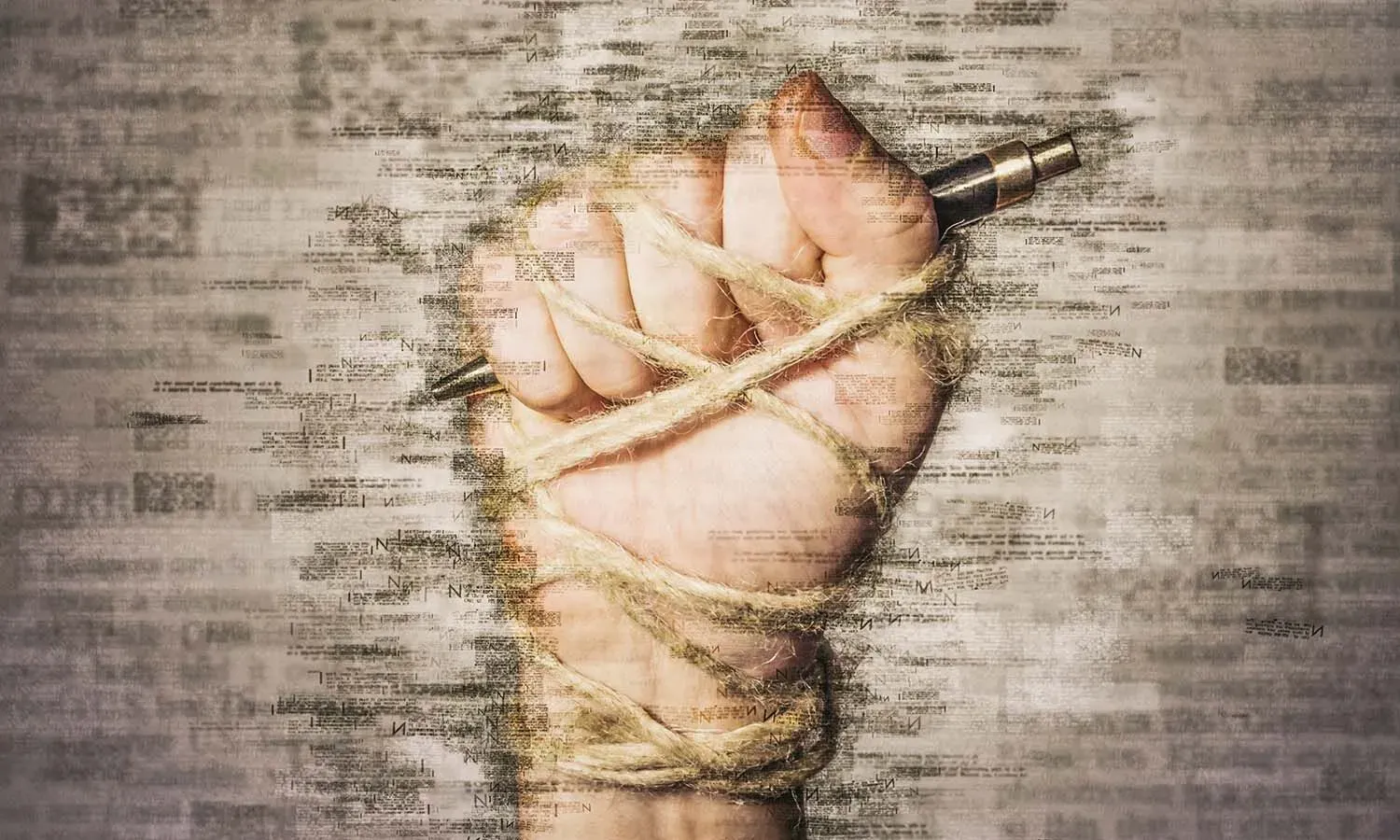
Titans vs the Fourth Estate: How Corporate Goliaths Muzzle India’s Independent Media
BLS International vs Nine Network: A Goliath’s Legal Gambit
In late 2025, a David-and-Goliath drama unfolded in a Delhi courtroom. On one side stood BLS International Services Ltd., a globe-trotting outsourcing behemoth operating in over 60 countries and serving 46 foreign governments. On the other side stood Nine Network Pvt. Ltd., a small, yet aggressive, honest, independent digital media outfit (publisher of Inventiva magazine) that had published a series of investigative reports probing BLS’s big Aadhaar deal.
The articles dug into public spending, procurement practices, and broader policy issues around the Aadhaar Seva Kendra project, essentially asking whether the contract was a “government-sanctioned scam” of inflated costs and favouritism. BLS’s response to this scrutiny? Not a point-by-point rebuttal or transparency offensive, but a defamation lawsuit aimed at bludgeoning the critics into silence. In other words, when Nine Network pointed a spotlight, BLS reached for a muzzle.
The legal offensive began with BLS securing an ex-parte injunction, a temporary gag order granted without even hearing Nine Network’s side. Armed with this one-sided order, BLS then pushed for a sweeping, blanket ban on any reporting related to the Aadhaar project or its lucrative contract.
The company’s lawyers even had the chutzpah to argue that Nine Network should not be heard in court at all because a contempt petition against the outlet was pending (essentially claiming Nine’s alleged disobedience of the gag meant they forfeited their right to defend themselves). If that sounds like a legal ambush, it was. The strategy was clear: hit fast, hit hard, and shut the story down before it gains traction. It’s a classic move from the playbook of powerful entities facing uncomfortable questions; where they use the law not as a shield for truth, but as a weapon to intimidate the truth-tellers.
But in this case, the courts pushed back – hard. The Karkardooma District Court in Delhi refused to play along with BLS’s censorship bid, delivering a strong rebuke that echoed principles of natural justice. In an order on October 2025, the judge pointedly noted that merely filing a contempt petition “does not tantamount to adjudicating the opposite party to have committed contempt,” and that Nine Network must be given a fair hearing before any drastic action.
In layman’s terms: you don’t declare a journalist guilty of contempt (or defamation) without giving them their day in court. The message to BLS was clear: slow down with the gag tactics and let both sides be heard. It was a significant win for press freedom, even before the main showdown on the injunction.
The real climax came on November 2025, when the court finally heard full arguments on BLS’s application to make the gag permanent. By this time, BLS had thrown in every allegation but the kitchen sink, including a bizarre story about Nine Network allegedly distributing defamatory pamphlets on the streets (a claim for which, notably, BLS provided no concrete evidence). The judge sifted through the plaint, the articles in question, the evidence (or lack thereof), and the constitutional stakes at play. In the end, the court refused to extend or expand the earlier ex-parte order.
The temporary muzzle would not be transformed into a long-term censorship tool. Crucially, the judge observed that Nine Network’s reports were aimed at the Aadhaar project and policy concerns, not at maligning BLS’s personal reputation. Even BLS’s own filings effectively conceded that the journalists were motivated by public-interest issues (how public money was being spent), not by malice. In legal jargon, the court recognized the hallmark of a SLAPP suit, a Strategic Lawsuit Against Public Participation, gussied up as a defamation claim. Lacking any proof of actual defamation (those mysterious pamphlets never materialized in evidence), BLS’s case to gag the media fell flat.
The judge’s reasoning amounted to a ringing endorsement of press freedom and prior restraint as an absolute last resort. The court noted that if Nine Network’s articles were ultimately found non-defamatory after a trial, no remedy could undo the harm of having muzzled them in the meantime. Censoring news before even determining its falsity, the order warned, would “fall foul of Article 19(1)(a) of the Constitution” – i.e. violate free speech.

If BLS was uncomfortable with scrutiny, that was not sufficient reason to preemptively scrub critical articles from the public domain. The court declined to convert BLS’s discomfort into legally sanctioned censorship. The ex-parte gag was lifted, and Nine Network could breathe easier, at least for now, to continue its reporting. David hadn’t exactly slain Goliath, but he dodged the giant’s club and lived to tell the tale.
This courtroom episode was more than a one-off victory for one media outlet. It felt like a small turning of the tide in India’s embattled media landscape. Observers noted that the case bore all the hallmarks of a SLAPP attempt, where a powerful company suing a smaller news outlet not necessarily to win on merits, but to scare it into silence through legal burden. The Karkardooma Court’s refusal to play censor is a refreshing departure from the trend of granting quick gags.
And make no mistake, there is a trend – a bigger pattern of such suits playing out across India’s courts. BLS is not alone; in fact, it’s following in the well-trodden footsteps of some of India’s biggest corporate titans. To fully grasp the playbook BLS tried to use, one must step back and see how other corporate Goliaths – from the Ambani empire to the Adani Group, have routinely reached for the “sue and subdue” strategy whenever journalism gets uncomfortably real.
SLAPP Suits: Muzzling Media by Any Other Name
What BLS attempted was hardly an isolated incident. In media circles, such cases are grimly referred to as SLAPP suits, Strategic Lawsuits Against Public Participation, and they’ve become the weapon of choice for the rich and powerful who wish to insulate themselves from scrutiny. The formula is simple: hit journalists or news outlets with gigantic lawsuits, often alleging defamation, claiming astronomical damages, and demand immediate gag orders on the contested reporting.
The goal is not necessarily to win in court, but it is to intimidate the press, drain their resources, and suppress critical voices by entangling them in legal battles. As veteran Indian journalist Paranjoy Guha Thakurta (who has weathered more than his share of such legal harassment) succinctly put it, the point of these legal attacks “isn’t to take journalists to court, but to serve as an intimidation tactic and a way to harass reporters through legal fees and time,” often by dragging them into courts hundreds of miles away from their home base. It’s lawfare, i.e., a war by litigation, and its chilling effect is no accident; it’s the whole point.
India’s corporate giants have increasingly embraced the SLAPP suit culture, mirroring a global trend where powerful interests weaponize laws to throttle the media. Across the world, from Europe to the United States, deep-pocketed individuals and companies exploit defamation and other laws to silence inconvenient truths, slapping journalists with extortionate damage claims or even criminal cases to stop critical reporting. The result, as Index on Censorship warns, is “crippling” for journalism and democracy alike. In India, defamation is not only a civil wrong but also a criminal offense – a colonial-era relic that theoretically allows jail time for “harming reputation”. Although rarely used to actually imprison journalists, the specter of criminal charges adds an extra layer of intimidation.
Over the past decade, legal intimidation of journalists in India has spiked. By 2014, media watchdogs were already sounding the alarm about big businesses muzzling critical reporting. That year, at least five journalists were fighting defamation cases filed by corporations, including one reporter who received a ₹1 billion legal notice for exposing wrongdoing in a rose export company. “My case is not just to intimidate me, but to silence all further reports on [the company],” that journalist, Keya Acharya, told the Committee to Protect Journalists (CPJ).
Her words proved prescient – the use of legal threats to impose a “chilling effect” on coverage has only broadened since then. Paranjoy Guha Thakurta himself co-authored a book titled “Sue the Messenger,” chronicling how legal arm-twisting by corporates is shackling reportage and undermining democracy in India. Sadly, in the years since that 2016 publication, the messengers are still being sued in droves.
The Adani Playbook: Gagging Critics at All Costs
If there’s an Exhibit A for corporate legal intimidation in recent times, it’s the saga of the Adani Group – one of India’s mightiest conglomerates – and its aggressive response to journalists investigating it. Gautam Adani’s companies have not hesitated to deploy the big legal guns when reporting turns unfavourable. The most striking example unfolded in 2025, when Adani Enterprises Limited (AEL) filed a defamation suit so sweeping it ensnared multiple journalists and even foreign entities.
Adani’s lawsuit, lodged in a Delhi court in mid-2024, accused a group of reporters of publishing “false and defamatory” reports that allegedly caused “massive loss” to the company’s image and even billions of dollars in market value. (How a handful of journalists could inflict multi-billion-dollar damage to a multinational behemoth’s reputation is itself a curious notion – but in the logic of SLAPP suits, hyperbolic claims are par for the course.)
What Adani really wanted, aside from hefty damages, was silence – immediate and total. And on September 6, 2025, the company scored an initial win: a civil judge in Rohini Court granted a gag order of breathtaking scope. The order barred several named journalists (including well-known reporters like Ravi Nair and Paranjoy Guha Thakurta) from “publishing or circulating” any material critical of Adani.
It also demanded that existing articles and posts be taken down within 36 hours, and even empowered Adani to flag additional URLs for takedown without further court vetting. In effect, the judge handed Adani a carte blanche to scrub the Internet of unwelcome content about itself. The order didn’t bother with the pesky question of whether the flagged articles were actually true or defamatory – it presumed defamation, and muzzled the writers preemptively. This was prior restraint in one of its most extreme forms: censorship first, trial later (maybe).
Press freedom advocates reacted with outrage, calling the gag order what it was: an unconstitutional prior restraint that violates freedom of speech. Indeed, India’s Supreme Court has long held that such prior restraints should be exceedingly rare. The standard traceable to a 19th-century English case (Bonnard v. Perryman) is that injunctions shouldn’t be granted in defamation cases unless the defendant has no possible defense of truth or fair comment.
In other words, unless it’s obvious the publication is false and indefensible, the media gets to publish and the aggrieved party can seek damages later if they prove defamation at trial. By gagging the journalists without hearing their side, the Rohini court’s order flew in the face of this principle. It was as if AEL’s accusation alone was enough to outlaw the articles. As The Indian Express noted, the judge essentially allowed Adani to “curate public information about itself” in the interim. Notably, none of the supposedly defamatory content was even examined by the court before issuing the takedown edict.
The fallout of the Adani gag was swift and far-reaching – precisely what the company might have intended. Armed with the court order, the Union Ministry of Information & Broadcasting swung into action, issuing directives to platforms to remove dozens of pieces of content. By mid-September, 138 videos and 83 social media posts critical of Adani had been taken down across outlets like Newslaundry, The Wire, HW News, and popular YouTube channels.
It was a censorship bonanza, all thanks to a single judge’s ex-parte order. The Editors Guild and press bodies sounded the alarm, condemning the gag as a grave threat to legitimate reporting and free speech. The International Federation of Journalists decried the “weaponisation of legal mechanisms to silence critical journalism”.
Fortunately, this story doesn’t end with Adani’s legal steamroller triumphing. In a heartening twist, just 12 days later the gag order met the fate it deserved – it was quashed on appeal. On September 18, 2025, a district judge (Ashish Aggarwal of Rohini courts) set aside the sweeping injunction, castigating it as “unsustainable” since the journalists had no chance to be heard before it was passed. The judge emphasized that no content was examined, no opportunity given to respond – a clear violation of natural justice. Until journalists are heard and a determination made that their work is false or defamatory, you cannot yank their articles offline, he held.
To do otherwise would be to invite a serious violation of Article 19(1)(a) (free speech). In scathing language, the order noted that the September 6 gag had effectively declared the material defamatory “without trial,” and that such shortcuts cannot stand. The court even mused that had the gag remained, any author writing critically about Adani would live under a perpetual “sword hanging” over their head, facing contempt of court for any unflattering comment before any finding of actual defamation – a “perilous state” that exerts a chilling effect on all critics. In other words, the gag order itself was more injurious to society than the articles ever could be.
The lifting of the Adani gag was celebrated as a rare victory for the fourth pillar of democracy in an era when money and influence often kills the essence of justice. It showed that at least some in the judiciary recognize a SLAPP suit when they see one. As the IFJ applauded, the decision “rightly reinforces that legal mechanisms must not be weaponised to silence critical journalism.” Still, the episode was a stark illustration of how far a corporate titan will go to shield itself from scrutiny.
Adani’s initial success in obtaining such an overbroad gag points to systemic issues: Why was such an order granted in the first place? The answers lie in forum-shopping and legal firepower, which brings us to another tycoon with a penchant for suing his critics into submission, which is none other than the Ambani clan.
The Ambani Blitz: 28 Lawsuits and a Hometown Advantage
If Adani’s approach was a sledgehammer, Anil Ambani’s was a machine gun – spraying legal bullets in all directions. In 2018, as the Indian media dug into controversial deals like the Rafale fighter jet contract (where Anil Ambani’s firm was a beneficiary), the younger Ambani launched what one newspaper called “the largest defamation blitz in recent memory.” His Reliance Group companies filed an astounding 28 defamation suits in a single year (2018) in one court (the city civil court of Ahmedabad).
Twenty of those cases targeted journalists and media organizations; the rest went after opposition politicians who had criticized his business dealings. This was a full-spectrum legal assault. The defendants read like a who’s who of the press: The Financial Times, Bloomberg, The Economic Times, The Tribune, The Week, The Wire, NDTV – even individual journalists like former Financial Times writer James Crabtree and noted columnist Ajai Shukla. If you had published anything even mildly critical of the Reliance-Anil Dhirubhai Ambani Group (ADAG) in that period, chances are you got a legal notice or found yourself named in a lawsuit.
The lawsuits coincided with reporting on two main issues; the Rafale fighter jet deal (where allegations flew of crony capitalism benefiting Ambani) and a business story about Anil Ambani’s telecom assets being sold to his brother Mukesh’s company. Not content to simply deny the allegations in the media, Reliance chose to carpet-bomb the critics with litigation. Many suits claimed enormous damages – Rs 5,000 crore (about $680 million) was demanded from the Congress-owned National Herald newspaper, for instance, over a Rafale article.
Another case infamously sought Rs 10,000 crore (about $1.35 billion) from NDTV and its journalists, simply because an NDTV news show panel debated whether Reliance had the expertise for the Rafale deal and raised questions about its transparency. (CPJ drily noted that the suit alleged a journalist’s question had “led to defamatory answers” from panelists – a logic that borders on farcical.) These ridiculously massive claims, as CPJ described them, amount to a “severe attack on press freedom in India.” The goal wasn’t to recover money – it was to send a message: mess with our empire, and we will bury you in court notices and legal fees.
One might wonder, why Ahmedabad of all places? The Ambani companies are largely based in Mumbai, and the journalists were scattered across Delhi, Mumbai, Bangalore, even abroad. The answer: forum shopping. Gujarat (Ambani’s home state) has a plaintiff-friendly quirk as it caps court fees for filing a civil suit at Rs 75,000, regardless of the damages claimed.
This means an Ambani firm can claim tens of thousands of crores in “reputation damage” but pay a pittance in filing fees. In other jurisdictions, to sue for, say, Rs 5,000 crore, the upfront court fee would itself be prohibitive. Ahmedabad provided the perfect legal firing range: low cost to file, perhaps a sympathetic local milieu, and inconvenient geography for the defendants. Suddenly, journalists and editors from Delhi or London found themselves summoned to a court halfway across India, needing to hire local counsel, file replies, and attend hearings – or risk ex-parte judgments. It’s a classic SLAPP tactic: sue in a distant forum to maximally inconvenience the target.
The Ambani blitz had its intended effect in many cases. Some media outlets quietly pulled down articles or issued tempered clarifications to avoid prolonged legal trouble. National Herald reportedly removed the article in question. The National Herald and Congress leaders were also sued for Rs 5,000 crore, though in 2019, after a political storm passed, Anil Ambani’s group rather magnanimously withdrew a number of these suits, including those against politicians and National Herald, claiming it wanted to “bring closure” to the Rafale issue.
By then the point had been made: a giant with sufficient legal ammunition can force media houses onto the back foot and deter aggressive reporting, at least for a time. For the few that refused to be cowed – like NDTV – the cases simply dragged on. (NDTV, to its credit, publicly stated that the Reliance suit was “nothing more than a heavy-handed attempt… to suppress the facts and prevent the media from doing its job – asking questions… in public interest.”)
Fast forward to 2025, and we see signs that courts are beginning to scrutinize these corporate gag attempts more skeptically. In November 2025, Anil Ambani was at it again – this time filing a defamation suit in Delhi (perhaps learning from the past that suing every critic in one go attracts bad press). He sued several media outlets, including Cobrapost and the publishers of The Economic Times, over reports alleging a ₹41,000 crore fraud in his companies. Ambani sought an immediate ex-parte injunction to stop any further reporting on the issue, presumably hoping for another magic gag like Adani first got. But this time, a Delhi court refused to bite.

The judge, after hearing initial arguments, indicated that Ambani’s case for an interim gag was not strong enough and that prior restraint was unwarranted on the presented facts. Realizing the writing on the wall, Ambani’s counsel tactically withdrew the injunction plea mid-hearing. In essence, the court forced Ambani to stand down from demanding a gag. That’s a notable shift – a senior civil judge in Delhi openly doubting the merits of a powerful billionaire’s request for secrecy at the preliminary stage. It suggests a growing judicial recognition that such suits can be abusive in nature, aimed more at reputation whitewashing than genuine grievance.
Not Just the Giants: Copycat Censorship Tactics
The impulse to silence journalism isn’t limited to the household-name conglomerates. Smaller tycoons and scandal-tainted businesspeople are increasingly copying the same playbook. Consider the case of Hari Shankar Tibrewala, a relatively lesser-known businessman caught up in a major money-laundering investigation (the ED’s probe into the Mahadev online betting racket).
In late 2025, as media reports linked Tibrewala to illicit betting funds and stock manipulation, he too unleashed the lawyers. Tibrewala’s legal team sent out a flurry of notices to many media outlets, including Nine Network, TICE Media and big financial dailies like Business Standard, accusing them of defamation and “misreporting”. Not stopping at notices, Tibrewala went to the Dwarka District Court in Delhi to seek an ex-parte injunction against these outlets. The demands were familiar: take down those articles, scrub those allegations, and cease any further reporting that paints him in bad light.
What were those media reports saying? They largely echoed enforcement agency releases and ongoing investigation details – for example, that Tibrewala was allegedly a “huge hawala operator” channeling betting money into Indian stocks (information publicly stated by the Enforcement Directorate). In other words, journalists were reporting on official accusations, duly noting that investigations were underway. Yet Tibrewala claimed these reports contained unverified allegations harming his reputation. As TICE editor Manoj Singh quipped, “When stories simply reference ED’s publicly available press releases and still attract legal notices, it raises a serious question — will an injunction now be filed against the ED’s website itself?”. His point: the legal threats seemed less about factual accuracy and more about controlling the narrative.
Indeed, Tibrewala’s approach exhibited a telling selective targeting. Despite “wide national coverage of Tibrewala’s affairs across several major outlets,” his legal notice pointedly omitted some of the biggest media houses, instead roping in a curated list of smaller digital platforms. This raised suspicions that he was “strategically focusing on smaller outlets where injunctive relief may be easier,” possibly to set a precedent before going after larger fish. Legal observers cited by TICE noted this is a common tactic – sue the little guys first, secure a favorable order, and use that to intimidate or legally corner the bigger organizations later. It’s essentially a form of legal cherry-picking: bully those least equipped to fight back, to build momentum for broader censorship.
At the time of writing, Tibrewala’s injunction petition was pending, with the court yet to decide whether to grant a temporary gag. But regardless of its outcome, the case underscores how the SLAPP syndrome is permeating all levels of the power structure. It’s not just blue-chip CEOs and billionaires; even mid-tier players entangled in scandals now reflexively reach for defamation law as a PR tool.
They seek to preemptively launder their image by legally intimidating journalists and freezing negative press while they fight their battles in court or with regulators. In Tibrewala’s case, the motivation was transparently reputation management amid a criminal probe: as ED raids and asset freezes piled up, the man’s priority seemingly became not resolving the allegations, but shutting up the messengers talking about them.
One might call it the “reputation racket”: powerful individuals using India’s plaintiff-friendly defamation laws as essentially a private censorship service. Filing a lawsuit is easy; proving the journalists wrong in a trial is hard (and might never happen). But you don’t need to win the case to win silence – the process is the punishment. As long as a gag order can be obtained or the legal proceedings themselves scare editors into self-censorship, the objective is achieved. It’s telling that in many high-profile instances, these suits quietly fade away later or are withdrawn once the news cycle passes.
For example, after the Rafale controversy ebbed, Reliance dropped several of its suits. The goal was never a righteous vindication in court; it was to buy time and suppress critical coverage at the crucial moment. Similarly, Paranjoy Guha Thakurta’s fateful 2017 article on the Adani Group (alleging regulatory favors) was taken down by Economic and Political Weekly under legal pressure, and the lawsuit against him was later settled quietly. But by then the story had been effectively buried and the journalist forced out of his job.
The Cost to Democracy and the Way Forward
These examples – BLS, Adani, Ambani, Tibrewala, and numerous others – paint a worrying portrait of the state of press freedom in India. When companies and wealthy individuals routinely turn to injunctions and figurehead lawsuits as a first response to criticism, it indicates a mindset that views journalism not as a democratic check but as a nuisance to be managed with legal muscle.
The cascading effect on the media landscape is deeply corrosive. Large news organizations might have the resources to fight prolonged legal battles (though even they often blink or buckle under pressure), but independent and smaller media – the very ones often doing courageous investigative work – can be crippled by a single well-aimed lawsuit.
The prospect of spending years in court, paying hefty legal fees, traveling to far-off forums like a remote district in Gujarat, all to defend the truth of a story, is enough to make even a brave editor think twice. This is the “chilling effect” in action: journalists preemptively soften their critiques, or drop certain investigations entirely, out of fear that a powerful target will SLAPP them with a suit and grind them down.
In a democracy, this kind of legal bullying undermines the public’s right to know. Vital stories about corporate malfeasance, government contracting scams, or public interest issues might never see the light of day because an editor calculated that publishing isn’t worth risking a crippling lawsuit. Those that do publish and get hit with suits often have their content taken down or blocked (even temporarily), creating information vacuums.
For instance, when the Adani gag order was in force (even for those 12 days), a wealth of critical content on one of India’s largest conglomerates vanished from major platforms – precisely when the public debate on the company’s activities was most needed. Had the gag not been overturned swiftly, that blackout could have lasted months or years, skewing public perception in the interim. Every such instance amounts to a small sabotage of the marketplace of ideas.
Legally, India finds itself at a crossroads. The higher judiciary has started acknowledging the menace of frivolous or excessive defamation suits. The Supreme Court’s 2024 ruling overturning a gag against Bloomberg (in a case involving Zee Entertainment) reaffirmed that courts must be extremely cautious in granting ex-parte injunctions against media. It underlined that injunctions should be granted only when not restraining would cause greater injustice than restraining – essentially a call to consider the public interest in publication.
Moreover, truth and fair comment on matters of public concern are recognized defenses to defamation; how can a journalist ever assert those if gagged before trial? Multiple High Courts too have quashed gag orders and criticised lower courts for acting hastily. These are heartening signs that the judiciary is not monolithically siding with the powerful.
Yet, the abuse continues, highlighting the need for systemic reform. Some democracies have enacted anti-SLAPP laws – provisions that allow defendants to quickly get such suits dismissed if they relate to protected speech on matters of public interest. India currently has no dedicated anti-SLAPP statute. Perhaps it’s time to consider one.
At the very least, judges across the board need sensitization: a critical article about a large corporation, especially one raising questions of governance or public funds, should ring alarm bells that a request to censor it may be more about reputation management than genuine defamation. Prior restraint should remain the rarest of exceptions, employed only when there is clear, immediate, and irreparable harm from publication (a high bar that mere corporate embarrassment does not meet).
There’s also a cultural shift needed. The rich and powerful in India – be they corporate czars or political heavyweights – often bristle at the very notion of media accountability. As one editor noted, many power-brokers still don’t understand that the media’s role is to be a watchdog; they think journalists should simply parrot the official narrative. Changing that mindset is hard, but shining a light on these legal intimidation campaigns is a start.
In recent years, media outlets have begun reporting on the fact of being sued itself – turning the spotlight back on the would-be censors. That’s a form of resistance: tell the public when someone tries to gag you. When Anil Ambani filed those 28 suits, it became a story in its own right, with press freedom groups and even the international media taking note. Public opinion, at least among those who value democracy, tends to side with the underdog journalist facing the billionaire’s wrath.
Ultimately, the fight against SLAPP suits in India is a fight for the soul of its democracy. A free press is often messy, noisy, and yes, it can sometimes even be inaccurate – but the answer to that is more speech, not enforced silence. Titans like BLS International, Adani, Ambani, and others have every right to rebut, refute, and present their side in the court of public opinion.
What they should not have is the right to preemptively gag the press to avoid criticism. As the Delhi court wisely noted in the Nine Network case, discomfort with scrutiny is not grounds for censorship. Or as the old saying goes, “If you can’t stand the heat, stay out of the kitchen”. Likewise, if you can’t handle a probing article, firing off a lawsuit shouldn’t be your reflex.
Every time a judge denies an unfair gag order or tosses out a frivolous ₹1,000 crore claim, it’s a small victory for truth and accountability. Each such decision chips away at the notion that might makes right in the media arena. But vigilance is key – for every one case that gets public attention, many others fly under the radar, where smaller outlets quietly yield to legal threats we never hear about. The burden falls on not just courts, but civil society and journalistic community to support those on the frontline of such suits.
In the end, the question posed – “Till what extent will companies go to silence true journalism?” – is being answered in real time: They will go as far as we, as a society, allow them to. Suing the messenger has become all too easy. It will take collective will to ensure that telling uncomfortable truths does not become an occupational hazard litigated into oblivion.
The courage of independent media and the robustness of judicial oversight will together determine whether India’s journalists can continue to hold power to account, or whether they’ll be forced into an era of self-censorship under legal duress. The stakes could not be higher – because when the press is silenced, the public is blindsided. And that’s exactly what the titans want, but exactly what democracy cannot afford.