₹590 Crore Fraud At IDFC First Bank Triggers ₹14,000 Crore Market Wipeout. Governance Test, Investor Jolt, And The Question Of Internal Controls
A ₹590-crore fraud at a single branch of IDFC First Bank has triggered a market rout far exceeding the financial loss itself. The episode not only erased ₹14,000 crore in investor wealth but also revived deeper questions about governance, internal controls and the fragility of trust in India’s banking system.

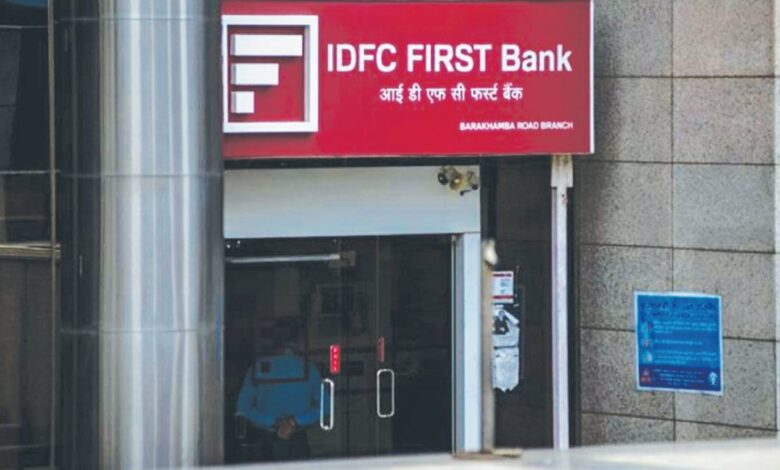
A ₹590-crore discrepancy at a single branch has snowballed into one of the sharpest market reactions seen in recent years for a mid-sized private lender. Shares of IDFC First Bank plunged as much as 20% in a single session after the bank disclosed suspected fraudulent transactions at its Chandigarh branch involving accounts linked to the Haryana government.
By the end of the trading session, over ₹14,000 crore in market capitalisation had been erased, reminding us that in banking, confidence can sometimes prove more fragile than capital.
How the Fraud Came to Light
The episode surfaced after a department of the Haryana government requested closure of its account and transfer of funds to another bank. During the reconciliation process, discrepancies were observed between the balances recorded by the bank and those mentioned by the government entity.
In its stock exchange filing, the bank stated:
“The aggregate amount under reconciliation across the identified accounts at the above mentioned branch is approximately ₹590 crore. The impact may be determined based on receipt of further information, validation of claims, recoveries of any nature including those made through the process of marking lien on fraudulent beneficiary accounts maintained with other banks, liabilities of other entities involved in the fraudulent transactions, and the legal recovery process.”
From February 18, 2026 onwards, other Haryana government entities also engaged with the bank regarding their respective accounts. During this extended reconciliation exercise, additional differences were observed between the balances recorded in the bank’s books and the amounts cited by the account holders.
Based on a preliminary internal review, the bank clarified that the matter appears confined to a specific group of government-linked accounts operated through the Chandigarh branch and does not extend to other customers.

Immediate Action: Internal Review and Forensic Audit
Following the discovery, four suspected officials were placed under suspension pending investigation, and a police complaint was filed.
The Special Committee of the Board for Monitoring and Follow-up of Cases of Frauds (SCBMF) met on February 20, 2026. The Audit Committee and the Board of Directors were convened on February 21 to review the developments.
An independent forensic audit has been initiated, with KPMG appointed to conduct the investigation. The bank has also sent recall requests to certain beneficiary banks to lien-mark balances in suspicious accounts maintained elsewhere.
It has committed to pursuing strict disciplinary, civil and criminal action against employees and any external individuals found responsible.
The Market’s Verdict: A Disproportionate Reaction?
While the operational discrepancy stands at ₹590 crore, the market response was dramatically larger.
The stock slumped nearly 20% intraday, marking its worst session in six years. Around ₹14,000 crore of investor wealth was wiped out in a single trading session.
The selloff was not merely about the absolute amount involved. Investors appeared to react to what the incident could imply about internal controls, governance oversight, risk management frameworks and earnings visibility.
In banking, valuation often carries a trust premium. When governance concerns surface, that premium can compress quickly.
Earnings Impact, Manageable or Material?
The discrepancy amounts to roughly one-fourth of the bank’s annual net profit.
According to analyst estimates:
- UBS pegged the suspected amount at about 22% of fiscal 2026 profit after tax, though it indicated the capital impact would likely be limited to around 1% of net worth.
- Morgan Stanley estimated the potential hit to fiscal 2026 profit before tax at roughly 20%.
- Jefferies noted that the lender would need to reassure investors that the issue is not systemic and has not spread to other clients.
The broad consensus appears to be that while the profitability impact may be meaningful in the short term, the bank’s capital position remains largely intact.
What remains uncertain is the timing of recognition and recovery. The bank has said it cannot comment on accounting treatment until legal clarity and recovery prospects are clearer.
CEO Response, “An Isolated Incident”
Managing Director and CEO V. Vaidyanathan has described the episode as an isolated incident and the first major operational setback in a decade. He stated that net interest margins are improving and credit costs are expected to decline this quarter. According to him, the bank believes it can absorb the financial impact.
On investor engagement, he indicated that marquee shareholders such as Warburg Pincus and Abu Dhabi Investment Authority remain supportive and are informed as board participants.
The CEO emphasised that the bank’s long-term growth trajectory remains intact. Since its merger phase, deposits have grown from approximately ₹38,000 crore to ₹2.8 lakh crore. The bank continues to target a return on equity of 15–16% based on unit economics and core profit growth.
“We will learn from this and make the necessary improvements,” he said.
A Governance Stress Test
Even if the financial hit proves manageable, the larger issue revolves around systems and oversight.
Branch-level fraud involving government-linked accounts inevitably raises questions:
- How did reconciliation gaps persist?
- Were internal audits and compliance checks bypassed?
- Were segregation-of-duty protocols adequate?
- What early warning signals were missed?
While the bank maintains that the matter is confined to a specific group of accounts and not systemic, the findings of the forensic audit will be critical in shaping both regulatory and investor perception.
The episode also reflects a broader trend flagged in data from the Reserve Bank of India. While the number of fraud cases in the banking system has declined in recent years, the size of individual frauds has increased.

A Pattern That India Has Seen Before
India’s banking history over the past two decades has been punctuated by episodes that have shaken confidence, redefined regulation and altered how investors price risk.
One of the defining moments came in 2018 with the fraud at Punjab National Bank involving jeweller Nirav Modi. Fraudulent Letters of Undertaking were issued without proper recording in the core banking system, leading to exposure exceeding ₹13,000 crore and exposing critical control failures between SWIFT messaging and internal systems.
Closely linked was the case involving Mehul Choksi and the Gitanjali Group, which amplified scrutiny around similar instruments.
Earlier, the default by Vijay Mallya on loans extended by a consortium led by State Bank of India triggered nationwide debate on credit discipline and governance standards in public sector lending.
The collapse of Infrastructure Leasing & Financial Services (IL&FS) in 2018 exposed how governance failures could ripple across the broader financial ecosystem. The crisis at Punjab and Maharashtra Co-operative Bank revealed supervisory blind spots in the cooperative banking sector. The intervention at Yes Bank following allegations against Rana Kapoor demonstrated that private institutions were not immune to governance breakdowns.
Together, these cases reflect recurring stress tests for India’s financial architecture.
Emerging Patterns in Indian Banking Frauds
Across these episodes, certain themes recur. Weak internal controls or deliberate bypassing of oversight mechanisms frequently lie at the heart of major frauds. Delayed detection allows irregularities to compound over time. Concentrated exposures to specific entities magnify damage when problems surface. Governance lapses – rather than mere accounting errors – often play a decisive role.
In financial markets, the punishment often exceeds the quantum of fraud. Share prices fall not only because of immediate losses but because investors reassess risk premiums and future earnings stability.
Data from the Reserve Bank of India supports this observation. While the number of reported fraud cases has declined, average ticket sizes have increased and cases have grown more complex, often involving layered transactions and cross-border elements.

The Last Bit,