
Ankiti Bose, Zilingo & Suumaya: The ₹201-Crore Transaction Trail, a ₹400-Crore COVID Order and a Mumbai GST Case Demand Answers
SEBI records ₹201.12 crore in sales between Suumaya Industries and Zilingo Global; a pending Mumbai GST case index lists Ankiti Bose, Zilingo Global, Suumaya Industries and Veda Multicorp among the parties. With ED separately alleging ₹137 crore in the Need to Feed case and ₹5,000 crore in circular transactions, the missing reconciliation of these corporate and financial trails demands serious investigation.

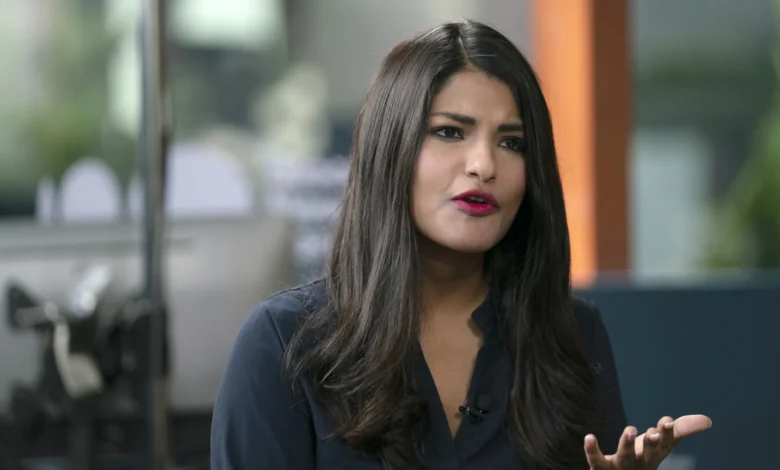
The story of Ankiti Bose and Zilingo was once presented as an extraordinary startup success. A young founder, a rapidly expanding fashion-technology platform, hundreds of millions of dollars in funding and a near-billion-dollar valuation.
But the subsequent collapse of Zilingo, the internal financial controversy surrounding its management, the departure of its CEO, and now the emergence of significant corporate transaction records involving Suumaya Industries raise questions that deserve more than corporate explanations.
There are three important documentary developments.
First, Suumaya announced ₹400 crore of COVID-19 supply orders attributed to Zilingo in May 2020.
Second, SEBI’s January 2025 interim order recorded ₹201.12 crore in net sales between Suumaya Industries and Zilingo Global Private Limited.
Third, a Mumbai criminal complaint docket, publicly indexed under the title Lavakesh, Additional Assistant Director v. Ankiti Bose, lists Ankiti Bose, Zilingo Global, Suumaya Industries, Veda Multicorp and several other individuals and companies in a pending proceeding under the Central Goods and Services Tax Act.
These records merit close examination. They do not automatically establish that every party participated in the same wrongdoing. But they provide concrete leads that investigators should not leave unexplored.
1. The ₹400-crore Zilingo order: A corporate announcement that deserves to be reconciled
On 14 May 2020, Suumaya Lifestyle Limited, subsequently known as Suumaya Industries Limited, announced that it had secured approximately ₹525 crore in orders for COVID-19 essentials, reusable masks and PPE kits.
The company’s announcement attributed:
- ₹400 crore to Zilingo.
- ₹65 crore to various State Government institutions.
- ₹15 crore to Central Government agencies.
- ₹45 crore to other multinational companies and corporates.
The Zilingo component alone represented approximately 76% of the announced order book.
The company also announced plans to supply approximately 50 lakh reusable cotton masks and 35 lakh PPE kits over five months through contracted manufacturing facilities.
This was an extraordinary commercial announcement for a company whose historical business was associated with textiles and women’s fashion.
It was also an important announcement for Zilingo, whose co-founder and CEO was Ankiti Bose.
The critical question is what happened to this commercial relationship after the announcement.
Was the ₹400-crore order supported by a binding purchase agreement? Which Zilingo legal entity executed the agreement? How much was actually supplied? Were orders cancelled, amended or transferred? What was invoiced, what was delivered and what was ultimately paid?
A corporate press release cannot answer these questions.
The underlying contracts, invoices, transport records, delivery acknowledgements and bank statements can.
2. SEBI’s ₹201.12-crore disclosure: Zilingo appears in Suumaya’s actual counterparty records
The issue becomes substantially more important following SEBI’s interim ex-parte order-cum-show-cause notice dated 24 January 2025.
The regulator examined Suumaya Industries’ transactions during the period from 1 April 2020 to 31 March 2023.
Its counterparty schedule specifically identified Zilingo Global Private Limited and recorded approximately ₹201.12 crore in net sales by Suumaya to that entity.
This is not merely a reference to a brand name in an old press release. It is a specific corporate entity appearing in a securities regulator’s examination of Suumaya’s recorded transactions.
The order also identified substantial sales with other counterparties, including Veda Multicorp LLP, First Orgacon Private Limited and Dentsu Communications India Private Limited.
SEBI raised serious prima facie concerns about Suumaya’s financial records, including the use of journal entries, the mismatch between reported transactions and bank receipts, and the apparent fictitious nature of a substantial proportion of the company’s standalone sales and purchases.
However, an important distinction must be maintained.
SEBI’s order does not name Ankiti Bose or Zilingo Global as noticees. Nor does the ₹201.12-crore entry, by itself, establish that the Zilingo transactions were fictitious.
The regulator’s wider findings cannot automatically be attributed to every counterparty.
That is precisely why the Zilingo transaction trail needs independent verification.
3. Where was Ankiti Bose during the relevant commercial relationship?
Ankiti Bose co-founded Zilingo in 2015 with Dhruv Kapoor and served as its CEO for approximately seven years.
She was suspended on 31 March 2022 following complaints that triggered an internal investigation. Zilingo terminated her employment on 20 May 2022.
She announced her resignation from the company’s board and directorships in Zilingo and its subsidiaries on 30 June 2022.
The chronology is significant.
Suumaya’s announced COVID-19 supply relationship began in May 2020. SEBI’s subsequent investigation covered April 2020 to March 2023. Bose’s executive and board positions overlapped with part of that period.
However, SEBI’s published counterparty schedule provides an aggregate ₹201.12-crore figure, not a year-wise transaction schedule identifying the exact dates, approvals or individuals responsible for each transaction.
Therefore, the actual extent of Bose’s involvement cannot be established merely from her designation.
The relevant evidence would include:
- Original purchase agreements and amendments.
- Zilingo Global’s board resolutions and management approvals.
- Internal correspondence concerning Suumaya.
- Purchase orders and supplier onboarding documentation.
- Invoice approvals and accounting ledgers.
- Bank statements and payment authorisations.
- Audit records identifying the executives responsible for individual transactions.
A former CEO cannot automatically be held responsible for every transaction recorded by a subsidiary. Equally, a significant commercial relationship should not escape examination merely because the relevant executive subsequently left the company.
The question must be resolved through documents.
4. The Mumbai GST proceeding: A more direct corporate intersection
A further development deserves particular attention.
A third-party public court-indexing database lists a proceeding titled:
Lavakesh, Additional Assistant Director v. Ankiti Bose
The indexed details are:
- Registration number: SS Case 155/2025.
- Filing number: 113646/2025.
- CNR: MHMM110153622025.
- Court: Chief Metropolitan Magistrate, Esplanade Court, Mumbai.
- Statutory classification: Sections 132 and 137 of the Central Goods and Services Tax Act, 2017.
The indexed party list includes Ankiti Bose, Zilingo Global Private Limited, Suumaya Industries Limited, Veda Multicorp LLP, Ushik Gala and several other individuals and companies.
The database records the proceeding as pending and displays 18 January 2027 as the next hearing date.
This is a significant development because the named corporate entities are not appearing here merely as unrelated names in separate news reports. The public case index places several of them within the same proceeding.
But the distinction between a case listing and proof of wrongdoing is essential.
The original complaint, prosecution sanction, cognisance order, summons and transaction schedules have not been independently examined for this article. The precise allegations against each respondent, the alleged transaction amounts and the individual roles must therefore be verified against those primary documents.
Nevertheless, the appearance of Bose, Zilingo Global, Suumaya Industries and Veda Multicorp in the same indexed proceeding provides a specific investigative lead.
What transactions are alleged?
Which invoices and tax-credit entries are involved?
Which entities allegedly issued invoices, received payments or claimed input tax credit?
What is the alleged role of each individual?
And do any of the transactions correspond to the ₹201.12-crore sales recorded by SEBI?
These are questions that the original prosecution documents must answer.
5. The ₹137-crore Need to Feed investigation and alleged ₹5,000-crore circular trading
The Suumaya investigation took another serious turn when the Enforcement Directorate announced the arrest of promoter Ushik Gala on 20 November 2025, following his arrest on 17 November.
According to the ED, the investigation concerns alleged embezzlement of approximately ₹137 crore under a purported Haryana Government-linked programme called Need to Feed.
The agency alleged that certain Suumaya entities and employees of Dentsu Communications India were involved in creating a purported government contract to obtain trade-finance funding.
The ED further alleged that funds were routed through dummy agro-trading entities without corresponding genuine purchases and that fake invoices and lorry receipts were used to simulate business transactions.
The agency also alleged approximately ₹5,000 crore in circular transactions, stating that only around 10% of the transactions were genuine.
These are serious allegations, but they are separate from SEBI’s counterparty disclosure and the GST case index.
The ED’s published November 2025 account does not identify Ankiti Bose or Zilingo Global as participants in the Need to Feed arrangement.
It would therefore be irresponsible to claim that Bose participated in the alleged ₹137-crore arrangement or the alleged ₹5,000-crore circular trading.
What investigators should establish is whether any actual financial or documentary overlap exists between these matters and the Suumaya–Zilingo transaction trail.
If common accounts, counterparties, invoices, payments or intermediaries exist, they should be examined. If no connection exists, that should also be established conclusively.
6. Zilingo’s earlier financial controversy cannot be ignored
The Suumaya relationship must also be viewed against the background of Zilingo’s own corporate crisis.
In March 2022, the Zilingo board suspended Ankiti Bose pending an internal investigation into complaints of serious financial irregularities.
The company appointed external investigators, including Kroll and Deloitte, to examine the company’s financial affairs.
Contemporaneous Bloomberg reporting published by The Indian Express discussed questions concerning more than US$7 million in vendor payments reportedly approved by Bose without the knowledge of other senior executives.
These were reported allegations, not judicial findings.
Bose denied wrongdoing and maintained that payments had proper documentation and were known to relevant finance, technology or operations teams. She also said she had not been given access to the complete investigation reports or sufficient opportunity to respond.
Zilingo announced her termination on 20 May 2022, stating that the decision followed an independent forensic investigation into serious financial irregularities and that it reserved the right to pursue legal action.
There was also a dispute over the reasons for termination. A contemporaneous Mint report stated that her termination letter cited issues such as insubordination, neglect and failure to produce documents, rather than expressly accusing her of fraudulent transactions.
On 30 June 2022, Bose resigned from all directorships, stating that the board had not provided her with the investigation reports.
The wider financial problems continued. Zilingo entered creditors’ voluntary liquidation in February 2023.
The company subsequently became the subject of competing allegations and disputes involving its founders, investors and former management.
7. The harassment dispute and the 2024 FIR
The controversy surrounding Zilingo was not limited to its financial affairs.
Bose also raised harassment-related concerns before the board in 2022, although Zilingo maintained that these concerns were brought to its attention after her suspension.
In April 2024, Bose filed an FIR against co-founder Dhruv Kapoor and former COO Aadi Vaidya, alleging sexual harassment and stalking relating to alleged incidents in March 2021.
Both individuals denied the allegations and described them as baseless.
The existence of the FIR does not establish the truth or falsity of the allegations.
The dispute illustrates how Zilingo’s corporate collapse developed into a prolonged conflict involving management, shareholders, employment, financial allegations and criminal complaints.
These controversies should be examined separately rather than used to assume wrongdoing in unrelated commercial transactions.
8. The documents that regulators must obtain
The relevant authorities now have identifiable corporate and financial records to examine.
A proper investigation should establish:
The ₹400-crore announcement: Obtain the original Zilingo order, the contracting entity, the purchase agreement, amendments, cancellations and actual deliveries.
The ₹201.12-crore SEBI entry: Obtain year-wise ledgers, corresponding Zilingo Global purchase records, invoices, credit notes, payment statements and transaction approvals.
The GST proceeding: Examine the original complaint, prosecution sanction, cognisance and summoning orders, invoice schedules and evidence identifying the role of each named respondent.
The ED investigation: Establish whether any common counterparties, bank accounts, invoice trails, intermediaries or transfers connect the Need to Feed transactions with the Zilingo relationship.
Executive responsibility: Examine board minutes, internal emails, management approvals and authorisation records to establish which executives actually negotiated, approved and supervised the transactions.
If the documentary trail implicates any individual, that evidence must be assessed through the applicable legal process. Equally, evidence excluding an individual’s involvement must not be ignored.
Conclusion: Corporate relationships cannot be investigated selectively
The Suumaya–Zilingo relationship now warrants a proper documentary reconciliation.
A ₹400-crore order was publicly attributed to Zilingo in May 2020. SEBI subsequently recorded ₹201.12 crore in net sales with Zilingo Global. A pending Mumbai GST proceeding is publicly indexed with Ankiti Bose, Zilingo Global, Suumaya Industries and Veda Multicorp among the named parties.
Separately, the ED has alleged substantial financial wrongdoing involving Suumaya and Dentsu.
These records create legitimate questions about the movement of goods, the authenticity of invoices, the flow of funds, tax treatment and the responsibility of the executives who controlled the relevant entities.
Ankiti Bose’s precise role must be established from corporate and transaction records. Her former position as Zilingo’s CEO and director warrants examination of the relevant decisions, but it does not establish personal involvement in any alleged offence.
The same standard must apply to every promoter, director, executive and corporate entity appearing in these records.
The ₹201.12-crore entry cannot remain an unexplained line in a regulatory schedule. The GST proceeding cannot remain merely a collection of company names. And the ₹137-crore and ₹5,000-crore allegations cannot be used to imply guilt by association.
What the public deserves is a complete transaction trail, identification of the actual decision-makers and an investigation that establishes what happened rather than assumes what happened.
That is the accountability standard the authorities must meet.
DISCLAIMER
This article distinguishes between published corporate announcements, regulatory observations, allegations by investigative agencies, pending criminal proceedings and disputed claims. SEBI’s January 2025 document is an interim ex-parte order-cum-show-cause notice, not a final adjudication. The ED’s allegations remain subject to the legal process. The Mumbai GST case details cited here are based on a public third-party court-indexing record; the original complaint and supporting judicial documents require independent verification. No finding of criminal guilt against Ankiti Bose in the specific Suumaya transactions discussed here is asserted. The role and responsibility of each individual must be determined from primary evidence and through due process.