Before Macron Lands, India’s $40 Billion Rafale Bet Faces Old Questions
Before Macron’s aircraft touches down in Delhi, India may greenlight one of its largest defence acquisitions in history. The proposed 114 Rafale jets signal strategic urgency amid a widening squadron gap but they also reopen old questions about process, cost and trust in India’s defence procurement system.

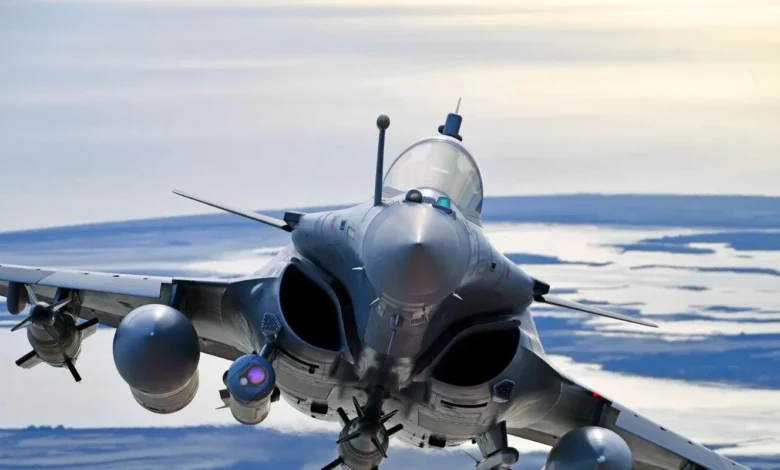
As Emmanuel Macron prepares to land in New Delhi, the runway is being cleared with more than ceremony. India is poised to approve one of the largest fighter aircraft acquisitions in its history, Rafale– a decision that speaks as much to geopolitics as it does to military arithmetic. The message is unmistakable: air power is back at the centre of strategy.
At the heart of this moment lies a proposal to acquire 114 Rafale fighter jets from France in a deal estimated at roughly ₹3.25–3.6 lakh crore (about $40 billion). It forms part of a broader ₹3.6 trillion defence spending package expected to receive formal clearance from the Defence Acquisition Council chaired by Defence Minister Rajnath Singh. The crucial “Acceptance of Necessity” would push the programme into commercial negotiations, setting the stage for what could become one of India’s largest-ever fighter aircraft contracts.
The Big Decision
According to reports, 18 aircraft would arrive in flyaway condition, while the remaining 96 would be manufactured in India. Nearly 80 per cent of the fleet is projected to be assembled domestically, with indigenous content potentially touching 60 per cent under the Make in India framework. The configuration is expected to include both single-seat and twin-seat variants.
The wider defence package extends beyond fighters. It includes additional Boeing P-8I Poseidon reconnaissance aircraft for the Navy, upgrades to Soviet-era T-72 tanks and BMP-2 infantry fighting vehicles, and procurement of other critical systems for ground forces. Yet it is the Rafale line that dominates the strategic buildup.
Why Now? The Squadron Gap and the Two-Front Reality
The timing is not accidental. The Indian Air Force currently operates around 29 fighter squadrons against a sanctioned strength of 42. The retirement of ageing MiG-21 squadrons in 2025 has widened the gap further. With China consolidating air power along the northern frontier and Pakistan maintaining operational readiness on the western front – increasingly in coordination – the two-front contingency is no longer theoretical planning. It is embedded into force calculations.
Hence, for defence planners, the Dassault Rafale is not merely an addition. It is a 4.5-generation platform capable of air superiority, deep strike, electronic warfare, and nuclear delivery. It alters engagement geometry and extends deterrence depth.
But capability alone does not define this story.

Not Just Jets, The Weapons That Change the Equation
The aircraft are only one part of the equation. The weapons they carry may matter even more.
India is expected to expand its inventory of SCALP long-range cruise missiles and Meteor beyond-visual-range air-to-air missiles. SCALP provides stand-off strike capability, allowing targets deep inside hostile territory to be engaged without crossing heavily defended airspace. Meteor enhances air dominance at extended ranges.
The Indian Navy’s separate order for 26 Rafale-Marine fighters further integrates this capability across services, strengthening cross-domain flexibility in the Indian Ocean theatre.
Operational deployment of Rafales during the 2025 conflict with Pakistan – despite reports of at least one aircraft lost – has added battlefield validation to procurement decisions. Real-world use changes institutional comfort levels. It reduces uncertainty. It shifts the debate from theoretical capability to demonstrated performance.
And yet, Rafale in India has never been only about performance.
From 126 to 36: The Pivot That Shaped Public Memory
To understand why today’s ₹40 billion proposal will be scrutinised, one must revisit 2012.
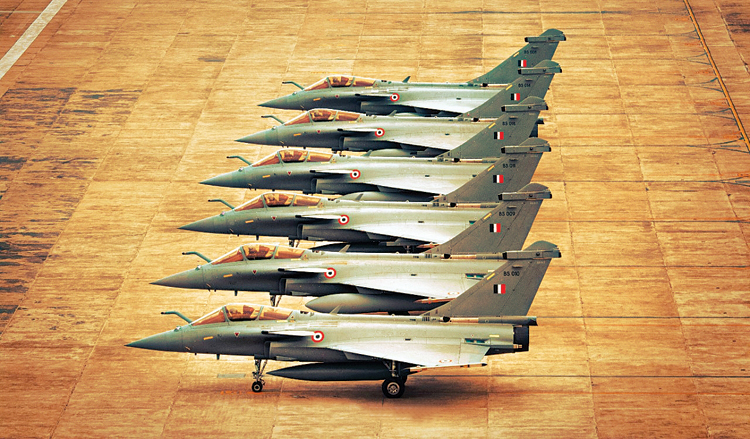
After a long-running global competition under the Medium Multi-Role Combat Aircraft (MMRCA) tender, the Rafale was selected over competing American, European and Russian platforms. The original plan envisaged 126 aircraft — 18 to be delivered in flyaway condition and 108 to be manufactured in India by Hindustan Aeronautics Limited (HAL).
In April 2015, during a visit to Paris, Prime Minister Narendra Modi announced a dramatic shift. Instead of 126 aircraft with large-scale HAL manufacturing, India would purchase 36 Rafales off-the-shelf through a government-to-government agreement. The deal, signed in September 2016, was valued at approximately €7.8 billion (around ₹58,000 crore) and included weapons packages such as Meteor missiles, spares, and maintenance support.
The government argued urgency. Squadron strength was dipping. Negotiations with HAL had stalled over cost and responsibility clauses. A direct inter-governmental purchase, it said, was faster and cleaner.
However, critics saw it differently. They questioned why a decade-long tender process had been abandoned. They raised concerns over pricing comparisons between the 126-aircraft proposal and the 36-jet deal. They pointed to changes in offset partnerships, particularly the emergence of private-sector joint ventures instead of HAL’s central manufacturing role. The government declined to publicly disclose detailed pricing, citing confidentiality clauses within the agreement and national security considerations.
The issue reached the Supreme Court, which declined to cancel or probe the procurement. Legally, the matter closed but politically, it lingered.
Why Rafale Still Raises Questions
Rafale’s capability has rarely been the issue. Its politics have.
The controversy of 2015–2019 created three enduring doubts:
- Process doubt – Why was a decade-long competitive tender replaced by a smaller direct purchase?
- Cost doubt — Why could pricing not be transparently benchmarked?
- Industrial doubt — Did India lose manufacturing leverage when HAL’s role diminished?
These questions were not about whether India required fighter jets. They were about how India buys them. That history explains why every new Rafale announcement carries baggage.
The current 114-aircraft proposal appears structurally different. The scale is larger. Domestic manufacturing commitments are deeper. Operational experience now exists. The urgency is clearer. Yet scrutiny remains inevitable and perhaps necessary.
At roughly $40 billion, this is not a marginal procurement. It represents a long-term fiscal and strategic commitment. Questions therefore extend beyond capability:
—Is the per-aircraft cost competitive by contemporary global standards?
—How much meaningful technology transfer accompanies domestic production?
—Will indigenous fighter programmes such as Tejas Mk2 and AMCA be strengthened by this ecosystem — or overshadowed by it?
—Can timelines be maintained without cost escalations?
Defence procurement sits at an uneasy intersection of secrecy and democracy. Governments argue (often correctly) that certain pricing and weapons details cannot be publicly disclosed without compromising national security. Yet public trust depends on institutional transparency and procedural robustness.
The scepticism surrounding Rafale, then, is less about the aircraft and more about the system that buys it.
What’s Different This Time?
Unlike the earlier 36-jet deal – framed as an emergency purchase – the current proposal resembles long-term force structuring, not a stopgap and, more about capacity rebuilding.
The domestic manufacturing share is projected to be higher. The industrial ecosystem appears broader. Operational familiarity reduces transition costs. Strategic urgency is sharper given the two-front reality.
But the test will not lie in announcements; it will lie in whether India can simultaneously:
- Expand Rafale induction
- Sustain indigenous fighter development
- Enforce cost discipline
- Deliver on Make in India promises
- Scale does not automatically equal structural reform.

The Last Bit, Macron, Diplomacy and the Indo-Pacific
For France, the deal deepens a defence partnership that now stretches beyond aircraft into submarines, space cooperation, and Indo-Pacific coordination. Macron’s visit is expected to include discussions on innovation, artificial intelligence, and regional security.
Defence transactions are rarely transactional. They anchor strategic trust. In an era where supply chains are politicised and alliances fluid, France offers India a rare combination: advanced technology without alliance conditionality and for India that flexibility matters.
India’s decision to expand its Rafale fleet is about more than aircraft numbers. It reflects a recalibration of air power in response to an unforgiving regional environment. It also tests whether past controversy has matured into institutional confidence. However, whether procurement maturity keeps pace with strategic ambition is the question that remains.