From Pre-Possession Maintenance Payment To Power Cuts Without Notice: How Long Will BPTP Harass The Homebuyers?
BPTP’s Decades Of Delay And Denial: Why Are Homebuyers Still Fighting For Basic Electricity, Water And Refunds In 2026?

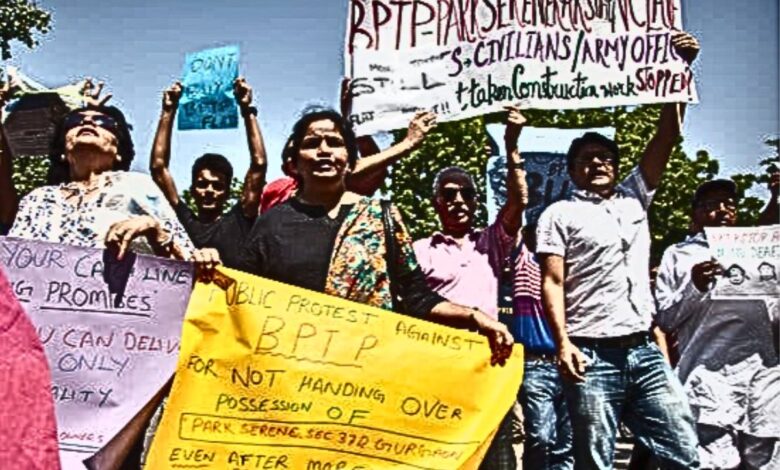
In the first week of July 2026, the Gurugram bench of the Haryana Real Estate Regulatory Authority issued a pointed order against BPTP Limited. The authority directed the developer to refund ₹1,16,545 that had been collected as maintenance charges from an allottee of an apartment in Park Spacio, Sector 37D, Gurugram, before physical possession was handed over. The order carried interest at 11 percent per annum from the date of collection until realisation. In addition, the adjudicating officer awarded ₹1 lakh as compensation for mental agony and harassment and ₹50,000 towards litigation costs.
The complainant had argued that possession was effectively held back until the maintenance amount was paid. The builder-buyer agreement, according to the findings, contained no clause authorising the collection of such charges in advance. The authority held that a promoter is not entitled to demand pre-possession maintenance and cannot make such payment a precondition for handing over the unit. The order is specific, quantified and recent. It is also not an isolated episode.
Across Greater Faridabad, residents of multiple BPTP blocks have spent 2026 staging repeated protests. In sectors and pockets associated with the long-running Parklands and related plotted developments, allottees have complained that individual electricity connections have still not been provided more than a decade after occupation began.
Harassment by BPTP
The builder continues to operate through a single-point connection taken from the distribution company. Residents report frequent, often unannounced power cuts, water supply gaps stretching to 25–40 hours at a stretch during peak summer months, and successive increases in common area maintenance charges. Demonstrations have taken place outside the builder’s offices. Memorandums have been submitted to the energy minister and other officials. Road blockades have occurred. The grievances are not new; they have been voiced for years.
These two contemporaneous developments — a formal RERA finding of unlawful pre-possession charges in Gurugram and sustained resident agitation over basic utilities in Faridabad — sit against a longer documented record of delayed possession, refund orders and consumer litigation involving BPTP projects.
In March 2026, the same regulatory authority directed BPTP to refund ₹18.12 lakh with interest in connection with units booked in 2012 in the Park Terra project in Sector 37D. Possession had been due by the end of 2016 under the agreement. The project was not delivered on time. The authority rejected the developer’s limitation argument, holding that the failure to refund created a continuing liability.
Older matters follow a similar trajectory. In the Astaire Gardens project in Sector 70A, Gurugram, allottees who booked around 2011–2012 faced multi-year delays. Possession timelines of roughly three to three-and-a-half years stretched far beyond the contractual dates. Consumer commissions and RERA benches have repeatedly examined claims for refund with interest or delay compensation.
In Parklands, Faridabad, plotted developments launched in the mid-2000s produced a series of disputes over delayed handover, additional land charges, and incomplete infrastructure. National and state consumer fora have recorded cases in which buyers waited four, six, eight or more years past the promised possession dates. Some orders directed refund of the amounts paid together with interest; others awarded compensation for mental agony and litigation costs.
The pattern that emerges from the public record is one of repeated regulatory intervention. Pre-possession charges that lack contractual foundation are ordered to be returned with interest. Delayed projects generate refund or compensation directives. Residents who have already paid the bulk of the consideration continue to campaign for individual electricity meters, reliable water supply and transparent maintenance accounting years after they moved in.
From the standpoint of a homebuyer who has committed life savings, taken a home loan, and waited through multiple missed deadlines, several questions arise in sequence.
How many times must a regulatory authority record that maintenance charges cannot be collected before possession before the practice stops across a developer’s portfolio? The July 2026 Park Spacio order is explicit. The amount involved in that single complaint was ₹1.16 lakh plus interest and compensation. How many other allottees in the same or similar projects paid comparable sums under similar pressure and have not yet approached the authority?
In Faridabad, residents of BPTP report that individual electricity connections remain unavailable more than ten years after occupation in several blocks. The builder BPTP retains control through a single-point supply. Bills are raised, charges are collected, and cuts occur without prior notice. What is the justification for continuing a single-point arrangement for so long when the stated objective of plotted and group-housing developments is eventual individual metering and direct consumer relationship with the distribution company? How many summers of 25–40 hour water gaps and unannounced power interruptions are considered acceptable after the bulk of the sale consideration has already been paid?
Across projects launched between 2005 and 2015 by BPTP — Parklands, Astaire Gardens, Park Terra, Park Spacio, Amstoria and others — the gap between contractual possession dates and actual handover has frequently been measured in years rather than months.
RERA and consumer forum orders have quantified the financial consequence in specific cases: refund of ₹18.12 lakh, delay interest running into lakhs, compensation for mental agony fixed at ₹1 lakh in recent matters. What is the cumulative number of such orders against the same promoter group? What is the aggregate sum of refunds and interest that have been directed over the last decade? Public databases of RERA orders and consumer judgments contain the individual decisions; a consolidated public accounting remains the missing piece for any homebuyer trying to assess systemic risk.
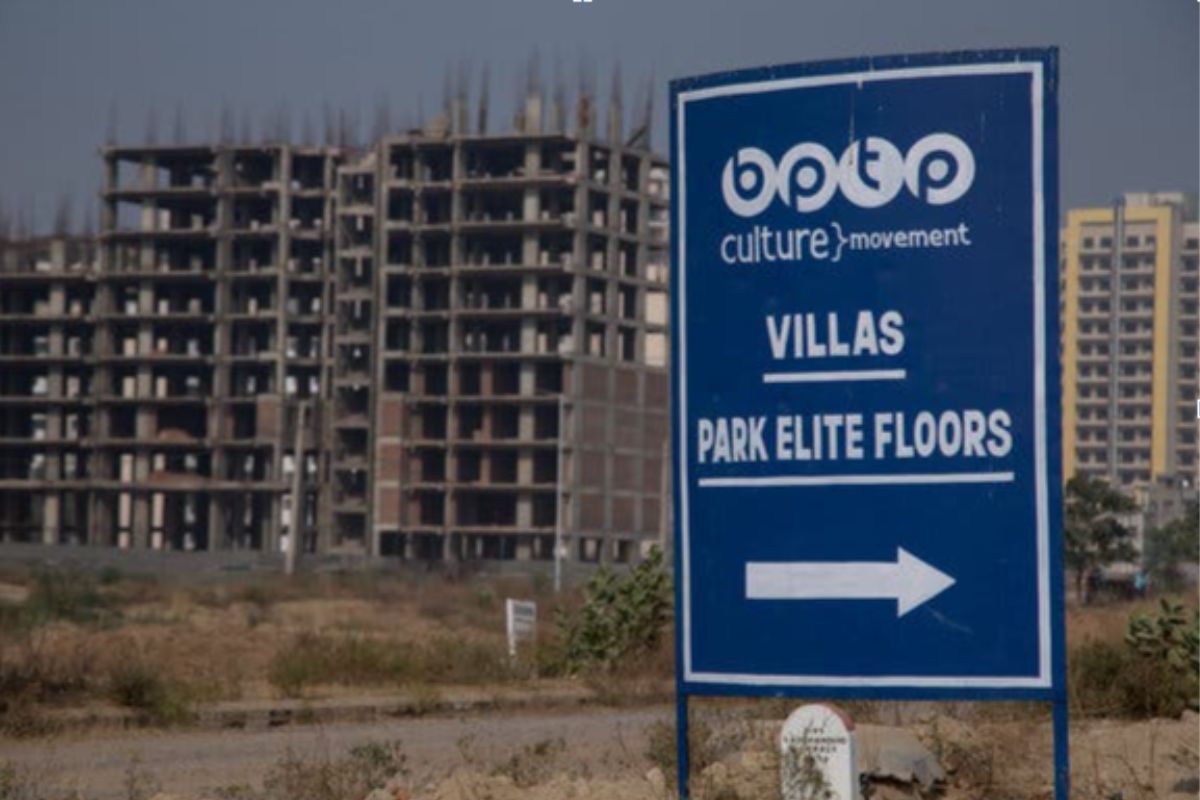
When residents must stage road blockades, submit memorandums to ministers, and hold symbolic protests simply to demand the electricity connection that should accompany a completed dwelling unit, what does that reveal about the post-possession experience? The July 2026 RERA order addressed the pre-possession phase. The Faridabad protests address the post-occupation phase. Together they suggest that the points of friction are not confined to a single stage of the buyer journey.
The builder-buyer agreement is the document that is supposed to define rights and obligations. In the Park Spacio matter the authority found no clause supporting advance maintenance collection. In multiple delay cases the contractual possession date was treated as binding for the purpose of calculating interest or compensation. If the written agreement is repeatedly found to have been applied selectively or exceeded, what practical protection does it actually afford an individual allottee who lacks the resources for prolonged litigation?
Interest rates awarded by the authority — 11 percent in the recent maintenance refund, other rates in delay matters — are intended to compensate for the time value of money and the hardship of delayed use of the property. Yet each order still requires the homebuyer to file a complaint, engage counsel, and wait for adjudication. How many allottees simply absorb the extra charges or abandon claims because the process itself is exhausting?
The public record does not show a single dramatic collapse or overnight abandonment of projects. It shows a steady accumulation of individual orders, resident associations, protests over utilities, and regulatory findings that the same categories of grievance keep recurring. Pre-possession charges. Multi-year delays. Incomplete infrastructure. Single-point electricity long after occupation. Maintenance hikes accompanied by complaints of poor service. Each episode is documented. Each produces a specific number — ₹1.16 lakh, ₹18.12 lakh, 11 percent interest, ₹1 lakh compensation, 25–40 hour water gaps, more than a decade without individual meters.
For a homebuyer evaluating whether to enter or remain in a BPTP project, or for one already inside and confronting the same difficulties, the questions are therefore concrete. How many regulatory findings of unlawful charges are required before the practice is discontinued across the board?
How many years of single-point electricity supply constitute an unreasonable delay in providing a basic civic connection? How many separate RERA and consumer orders on delayed possession are needed before the pattern is treated as systemic rather than case-by-case? And when residents must repeatedly take to the streets to demand water, power and accountability after having paid the price of the house, what does that say about the balance of power between the allottee and the promoter?

The July 2026 order and the concurrent Faridabad protests do not invent the grievances. They illustrate them with fresh dates, fresh figures and fresh public demonstrations. The numbers are on record. The questions they raise belong to every homebuyer who has already paid, is still waiting, or is being asked to pay more.