Gold Rush 2.0. Why Gold Could Hit $8,900 By 2030 — And How The Ultra-Rich Are Already Preparing By Vaulting Wealth In Singapore


There is a strong shining link emerging between Singapore and gold; as global markets struggle with rising uncertainty from mounting geopolitical tensions to Trump’s unpredictable policies, the world’s ultra-wealthy are moving super fast to secure their wealth. And increasingly, that means parking gold not just anywhere, but in Singapore, the new global haven for precious metals.
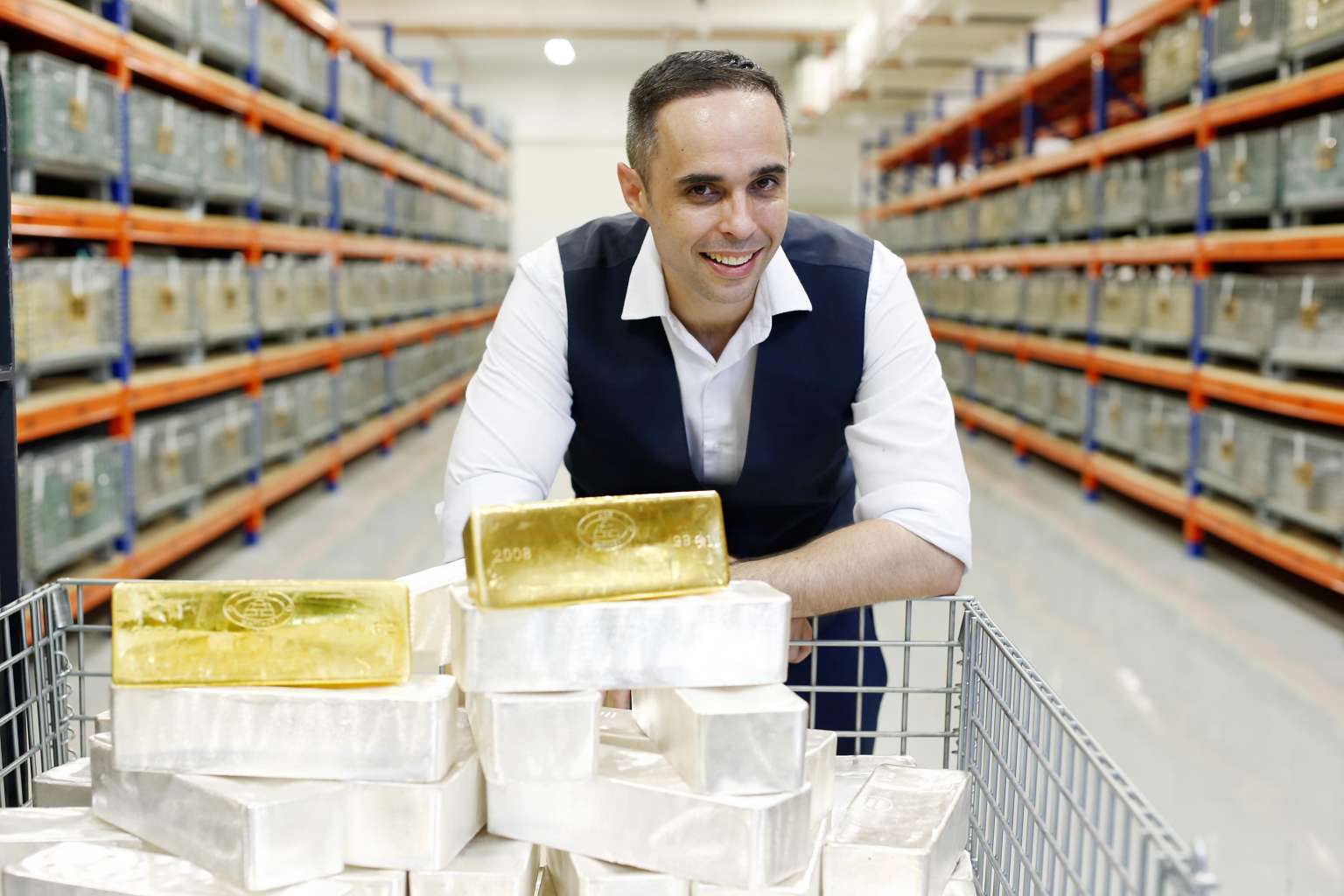
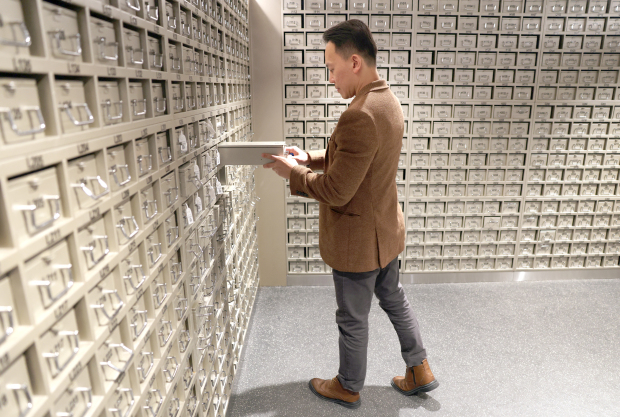
Tucked away not far from Changi Airport is a discreet yet highly fortified facility known as The Reserve. Clad in sleek black onyx and armed with multi-layered security protocols, this six-story storage fortress is no ordinary vault. Behind its steel doors lie rows upon rows of gold and silver bars – worth over $1.5 billion – and thousands of safe deposit boxes stretching up three stories high.
The demand for such elite vaulting services has exploded exponentially, from January to April this year, The Reserve reported an 88% surge in orders to store gold and silver compared to the same period in 2024. Sales of gold and silver bars themselves soared by 200% year-on-year, according to founder Gregor Gregersen.

So what’s driving this gold rush 2.0?
A creeping sense of unease, bordering on outright distrust, among the global elite.
“A lot of very high net-worth clients are looking at tariffs, looking at the world changing, looking at the potential of geopolitical instabilities,” Gregersen statted. “The idea of putting physical metal in a safe jurisdiction like Singapore with parties they can trust is becoming a big trend.”
And he’s not exaggerating. A staggering 90% of new vaulting clients are based outside Singapore, indicating a broad international shift toward safeguarding assets away from home.
Gold, The Ultimate Safe Haven in Volatile Times
Gold prices have been on a tear in recent months, reaching historic highs. At last check, spot gold was trading around $3,346.32 an ounce, and some analysts are predicting it could rise to $5,000 or even $8,900 per ounce by 2030, as fears about global financial instability, inflation, and political shocks mount.
April’s massive U.S. asset sell-off, combined with persistent U.S.-China trade frictions and election-year jitters, only intensified gold’s appeal as a safe haven. Even as risk appetite returned temporarily with signs of a trade thaw, many high-net-worth individuals remain unconvinced that stability is here to stay.
Why Physical Gold Is Beating Paper Gold in the Wealth Game
One noticeable shift in this wave of bullion buying is the clear preference for physical gold over “paper” gold—that is, gold ETFs or other gold-backed financial instruments.
According to Gregersen, the ultra-wealthy increasingly want to own actual gold bars, not just a claim to them on paper. The preference is rooted in minimizing counterparty risk – a fear made real by events like the Silicon Valley Bank collapse in 2023. When a financial institution implodes, paper assets can become inaccessible or even worthless. Physical gold, stored securely in a non-bank vault, is insulated from such systemic shocks.
“Some holders of physical precious metals are wary of storing gold within the banking system, even in allocated form,” said John Reade, Chief Market Strategist at the World Gold Council. “They prefer to hold gold with entities that are not banks.”
This cautious attitude is especially prevalent in regions where banking systems have become politically or economically unstable. In countries like Lebanon, Egypt, or Algeria, mistrust in domestic institutions runs deep. For many of these clients, storing gold in their home country isn’t just undesirable—it’s unthinkable.
“They don’t want to put it in the bank,” explained Jeremy Savory, founder of Millionaire Migrant, a Dubai-based consultancy that works with high-net-worth individuals seeking second citizenships and safe asset relocation. Savory’s clients are increasingly moving gold to Switzerland, Dubai, and especially Singapore.
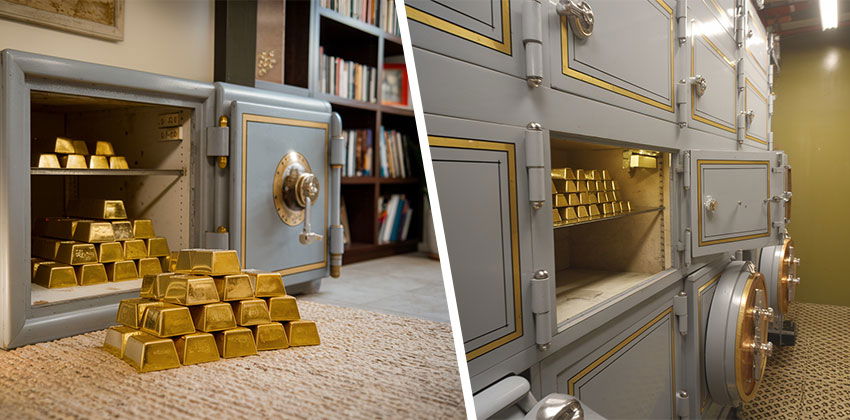
Vaulted Gold Is A Long-Term Play
Of course, physical gold isn’t for everyone. For short-term investors or those looking for liquidity, the transaction costs of buying, transporting, and storing bullion are significantly higher than trading gold-linked securities.
But for those with a longer investment horizon and a sharp eye on wealth preservation, vaulted gold in Singapore is more than just a commodity and serves as a security blanket. A hedge not just against inflation, but against political chaos, currency devaluation, and the unknowns of tomorrow.
Ultra-Rich Storing Their Gold in Singapore—and Not Switzerland or Dubai
As illustrated above it is not about owning gold anymore. For the world’s wealthiest, it’s also about where you keep it.
As gold prices soar and market volatility intensifies, Singapore is increasingly emerging as the preferred vault of choice for ultra-high-net-worth individuals around the globe.
But why Singapore? What makes this Southeast Asian city-state more attractive than the age-old stalwarts like Switzerland or Dubai?
To answer that, it helps to understand the nuanced intersection of geopolitics, logistics, and discretion—all areas where Singapore excels.
Singapore, The “Geneva of the East”
Often referred to as the “Geneva of the East,” Singapore enjoys a reputation for neutrality, stability, and discretion. It’s politically stable, financially robust, and strategically agnostic – qualities that are becoming rare in an increasingly polarized world.
This reputation matters. For the ultra-rich, especially those from politically volatile regions, Singapore provides a unique comfort: a strong rule of law without the heavy-handed visibility that sometimes comes with storing wealth in more scrutinized jurisdictions.
Location, Location, Logistics
One of Singapore’s biggest advantages? Geography.
Situated at the crossroads of Asia, it’s a natural transit hub, making it exceptionally convenient for moving and accessing physical assets like gold.
“Singapore is a transit hub. Anywhere that is a transit hub usually makes sense that there’s a gold vault,” said Jeremy Savory, founder of Millionaire Migrant. “You can bank, you can store your gold there, but you can also pick it up [easily] because it’s a transit hub. And this is where Switzerland is losing out.”
Switzerland, while historically synonymous with wealth storage, has lost a bit of its sheen amid growing regulatory oversight and geopolitical scrutiny. And while Dubai remains a strong contender, it comes with a trade-off.
“Dubai is probably a little bit more documentation-heavy. Some people don’t like documentation,” Savory added.
That’s where Singapore shines, it offers Swiss-grade security and efficiency with Asian-level accessibility and agility, minus the paperwork maze. For many wealthy clients who value both discretion and speed, that’s an unbeatable combination.
Gold’s Upward Trajectory, How High Can It Go?
The growing interest in Singapore-based gold storage also aligns with increasingly bullish forecasts for gold’s future.
Spot gold may be trading near $3,346.32/oz, but analysts are eyeing much loftier ceilings. The respected “In Gold We Trust Report 2025” predicts a potential rise to $4,800–$8,900/oz by 2030, depending largely on inflationary trends and macroeconomic shocks.
“The forecast corridor of $4,800 to $8,900 depends mainly on how inflationary the next five years will be,” the report states, citing factors such as central bank behavior, global debt, and rising geopolitical uncertainty.
Even JP Morgan has thrown its weight behind gold’s long-term rise, forecasting a price of $6,000 per ounce by 2029, marking a potential 80% increase from current levels.
But this is not just gold’s moment, it might be the start of a long-term secular movement, the report suggests. While investors should brace for short-term corrections, the overall direction points upward.
How Much Gold Do the Wealthy Really Hold? Less Than You Think
Interestingly, gold still represents a relatively small slice of the pie in most institutional portfolios. According to market data, global family offices and institutional investors currently allocate only around 1% of their holdings to gold and precious metals – placing it in the same category as art, antiques, and infrastructure. It trails far behind traditional asset classes like private equity, real estate, and cash.
This under-allocation presents a significant opportunity. As macro uncertainties persist and as the case for tangible, sovereign-proof wealth grows stronger a mere shift from 1% to 3% in institutional gold allocation could send prices sharply higher.
Interesting Fact
Forget the treasure maps as the real gold rush might just be happening deep beneath our feet.
For centuries, humans have dreamt of untold riches hidden beneath the Earth. Now, thanks to groundbreaking research, that idea is shifting from myth to science. New geological studies confirm what many have speculated for decades: Earth’s core holds a massive reservoir of gold, and it’s leaking toward the surface.
In a study led by geochemist Nils Messling from the University of Göttingen, researchers analyzed volcanic rocks ejected from deep below the lithosphere, particularly from ocean island hotspots like Hawaii. These rocks, essentially messengers from Earth’s interior, revealed a startling truth:
“When the first results came in, we realised we had literally struck gold,” said Messling. “Our data confirmed material from the core is leaking upward.”
Traces of gold and other precious metals like platinum, palladium, and rhodium have been found in rocks originating from the mantle, suggesting a slow upward migration of once-trapped core elements.

Earth’s Core, A 50cm Blanket of Hidden Gold
It’s estimated that over 99% of Earth’s gold is trapped in the core, buried during a process called the iron catastrophe that occurred billions of years ago. Back then, heavy elements like gold sank into the molten center, leaving only trace amounts near the crust.
If all that hidden gold were somehow spread across the surface, it would form a layer half a meter thick over the entire planet.
While we’re nowhere close to drilling for it, the key takeaway is this – that treasure isn’t as sealed off as we once thought.
How Did Scientists Find It?
To track this elemental journey, scientists turned to ruthenium isotopes. Unlike gold, which doesn’t leave a clear signature, ruthenium-100 can serve as a tracer. This rare heavy metal forms deep within the Earth and differs slightly in its isotopic makeup depending on its source.
By analyzing ruthenium in deep-sea volcanic rocks, researchers found compelling evidence of its core origin. These rocks act like Earth’s “time capsules,” revealing a slow exhalation of the deep interior through superheated mantle plumes.
“We can now prove huge amounts of superheated mantle rock rise from the core-mantle boundary,” said geochemist Matthias Willbold, also of the University of Göttingen.
More Than Just Gold Fever
While we’re unlikely to start mining the core anytime soon, this discovery rewrites the geological rulebook. For decades, scientists believed Earth’s core and mantle were completely isolated systems. This new evidence suggests otherwise.
Even more intriguingly, it shows that elements called siderophiles – which bond with iron and typically sink – are not permanently lost to the depths. They’re coming back, albeit slowly, and changing the surface composition of the planet over time.
For planetary scientists, it’s a new way to understand the geology of other rocky worlds, like Mars or Mercury. For investors and futurists, it opens up the wild idea that precious metals might someday be sourced from extreme depths, or that volcanic hotspots might one day be literal gold mines.
The Last Bit, Singapore’s Gold Appeal Isn’t Just a Fad
From trade tensions and banking collapses to election-year drama and inflation shocks, today’s environment is tailor-made for gold. And Singapore has emerged as the physical expression of that safe-haven instinct – secure, neutral, and brilliantly positioned on the global map.
For the ultra-rich, parking gold in Singapore is no longer just a financial strategy but a geopolitical insurance policy and if current trends are anything to go by, Singapore’s vaults are only going to get fuller.