How India’s biggest atta brand sold “100%” purity to a nation — and why the food regulator finally called the language a lie of impression
For twenty-four years, a packet has sat on Indian kitchen shelves with a name that is not a product description. It is a prayer.

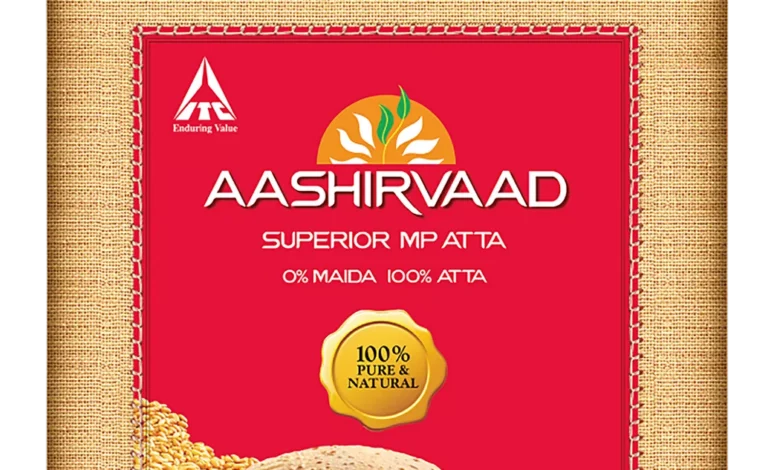
The flour inside is sold as the honest grain of the Indian household: chakki-ground, Madhya Pradesh wheat, “100% Atta,” “0% Maida,” the roti that will not betray you. Television has spent two decades putting that packet in the hands of a mother who is not allowed to get the staple wrong. The company behind it, ITC Limited — the same house that built a fortune on cigarettes — now claims the country’s largest wheat-flour brand and more than 45 per cent of the branded atta market. Aashirvaad still throws off more than a third of ITC’s entire packaged-foods revenue.
On 10 August 2026, the Food Safety and Standards Authority of India put a different word on that blessing.
Misleading.
Not a blogger. Not a rival mill. The statutory food regulator of the Republic of India. It asked ITC to explain why the claims “100% Atta,” “100% Madhya Pradesh Wheat” and “Made from 100% M.P. Wheat only” should not attract action. Three days later, the Central Licensing Authority in Kolkata issued an Improvement Notice: strip “100% Atta & 100% Madhya Pradesh Wheat” and “0% Maida” off every label, advertisement and website in 15 days, or face suspension of the FSSAI licence.
ITC ran to the Delhi High Court. Justice Swarana Kanta Sharma, on 25 August, told FSSAI not to decide on cancellation until 9 September — and only because the court has not even settled whether Delhi is the right courtroom. The clock on the improvement notice was about to expire on 28 August. The blessing stays on the packet. The argument is parked. The kitchen does not get an answer.
That is the story FSSAI has put on paper. It is not a small story. It is also not the story some people want it to be. The verified record does not show that Aashirvaad has been secretly pouring maida into the national roti for decades. FSSAI has not alleged that the product contains maida, other flours, or wheat from outside Madhya Pradesh. Viral videos that once called the dough “plastic” were fact-checked as gluten — the protein FSSAI itself says is maliciously mislabelled as plastic — and a Bengaluru civil court barred those clips. Independent packaged-atta tests and a 2026 third-party screen of an Aashirvaad batch have not produced a public finding of heavy metals, aflatoxins or a pesticide cocktail above limits.
So let us be precise, because precision is what this brand has spent a generation refusing to put on the front of the pack.
The charge that stands on the official record is this: ITC has been feeding India a sentence, not a poison. A sentence designed to sound like a laboratory certificate. A sentence the regulator now says is undefined, ambiguous, and built to plant a false sense of purity and superiority in the mind of the person who buys the household’s most intimate food.
If that is not junk, it is something colder. It is the industrial packaging of trust.
The word that is not in the law
On 28 May 2025, FSSAI told every food business in the country to stop using “100%” on labels, packs and promotions. The press note of 30 May 2025 did not whisper. It said the term is not defined under the Food Safety and Standards Act, 2006, or the Advertising and Claims Regulations, 2018. It said the fashion for “100%” was spreading. It said the word, alone or dressed with other adjectives, is “likely to create a false impression of absolute purity or superiority.” It said that impression can lead a shopper to believe other lawful products are inferior or non-compliant. It pointed to Regulation 4(1) — claims must be truthful, unambiguous, meaningful, not misleading — and Regulation 10(7), which bars claims that undermine other manufacturers or twist consumer perception.
Read that again. The objection is not “your wheat is fake.” The objection is “you are selling a halo.”
“100%” is a number that looks like science and behaves like religion. It does not tell you ash content, extraction rate, bran retention, pesticide panel, or whether the chakki on the pack is a stone or a marketing noun. It tells a tired buyer: this one is complete; the others are compromise. That is why FSSAI bundled “0% Maida” into the same notice. “0% Maida” is not a nutrition table. It is a comparative smear against the neighbourhood mill and against every other branded atta that does not print the same boast. It invites the shopper to imagine maida in the other packet. FSSAI has not said the other packet has maida either. It has said the language is the offence.
ITC’s reply, in court, is technically clever and morally thin. The August notices, it says, do not state that the “100% Atta” claim is untrue. The advisory has no “force of law.” A binding ban cannot be smuggled in through a circular; it needs prior publication, Central Government approval, parliamentary scrutiny. The improvement notice arrived before the 30-day show-cause window closed. Existing labelling rules, it says, do not expressly outlaw the numeral. Removing the claims would force a pack overhaul, delisting, destruction of finished stock — “grave commercial and reputational harm.”
All of that may be good lawyering. None of it answers the only question a person holding a 10-kg sack actually has:
If the claim is so obviously true, why does it need the most aggressive absolute language in the Indian pantry — and why did the company ignore a year-old, India-wide advisory until the licence was on the table?
A blessing that already had a rap sheet
This is not ITC’s first collision with the idea that Aashirvaad talks bigger than the evidence.
In August 2016, the Advertising Standards Council of India’s Consumer Complaints Council upheld a complaint against the television commercial for Aashirvaad Sugar Release Control Atta. The ad said the “natural grain mix” stops sugar from rising suddenly. ASCI found it likely that viewers would take the low-GI atta as having a curative effect on other high-GI food eaten with it. The line “Eat rotis without worrying about sugar levels,” the Council said, was misleading by ambiguity: diabetics cannot eat rotis without limit.
That was ten years before FSSAI’s “100%” advisory. Same brand family. Same move: take a staple, hang a health halo on it, let the kitchen do the rest of the work.
The pattern is not subtle. Aashirvaad was launched on 27 May 2002. Packaged atta was then a thin, almost eccentric category; most of India still took wheat to the local chakki. ITC treated the mill as a competitor to be branded out of the room. Sales teams handed out samples at flour mills. Within four years the brand had overtaken national rivals. Hindustan Unilever eventually sold off its competing atta. By 2026, in a much larger branded market, Aashirvaad was back above 45 per cent. Older case material put national branded leadership even higher in earlier years; the unorganised mill still feeds most of India, but inside the supermarket aisle this one name became the default.
Default is power. Power is what you print in 72-point type on the front of a sack that will become thirty days of rotis.
“India’s No.1 Atta Brand” is a Nielsen line. “100% Atta” is a sermon. “0% Maida” is a warning about everyone else. “Aashirvaad” is the priest. Put them on one pack and you do not have a flour specification. You have a moral hierarchy of dinner.
FSSAI’s May 2025 advisory exists because that hierarchy had become industry fashion — “100% natural,” “100% pure,” “100% fruit juice” on concentrates, “100% atta” on bread that was 87 per cent whole wheat and still fined by the Central Consumer Protection Authority in a separate case. The English Oven “100% Atta Bread” order is not about ITC. It is about what the numeral does to a shopper’s brain. FSSAI told CCPA that name was “totally misleading.” The company said it only meant the grain source was atta. The regulator heard a percentage. That is the whole war.
What is actually in the bag — and what is not
Honesty requires a paragraph the outrage machine will hate.
Aashirvaad Shudh Chakki Atta, on the company’s own nutrition panel, is ordinary whole-wheat flour: about 340 kcal, 10.5 g protein, 76.8 g carbohydrate, 10.8 g dietary fibre, 1.4 g fat per 100 g. That is not a packet of chips. It is not a chemical slurry. Multigrain and “high protein” variants add soya, oats, psyllium, gram — still food, still marketed as virtue. Fact-checkers and food technologists have said, on the record, that mixing maida into branded atta is not the free lunch internet folklore claims it is: maida is not meaningfully cheaper, and packaged atta is not permitted to carry undeclared additives. FSSAI’s own myth-buster page exists because people washed dough, found gluten, and screamed plastic. Courts and laboratories have not handed the public a finding that Aashirvaad is a maida dump.
So no: the verified file does not support the sentence “ITC has been feeding India junk flour since 2002.”
What the file does support is uglier in a quieter way.
It supports a company that took the most trusted word in a Hindu kitchen and printed it over an industrial commodity. It supports a parent group whose historic cash engine is tobacco, now lecturing the country on shuddhata. It supports a decade-plus habit of health-adjacent claims that already failed ASCI once. It supports a 2025 advisory that the entire industry was told to obey — and a 2026 improvement notice that ITC answered with jurisdiction objections and a plea about “reputational harm,” as if the reputation were the victim and not the instrument.
And it supports a trail of ordinary, unglamorous consumer complaints — insects, larvae, hard lumps in sealed sacks, “guarantee” language on a pack that then yields worms — which do not prove a national adulteration plot, but do puncture the theatre of untouched, three-step-cleaned, 6,500-centre purity. Those complaints are not a lab paper. They are what “blessing” looks like when the warehouse is real.
If there is junk here, it is not the gluten. It is the copy.
The 15-month silence, then the stampede
Note the dates, because dates are how a regulator is made to look frantic and a conglomerate is made to look persecuted.
May 2025: countrywide advisory. Do not use “100%.”
August 2026: show-cause to ITC. Thirty days.
Three days later: improvement notice. Fifteen days. Licence on the hook.
25 August: High Court pause.
9 September: next date. First question: can Delhi even hear this?
Fifteen months is not an ambush. It is a period in which a market leader could have redesigned a panel, dropped a numeral, and gone on selling the same wheat. ITC did not. Other names in the same crackdown — Bonn, Emami, Amway, Apis, Masterchow — have already been pushed to pull or tone down absolute claims. The biggest brand chose the courtroom.
FSSAI’s counsel told the judge the improvement notice was born in Kolkata; Delhi, therefore, is the wrong door. ITC said the licence is central, the CEO sits in Delhi, part of the cause of action is here. The court has not ruled. Until it does, the packet that FSSAI called misleading remains the packet in the ration of millions of homes.
That is not a technicality. That is the business model defending the adjective.
What “misleading” means when the product is dinner
FSSAI’s own words are the harshest line in this story, and they do not need a novelist.
The term “100%,” the Authority said, may convey “a false sense of purity or superiority which may mislead consumers.”
Purity is not a marketing extra in atta. In this country it is the difference between feeding a child and feeling you have failed her. Superiority is not a slogan. It is the reason a household pays a branded premium instead of walking to the mill. When a regulator says those two ideas have been falsely planted by a word that does not exist in the statute book, it is not nitpicking font size. It is accusing the front of the pack of doing ideological work.
ITC wants the debate moved to procedure: advisory versus regulation, Kolkata versus Delhi, 30 days versus 15. Procedure matters. Regulators who rule by circular can rule by circular against anyone next. That is a real constitutional worry.
It is also a convenient fog.
Because the consumer is not in the High Court. The consumer is in front of a shelf where three brands look identical except one of them is shouting 100% and 0% and Blessing. The law ITC cites — claims must not be misleading — is the same law FSSAI is pointing at. The fight is only over whether “100%” is already illegal under that standard, or whether FSSAI must first gazette a ban on a two-digit number.
A company that needs a gazette notification before it will stop printing a purity percentage on the national staple has told you exactly how much of the blessing was ever about the wheat.
The bill
On 9 September the court will first ask where the case belongs. If Delhi keeps it, the country may finally get a ruling on whether an undefined superlative can be enforced off a pack without a formal regulation. If Delhi does not, the notice clock starts again in another building, and the same sack continues its journey from factory to tawa with the same four characters on its chest.
Until then, hold the two facts that survive every press release:
One. India’s food regulator has formally described Aashirvaad’s “100%” and “0% Maida” language as the kind of claim that misleads.
Two. The company that put a blessing on a flour sack has not been found, on the official record, to have filled that sack with maida — and has still spent a generation selling the idea of an uncontaminated, superior, medically reassuring roti to a nation that eats wheat at almost every meal.
The first fact is the investigation. The second is the indictment of the advertising.
The junk, if you need a word, is not the grain. It is the sentence that taught millions of households to confuse a marketing numeral with a laboratory truth — and then ran to court when the laboratory’s regulator asked for the numeral back.