Made In China, Blocked By America, The Trade War That Won’t Die. The U.S.-China Trade Dance Enters Round Two

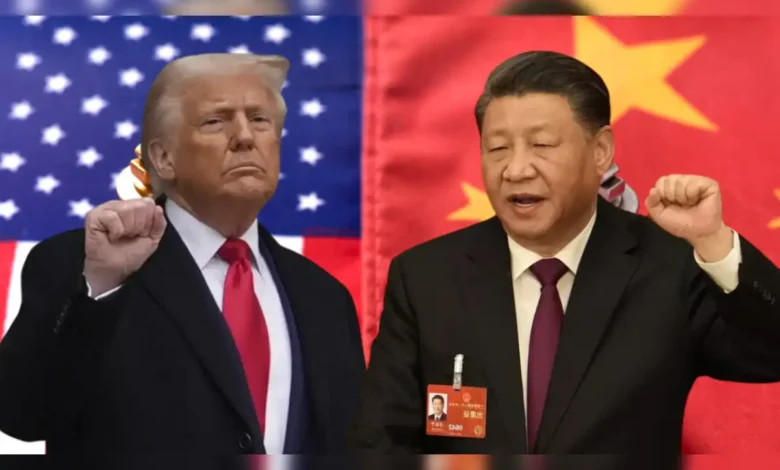
Even as U.S. pushes for high-tech manufacturing while China doubles down on industrial self-Reliance, the stage is being set for prolonged trade tensions.
U.S. President Donald Trump has made it clear: America’s focus is on revitalizing domestic production in high-tech industries not low-value goods such as apparel or footwear. “Forget the factory lines for socks, sneakers, and T-shirts,” he told reporters on Sunday, illustrating his administration’s goal to bring back advanced manufacturing jobs to the United States.
Meanwhile, China is intensifying its longstanding strategy of manufacturing-led growth, a move that could further strain already-tense U.S.-China trade relations.
During a visit to Henan province last week, Chinese President Xi Jinping reiterated his commitment to building a resilient industrial base. Speaking to workers at a state-owned ball-bearing facility, Xi emphasized that self-reliance in advanced manufacturing remains the “right path” for China and the “backbone” of its national economy, according to an official statement.
In 2023, manufacturing accounted for over 25% of China’s GDP, according to World Bank data. The Chinese government continues to prioritize strategic sectors, particularly high-tech manufacturing, as it seeks to reduce reliance on foreign technology and assert greater control over its industrial future.
However, this vision of industrial self-sufficiency is fundamentally at odds with the Trump administration’s core demands in trade negotiations. Washington has repeatedly criticized Beijing for perpetuating trade imbalances and distorting global markets through extensive state subsidies to favored industries.
“There is little room for compromise on China’s manufacturing-first strategy,” said Allan von Mehren, China economist at Danske Bank. “This approach is deeply embedded in Beijing’s broader agenda of self-reliance. I don’t expect a major breakthrough in trade talks. U.S. tariffs on Chinese imports are likely to remain around 40%.”
China’s ambitions were formalized in the Made in China 2025 policy framework, unveiled in 2015, which seeks to elevate the country’s position in global value chains – from electric vehicles and semiconductors to robotics and commercial aviation.
According to a 2022 report by the Center for Strategic and International Studies, China’s state support to its industrial sectors amounted to at least 1.73% of GDP in 2019, far outpacing the U.S., which allocated just 0.39% of GDP toward similar objectives.
Chinese firms, especially in key sectors, continue to benefit from a combination of direct grants, tax incentives, and other forms of state aid. A 2020 analysis by the Rhodium Group found that nearly all major publicly listed Chinese companies received some form of government support.
Still, despite these efforts, China has fallen short of several targets outlined in the Made in China 2025 plan, including goals related to aerospace and high-end robotics. The European Chamber of Commerce in China has warned that Beijing’s aggressive industrial policies have contributed to unhealthy competition and exacerbated global trade tensions.
Global Trade Realignment Faces Headwinds as U.S.-China Tensions Simmer, EU and Emerging Markets Brace for Impact
Despite hopeful rhetoric from Washington, the prospect of a meaningful U.S.-China trade rebalancing remains slim.
U.S. Treasury Secretary Scott Bessent recently expressed cautious optimism in an interview, suggesting that, “We need more manufacturing, they need more consumption — so there is a chance to rebalance together.” Yet it is unclear whether that vision will translate into action during the ongoing 90-day trade truce negotiations with Beijing.
Economists remain skeptical. “The U.S. trade deficit with China is unlikely to narrow substantially,” noted Jing Wang, China economist at Nomura. The firm expects China to continue reducing its dependence on U.S. imports, while American manufacturers face a long road to re-shoring production and identifying viable alternatives to Chinese supply chains.
Wang warned that the shifting trade dynamics could have broader global implications.
“As the U.S. is the most buoyant consumer market worldwide, a sudden flood of cheaper Chinese goods to the rest of the world will inevitably spark global backlash,” she said.
Global Concerns Over Industrial Overcapacity and Export Dumping
China’s deepened industrial push and aggressive export orientation are fueling growing concern beyond the U.S., with several non-U.S. markets taking preemptive steps to safeguard domestic industries from the fallout.
Amid looming U.S. tariffs, Chinese exporters have already begun pivoting to Europe. In Yiwu, a major toy manufacturing hub, producers recently redesigned Santa Claus figurines with rounder faces and blue eyes in a bid to appeal more to European consumers, a move emblematic of China’s growing urgency to diversify export destinations.
But this redirection of trade flows has not gone unnoticed. “By the end of this year, it’s not just U.S.-China tensions that we need to watch — EU-China frictions are going to come increasingly into focus,” said Nick Marro, principal economist at the Economist Intelligence Unit. “And it’s no longer just about electric vehicles, but a broader swath of consumer and industrial goods.”
Last week, G7 finance ministers, led by the U.S., convened to discuss coordinated measures to counteract China’s export overcapacity and non-market trade practices. “The aim is clearly to curb China’s growing export saturation,” said Wang Dan, China director at Eurasia Group.
These actions could be perceived in Beijing as antagonistic, potentially triggering retaliatory measures against foreign firms operating in China. “Delays in licensing, exclusion from local incentive schemes, or stricter regulatory scrutiny may follow if bilateral tensions escalate,” Wang added.

Pressure on Emerging Markets and the Promise of Imported Deflation
China’s dominance in low-end manufacturing is also squeezing developing economies, particularly those reliant on export-driven growth. According to Capital Economics, countries like India, Vietnam, and Indonesia have seen stagnation or decline in global export share across segments such as furniture, toys, and apparel, areas where China has expanded its footprint.
To shield domestic industries, these nations have introduced targeted protectionist measures to address overcapacity and suppress an influx of cheap Chinese goods.
Nonetheless, some analysts argue that China’s excess industrial capacity could offer a deflationary boon to inflation-strained economies. For countries with limited domestic manufacturing, such as Australia, inexpensive Chinese imports could ease consumer price pressures and help stabilize inflation.
China’s Consumption Conundrum, Manufacturing Obsession, and the Trump Tariff Drama
Despite repeated calls from economists both within and outside China to shift toward a consumption-driven economic model, Beijing remains tethered to its old growth engine: manufacturing. This reliance is not only amplifying deflationary trends but also reinforcing China’s deepening trade imbalances with major partners.
Recent Chinese customs data for April shows the structural mismatch. The country’s trade surplus soared to a record $992.2 billion, propelled by persistent imbalances with the U.S., European Union, and Southeast Asia. While China’s productive capacity continues to churn out surplus goods, domestic demand remains too weak to absorb the excess.
Although Chinese policymakers have tried to redirect goods previously destined for the U.S. toward domestic consumers, this strategy faces a significant obstacle: fragile consumer confidence. Lingering concerns about employment prospects and income stability are keeping household wallets shut. April retail sales rose just 5.1%, falling short of expectations, with auto sales barely growing at 0.7%, a sharp deceleration from March’s 5.5%.
Louise Loo, lead economist at Oxford Economics, believes that China’s pivot to a consumer-led model will be gradual at best. “Reform momentum will be very slow,” she said, forecasting that household consumption won’t reach even 50% of GDP until mid-century—far below the U.S. benchmark of 70%.
Yet, Xi Jinping’s continued emphasis on manufacturing is not without strategic rationale. As geopolitical frictions with Washington deepen, access to advanced technologies is increasingly constrained. Under the Biden administration’s “small yard, high fence” approach, a narrow range of critical technologies is subject to broad and restrictive controls, leaving China little choice but to double down on self-sufficiency in manufacturing.
Nomura’s Jing Wang sees little room for optimism on that front. “The Trump administration, by treating China as the most potent near-peer adversary, would make the yard bigger and the fence higher,” she said, suggesting that strategic decoupling on national security grounds is virtually baked in.

The Trump Playbook Is Chaos as a Trade Tactic
Meanwhile, U.S. President Donald Trump continues to frame his erratic tariff policy as a negotiation masterstroke rather than backpedaling. Responding to criticism that his trade threats often culminate in watered-down or reversed measures—a pattern dubbed “TACO trade” (Trump Always Chickens Out)—Trump insisted, “It’s called negotiation.”
Asked whether he was retreating from hardline positions, Trump pointed to his tariff threats against the EU. After announcing a 50% levy on EU goods, he delayed it just two days later at the request of European Commission President Ursula von der Leyen. “You call that chickening out? That’s so unbelievable,” he said. “After I did what I did, they said, ‘We’ll meet anytime you want.’”
Markets have responded accordingly. Stocks slid after Trump’s initial EU tariff threat, only to rally after he postponed the move to July 9. This whiplash has become a hallmark of Trump’s trade strategy, surprise announcements, market jolts, followed by sudden reversals.
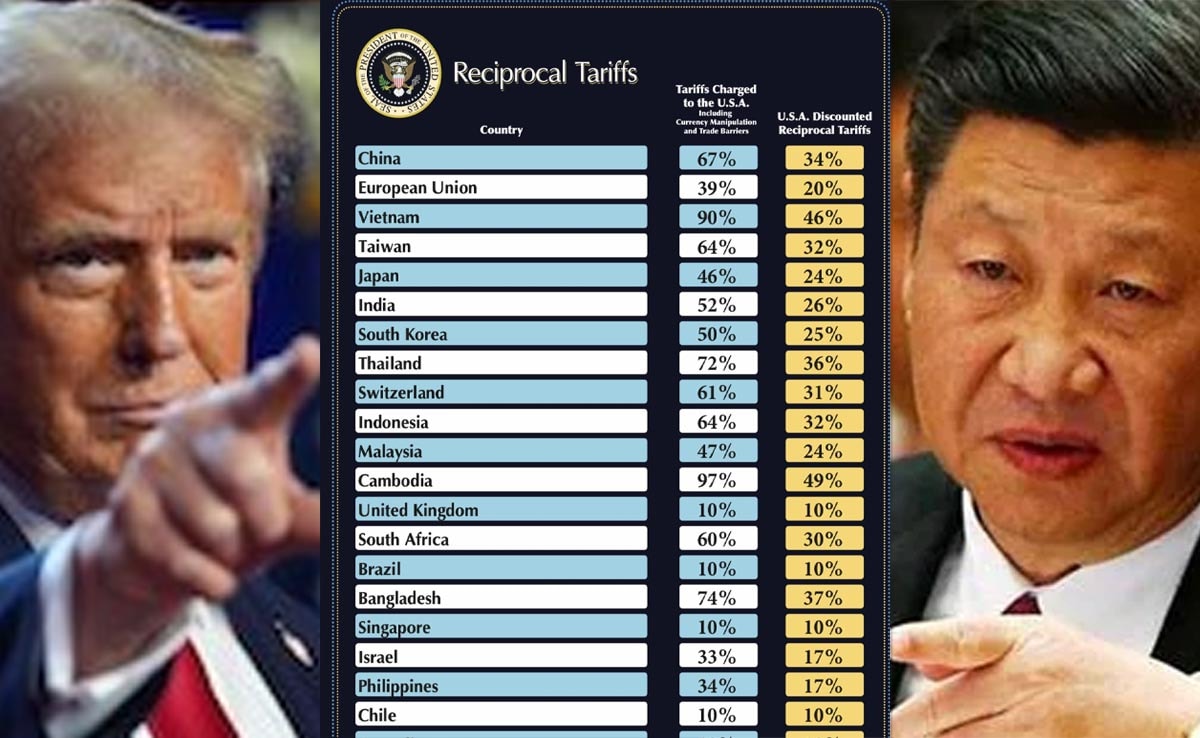
In April, Trump imposed sweeping “reciprocal” tariffs on nearly every major trading partner, some as high as 30%. A week later, rattled markets saw relief when those tariffs were slashed to 10% for a 90-day trial period. The result – one of the biggest single-day stock rallies in recent history.
The U.S.-China trade war has followed a similar trajectory: Trump raised tariffs on Chinese goods as high as 145% in April, prompting immediate retaliation. A month later, following preliminary talks, he rolled them back to 30%.
The Last Bit,
As both nations entrench their positions – with the U.S. pushing for fair competition and China accelerating its push for industrial self-reliance – the prospect of a mutually agreeable trade resolution remains distant. Whether viewed as a gamble or reckless policy improvisation, Trump’s tariff maneuvers continue to disrupt global markets and inject uncertainty into long-term trade planning.
As Beijing struggles with internal economic reforms and external pressure, and Washington vacillates between containment and cooperation, easy fixes are off the table.