DLF: The Empire Of Glass And Steel Includes Searches, Probes, Penalties And The Questions That Remain
DLF built an empire by transforming Gurugram’s skyline and selling the promise of India’s most coveted real estate. But behind that glittering skyline lies a far darker record: CBI and ED searches, FIRs, regulatory penalties, unresolved court battles and, now, two Supreme Court-directed CBI probes. The questions keep returning. So does DLF.

DLF did not merely build buildings. It helped build the idea of modern Gurugram itself – the glass towers, gated communities, sprawling townships and carefully marketed promise of premium urban living. Over decades, the company became synonymous with scale, wealth and the transformation of Haryana’s once-sleepy skyline into one of India’s most valuable real-estate markets.
That image of permanence, however, sits alongside a remarkably persistent legal record.
For years, DLF and companies associated with the group have found themselves dealing with agencies and institutions that wield some of the most formidable powers in the country.
The CBI has searched its premises. The Enforcement Directorate has done the same. The Competition Commission of India has imposed a ₹630-crore penalty. SEBI once barred the company and members of its senior leadership from accessing the securities market. Police and economic-offences agencies have registered cases around individual projects and transactions. And courts have repeatedly been asked to examine disputes involving the company, its subsidiaries and its dealings with buyers, investors and other parties.
None of that, by itself, establishes criminal wrongdoing by DLF.
That distinction becomes particularly important because the legal status of these matters varies sharply. Some allegations remain under investigation. Some regulatory findings have been challenged or overturned. Some proceedings have produced no final adverse finding against the parent company. Others remain alive before the courts.
Yet the sheer range and longevity of the scrutiny is difficult to overlook.
The latest chapter has made that record impossible to treat as merely historical. In February 2026, the Supreme Court directed the CBI to examine allegations arising from the dispute surrounding DLF Home Developers’ The Primus project in Gurugram. Six months later, in August, the Court again directed an independent CBI examination into allegations that included transactions involving DLF-group entities in the Indiabulls Housing Finance matter.
Two Supreme Court-directed investigations in the same year do not make DLF guilty of anything. But they do raise a question that cannot be answered by pointing to any one case in isolation.
How did a company that came to embody the polished face of Indian real estate accumulate such a long trail of searches, regulatory actions, police cases and unfinished legal questions?
To understand that, it is necessary to go back to Gurugram — and to a CBI investigation that brought investigators into DLF’s own offices in January 2019.
The Land That Started the Questions
By January 2019, the focus had shifted from the polished developments rising across Gurugram to the land beneath them.
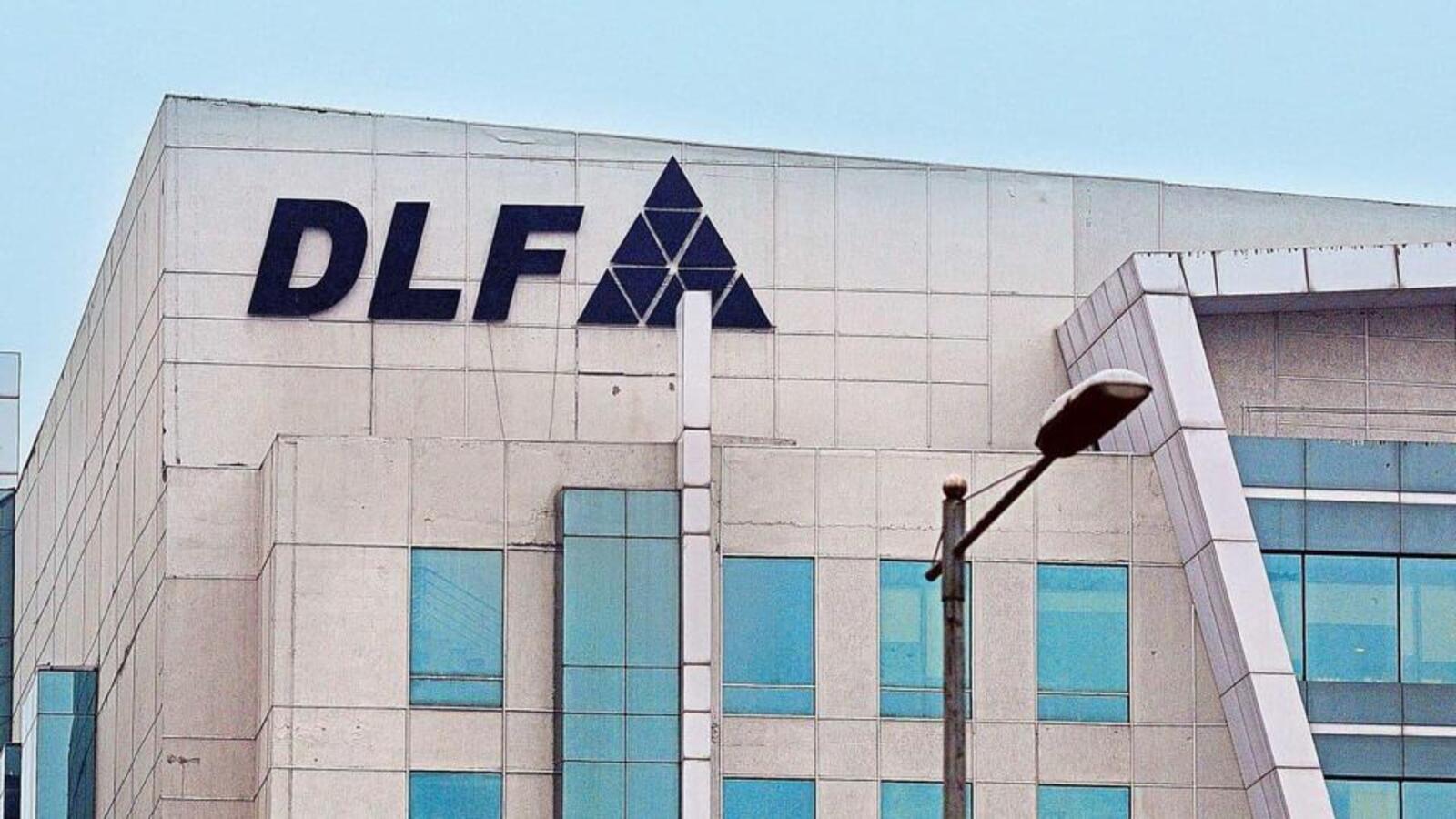
On 25 January, CBI teams searched DLF’s Gurugram office as part of a case registered two days earlier over the alleged release of around 1,417 acres spread across Sectors 58–63 and 65–67. The investigation was considerably wider than DLF itself. Fifteen developer entities were named, including DLF New Gurgaon Homes Developers Private Limited, while former Haryana Chief Minister Bhupinder Singh Hooda and senior officials of the Town and Country Planning department also figured in the case.
The allegation went to the heart of how land moved from government acquisition proceedings into private development.
The CBI was examining whether acquisition notifications had driven down the value of land held by private owners, allowing developers to acquire parcels at depressed prices before substantial portions were subsequently released from acquisition and licences granted for development. The case invoked criminal conspiracy and cheating provisions as well as the Prevention of Corruption Act. The ED subsequently registered a connected money-laundering case.
DLF maintained that the agency was examining an old land-acquisition matter and that it was cooperating.
The years that followed produced a complicated picture. The CBI eventually filed a charge-sheet in 2021 against three former officials and two other companies. In July 2024, the ED attached 88.29 acres valued at ₹300.11 crore in the wider investigation, but those properties were linked to the M3M/RS Infrastructure chain rather than DLF. Crucially, the available record does not show a charge-sheet in this RC naming DLF Limited or its present chairman and directors.
That matters.
A search of DLF’s office cannot be converted into a finding that DLF committed the offences under investigation. Nor can the naming of a subsidiary be treated as proof against the parent company.
But neither does the later absence of a charge-sheet erase what happened in January 2019.
Investigators had entered the headquarters of one of India’s biggest real-estate companies while examining allegations involving the acquisition, release and subsequent development of large tracts of Gurugram land. A DLF subsidiary was among the named entities. The investigation continued through multiple agencies and years.
And four years later, another central agency would return to the same Gurugram office. This time, the trail led not to Haryana’s land-acquisition machinery, but to the collapse of another real-estate giant: Supertech.
The ED Search and the Supertech Connection
The next agency to arrive at DLF’s Gurugram premises was the Enforcement Directorate.
Between 23 and 25 November 2023, ED officials searched the company’s offices while pursuing the money-laundering investigation into the Supertech group. DLF subsequently disclosed that the agency had sought transaction records relevant to that investigation and that the company had provided the requested cooperation.
The episode is significant, but it also requires restraint in how it is described.
The available record does not show that DLF itself was accused of money laundering in a separate ECIR arising from this search. Nor does it show a prosecution complaint against DLF, an attachment of DLF property or the arrest of any DLF director in connection with the Supertech investigation.
In other words, the search was an investigative event, not a verdict.
But there is a broader point here.
DLF’s premises had now been searched by two of India’s principal investigative agencies within the space of four years – the CBI in the land-acquisition case and the ED in a money-laundering investigation involving another major real-estate group.
Neither search can be treated as proof of wrongdoing by DLF. Yet both form part of the company’s documented history of regulatory and investigative scrutiny.
The distinction is important because DLF’s legal record cannot honestly be reduced to either extreme. It is not a catalogue of established criminal conduct. But neither is it a history free of serious questions raised by powerful investigating and regulatory institutions.
In February that year, the country’s highest court would order the CBI to examine a dispute involving DLF’s The Primus project – opening a very different chapter in the company’s long-running battles with its homebuyers.
When the Supreme Court Ordered a CBI Probe
The Primus dispute began with homebuyers, but it eventually reached the country’s highest court.
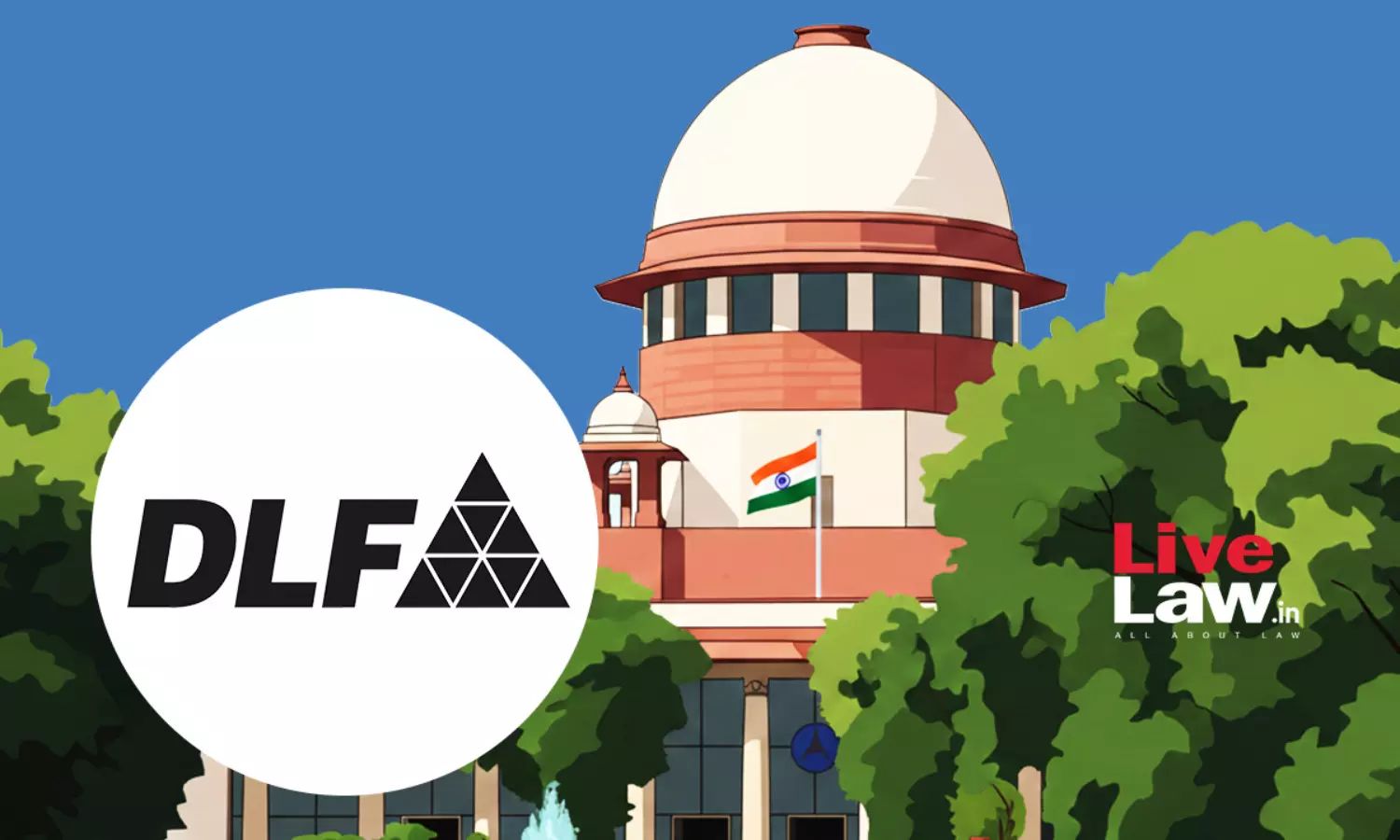
On 25 February 2026, the Supreme Court was hearing appeals arising from five complaints against DLF Home Developers Limited concerning its The Primus project in Sector 82A, Gurugram. What had begun as a dispute over the project’s delivery and representations made to purchasers had, by then, become serious enough for the Court to direct the CBI to examine the matter.
The issues recorded before the Court included alleged discrepancies concerning roads, water, electricity, amenities and approvals associated with the project. These were not treated by the Court as established wrongdoing. In fact, the order expressly stopped short of forming a definitive view in favour of either side. A CBI status report has since been submitted, but no final judicial determination based on that report has emerged.
That makes the order significant for what it represents, rather than what it proves.
The Supreme Court did not declare DLF guilty. It did not conclude that the allegations made by the homebuyers were true. It directed an investigation so that those questions could be examined.
For DLF, however, the development marked a notable escalation. This was no longer simply another consumer complaint or project-level dispute moving through the usual litigation process. The matter had travelled all the way to the apex court, which considered a CBI examination appropriate.
And the timing matters.
The Primus order came after years in which DLF had already faced scrutiny from the CBI, ED, CCI, SEBI and police authorities. Now, in the same year, the Supreme Court itself had placed one of the company’s residential projects under the lens of a central investigative agency.
The matter might have remained an isolated 2026 development.
It did not.
Less than six months later, another Supreme Court order would put DLF-group entities inside a separate CBI examination – this time involving allegations around lending, investments and the former promoters of Indiabulls Housing Finance.
The second probe would prove particularly revealing because another investigating agency had already reached a very different preliminary conclusion.
The ₹66-Crore Question
On 18 August 2026, the Supreme Court opened another investigative front.
The case concerned allegations surrounding the former promoters of Indiabulls Housing Finance, now Sammaan Capital. The Citizens Whistle Blower Forum had approached the Court over six allegations flagged by the Enforcement Directorate, and the Supreme Court directed the CBI to examine each of them independently. One strand of that investigation led directly into transactions involving DLF-group entities.
The allegation was not simply about borrowing money.
Investigators were examining loans extended by Indiabulls Housing Finance to DLF-group companies alongside an investment of approximately ₹66 crore by DLF-group entities in EMU Realcon, an entity described as associated with Sameer Gehlaut.
The alleged connection was portrayed as a possible quid-pro-quo or circular arrangement raising questions about whether the lending and investment transactions were connected in a manner that went beyond ordinary commercial dealings.
But there was a complication.
The Delhi Police Economic Offences Wing had already investigated the allegations after registering an FIR on 15 December 2025 based on an ED complaint. Its status report, filed in August 2026, said investigators had found no direct financial trail linking the loans to investments in entities associated with Gehlaut.
The numbers were substantial. The EOW said 67 loans involving the DLF group had aggregated to approximately ₹2,212.65 crore. Gross collections had reached around ₹2,731.58 crore, and the loans had subsequently been closed. The ₹66-crore investment, meanwhile, had been made roughly 17 months before the relevant lending took place.
On those facts, the preliminary investigation did not establish the financial linkage being alleged.
Yet the Supreme Court did not leave the matter there. It directed the CBI to independently examine all six allegations.
Again, that is not a finding that DLF-group entities engaged in a quid-pro-quo arrangement. The Court did not pronounce the allegations proved. What it did was refuse to treat the preliminary EOW findings as sufficient to close the larger set of questions before it.
For DLF, the significance lies in the convergence.
In February, the Supreme Court had directed a CBI examination into allegations surrounding one of its residential projects. In August, it directed another CBI examination involving transactions connected to DLF-group entities.
Two separate matters. Two separate sets of allegations. Two separate investigative questions.
And both had reached the same institution: the Supreme Court of India.
But the DLF legal story did not begin in 2026.
Long before these latest investigations, another transaction had already placed the company in the middle of one of Haryana’s most politically charged real-estate controversies – the Shikohpur land deal involving Robert Vadra.
The Shikohpur Deal and the Vadra Connection
Another chapter in DLF’s history began with 3.53 acres of land at Shikohpur, now identified with Sector 83, Gurugram – and a transaction that became politically explosive because of the names attached to it.
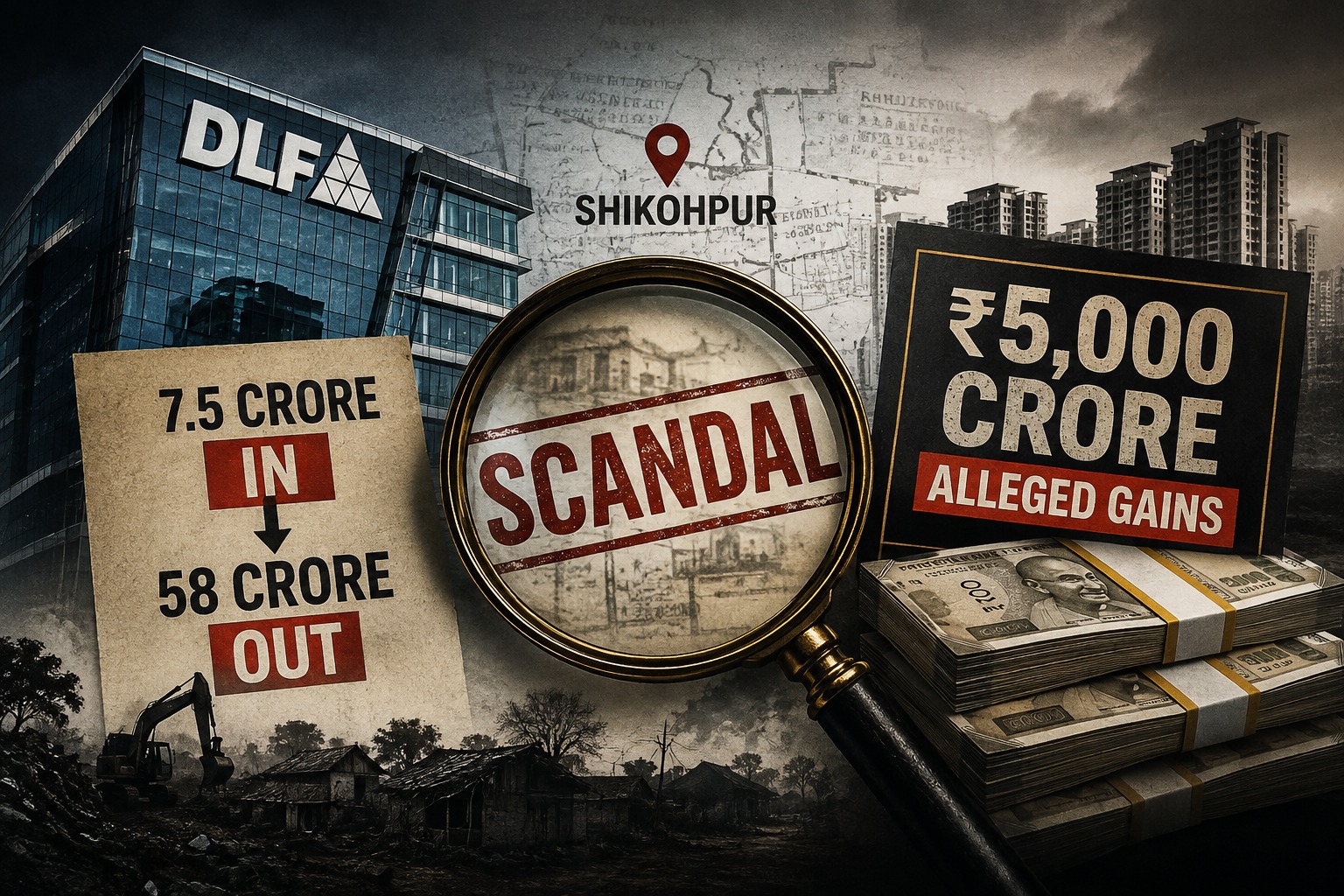
In 2018, FIR No. 288 was registered at Kherki Daula police station against Robert Vadra, former Haryana Chief Minister Bhupinder Singh Hooda, Onkareshwar Properties, “DLF company” and others. The transaction under scrutiny involved Skylight Hospitality, associated with Vadra, purchasing the land for ₹7.5 crore before selling it to DLF for ₹58 crore. The Enforcement Directorate subsequently registered ECIR/06/HIU/2018 in connection with the matter.
The difference between the two transaction values became the centre of years of political and investigative attention. But once again, the subsequent record is more complicated than the allegations surrounding the deal might suggest.
In 2023, the Haryana government told the Punjab and Haryana High Court that it had found no violation in the specific transfer of the property from Skylight Hospitality to DLF. The ED nevertheless continued examining the wider matter. It later attached properties linked to Vadra and Skylight entities and filed a prosecution complaint in July 2025. Those attached properties were not identified as belonging to DLF.
DLF therefore cannot simply be treated as having been found guilty because its name appeared in the FIR or because the transaction became part of the ED’s investigation.
Yet neither has the company’s involvement disappeared from the investigative record.
An ED status submission in July 2026 reportedly indicated that further investigation into DLF’s role was continuing. Nearly two decades after the underlying land transaction, the questions around it had therefore not entirely been put to rest.
The Shikohpur episode also illustrates why DLF’s legal history is difficult to reduce to a simple list of convictions or clean exits. Transactions can remain under scrutiny for years. Investigations can widen, narrow or change direction. One authority may report no violation while another continues examining connected allegations.
And while the land cases kept questions around DLF’s dealings with developers, officials and politically connected individuals alive, another battle was taking shape around something far closer to the company’s core business.
Its contracts with the people buying its homes.
That fight would bring the Competition Commission of India down heavily on DLF — with a ₹630-crore penalty that would eventually reach the Supreme Court.
The ₹630-Crore Blow
If the land cases raised questions about how DLF acquired and dealt with property, the Competition Commission of India turned its attention to what happened after the sale – the contracts signed with the people who bought its apartments.
The dispute began with complaints concerning DLF’s buyer agreements. In the Belaire Owners’ Association matter and related proceedings, the CCI concluded that DLF had abused its dominant position by imposing unfair and one-sided conditions on apartment purchasers. The regulator imposed a penalty of ₹630 crore.
For DLF, this was not a routine regulatory reprimand. The finding went directly to the relationship between one of India’s largest developers and its customers.
DLF challenged the decision before the Competition Appellate Tribunal, but the tribunal upheld the CCI’s order. The matter then moved to the Supreme Court, which admitted DLF’s appeal in August 2014. The company deposited the ₹630-crore penalty while the litigation continued. More than a decade later, the principal appeal remains pending, as does DLF’s application seeking a refund of the amount with interest. The company continues to treat the deposit as recoverable.
That leaves the legal position unfinished.
The CCI’s finding has not been finally upheld by the Supreme Court, but neither has it been set aside. Until the apex court decides the appeal, the ₹630-crore order remains one of the most consequential unresolved regulatory battles in DLF’s history.
The same regulatory concern surfaced again in the New Town Heights matter. In May 2015, the CCI ordered DLF to cease and desist from unfair clauses in its apartment agreements. It did not impose another monetary penalty, having already imposed the ₹630-crore penalty in the Belaire proceedings. The appeal in the New Town Heights matter remains tagged with the main case.
But the CCI was not the only regulator to take aim at DLF.
In the same period, SEBI opened a separate front — this time over what DLF had told investors before its 2007 public offering.
And the allegations went beyond the terms of a homebuyer agreement. They went to the disclosures made to the public market itself.

SEBI and the Questions Over DLF’s IPO Disclosures
The CCI proceedings concerned the contracts DLF imposed on homebuyers. SEBI’s case went somewhere more fundamental: what the company had disclosed to investors when it came to the stock market.
On 10 October 2014, SEBI barred DLF Limited, K.P. Singh, Rajiv Singh, Pia Singh and three others from accessing the securities market for three years. At the centre of the regulator’s action were allegations concerning DLF’s relationship with Sudipti Estates and the disclosure of material information in documents connected with the company’s 2007 IPO.
SEBI alleged that DLF had failed to properly disclose its relationship with Sudipti and had omitted material information relating to related-party matters, financial data and an outstanding FIR.
For a company raising money from the public, the allegations struck at a sensitive point: whether investors had been given a complete picture before deciding whether to buy into the DLF story.
But again, the regulator’s order was not the final word.
DLF challenged the action before the Securities Appellate Tribunal, which quashed the three-year restraint in March 2015. SEBI appealed against that decision, and its challenge remains pending before the Supreme Court. No interim order has restored the original market-access ban.
There were further financial consequences. Separate monetary penalties totalling ₹52 crore on DLF-side entities and ₹34 crore on parties linked to Sudipti were subsequently held unsustainable by SAT in light of its earlier majority decision, with the question of their revival tied to the outcome of the Supreme Court proceedings.
The result is another unresolved piece of the larger DLF puzzle.
SEBI’s original action was severe. SAT subsequently overturned the restraint. The matter remains before the Supreme Court. The allegations concerning disclosure have therefore not become a final judicial finding against DLF — but neither have they disappeared from the legal record.
And this is where the story becomes broader than the headline cases.
Alongside the CBI and ED investigations, the CCI penalty and the SEBI proceedings sits a long list of smaller, project-specific disputes. They involve homebuyers, investors, resident associations and allegations ranging from delayed refunds to title disputes and misrepresentation.
Individually, many of these cases may appear far less consequential than a Supreme Court-directed CBI investigation or a ₹630-crore regulatory penalty.
Collectively, however, they add another layer to the record.
The Cases Beneath the Headlines
The headline cases are only the most visible part of DLF’s litigation record. Beneath the CBI searches, ED investigations and regulatory battles lies a much larger collection of project-specific complaints, police cases and disputes involving buyers, investors, resident associations and DLF-linked entities.
One such matter concerned DLF Towers in Okhla. An FIR was reported against DLF, K.P. Singh, Rajiv Singh and others over delays in the project and allegations that refunds amounting to roughly ₹300 crore had been withheld from around 200 investors. The case added to a recurring theme in the company’s legal history: disputes over what purchasers were promised, what they ultimately received and what happened to their money.
In Hyderabad, DLF Universal Limited and members of the Singh family were named in a case registered by the Central Crime Station over an alleged land and title transaction. The allegations included the use of forged documents and inducement to invest approximately ₹2.4 crore.
Then there was Park Place.
A 2015 FIR filed by the Park Place Condominium Association alleged that DLF had failed to transfer the club and common facilities and had allowed outsiders to obtain memberships. The Corporate Greens project produced another legal confrontation: in 2019, a Gurugram court directed registration of an FIR over allegations including incomplete development, unauthorised sales and misrepresentation.
Vibes Developers generated yet another criminal complaint, followed by years of litigation before the Delhi High Court over attempts to have the proceedings quashed. For several of these older FIRs, the available public record does not provide a clear final disposal. That means they cannot responsibly be presented as established wrongdoing; they remain matters that entered the criminal justice system and whose ultimate outcomes are not fully reflected in the material available here.
That qualification is important.
These cases are not interchangeable. A police complaint is not equivalent to a CCI finding. A project dispute cannot simply be placed alongside a Supreme Court-directed CBI investigation and treated as having the same legal weight.
But the sheer variety of disputes is difficult to miss. Land. Buyer agreements. Refunds. Common facilities. Project delivery. Title. Disclosures. Investments. Different transactions. Different complainants. Different forums.
Yet DLF’s name keeps recurring.
And when those smaller disputes are placed beside the company’s larger battles with the CBI, ED, CCI and SEBI, the question becomes less about any individual case and more about the cumulative record.
That is where the story moves from a list of proceedings to a pattern.
What the Record Actually Shows
The temptation with a record this crowded is to turn accumulation into accusation. That would be easy – and it would also be inaccurate.
The cases do not all carry the same legal weight. Some are allegations recorded in FIRs. Some remain under investigation. The CCI’s finding is under appeal before the Supreme Court. SEBI’s restraint was quashed by SAT and is itself the subject of a pending appeal. In the Shikohpur matter, the Haryana government told the High Court that it found no violation in the specific transfer of the property to DLF. In the Indiabulls-linked matter, the EOW reported that it found no direct financial trail connecting the relevant loans to investments in Gehlaut-linked entities.
Those facts belong in the story.
But so do the other facts.
The CBI searched DLF’s Gurugram office in the 2019 land case. The ED searched the same premises in 2023 in connection with the Supertech investigation. A DLF subsidiary was named in the land-release case. The CCI imposed a ₹630-crore penalty after finding abuse of dominant position. SEBI imposed a three-year market-access restraint before SAT overturned it. And in 2026, the Supreme Court directed the CBI to examine two separate matters involving DLF projects or group entities.
That is the part that cannot be explained away by pointing to the outcome of any single proceeding.
Nor does DLF’s standard response – cooperation, denial of criminal wrongdoing and reliance on the absence of final convictions or charge-sheets against the parent company and current leadership – answer every question raised by the chronology.
The absence of a conviction is legally decisive where guilt is concerned. It does not, however, rewrite the history of investigations that actually took place.
The result is an unusual legal portrait.
DLF is not a company that can fairly be described, on the material available, as having been convicted of the broad range of wrongdoing suggested by its critics. But neither is it a company whose legal troubles can be dismissed as a handful of disconnected disputes.
For nearly two decades, questions have followed the group across land transactions, homebuyer agreements, public disclosures, project execution and financial relationships.
And in 2026, the questions have reached the Supreme Court twice. That is the record. The unanswered part is what the investigations now underway will ultimately find.