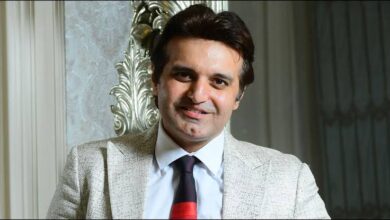
Singularity AI: Ranges, Not Points – Vatsal Soin 0→1 Doctrine Invention Draws Accountability Line

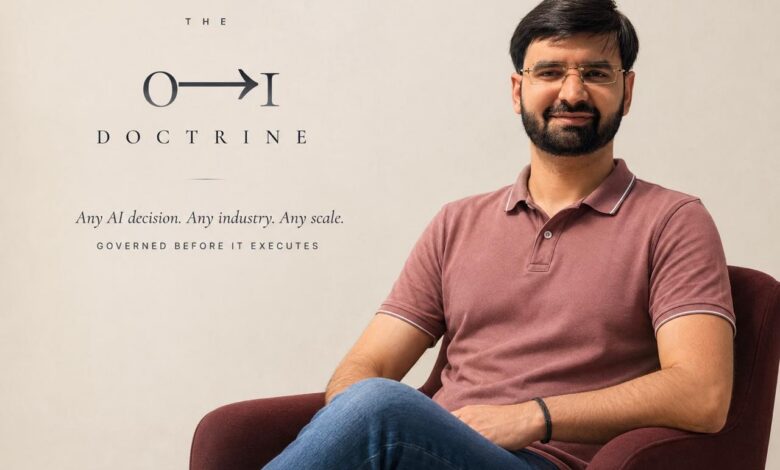
Real systems rarely operate at exact values, and neither does this. Every proposed action normalises to a value along a continuous scale between 0 and 1 — 0 marking no alignment with what was authorised, 1 marking complete alignment — then tested against a range a human already set, whatever Singularity turns out to mean.
Live: www.0to1doctrine.com
Vatsal Soin is a serial inventor with patent filings across six continents, spanning multiple domains — grants in the US, India, Japan, and South Africa. His latest grant, as recent as August 14, 2026, covers an AI-powered footwear system alongside a global sharable size card. Earlier inventions converged toward the 0→1 Doctrine.
This 0→1 Doctrine checks one thing, before it happens: whether a proposed AI action falls inside a range a human has already approved. Every measurement, in every field, is converted to a single number between 0 and 1 — the same scale, regardless of what produced the proposal or how capable it became.
That number does not appear from nowhere. It starts as a raw index — a reading, a metric, specific to its own field. Where several indices feed one decision, they are weighted, not simply added, because treating a critical signal the same as a minor one would be its own kind of error. This weighting works identically whether the system involved is narrow AI, general intelligence, or whatever comes after.
Raw data never leaves the device that produced it. Only a temporary working copy is used to reach a result, and that copy is deleted the moment the result is sealed — the original stays exactly where its owner kept it. Where patterns are studied across many decisions at once, controlled noise protects any single record from being identified inside that larger picture.
“The doctrine does not make AI smarter. It makes AI accountable.”
THREE ROLES, ONE PAIR OF NUMBERS
0 and 1 are not used once here. They are used three separate times, for three separate jobs.
A continuous scale normalises any raw measurement to a value between 0 and 1. A separate, continuous compatibility score — the Service-Product Fit Score — measures fit between what is required and what is offered, on that same range. A third, binary layer resolves to a definite authorisation outcome. Three mathematically distinct roles, not one idea repeated three times.
Conflating these three would be a real error. Keeping them separate is what lets each one be proven independently, rather than assumed by association with the other two.
RANGES, NOT POINTS
A system built only for exact values struggles against how variable real-world conditions actually behave.
Load-bearing capacity varies with temperature. Financial risk shifts with market conditions. A system demanding one precise number is demanding something operational reality rarely provides. Normalisation Invariance, one of the filed theorems underpinning this architecture, proves the range-based check holds regardless of which domain supplies the underlying measurement.
That proof does not need to be redone for every new field a measurement might come from. It was written once, for the property itself.
STRUCTURAL, NOT MATHEMATICAL: THE QUANTUM COMPARISON
A classical bit resolves to 0 or 1. A qubit can exist in a superposition of basis states, with measurement producing an outcome according to the chosen measurement.
Neither has an equivalent to a deliberate, pre-authorised hold-for-human outcome. This architecture’s Decision Closure Axiom resolves every proposed action to approve, reject, or hold for a named person — with finer-grained outcomes available beneath that closure where conditions call for them.
This does not bridge quantum computing, and does not claim to. The resemblance is structural — the same bounded range, arrived at for a different reason. Domain Universality, a separate theorem, proves this structural property holds whether the underlying computation is classical, quantum, or something not yet built.
That is a claim about the shape of the check, not a claim about quantum hardware. The two should not be confused, and this architecture is careful not to conflate them.
THE MOMENT BETWEEN COMPUTATION AND CONSEQUENCE
A calculation and an outcome have never been the same event. Something happens in between.
Whatever computed the proposal — a narrow model, a general one, something beyond either — this architecture’s proposed operating point sits in the moment before that proposal becomes a real-world consequence. Self-correction before propagation, a filed feature of this architecture, intervenes in that interval specifically, before an error compounds rather than after.
That timing is not incidental. A correction applied after the consequence is a repair. A correction applied before it is governance.
REVERSE DISCOVERY: TRACING BACKWARD, NOT FORWARD
Most systems only ask what happens next. This one can also ask what already happened, without exposing what produced it.
Accountability that only runs forward is half an audit trail. This runs both directions, without exposing the raw data that produced either decision.
A trail that only points forward tells you what might happen next. A trail that also points backward gives investigators a starting place, without requiring the underlying data to be exposed to get there.
THREE EXAMPLES, ONE IDENTICAL RULE
A capital allocation, an infrastructure adjustment, and a resource request — three unrelated decisions, the same measurement underneath each.
- A capital-allocation compatibility score normalises to [0.68, 0.74], sitting inside its authorised range [0.62, 0.80]. Cleared, the allocation proceeds without further review.
- An infrastructure-adjustment risk score normalises to [0.85, 0.92], entirely outside its authorised ceiling [0.50, 0.78]. Blocked outright, the adjustment halted before commitment.
- A resource-request compatibility score normalises to [0.71, 0.76], barely overlapping its authorised threshold [0.68, 0.73]. Held — the margin too thin to resolve alone.
“Three unrelated decisions. One identical measurement underneath every one of them.”
ONE CONFIRMED HARDENING WORTH NAMING
Silence should never quietly become approval.
Where a decision is escalated to a human authority and that person is unavailable, refuses, or times out, the system defaults to reject. Silence never becomes consent by default.
WHAT THIS DOES NOT CLAIM
This does not claim to know whether Singularity has arrived, or to have anticipated every domain it will one day govern. What it claims is narrower: the shape of the check does not change when the thing being checked is new. A range either holds the proposal or it does not.
WHAT CAPITAL IS ACTUALLY PRICING
The debate over Singularity is a debate about capability. The exposure sitting underneath it is a debate about accountability, and it does not wait for the first debate to resolve.
Every dollar committed to autonomous decision-making already carries this exposure, whichever way the capability debate eventually settles. A narrow claim, checkable against something already filed, is worth more to a serious allocator than a broad promise resting on which side of an unresolved argument turns out to be right.
“At Singularity, 0→1 draws the line between what AI can do and what it may do—turning 0 and 1 into a measurable boundary for accountability.”
Live: www.0to1doctrine.com
This can be tested, live, via API, governed against ungoverned, side by side.
Selected References
Granted: US Patent 12,446,652 B2 · Japan Patent 7560909 · India Patents 454081 and 599317 · Filed: PCT/IN2025/051943 · US 19/489,595 · India 202511115781 · Australia AU2022450649
DISCLAIMER: Informational only. Not certified. No endorsement implied. Not investment advice. Examples and band values are illustrative. Vatsal Soin · © 2026 All Rights Reserved.