From 2010 Income Tax Searches To 2026 Municipal Sealing: Raheja Developers’ Recurring Fight With Tax Authorities
Raheja Tower, with one more, sealed For ₹1.11 Crore Tax Default: Manesar Civic Body Targets Delhi-NCR Developer Over Long-Pending Dues


The Manesar Municipal Corporation’s tax wing arrived at IMT Sector-2 with little room for negotiation.
In mid-August 2026, officials sealed Raheja Tower-A along with the Ginger Hotel operating in the same complex.
The outstanding property tax liability stood at ₹1.11 crore. Multiple notices had already been served. Payment did not materialise. The seals went on.
For a commercial property carrying the Raheja Developers name in the Delhi-NCR region, the action is significant. Property tax is a basic civic obligation that funds local roads, sanitation, lighting and municipal services. When a prominent commercial tower in an industrial township remains in default for a prolonged period, the shortfall is ultimately borne by compliant taxpayers and the quality of public infrastructure suffers.
The sealing formed part of a wider recovery campaign by the Manesar Municipal Corporation against chronic defaulters like Raheja. Similar actions against other commercial buildings in the township have taken place around the same time. Officials have made it clear that the drive will continue until outstanding dues are cleared.
This municipal action does not stand in isolation. Raheja Developers, the Delhi-NCR based entity promoted by Navin M. Raheja, has a documented history of scrutiny by tax and investigative agencies. In 2010, the Income Tax Department conducted searches on the company. Contemporary reports indicated that material pointing to potential tax evasion in the range of ₹80 crore to ₹118 crore was recovered. The matter proceeded to the Income Tax Settlement Commission. In 2014, the Delhi High Court quashed the immunity that had been granted through those settlement proceedings, leaving the earlier disclosures open to further examination.
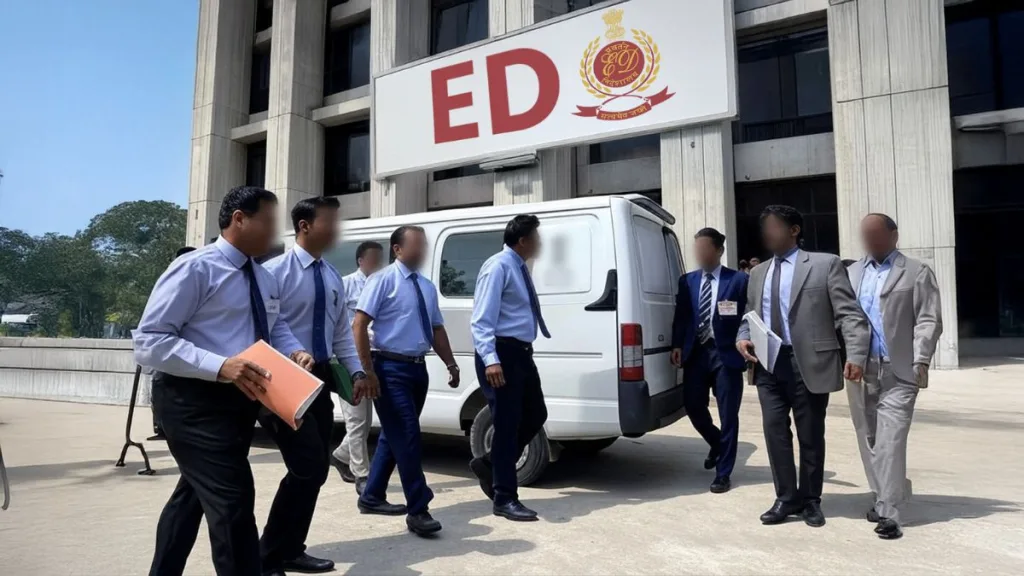
More recently, the Enforcement Directorate has attached substantial assets linked to Raheja Developers and its promoter family under the Prevention of Money Laundering Act. In April 2026 the agency provisionally attached properties with an estimated market value of approximately ₹1,113 crore. In June 2026 it attached further assets valued at around ₹503 crore, taking the cumulative provisional attachment to over ₹1,600 crore.
The investigation originates from multiple FIRs registered by the Economic Offences Wing on the basis of complaints from nearly 4,600 homebuyers. According to the agency, the company collected roughly ₹2,426 crore from these buyers for various residential projects, and a substantial portion of those funds was allegedly diverted for purposes other than construction and completion of the promised units.
While the ED proceedings concern alleged money laundering and diversion of homebuyer funds rather than municipal property tax, they form part of the same broader pattern of regulatory and financial examination that has followed the Delhi-NCR based Raheja Developers group. Against this background, the sealing of a commercial tower for an unpaid civic liability crores acquires additional resonance. It suggests that even routine statutory payments have not always received priority.
Municipal corporations across the National Capital Region have sharpened property tax enforcement in recent years through data-driven identification of defaulters, repeated notices and physical sealing. Manesar’s action against Raheja Tower-A fits this stricter approach. The principle is straightforward: commercial properties that generate revenue for their owners are expected to contribute their share to the local civic body. When that contribution is withheld until the locks are applied, the public perception of selective compliance is reinforced.
For tenants and occupants of the sealed tower and hotel, the immediate consequence is operational disruption. For the wider public, the episode raises a larger question of accountability. A developer that has collected thousands of crores from homebuyers over the years and has faced successive rounds of tax and enforcement scrutiny still allowed a municipal tax demand of crores to remain unpaid until sealing became inevitable.
The 2010 Income Tax searches, the 2014 High Court ruling on settlement immunity, the 2026 ED attachments exceeding ₹1,600 crore, and now the Manesar sealing together sketch a consistent picture. Basic compliance, whether with direct tax authorities, money-laundering investigators or the local municipal corporation, has repeatedly required external pressure. This property tax default is modest when compared with the scale of the other figures involved, yet it is telling precisely because it is so basic.
In an industrial township that depends on reliable municipal services to function, large-scale defaults undermine the collective system. The Manesar Municipal Corporation has drawn a clear line. Whether the amount is paid and the seals removed, or whether the standoff continues, the locking of Raheja Tower-A has already illustrated a simple reality: even well-known names in Delhi-NCR real estate are not exempt from the consequences of unpaid civic dues.