Thackeray’s Bold Take On The Language Debate: “Marathi Rules Mumbai, Deal With It!”
"Marathi runs in Mumbai’s veins, and that ain't changing!" Aditya Thackeray shuts down claims of a language shift, reigniting the battle over Mumbai’s linguistic identity.

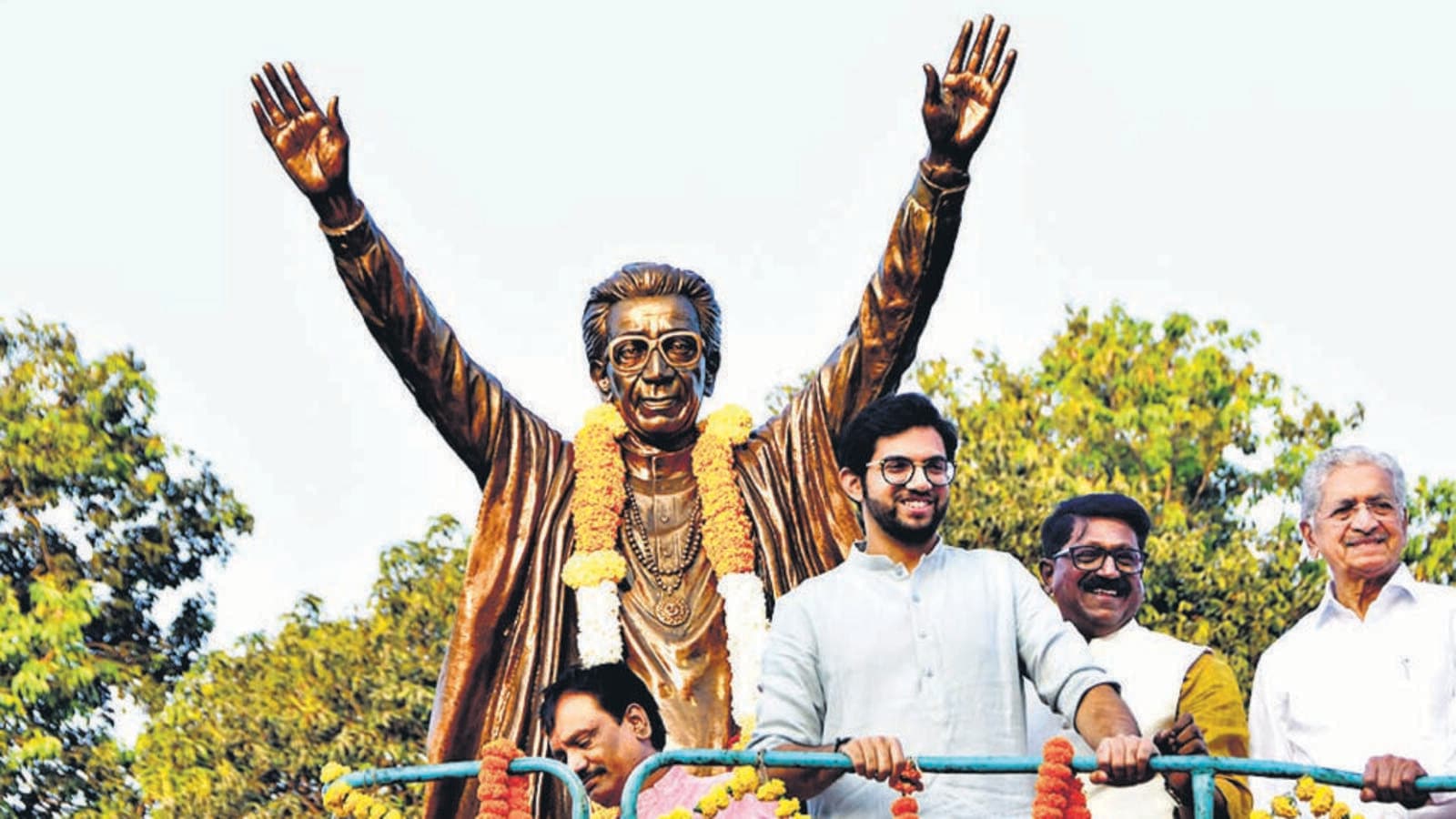
Aditya Thackeray, senior Shiv Sena (UBT) leader and ex-Maharashtra minister, recently categorically stated Marathi as the ruling language of Mumbai. His statement came after a controversial statement by an RSS leader on the language identity of Mumbai. Political exaggeration, provincial regionalism, and dominance of Marathi as metropolitan language of the capital of Maharashtra have all been justified in reference to Thackeray’s quote, which once again injected spark to controversies of the cultural and linguistic identity of Mumbai.
This piece looks at the political and historical context of the language problem in Mumbai, explores the appropriateness of Thackeray’s comment, and considers the broader implications of such language controversies.
Background of the Controversy
The controversy was raised when a senior Rashtriya Swayamsevak Sangh (RSS) leader stated that Mumbai’s linguistic identity was transitioning and suggested the rising ascendancy of other languages within the city. People interpreted this comment as minimizing the predominance of Marathi, the mother tongue of Maharashtra.
Aditya Thackeray’s retort strongly opposed the likelihood of Mumbai’s language identity shift by saying, “The language of Mumbai is Marathi. Not possible.” It reinforced Shiv Sena’s ever-favored role of upholding Marathi identity and pride for Mumbai.

Political and Historical Significance of Marathi in Mumbai
1. The Role of Marathi in Mumbai’s Formation
Mumbai, or Bombay as previously known, has a long historical connection with the Marathi-speaking community. Before India’s independence, Mumbai was a multilingual city with a strong Gujarati, Konkani, and English-speaking influence. However, the linguistic reorganization of states in 1960 created Maharashtra with Mumbai as its capital. The Samyukta Maharashtra Movement, which had petitioned Mumbai to be included in Maharashtra, helped to cement the city’s Marathi identity.
2. Shiv Sena’s Marathi Manoos Agenda
The Shiv Sena, established by Balasaheb Thackeray in 1966, was founded upon the concept of “Marathi Manoos” (proud Marathis). The party has historically positioned itself as the defender of Marathi culture, language, and the interests of native Maharashtrians in Mumbai. Over the decades, the party has campaigned for priority to be given to Marathi speakers in jobs, education, and governance.
Aditya Thackeray’s recent utterance is consistent with this tradition, upholding the party’s fundamental ideology, especially when the Shiv Sena (UBT) is pitted against the Eknath Shinde group for Marathi votes.
3. Linguistic Diversity vs. Marathi Dominance in Mumbai
Even though Marathi is the dominant language, Mumbai is a cosmopolitan city. A substantial number of Hindi, Gujarati, Tamil, and Urdu speakers reside in the city; the reason why is apparent: it’s the commercial capital of India. Over time, years of immigration by individuals across the country have transformed Mumbai into a multilingual form. Consequently, other languages, primarily Hindi, are gaining prominence.
However, Marathi continues to heavily imprint Mumbai governance, administration, and public life. The Brihanmumbai Municipal Corporation (BMC) functions predominantly in Marathi, and the state government of Maharashtra has always favored Marathi language policies for schooling and government services.
The Broader Implications of the Language Debate
1. Political Impact in Maharashtra
The argument regarding Mumbai’s language is not about culture alone; it is profoundly political. With upcoming elections, political parties in Maharashtra are keen to consolidate their voter base. The Marathi identity remains a powerful issue that parties like the Shiv Sena (UBT), the Shiv Sena (Shinde faction), the Maharashtra Navnirman Sena (MNS), and even the BJP leverage in their political campaigns.
Aditya Thackeray’s robust reaction has several political functions:
- It reaffirms his party’s commitment to Marathi pride.
- It places the Shiv Sena (UBT) in the correct position to be the custodian of Maharashtrian interests.
- It counters any narrative suggesting a diminishing role of Marathi in Mumbai.
2. Cultural and Linguistic Identity
Language is a crucial identifying identifier. Local languages frequently face competition from dominant national and international languages in a society quickly becoming more urbanized and globalized. A larger initiative to preserve and advance regional linguistic identities in India includes the declaration of Marathi as the native language of Mumbai.
3. Linguistic Tensions in a Multilingual India
India has also experienced different movements and conflicts over languages. From Tamil Nadu’s anti-Hindi demonstrations to the conflict over Telugu-speaking Andhra Pradesh in the 1950s, politics over languages has been a grand narrative in India’s history. The Mumbai language dispute also falls into the larger context of language claims and local pride.
The Bottom Line
Aditya Thackeray‘s reiteration of Marathi being Mumbai’s foremost language is an intentional affirmation of local identity, political rhetoric, and cultural egotism than a response to a comment made by an RSS leader. Marathi is Mumbai’s language even if the metropolis remains a linguistic melting pot. In India’s most beautifully diverse city, the confrontation highlights the nuances of immigration, politics, and language.

It will be challenging to preserve Mumbai’s multilingual nature as it grows because of its inherent linguistic and cultural diversity. Whether this controversy is a momentary fad, or a permanent political concern would hinge on the extent to which Maharashtra’s leaders are sensitive to the feelings of their diverse constituents.