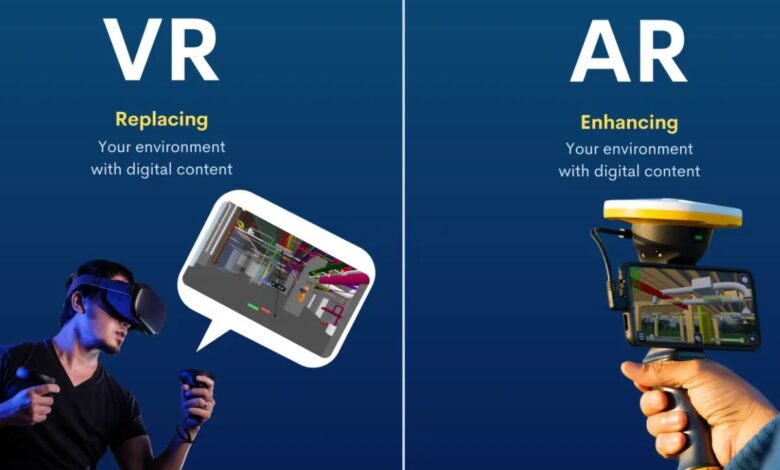
India has emerged as a genuine global hub for virtual and augmented reality development, powered by a mature IT services sector, deep engineering talent, and increasingly serious enterprise adoption. What was once dismissed as a gaming novelty has evolved into enterprise-scale, ROI-driven technology — companies now use AR and VR for industrial safety simulations, immersive employee training, virtual real estate tours, and AR-enabled e-commerce experiences. This shift has been further accelerated by India’s National Extended Reality Mission, launched in 2025, which has boosted both funding and research into spatial computing technologies across the country.
Global enterprises increasingly outsource immersive technology projects to Indian firms, drawn by a combination of deep expertise in tools like Unity, Unreal Engine, ARKit, and ARCore, alongside significantly better cost efficiency compared to Western development shops. Below is a comprehensive list of ten VR/AR development firms actively serving clients from India in 2026 — spanning both large enterprise technology leaders and specialized immersive technology studios. Every firm listed is currently operational, with no known association with governmental or regulatory scrutiny.
1. Tata Consultancy Services (TCS)
TCS stands as one of the most significant enterprise players in India’s immersive technology landscape, having invested substantially in VR/AR and metaverse-enabled solutions through its digital innovation labs. The company integrates immersive technology with AI, IoT, and analytics to deliver comprehensive, enterprise-grade XR ecosystems rather than standalone AR or VR applications.
TCS’s global client base and deep R&D capabilities position it as a natural choice for large multinational enterprises seeking to deploy immersive transformation projects at scale — particularly organizations that already work with TCS on broader digital transformation initiatives and want XR capabilities integrated into that existing relationship.
Best for: Large-scale enterprise XR ecosystems integrated with AI and IoT.
2. Infosys
Infosys has built out immersive digital experience platforms through its dedicated innovation and digital engineering divisions, leveraging VR/AR technology alongside cloud architecture and AI frameworks to create scalable enterprise solutions. Like TCS, Infosys approaches immersive technology as one component within a broader digital transformation offering rather than a standalone service line.
This integration means Infosys is particularly well-suited to enterprises that need VR/AR capabilities woven into existing cloud infrastructure and data systems, rather than isolated pilot projects. Its scale and established enterprise relationships give it credibility for large, multi-phase immersive technology rollouts.
Best for: Cloud-integrated enterprise immersive solutions at scale.
3. CHRP-INDIA
CHRP-INDIA has carved out a distinctive niche in enterprise-grade immersive learning and simulation-based training, with a specific focus on XR-driven workforce transformation in industrial and high-risk environments. The company has implemented what it describes as one of the world’s first XR and VR safety training deployments inside live coal and ore mines — a genuinely high-stakes, real-world application rather than a demonstration project.
Established in 2008 with offices spanning India, France, and Bahrain, CHRP-INDIA’s focus on practical implementation over experimental prototypes has helped it build a reputation for measurable ROI — reduced training errors, improved retention rates, and enhanced operational safety metrics for clients in demanding industrial settings.
Best for: Industrial safety training and high-risk environment simulation.
4. Simulanis
Simulanis has built its business around delivering innovation and measurable value to customers through continuous investment in VR/AR research and development. The company’s products are specifically designed to improve productivity, increase workplace safety, and reduce operational costs — positioning it as a results-oriented partner for enterprises rather than a purely creative or experimental studio.
Simulanis’s focus spans training simulations and visualization tools across multiple industrial sectors, reflecting the broader trend of Indian VR/AR firms moving toward practical, outcome-driven applications rather than purely entertainment-focused immersive content.
Best for: Productivity and safety-focused industrial VR/AR applications.
5. GreyKernel
GreyKernel has established itself as one of the leading and most-awarded virtual reality and advanced visualization studios in India, known for combining a strong technical team with cutting-edge immersive technology. The company’s recognition within the industry reflects sustained quality and innovation across multiple project types rather than a single flagship product.
GreyKernel’s positioning as an advanced visualization specialist makes it particularly relevant for clients needing highly polished, visually sophisticated VR experiences — architectural walkthroughs, product visualization, and other applications where visual fidelity is a critical success factor.
Best for: High-fidelity visualization and architectural VR experiences.
6. Simbott
Simbott specializes in VR, AR, and MR-based training simulator software, having delivered more than 150 projects across India and internationally. The company’s most recognized products include its Welding Simulator and Spray Painting Simulator — highly specific, industrially relevant tools used across manufacturing, automotive, aerospace, and construction sectors.
This specialization in simulation-based technical skills training differentiates Simbott from broader immersive technology studios, giving it deep domain expertise in replicating hands-on industrial processes within a virtual environment — a genuinely difficult technical challenge that requires close collaboration with industry experts.
Best for: Technical skills training simulators for manufacturing and industrial sectors.
7. Talentica Software
Talentica Software has built a substantial VR/AR development practice backed by a team of more than 450 skilled engineers, helping both startups and enterprises create immersive digital experiences for training, visualization, and product engagement. This scale gives Talentica the capacity to handle larger, more complex projects than boutique studios while maintaining startup-friendly engagement models.
The company’s dual focus on serving both early-stage startups and established enterprises reflects a flexible engagement model, making it a relevant option for organizations at different stages of their immersive technology adoption journey.
Best for: Scalable VR/AR development for both startups and enterprises.
8. Kinemeric (formerly CXR Agency)
Kinemeric has built a strong reputation for creating innovative VR/AR solutions across education, healthcare, and marketing applications, with independent client reviews highlighting consistently high satisfaction with project management, punctuality, and communication. A notable share of reviewers specifically praise the studio’s creativity and adaptability in delivering XR development solutions.
One illustrative example of Kinemeric’s work includes an industry-focused AR game developed for a fiber optic broadband solutions partner — reflecting the studio’s ability to translate technical, industry-specific concepts into engaging, interactive experiences rather than generic immersive content.
Best for: Creative, marketing-oriented VR/AR experiences across diverse industries.
9. Coherent Lab
Coherent Lab has provided enterprise-grade VR/AR solutions for more than a decade, delivering scalable immersive experiences to clients across healthcare, education, retail, and manufacturing. The studio’s core strength lies in creating interactive 3D experiences that address specific business problems while keeping solutions both scalable and cost-effective — an important balance for clients wary of expensive, over-engineered immersive projects.
With a track record spanning more than 150 successful projects, Coherent Lab has built particular expertise in translating complex enterprise requirements into practical, deployable VR/AR applications rather than purely conceptual prototypes.
Best for: Cost-effective, enterprise-grade VR/AR across healthcare, retail, and manufacturing.
10. Awakeen Studio
Awakeen Studio specializes across augmented reality, virtual reality, and game development services, serving clients across entertainment, education, medical, automobile, real estate, and tourism sectors. This broad industry range reflects a versatile technical foundation capable of adapting immersive technology to genuinely different use cases — from entertainment-focused VR experiences to serious medical training applications.
The studio’s game development background gives it a particular edge in creating genuinely engaging, interactive experiences rather than purely functional immersive tools — a meaningful differentiator for clients whose AR/VR use case depends on sustained user engagement, such as retail or tourism applications.
Best for: Versatile VR/AR and game development across entertainment and enterprise use cases.
How to Choose the Right VR/AR Development Partner
With hundreds of firms operating in this space across India, a few practical considerations can help narrow your search. First, distinguish between enterprise IT giants like TCS and Infosys — best suited for large organizations wanting immersive technology integrated into broader digital transformation initiatives — and specialized studios like Simbott or CHRP-INDIA, which offer deeper domain expertise for specific use cases like industrial training or safety simulation.
Second, evaluate the firm’s technology stack: look for proficiency in Unity, Unreal Engine, ARKit, and ARCore, along with experience in the specific hardware you plan to deploy on, whether that’s mobile AR, dedicated VR headsets, or mixed reality devices. Third, request case studies specific to your industry — a studio with strong healthcare VR/AR experience may not translate directly to industrial safety training, given how different the underlying content and interaction design requirements can be.
Finally, factor in realistic budget and timeline expectations: a simple AR app can typically be developed for $10,000–$30,000 over 6–8 weeks, while full enterprise VR solutions can exceed $100,000 and take four to six months or longer, depending on complexity and the level of custom 3D content required.
Final Thoughts
India’s VR/AR development landscape in 2026 has matured well beyond experimental gaming projects into a genuinely diverse, enterprise-focused industry. Whether you need the massive scale and integration capabilities of TCS and Infosys, the industrial safety specialization of CHRP-INDIA and Simbott, or the creative versatility of studios like Kinemeric and Awakeen Studio, the ten firms featured here represent currently active, well-regarded options for organizations exploring immersive technology in 2026. As adoption continues accelerating across healthcare, manufacturing, retail, and education, expect India’s position as a global immersive technology development hub to strengthen further.