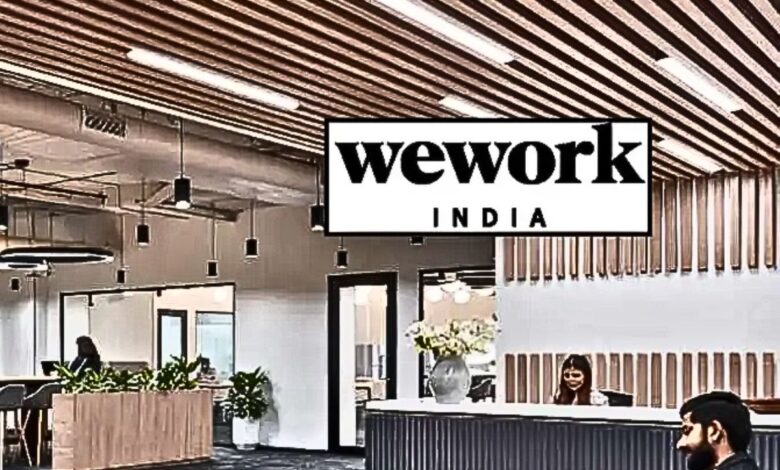
WeWork India’s recent IPO was more than a stock market debut; it was a litmus test of whether investors have learned from history or are doomed to repeat it. The offering came wrapped in paradox: a Rs 3,000 crore (approx. $338 million) issue designed entirely as an Offer for Sale; meaning not a single rupee of fresh capital for the company’s coffers.
Instead, the IPO allowed existing backers, chiefly real estate giant Embassy Group and WeWork’s global arm, to cash out their stakes in the co-working venture. All this transpired under the shadow of the original WeWork debacle, which is a saga of hubris and hype that saw the U.S. parent’s $47 billion dream deflate into a cautionary tale of corporate “megalomania meets reality.”
WeWork India’s IPO, which closed on October 7, 2025, amid legal challenges and governance red flags, forces us to ask: Have the core issues that doomed WeWork’s global IPO in 2019 been resolved, or merely transplanted to a new market? The Bombay High Court’s swift dismissal of petitions against the IPO and the stock’s muted trading debut might suggest business as usual. But beneath the surface lies a layered story of financial engineering, human drama, and historical parallels that deserves closer scrutiny.
A Fraught Debut: WeWork India’s IPO Under Scrutiny
When WeWork India Management Ltd pushed open the doors to the public markets in October 2025, it did so under a cloud of scrutiny. The company, essentially the Indian franchise of WeWork Global, filed its Red Herring Prospectus in late September and hit the market with a 100% Offer-for-Sale IPO of 46.3 million shares.
Embassy Buildcon LLP (the Embassy Group entity) and WeWork International were the selling shareholders, not WeWork India itself, so “our company will not receive any proceeds from the Offer,” the prospectus admitted. In plainer terms, the IPO was designed to facilitate an exit, principally for Embassy Group, which slated roughly three-quarters of the shares on sale; rather than to raise growth capital. Observers noted that this structure would “not create any tangible assets or business opportunities” for WeWork India, “but simply allow promoter Embassy Buildcon LLP to exit.”
Red Flags and Legal Hurdles
Given this setup, it’s no wonder that corporate governance hawks and some investors smelled a rat. InGovern Research Services, a leading proxy advisory firm, issued a damning note ahead of the listing, warning of “serious gaps” in disclosures and poor financial health. It pointed out that WeWork India did not qualify for a profitability-based IPO (SEBI’s Regulation 6(1)) and had to rely on Regulation 6(2) for loss-making or restructured firms.
The reason? WeWork India had racked up accumulated losses and a negative net worth of ₹437.45 crore as of March 31, 2024. Although the company reported a small profit in FY25, InGovern noted this was “largely due to a deferred tax credit of ₹286 crore rather than any operational turnaround.” In other words, accounting magic, not business performance, tipped the firm into the black. In reality, operating cash flows remained negative and lease obligations devoured over 43% of annual revenue, indicating persistent liquidity pressure despite headline improvements.
Moreover, over 53% of the promoters’ pre-IPO shares were pledged as collateral for ₹2,065 crore in borrowings – a highly unusual red flag for a company going public. These pledges were hastily released in September to comply with SEBI rules (which bar promoter pledges at IPO), but InGovern warned that if listing were delayed beyond 45 days, the promoters were contractually obliged to re-pledge the shares. This meant any hiccup in the IPO timing could have forced “enforced pledging that could erode promoter control and affect price stability,” essentially putting a governance time-bomb under the stock.
Additionally, serious legal proceedings involving the company’s key promoters – Jitendra (“Jitu”) Virwani and his son Karan Virwani cast a long shadow. The Virwanis, who helm Embassy Group, have been embroiled in investigations by India’s federal agencies: a CBI chargesheet (for alleged cheating and conspiracy dating back to 2004), an Enforcement Directorate (ED) probe under anti-money-laundering laws, and an Economic Offences Wing case in 2024.
These are not minor allegations; they include charges of cheating, criminal conspiracy, breach of trust, and money laundering. InGovern alleged that WeWork India’s offer documents failed to include full details of these ongoing criminal cases against the promoters. Indeed, an investor petition would later claim that a November 2024 chargesheet by the EOW was initially omitted from the Draft RHP filed in January 2025 and added only via an August 2025 addendum. Such omissions raised pointed questions about SEBI’s disclosure enforcement and the “fit and proper” status of those at the company’s helm.
Two concerned retail investors took these issues to court in a last-ditch effort to halt or delay the IPO. They filed petitions in the Bombay High Court alleging that SEBI had “overlooked disclosure lapses” and allowed the issue despite WeWork India’s shaky finances and opaque promoter track record.
The pleas highlighted the negative net worth, cumulative losses, and the impression that WeWork India portrayed itself as part of the global WeWork brand without sufficiently warning investors that it “only licenses the brand name” with no financial backing from WeWork Global. The petitioners argued that public investors were not being properly apprised of the risks, essentially accusing the company of packaging itself as a glamorous tech-enabled venture when it was, in substance, a heavily leveraged real-estate sublease business.
SEBI and the Courts: Due Diligence or Rubber Stamp?
The regulator and the judiciary, however, were not swayed. SEBI, India’s market watchdog, maintained that it had exercised “due care and caution” in vetting the offer. In the court hearings, it was pointed out that loss-making companies routinely undertake IPOs and no law prohibits it, citing recent high-profile IPOs of tech startups like Zomato and Paytm as examples.
As for the pending legal cases, SEBI noted it had specifically directed WeWork India to list the criminal proceedings as the first risk factor in the prospectus– an instruction that was indeed followed, with the final prospectus prominently warning investors about the investigations into the Virwanis. SEBI also argued it is impractical for the regulator to issue detailed public orders for every complaint in an IPO process, given the volume of filings it reviews.
The Bombay High Court ultimately dismissed both petitions on December 1, 2025, clearing the path for WeWork India’s already-completed listing. One petitioner was even slapped with ₹1 lakh in legal costs for his trouble. The Court noted that all required disclosures were made per regulations and that regulators’ decisions shouldn’t be second-guessed absent clear arbitrariness. Judges took cognizance of the fact that the issue had eventually been oversubscribed (1.15 times) with strong QIB interest, implying that the market, presumably including savvy institutional investors had adequate information to make its decision. In essence, the message was: the prospectus warned you, the big investors came anyway, so what’s the problem?

However, that stance arguably sidesteps the heart of the matter. Yes, WeWork India’s red flags were disclosed in fine print, but full disclosure alone doesn’t guarantee a fundamentally sound offering. The High Court’s decision underscored an uneasy truth of capital markets: if enough investors are willing to buy in, even a loss-laden, related-party-entangled company can sail through to listing. Caveat emptor — let the buyer beware — remains the last line of defense.
Behind the Numbers: Cash Flows, Creative Accounting, and Debt
WeWork India’s financial story is a study in contrasts. On one hand, the company and its promoters touted a “record revenue” and a turn to profit in recent quarters; on the other, closer examination reveals that profit was purely a quirk of accounting and one-off tax benefits, while underlying operations continued to bleed cash.
According to the filings, WeWork India’s total income for Q2 FY26 (July–Sep 2025) rose to ₹585.5 crore, up from ₹499.5 crore in the same period a year earlier. The top-line growth of about 17% signals robust demand for its flexible office spaces. The company even reported a post-tax profit of ₹6.4 crore for that quarter, ostensibly its first Ind AS-compliant profitable quarter.
But context is everything: the year-ago quarter’s profit was ₹203.7 crore, only because of a massive deferred tax credit that obscured an operational loss. Strip out that tax credit, and last year was deep in the red. In fact, WeWork India admitted that the FY25 full-year profit was largely due to a ₹286 crore deferred tax gain. It’s a classic case of a balance-sheet maneuver (reversing past losses to recognize a tax asset) yielding a paper profit, even as the core business hadn’t fundamentally turned around.
The company’s preferred metric is Adjusted EBITDA, which it claims was ₹4212.5 million in FY25 with a healthy 21.6% margin, up from ₹3397.5 million in FY24. It argues that Ind AS 116 (the accounting standard for leases) “artificially” depressed its net worth by forcing it to recognize lease liabilities on the balance sheet. WeWork India trumpets that by EBITDA measure, it has “the highest EBITDA amongst benchmarked peers in the industry”.
This is a fair point to an extent – accounting for long-term leases does make a space-leasing company look highly leveraged. But one must note: EBITDA doesn’t pay the rent or interest. Despite its adjusted profitability, actual net cash from operations was only ₹1289.9 crore in FY25, barely above the ₹1161.8 crore in FY24. And this operational cash flow, while positive, has to service not just rent but also debt and expansion needs. WeWork India’s own risk factors concede that cash flows could be strained by high lease commitments – no surprise given that lease payments consume nearly half of annual revenue.
The capital structure is another part of the story. Leading up to the IPO, the promoters (Embassy) injected equity to shore up confidence: ₹500 crore was pumped in via a rights issue in January 2025, at a price higher than the IPO pricing. This was highlighted repeatedly to suggest promoters’ conviction in the business. It’s true that Embassy effectively pre-paid some equity to dress up the balance sheet. Yet, simultaneously, Embassy had a large pile of debt secured by WeWork shares, which is a somewhat precarious situation. In the run-up to the listing, Embassy Group had reportedly pledged more than half of its stake to raise loans.
Those loans, amounting to over ₹2000 crore, were partly repaid using the IPO proceeds once the shares sold. In fact, ₹1,748 crore of Embassy’s debt was paid down thanks to the IPO money. To put it bluntly, public investors’ money was essentially used to de-leverage the promoter’s balance sheet. WeWork India itself acknowledged this, saying “a large portion of IPO proceeds went toward repaying the debt against which shares were pledged,” significantly reducing the encumbrance on promoter shares. This is not necessarily nefarious as paying off debt can be positive, but it underscores that the IPO’s primary economic outcome was to bail out the promoter’s loans and provide an exit liquidity event, not to fund WeWork India’s growth.
The governance concerns didn’t end at financial engineering. Investors were also wary of related-party transactions and WeWork India’s heavy reliance on its association with the WeWork brand (owned by the now-distressed U.S. entity). The prospectus clarifies that WeWork India licenses the “WeWork” trademark and operating know-how from WeWork Global. But crucially, this license remains valid only so long as the Indian promoters retain control. If Embassy were to lose management control or significant ownership, the franchise rights could be withdrawn. This means WeWork India’s very identity is tethered to the fate and decisions of its now-former parent.
Proxy advisors argued that investors should have been explicitly warned how precarious that could become – imagine if the U.S. WeWork’s collapse had led to a loss of rights to the name in India. The company insists it has “all customary safeguards in place” and an exclusive long-term agreement for the brand in India. Indeed, WeWork India was quick to reassure that WeWork Global’s bankruptcy in 2023 wouldn’t affect Indian operations, noting that the global firm had since exited Chapter 11 by mid-2024 and assigned the India license to Embassy under new terms.
That global restructuring placed WeWork’s international assets under the wing of Yardi Systems (a real-estate software company) with SoftBank retaining a minority stake, effectively giving Embassy a stable counterparty for the brand rights. Still, the notion that a bankrupt American company (now restructured) was essentially the source of WeWork India’s brand value did not inspire confidence in all quarters. It’s a rich irony: WeWork India went public just as WeWork Global was going bust, forcing investors to compartmentalize the two. (WeWork India’s CFO practically begged analysts to judge the Indian unit on its own merits, separate from the turmoil of “WeWork 1.0” abroad.)
The IPO Reception: Muted Applause from Mr. Market
Despite all the pre-listing drama, the IPO managed to scrape through with modest oversubscription. On the final day of the book-build, the issue was around 1.15 times subscribed. The heavy lifting was done by Qualified Institutional Buyers (QIBs), mostly domestic mutual funds and some foreign institutions, who subscribed 1.79× their allotted portion. In contrast, retail investors bid for only about 61% of the shares earmarked for them (i.e. the retail portion went undersubscribed) and non-institutional high-net-worth investors took up just 23% of theirs.
In plain terms, had it not been for the anchors and institutional buyers, WeWork India’s IPO might have faltered. Domestic mutual funds alone pumped in ₹1,413 crore, taking up roughly 2.18 crore shares in their portfolios – a significant endorsement from India’s asset managers, likely influenced by anchor allocations and perhaps a dash of FOMO in a booming IPO season. This institutional thrust allowed the book-runners to close the issue successfully by October 7.
WeWork India listed on October 10, 2025, and the stock’s performance can best be described as tepid. In pre-open price discovery, it barely budged above the IPO price of ₹648, and eventually debuted at ₹650 on the NSE – a mere 0.3% premium. Any champagne in the IPO bankers’ office was short-lived; by the end of the first trading day, the stock slid below the issue price, closing about 3% lower.
Specifically, the shares opened just above the offer price and then fell as much as 5.2% intraday to ₹614.25 before recovering slightly to finish the day down around ₹628. This flat-to-down debut valued the company at roughly ₹84.25 billion (about $950 million) – a far cry from the multibillion-dollar heights WeWork once dreamed of globally, but still a rich valuation at ~15 times annualized revenue for a firm with thin margins and high debt.
The market’s lukewarm reaction reflected skepticism about both valuation and governance. “The market was not very comfortable with the valuation, and WeWork is now facing the heat,” observed one investment officer, noting that at around ₹8,685 crore (₹648 per share) the IPO priced in aggressive future growth. By some measures, WeWork India’s pricing was steeper than domestic peers. Competing co-working firms that had recently listed, such as Smartworks and IndiQube, were growing faster and trading at lower multiples.
WeWork India projected about 22% revenue CAGR over FY23–FY25, which actually lagged behind these rivals’ trajectories. Smartworks (listed July 2025) had seen its stock jump ~35% post-IPO, while IndiQube’s had recovered to ~4% above IPO after an initial dip. In market cap terms, by October 2025 Smartworks was valued around ₹68.9 billion and IndiQube ₹47.6 billion – making WeWork India, at ₹84 billion, the richest of the bunch despite arguably weaker metrics. That disparity did not go unnoticed by savvy investors.
Governance concerns also continued to cast a shadow on the stock’s prospects. The proxy advisors’ warnings about “fragile financials” (negative cash flow, high lease liabilities) and the lack of fresh capital infusion remained salient. Essentially, the IPO gave WeWork India the sheen of public listing and a currency (its stock) for future transactions, but no new money to actually bolster its balance sheet or fund expansion.
“The listing adds visibility but not liquidity support for the business,” a Mumbai-based fund manager remarked pointedly. Indeed, within weeks of listing, WeWork India’s shares sagged in the secondary market, trading around ₹610 by late October. In mid-November, it was reported that global brokerage CLSA offloaded 840,000 shares (around ₹52 crore worth) in the open market, putting further pressure on the stock which slid below ₹600. Any post-IPO “pop” had well and truly fizzled.
Yet, for all the cautionary signs, WeWork India insists it is on a solid path. The company points to strong occupancy in its 70 centers across 8 cities, plans to add over 29,000 desks (expanding to 10 million sq ft) by year-end, and its ability to generate cash without external funding. In a characteristically upbeat earnings statement, CEO Karan Virwani proclaimed Q2 FY26 as “a defining moment in WeWork India’s journey,” proving that flexibility and profitability can coexist at scale.
“We are not just growing faster; we are growing smarter,” Virwani said, touting record revenues and expanding margins as evidence that “a sustainable, tech-enabled workspace model can power the future of work in India.” Such pronouncements sound eerily familiar to anyone who remembers the grandiose claims of WeWork’s founder a few years ago. And that brings us to the heart of the saga: to fully grasp the significance of WeWork India’s public foray, one must revisit the rise and fall of WeWork’s global empire – the very backstory that gives this IPO its dramatic irony.
Rise of an Icon, Fall of a Unicorn: The WeWork Global Saga
Long before WeWork India’s relatively sober prospectus made its way to SEBI, WeWork was a name that embodied the wild, and at times warped, optimism of the global startup boom. Founded in New York City in 2010 by the charismatic and controversial Adam Neumann, WeWork grew from a single SoHo loft into a co-working colossus spanning 528 locations in 111 cities and 29 countries within nine years.
The company’s core business was not new: essentially sub-leasing office space. Competitors like Regus (IWG plc), in fact, had been doing the same since the 1980s – profitably and at far smaller valuations. But WeWork didn’t sell itself as a stodgy real estate play. Neumann pitched WeWork as a tech-infused lifestyle revolution – “the Space-as-a-Service” pioneer that would change how people work and live. Internal mission statements spoke of “elevating the world’s consciousness” by bringing people together in beautifully designed common spaces.
The company branched into residential living (WeLive), education (WeGrow), and flirted with every buzzword from community-building to wellness to AI. Neumann had a vision of WeWork as an $10 trillion ecosystem that would encompass all aspects of life. Investors, for a while, drank the Kool-Aid with gusto.
By 2019, thanks to massive funding from SoftBank’s Vision Fund and others (over $12 billion poured in), WeWork’s private valuation had sky-rocketed to $47 billion. It was the second most valuable startup in the world at the time, after Uber. SoftBank’s founder Masayoshi Son, known for his risk-taking, personally championed Neumann, reportedly encouraging his grandiose ambitions (famously asking him to think bigger, “crazy” bigger).
Flush with cash, Neumann’s WeWork expanded at breakneck speed, signing 15-year office leases by the dozen and filling them with millennial freelancers and Fortune 500 satellite teams alike. Revenue doubled annually, from $886 million in 2017 to $1.8 billion in 2018, but losses mounted even faster (from $1.2 billion to $2.2 billion in the same period). WeWork spent lavishly to “blitzscale”: free kombucha on tap, below-market rents to lure in members, and acquisitions of niche businesses (wave pools, anyone?) that baffled analysts.
The company’s contribution margins were actually shrinking with growth, a red flag that traditional metrics struggled to justify. No matter, the growth story was intoxicating, and public markets were assumed to be eager for WeWork’s IPO** – the next blockbuster in a season of big tech debuts.
The S-1 That Shook the World
Then came August 2019, and the curtain was pulled back. WeWork filed its S-1 registration statement – a moment many described as the “emperor has no clothes” revelation. The filing was, to put it mildly, a corporate governance nightmare. It exposed a web of conflicts of interest and eccentric decisions that deeply rattled potential investors. Among the most egregious revelations:
- Neumann had been leasing office buildings he owned back to WeWork, effectively making himself his company’s landlord and collecting rent directly. (Only as the IPO neared did WeWork scramble to say it would buy those stakes from Neumann to unwind the conflict, but the damage was done.)
- WeWork had lent Neumann hundreds of millions of dollars at interest rates as low as 0.9%, some of which he used to buy properties that he then leased to WeWork. While some loans were repaid, it painted a picture of the CEO using the company as a personal piggy bank.
- Neumann’s family members were on the payroll. His wife, Rebekah Neumann, was a co-founder and ran the WeGrow private school; other relatives were employed or contracted for events. The S-1 famously noted that in the event of Neumann’s death, a succession committee would consider Rebekah’s recommendation for new CEO – essentially giving his spouse a say in the future leadership, a highly unorthodox provision that raised eyebrows across Wall Street.
- In perhaps the most ridiculed episode, Neumann had trademarked the word “We” through a personal LLC, then made WeWork pay $5.9 million to acquire that trademark. The sheer audacity of charging his own company for its name (“We”), and disclosing it in the S-1, drew scorn. Under public pressure, Neumann later returned the $5.9 million in stock, but the incident became a lasting symbol of his self-dealing.
Moreover, the S-1 showed a share class structure designed to entrench Neumann’s control: he had shares with 20 times voting power. Initially, he would hold about 65% of the voting rights despite not owning anywhere near that economic stake. (After backlash, an amended filing cut this to 10:1 votes and removed his wife’s succession role, but public confidence was already shaken.)
WeWork’s prospectus was also larded with New Agey language – it literally mentioned the word “community” over 150 times – but was fuzzy on a clear path to profitability. The risk factors read like a comedy roast of startup excess, pointing out WeWork might never turn a profit, had $47 billion in future lease obligations with no guarantee of tenants, and could implode in a downturn. In an ominous line, the Financial Times noted that WeWork’s $47 billion in rental commitments eerily matched its peak valuation – as if the universe was winking at the hubris.
Investor reaction to this disclosure was swift and brutal. In the span of weeks, WeWork’s expected IPO valuation plunged from $47 billion to as low as $10 billion in conversations among analysts. Blue-chip investors balked. Stories leaked of how during the roadshow, Neumann was confronted about his antics and governance; it wasn’t going well. By mid-September 2019, with the IPO book-build looking catastrophic, WeWork officially postponed the IPO. It was an unprecedented comedown – from being the year’s hottest offering to a subject of open mockery on financial news.
The fallout was dramatic and deeply personal. Adam Neumann was pushed to resign as CEO on September 24, 2019 under pressure from the board and investors (SoftBank chief among them). The man who only weeks prior had seemed untouchable was now leaving the company he founded – albeit with a king’s ransom for his exit. Reports emerged that SoftBank negotiated a golden parachute for Neumann worth up to $1.7 billion in stock, cash, and credit lines. (This figure stunned the public: essentially, Neumann’s reward for nearly wrecking the company was more money than most startup founders could ever dream of.
A shareholder lawsuit later alleged that Neumann “abused his control” to extract this lavish exit package.) To rank-and-file employees, this was salt in the wound. In November 2019, with new co-CEOs brought in to stabilize the ship, WeWork laid off 2,400 employees – roughly 20% of its workforce.
Many of those employees had joined dreaming of a lucrative IPO; instead they got pink slips while watching their ex-CEO ride off on his private Gulfstream with a jackpot. (One could say it was the most expensive weed-smoking session in corporate aviation history – Neumann’s infamous mid-2018 private jet trip to Israel, where he and friends hotboxed the plane with marijuana, had led to the jet’s owner repossessing it, a story that in hindsight symbolized WeWork’s lack of seriousness.)
SoftBank’s Rescue and the SPAC-afterlife
After the failed IPO, SoftBank Group – which had by then sunk around $10 billion into WeWork – stepped in to bail the company out. In October 2019, SoftBank took control by doubling down: it arranged a package of new equity and debt funding (several more billions) to keep WeWork solvent, slashing the valuation in the process. The once mighty WeWork was reportedly valued at around $8 billion in this rescue – a far cry from $47B. Masayoshi Son, who famously once called Neumann “crazy, but not crazy enough,” had to eat humble pie.
SoftBank recorded massive write-downs on its Vision Fund that quarter due largely to WeWork’s implosion. Son publicly admitted, “I was wrong,” calling his judgment “poor” and taking personal responsibility for the debacle. It was a black eye of the highest order for SoftBank, which had prided itself on backing paradigm-shifting founders.
Under SoftBank’s watch, WeWork slowly tried to piece itself back together. The growth-at-all-costs approach was jettisoned. Thousands more were laid off in early 2020. The timing, unfortunately, could not have been worse – the COVID-19 pandemic hit, emptifying offices worldwide. For a company whose model was renting desks in crowded spaces, COVID was an existential crisis.
WeWork’s occupancy plunged; survival meant renegotiating leases, shedding locations, and cutting costs to the bone. To their credit, new management did manage to stave off bankruptcy in 2020 through cost cuts (aided by flexible arrangements with landlords who preferred a downsized WeWork to a default). Over 2020 and 2021, WeWork closed or sold non-core ventures (WeLive, WeGrow were wound down) and refocused on the core co-working product, albeit at a smaller scale.
In a twist of fate, WeWork did eventually go public in October 2021, not via a traditional IPO but through a merger with a SPAC (special-purpose acquisition company) called BowX Acquisition Corp. This deal, announced in March 2021, valued WeWork around $9 billion including debt – a generous number given its troubles, but a fraction of its former self. When the merger closed, WeWork’s stock (under ticker “WE”) began trading on the NYSE on October 21, 2021 – two years after its first failed IPO attempt.
There was a celebratory moment: WeWork’s then-CEO Sandeep Mathrani rang the opening bell, and the WeWork logo lit up the exchange’s screen. The stock even jumped nearly 9% on debut as some remaining believers bought into the turnaround narrative. But the optimism was short-lived. WeWork never found solid footing as a public company. It continued to hemorrhage money – hundreds of millions in losses each quarter. By mid-2023, with occupancy still not fully recovered from the pandemic and with rising interest rates making debt servicing costly, WeWork was on the ropes again.
In August 2023, WeWork announced it had “substantial doubt” about its ability to continue as a going concern, effectively warning of possible bankruptcy. Its stock, which had traded around $10 post-SPAC, plummeted to mere pennies – closing at $0.12 by August 9, 2023. This collapse was stunning: a company once valued at $47 billion now had a market cap under $300 million. Over 90% of shareholder value had evaporated since the SPAC listing, and nearly 100% since the peak – an obliteration of wealth on par with the worst dot-com busts.
WeWork’s business model, of signing long-term leases and subletting short-term, proved fatally vulnerable to economic downturns and changing work habits. As one analyst wryly noted, “Flexible workspaces have a future in the office ecosystem, but WeWork, in its current state, may not.” It was a sober verdict: coworking wasn’t dead, but WeWork’s incarnation of it was flawed beyond repair.
Sure enough, on November 6, 2023, WeWork filed for Chapter 11 bankruptcy protection in the U.S., seeking to restructure its debt and shed unprofitable leases. The filing marked one of the most high-profile startup failures of the decade. Billions of equity value were wiped out – SoftBank alone reportedly lost over $13 billion on its WeWork adventure by that point.
The bankruptcy wasn’t the absolute end; over the next half-year, WeWork renegotiated many leases and secured new financing to stay alive on a smaller scale. By June 2024, as WeWork India noted, WeWork exited Chapter 11 after transferring majority ownership to Yardi Systems (a real estate software firm), with SoftBank left as a minority shareholder. In effect, WeWork’s global assets were handed over to creditors and a strategic partner; the company survived, but as a shell of its former self – a far cry from a world-conquering tech giant, now basically a chain of office rentals under new stewardship.
Culture and Character: The Human Drama
No chronicle of WeWork is complete without painting the human drama that unfolded at its helm. Adam Neumann became something of a legend, for both the right and wrong reasons. Tall, with flowing hair, equal parts charismatic and capricious, Neumann cultivated an image of a spiritual entrepreneurial guru. He talked about “energy and spirituality” in staff meetings, walked the office barefoot, and once claimed the ambition for WeWork was to “solve the problem of children without parents” and end world hunger – grandiosity that left colleagues either inspired or perplexed. But behind the scenes, Neumann’s behaviour veered into the realm of the outrageous.
He loved to party, and WeWork’s summer camp events for employees were the stuff of legend – and infamy – featuring alcohol-fuelled revelry. The IPO fallout brought many of these anecdotes to light: from the marijuana-laced private jet flight to Israel (which led to the jet’s owner cancelling WeWork’s lease on the plane), to Neumann’s proclivity for shotgunning tequila with staff after all-hands meetings – on the same day he announced layoffs. This almost surreal juxtaposition – firing 7% of staff then promptly serving tequila – became emblematic of a certain callousness in WeWork’s culture.
The cult of WeWork’s corporate culture is another facet worth noting. Neumann infused the company with a mission far beyond real estate. WeWorkers (as employees were called) were made to feel they were part of a movement to transform work and community, not just leasing offices. The S-1’s very name for the business – The We Company – indicated a desire to colonize every aspect of life with We. For a while, this grand narrative kept employees and investors in thrall. But by 2019, some of that shine had worn off internally.
Reports emerged of employee discontent, high burn-out, and disillusionment as the IPO fiasco unfolded. When SoftBank took over, thousands of those idealistic employees lost their jobs, while the top brass walked away enriched. The human toll was real: careers disrupted, stock options rendered worthless. Yet, even in downfall, WeWork’s story captivated popular imagination. It spawned books, a Hulu documentary, and even a dramatized TV series (“WeCrashed”) – a modern parable of startup hubris.
For SoftBank’s Masayoshi Son, WeWork was perhaps the most painful misstep of his investment career. Son had been celebrated for his early bet on Alibaba, turning $20 million into over $100 billion. WeWork was the dark mirror image – pouring roughly $18.5 billion (by some counts) into equity and debt, and ending up with almost nothing. Son confessed that his own investment judgment was swayed by Neumann’s charisma and the fear of missing out on “the next Alibaba of real estate.” That such a seasoned billionaire got caught in the hype speaks volumes of the irrational exuberance that defined the era.
WeWork India in the Shadow of “WeWork 1.0”
It is against this dramatic backdrop that WeWork India’s IPO must be contextualized. The Indian venture started in 2017 as a joint venture where WeWork Global initially held a stake (reportedly around 20%) and Embassy Group held the rest, bringing the WeWork brand into India’s burgeoning office market. After the Neumann-era implosion, WeWork Global’s stake was largely bought out by Embassy – effectively turning WeWork India into a franchisee that licenses the brand and tech platform but is run and financed independently.
By 2024, as noted, WeWork Global’s bankruptcy and restructuring meant the Indian entity was ring-fenced from that chaos (apart from brand licensing). In fact, one could argue WeWork India learned some what-not-to-do lessons from its U.S. cousin: it focused on corporate clients over freelancers, moderated its growth to a sustainable pace, and – crucially – aimed to achieve operational profitability in a way WeWork Global never did until it was too late.
However, certain parallels are hard to ignore. The very need for proxy advisors to flag governance issues in WeWork India – from promoter pledges to disclosure lapses – rings familiar bells. The rosy statements by management about “strong free cash flows” and not needing fresh capital sound like a cautious echo of WeWork’s past bombast (admittedly toned down).
And while WeWork India is not led by an eccentric founder, it is controlled by a powerful real estate family with its own controversies. The Virwanis are no Neumanns in style – they’re industry veterans – but the accusations of corruption and fraud in their past projects show that governance challenges take different forms in different contexts. Where Adam Neumann’s excess was personal enrichment and eccentric corporate structure, Embassy’s issues relate to the traditional Indian real estate world – opaque deals and brushes with law enforcement. Both boil down to trust deficits for public investors.
Financially, WeWork India’s situation is also a microcosm of WeWork’s core challenge: high fixed lease costs vs. variable demand. India’s office market has its own dynamics (in some cities, demand for flexible space is growing rapidly as startups and multinationals seek agility). WeWork India managed to navigate the pandemic and claim positive operating cash flow by FY23, which is no small feat. Still, its margins are thin and much of its “profitability” is courtesy of accounting adjustments – a reminder that economics cannot be defied indefinitely.
The global WeWork taught us that no amount of flashy rebranding or evangelism can convert a fundamentally unsound model into a profitable one. The Indian arm at least keeps things simpler (leasing out desks, offering value-added services, and expanding judiciously where it sees demand). But it also carries the baggage of high leverage and the need to keep occupancy rates above a critical threshold. If a downturn hits or new waves of remote work reduce demand, WeWork India could face the same cash crunch that nearly sank WeWork Global.
On the other hand, WeWork India has advantages its progenitor didn’t: a clean slate with public investors (until now), a more modest valuation, and a parent (Embassy) with deep experience in property. Embassy’s motivation in taking WeWork India public was partly to reduce its own debt and crystallize some returns – which it did.
Now that Embassy’s stake is below 50%, WeWork India has more public scrutiny and pressure for results. If the company can truly deliver 20%+ annual revenue growth and improve margins, it may justify its valuation in due time. The infusion of market discipline could be a good thing – something sorely lacking when WeWork Global was flush with private money and hubris. One might say WeWork India is WeWork’s second chance, in a far more conservative and regulated market.
At the end: Lessons Learned or History Repeating?
As we conclude this, the narrative of WeWork – both India and global – reads like a modern corporate epic. It has the dramatic rise, the hubristic peak, the tragic fall, and now, perhaps, a cautious revival in a new avatar. The WeWork India IPO symbolizes a kind of post-script to the WeWork saga: the idea that amidst the wreckage of the original vision, something of value can still be salvaged and grown responsibly.
Yet, one cannot escape a slight sense of déjà vu. The little ironies are everywhere. A company that, globally, became the poster child for excess and lack of transparency had its Indian unit list amid complaints of inadequate disclosure. A business model that failed spectacularly in one market is being pitched in another with claims of record EBITDA and limitless growth, just with more subdued rhetoric. Public investors are once again being asked to bet on a future of shared workspaces, albeit in a different context and geography.
If there’s one overarching lesson from WeWork’s journey, it is this: Fundamentals eventually catch up with even the most flattering fiction. In the U.S., WeWork’s fiction was that it was a tech company defying the old economics of real estate – a fiction that unraveled and nearly took the company down. In India, the fiction would be if one believed all issues are solved simply because the numbers have improved on paper and the brand is now under new ownership. WeWork India will need to prove with consistent performance that it can generate real profits (not just tax-adjusted ones) and sustain growth without overextending – essentially, to do what WeWork Global never did: under-promise and over-deliver.
For investors, WeWork India’s IPO is a reminder that hype cycles are cyclical. The euphoria that once propelled its parent to stratospheric heights gave way to cold skepticism, and now somewhere in between, cautious optimism is creeping back in a new market. The success of this venture will depend on sober, perhaps even dull, execution: filling desks, controlling costs, managing leases prudently. In that sense, WeWork India’s story may turn out less sensational than WeWork 1.0, and that’s a good thing. The company’s leadership would be wise to keep it that way: no talk of elevating consciousness or becoming planet Earth’s best employer, please, just stick to renting desks and making rupees.
From a broader perspective, WeWork’s tale, spanning New York to Mumbai, stands as one of the great business cautionary tales of our times. It has already shaped regulatory attitudes (fiascos like WeWork and Theranos have regulators worldwide tightening scrutiny on unicorns), and it’s become a case study in MBA classrooms on the dangers of charismatic leadership without checks and balances. The image of the WeWork logo once proudly flashing on the NYSE screen, only to fall to penny-stock obscurity, will not be easily forgotten.
WeWork India has an opportunity to write a better ending to the WeWork saga – but it will require humility, transparency, and grinding hard work that, frankly, were missing in the first go-around. The ghosts of WeWork’s past will haunt its future until exorcised by consistent success. In the halls of WeWork India’s glossy offices, one hopes the lessons from Manhattan’s mistakes echo loudly: reverberating as a warning against complacency, a call for governance, and a reminder that in business, prophecy and promise must eventually bow to profit and performance.