Why IDBI’s Privatisation Is Necessary But Far From Enough
The submission of financial bids for IDBI Bank’s privatisation marks a decisive moment in India’s long-stalled banking reform journey. More than a stake sale, it tests whether the state is truly willing to relinquish control, reduce fiscal risk, and let market discipline replace prolonged state rescue.

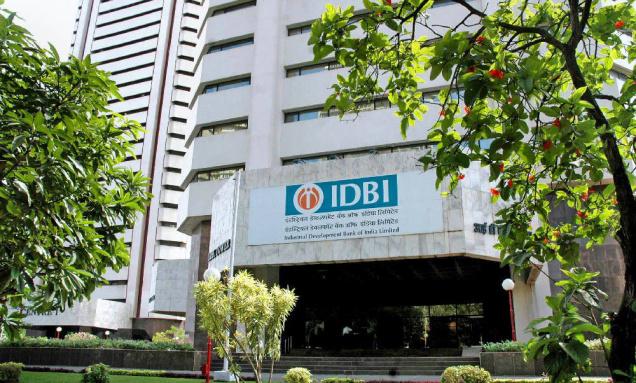
The receipt of financial bids for the strategic disinvestment of IDBI Bank marks a crucial procedural milestone in one of India’s most complex and long-running privatisation exercises. After years of uncertainty, delays, and recalibration, the transaction has formally entered its decisive phase, where intent now moves closer to execution. While the submission of bids does not guarantee closure, it signals that the process, stalled repeatedly by valuation disagreements and regulatory complexity, is finally advancing.
For the government, this moment is about more than one bank. It represents a test of credibility for India’s broader banking reform agenda and its willingness to cede control of a former public-sector lender that once stood on the brink of collapse.
The Deal on the Table
IDBI Bank is currently jointly owned by the Union government and Life Insurance Corporation of India (LIC), which together hold close to 90 per cent of the equity. Under the proposed transaction, a combined 60.7 per cent stake is being offered for sale – 30.48 per cent from the government and 30.24 per cent from LIC – effectively transferring management control to a private buyer.
The transaction is expected to fetch around ₹33,000 crore, making it one of the most significant disinvestment exercises in recent years. The Department of Investment and Public Asset Management (DIPAM) has confirmed that financial bids have been received and will be evaluated as per prescribed procedures. Before bids are opened, a reserve price (based on valuations by transaction and asset advisers) will be fixed using established methodologies.
The successful bidder will still require multiple approvals, including clearance under the Reserve Bank of India’s “fit and proper” framework, competition clearances, and compliance with sectoral regulations. Only after these steps are completed will ownership and management formally change hands.
Who’s in the Race and Who Isn’t
Industry reports suggest that several domestic and international entities cleared the RBI’s fit-and-proper screening to participate in the bidding process. These include Fairfax India Holdings, Emirates NBD, and Oaktree Capital. Early speculation around Kotak Mahindra Bank drew significant attention, although the bank later clarified that it had not submitted a financial bid.
The composition of potential bidders itself is revealing. While there is credible interest from well-capitalised institutions with experience in financial services, global enthusiasm appears measured rather than exuberant. Unlike India’s private-sector banks (which have attracted strong foreign investment flows) a former public-sector bank with a long history of stress remains a more cautious proposition for overseas buyers.

Market Signals and the Valuation Debate
IDBI Bank’s stock has been trading in the ₹120–125 range, reflecting market anticipation of the divestment. With a market capitalisation of roughly ₹55,000 crore, the implied valuation of ₹33,000 crore for a 60.7 per cent stake has become a central point of debate.
At current levels, the bank trades at a price-to-earnings multiple of around 35x, which is at the higher end for Indian banks. Sector-wide averages typically range between 25x and 30x, with private banks commanding premium valuations and public-sector banks trading at a discount. This divergence has sharpened scrutiny over whether the government’s pricing expectations are realistic, particularly given IDBI’s uneven earnings trajectory and legacy baggage.
The Bear Case, Why the Deal Could Still Unravel
Despite progress, significant risks remain. The proposed valuation implies a premium that could discourage bidders or trigger prolonged negotiations, pushing timelines further out. The transaction also represents India’s first attempt to privatise a former state-owned bank through a two-stage process that began with an insurer-led rescue, making it structurally different from past privatisations.
Regulatory approvals remain extensive, and any delay or additional conditions imposed by regulators could complicate closure. Moreover, transferring full managerial control within a heavily regulated banking environment is not merely a financial exercise – it involves cultural, operational, and governance transitions that have not been tested at this scale before.
Why IDBI Is Different, A Bank That Nearly Collapsed
IDBI Bank’s story is deeply intertwined with India’s post-independence industrial strategy. Founded in 1964 as a development finance institution, it was designed to provide long-term capital for industrial growth. In 2005, its commercial banking arm was fully merged, transforming it into a universal bank.
This dual identity eventually became a liability. While peers diversified into retail lending and fee-based businesses, IDBI remained disproportionately exposed to large corporate borrowers. The absence of a strong retail cushion left it vulnerable when the corporate credit cycle turned adverse.
The Years of Stress and Regulatory Clampdown
By the mid-2010s, IDBI was severely strained. Non-performing assets surged, capital buffers eroded, and profitability collapsed. In 2017, the RBI placed the bank under the Prompt Corrective Action (PCA) framework after it breached multiple regulatory thresholds.
At its peak, gross NPAs crossed 21 per cent of advances, while net NPAs exceeded 13 per cent – levels far above industry norms. Years of aggressive corporate lending, weak credit appraisal, and delayed recognition of stress compounded the crisis. The bank wrote off tens of thousands of crores in bad loans between 2013 and 2020, recovering only a fraction.
Governance failures further damaged credibility. Investigations and arrests linked to controversial lending decisions showed systemic weaknesses in oversight and internal controls. Under PCA, the bank’s ability to grow, lend, or take strategic risks was severely curtailed.

LIC’s Rescue and the Turning Point
The crisis culminated in 2019 when the government asked LIC to step in as a white knight. LIC acquired a controlling stake and injected around ₹21,000 crore of capital, preventing a potential collapse that could have destabilised the broader banking system.
Following the takeover, the RBI reclassified IDBI as a private-sector bank for regulatory purposes, even though state influence remained dominant. The bank embarked on balance-sheet clean-up, sold stressed assets, tightened underwriting standards, and gradually pivoted toward retail lending. PCA restrictions were lifted in 2021 after sustained improvement in capital and asset quality.
Stability returned but transformation remained incomplete.
IDBI Bank’s recent financials reflect this mixed picture. For the quarter ended December 2025, net profit remained largely flat at ₹1,935 crore, while total income declined year-on-year. Interest income also fell as funding costs rose, compressing margins.
Asset quality has improved meaningfully, with gross NPAs declining to 2.57 per cent and net NPAs remaining low at 0.18 per cent. Capital adequacy has strengthened to over 24 per cent, providing a comfortable buffer. However, return on assets has moderated, underscoring continued competitive pressures.
IDBI today is a stabilised bank but not yet a growth leader.
The Bigger Question – India’s Conflicted PSU Strategy
The IDBI transaction cannot be viewed in isolation. Over the past decade, the government’s approach to public-sector undertakings has appeared increasingly ambivalent. While policy announcements have emphasised strategic disinvestment, execution has slowed markedly.
Dividends extracted from PSUs have risen, while disinvestment receipts have declined. At the same time, government budgetary support to PSUs has increased, deepening fiscal exposure. Apart from a handful of cases (most notably Air India) privatisation has largely retreated.
IDBI as a Test Case for Future PSU Bank Privatisation
IDBI is the first serious attempt to privatise a former public-sector bank at scale. Success would validate the argument that stressed state-owned lenders can be repaired and handed over to private capital. Failure would reinforce scepticism about the political and operational feasibility of bank privatisation in India.
The outcome will influence the fate of other PSU banks and shape investor perceptions of reform credibility.
For bidders, IDBI offers undeniable strengths: nationwide branch reach, a stable deposit base, and bancassurance synergies. Under private management, these assets could be leveraged more efficiently.
Yet concerns persist. Legacy issues, regulatory scrutiny, political memory, and integration challenges weigh heavily. Global investors remain cautious, preferring cleaner private-bank stories with fewer historical encumbrances.
Why this is a good step by the government
First, it ends a long period of moral hazard.
IDBI survived not because of market discipline but because the state and later LIC—repeatedly stepped in to prevent collapse. Permanent government ownership of a rescued bank sends a damaging signal: that failure will ultimately be absorbed by taxpayers or policyholders. Privatisation restores a basic principle, that banking risk must ultimately sit with capital, not the sovereign.
Second, the bank is being sold after stabilisation, not distress.
This is not a fire sale. NPAs were cleaned up, PCA restrictions were lifted, and capital adequacy was rebuilt before exit was attempted. Selling after repair preserves value and improves the odds of a sustainable transition.
Third, it reduces long-term fiscal exposure.
Beyond the headline valuation, the real gain is risk transfer. Banking crises surface years later through recapitalisation and guarantees. Exiting ownership limits future obligations from credit cycles the government does not control.
Finally, it tests a workable template for PSU bank reform.
IDBI is a pilot project. Already rescued, ring-fenced, and reclassified, it is the least disruptive candidate for privatisation. If it cannot work here, it is difficult to argue it can work anywhere.
But the risks are also real. The government may be selling near a valuation peak, driven by recovery optimism and event-led speculation. LIC’s role complicates optics, raising concerns about socialised losses and privatised gains. One bank’s sale does not reform PSU banking systemically, where governance and autonomy issues persist. And banking privatisation carries execution risks far greater than asset sales in other sectors.
The deeper issue
This move exposes a two-track mindset. On paper, India pursues strategic disinvestment. In practice, it executes selective exits and selective rescues.
IDBI is being sold because it is finally clean enough to sell—not because the state has resolved to exit banking as a matter of principle. That makes this opportunistic reform, not structural reform.
The Last Bit,
Is this a good step?
Yes, for IDBI, for fiscal risk reduction, and for market signalling.
Is it a clean, unambiguously positive reform?
No – valuation risk, LIC optics, and lack of systemic follow-through remain unresolved.
If this sale succeeds, it strengthens the case for gradual PSU bank privatisation. If it fails, it will reinforce the belief that India wants reform without relinquishing control.
In short: This move is necessary, but not sufficient. Whether it becomes a reform milestone or a missed opportunity depends entirely on execution and on what the government chooses to do next.