Why Tata’s Biggest Aviation Challenge Isn’t Just Fixing Air India. It’s Preventing Indian Aviation From Becoming A One-Horse Race
When Tata Group bought back Air India, it promised to restore India's national carrier to its former glory. Four years later, the airline is still battling mounting losses and deep-rooted challenges. But the bigger question is no longer about Air India alone - it's about whether India's aviation market can remain truly competitive.

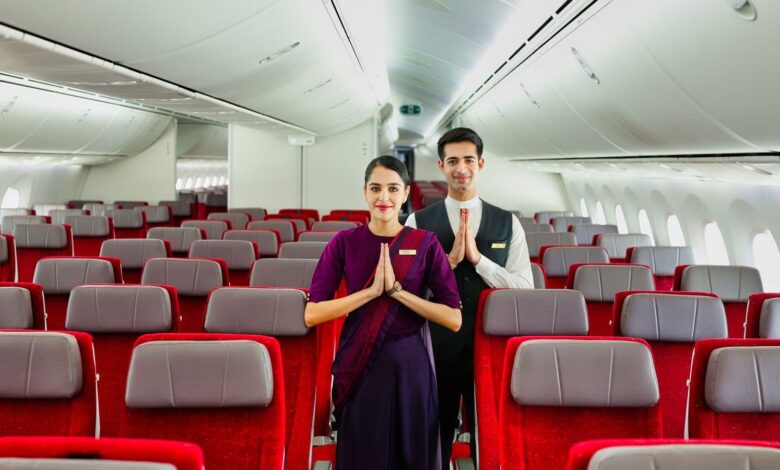
India’s aviation market has long been viewed as a duopoly. IndiGo dominates the skies, while the Tata Group’s airlines, led by Air India, are expected to provide the only meaningful counterweight. That balance has shaped everything from ticket prices and route expansion to how aggressively airlines compete for passengers. But the latest numbers suggest that equilibrium is beginning to shift.
According to the Directorate General of Civil Aviation (DGCA), IndiGo’s domestic market share climbed to a record 66.3% in June. At the same time, the Air India group, comprising Air India and Air India Express, saw its share slide to 23.9%, down from 27% in February. Akasa Air remained a distant third with 6.4%, while SpiceJet’s share slipped below 2%.
On the face of it, these are simply market-share figures. But in aviation, market share is far more than a scorecard. Bigger airlines can deploy aircraft more efficiently, negotiate better deals with airports and suppliers, add routes faster and spread costs across a larger network. Success tends to reinforce itself. As one airline grows stronger, it becomes easier for it to keep growing.
That is why Air India’s recent struggles matter far beyond Tata Group’s ambitious turnaround. The concern is no longer just whether Air India can restore its former glory. It is whether India’s only credible challenger to IndiGo can remain strong enough to keep the country’s aviation market genuinely competitive. If that gap continues to widen, the conversation shifts from one airline’s revival to the future structure of Indian aviation itself.

Tata’s turnaround is taking far longer than expected
When Tata Group bought back Air India from the government in January 2022, there was broad optimism that one of India’s most iconic brands could finally reclaim its place in the skies. The conglomerate had deep pockets, decades of aviation experience through Vistara and AirAsia India, and a reputation for turning around struggling businesses. Few doubted the task would be difficult. But even Tata now appears to be acknowledging that the scale of the challenge has exceeded its original expectations.
That reality became clear when Tata Sons Chairman N Chandrasekaran described Air India’s transformation as a five-to-ten-year journey in the company’s latest annual report.
It was a notable shift in tone. Four years into the acquisition, investors were expecting signs that the airline was moving decisively towards profitability. Instead, Tata is preparing stakeholders for a much longer recovery, while signalling that the hardest part of the turnaround may still lie ahead.
The financial numbers explain why. Air India reported a net loss of more than ₹22,000 crore in FY26, more than double the previous year’s ₹10,859 crore. The airline has continued investing heavily in new aircraft, technology, cabin upgrades and operational integration, but those investments have yet to translate into stronger financial performance.
The recent departure of CEO Campbell Wilson has added another layer of uncertainty, prompting Chandrasekaran himself to oversee weekly reviews covering flight operations, commercial strategy and financial performance.
Yet reducing Air India’s story to mounting losses would miss the bigger picture. Tata is not trying to rescue a conventional loss-making company. It is attempting one of the most ambitious airline transformations the industry has seen in decades – rebuilding a legacy national carrier while keeping thousands of flights operating every week. That distinction is important because many of the obstacles slowing the turnaround were inherited long before Tata regained control. And understanding those inherited problems is key to understanding why Air India’s recovery has proved so much harder than many expected.
Air India came with decades of baggage
The biggest misconception about Air India’s revival is that Tata simply had to inject money and improve management. In reality, the group inherited an airline weighed down by decades of neglect.
Years under government ownership had left Air India struggling with ageing aircraft, outdated technology, fragmented maintenance systems, inconsistent service standards and a work culture shaped by bureaucracy rather than competition. Reversing those problems was never going to be as simple as changing the name on the ownership papers.
Unlike a start-up airline that can build modern systems from scratch, Air India had to reinvent itself while continuing to operate one of the country’s largest networks. Aircraft cabins needed refurbishment, reservation systems had to be replaced, maintenance processes overhauled and thousands of employees retrained. Every one of those projects demanded time, capital and careful execution, all while ensuring that flights continued to depart every day with minimal disruption.
The complexity did not end there. By the time Tata regained Air India, it also found itself managing Vistara, Air India Express and AirAsia India. The group’s long-term strategy was clear: merge these businesses into a streamlined airline ecosystem capable of competing with IndiGo. On paper, the plan made perfect sense. In practice, it became one of the most complicated integration exercises the global aviation industry has seen in recent years.
Airline mergers are rarely straightforward. They involve bringing together different aircraft fleets, integrating reservation and IT systems, harmonising employee contracts, standardising operating procedures and blending distinct corporate cultures. Each step carries operational risks, and any delay can ripple through the business. For Tata, these integration efforts were unfolding at the same time as the broader overhaul of Air India itself, stretching management attention across multiple fronts.
That is why judging Air India’s progress solely through its financial results can be misleading. The airline is not only trying to return to profitability; it is rebuilding its foundations while simultaneously stitching together four separate carriers into a single aviation group. Few airline transformations have attempted both tasks at the same time, and fewer still have done so in one of the world’s fastest-growing aviation markets.
Then came the problems Tata couldn’t control
Even the best turnaround plans can be derailed by factors beyond management’s control, and Air India has had more than its fair share. While Tata was trying to modernise the airline, the global aviation industry was struggling with supply chain disruptions that continue to ripple through manufacturers, engine makers and maintenance providers years after the pandemic.
Aircraft deliveries have slowed across the industry as manufacturers struggle to clear production backlogs, while shortages of engines and critical spare parts have forced airlines worldwide to ground aircraft for longer than planned.
For Air India, these delays strike at the heart of its revival strategy. Tata’s transformation plan hinges on inducting newer aircraft, retiring older ones and improving reliability, fuel efficiency and passenger experience. But those gains become difficult to realise when aircraft arrive months behind schedule or spend extended periods waiting for engines and components.
The external pressures did not stop there. The ongoing conflict in the Middle East has pushed up fuel prices, foreign exchange fluctuations have increased costs for an airline that pays many of its bills in dollars, while airspace restrictions has forced longer routes and operational adjustments on international services. These were industry-wide challenges, but they landed at a particularly vulnerable moment for an airline already in the middle of a massive restructuring programme.
Then came the crash of AI171. Beyond the tragic loss of life, the accident inevitably shifted management attention towards investigations, regulatory scrutiny and rebuilding public confidence. Major aviation accidents often leave airlines dealing with operational reviews and reputational challenges long after the headlines fade. For Air India, it added another unexpected obstacle to a turnaround that was already proving more demanding than anticipated.
None of these events created Air India’s underlying problems. Those existed long before Tata regained control. But together they have slowed a recovery that was already expected to take years, making the gap with IndiGo even harder to close. And that is perhaps the biggest concern. While Air India has been battling inherited weaknesses and external disruptions, its biggest rival has largely been free to focus on doing what it does best – growing.
Why IndiGo’s growing lead should matter to everyone
In aviation, size is more than a matter of prestige. It is one of the industry’s biggest competitive advantages. Airlines with larger fleets and networks can utilise aircraft more efficiently, negotiate better commercial terms with airports and suppliers, attract more connecting passengers and spread fixed costs across millions of travellers. Once an airline reaches a certain scale, every additional aircraft and route tends to make the business even stronger.
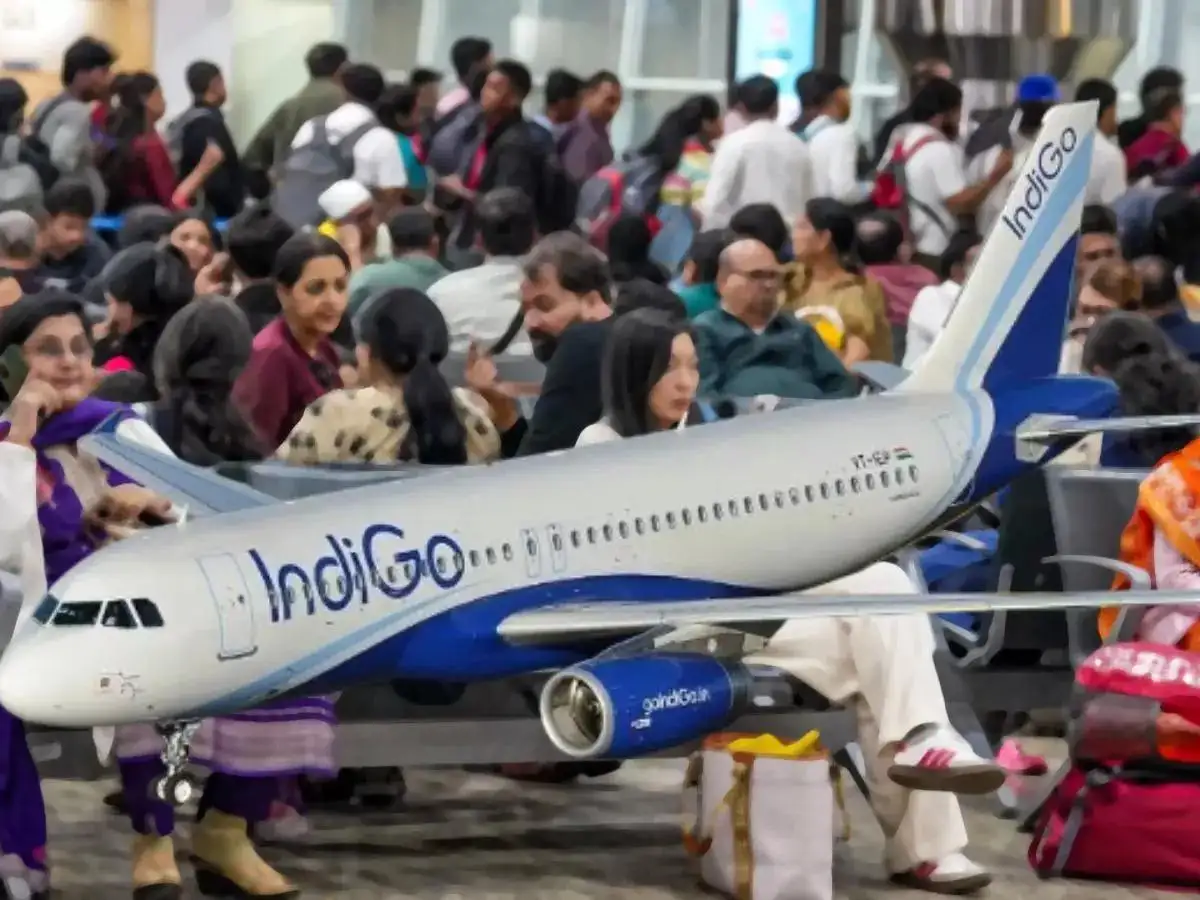
That is exactly where IndiGo finds itself today. With more than two-thirds of India’s domestic market under its control, the airline is benefiting from the kind of network effects that competitors find increasingly difficult to replicate. A broader route network feeds more passengers into the system, higher passenger volumes improve aircraft utilisation, while stronger cash flows allow the airline to keep expanding ahead of rivals. Success, in other words, creates the conditions for even greater success.
Air India, meanwhile, is caught in the opposite cycle. Instead of deploying more capacity to challenge IndiGo, it is still directing management attention and financial resources towards rebuilding the business from within. Every delay in inducting aircraft, every operational disruption and every additional year spent fixing legacy issues makes it harder to narrow the gap with a competitor that is expanding from a position of strength.
That is why the latest market-share numbers matter far more than they appear to at first glance. They are not simply evidence that one airline is outperforming another. They suggest that the competitive balance in Indian aviation may be shifting in a way that becomes progressively harder to reverse. Once a dominant airline reaches sufficient scale, challengers are no longer competing on equal terms – they are trying to catch a moving target that keeps pulling further away.
For passengers, that raises a much broader question. If Air India remains consumed by its turnaround for the better part of this decade, who provides the competitive pressure that keeps India’s largest airline on its toes? Because the longer one airline grows stronger while its closest rival focuses on fixing itself, the more India’s aviation market begins to resemble one dominated by a single player rather than two equally capable competitors.
The future of Indian aviation depends on more than Air India
There is still no reason to conclude that Tata’s Air India experiment will fail. The airline has completed the refurbishment of its narrow-body fleet, upgrades to its wide-body aircraft are underway, hundreds of new aircraft are on order and customer satisfaction has improved from the final years of government ownership. By most accounts, many of the operational building blocks needed for a long-term recovery are slowly falling into place.
The difficulty is that aviation turnarounds rarely follow a straight line. Airlines can spend years investing before those investments begin to show up in their financial performance. Tata has both the capital and the patience to see the project through, which explains why Chandrasekaran has openly described Air India’s revival as a five-to-ten-year journey rather than promising a quicker recovery.
But the longer that journey takes, the more the competitive market continues to evolve. IndiGo is not standing still while Air India rebuilds. It is expanding its network, inducting more aircraft and strengthening a market position that is already unmatched in Indian aviation. Every year that Air India spends fixing inherited problems is another year in which the gap between India’s largest airline and its closest challenger can widen.
That is why recent speculation around the government allowing airport operators to launch airlines (and the rumours that briefly linked Adani Group with a possible aviation foray, despite the group’s denial) generated so much interest. The debate was never really about Adani.
It reflected a broader question that will only become louder if the current trend continues: can India rely on a market where only one airline is consistently growing stronger, or will it eventually need another deep-pocketed challenger to keep competition alive?
For Tata Group, the task ahead remains rebuilding one of India’s most recognisable brands. The challenge is ensuring that one company’s prolonged turnaround does not gradually reshape the competitive dynamics of an industry that millions of Indians now depend on.
Because the biggest question facing Indian aviation is no longer whether Air India can recover. It is whether the market can remain genuinely competitive while everyone waits for it to do so.