Arrested, Bailed, Unresolved: Why Is the Public Still Waiting For The Truth In The Rohan Developers-Harresh Mehta SBI Case?
A bank complaint in 2016, a witness who became an accused in 2023, a ₹50-crore deposit whose meaning remains bitterly contested, tax penalties that unravelled on appeal, a redevelopment FIR alleging that residents were left without promised homes, and an insolvency process still unfolding in 2026. Behind the Rohan group lies not one scandal but several overlapping proceedings, each with its own standard of proof. This article interrogates what is alleged, what is established and what remains unanswered. It asks why years of investigation have produced so little clarity, and who ultimately bears the cost of that delay.

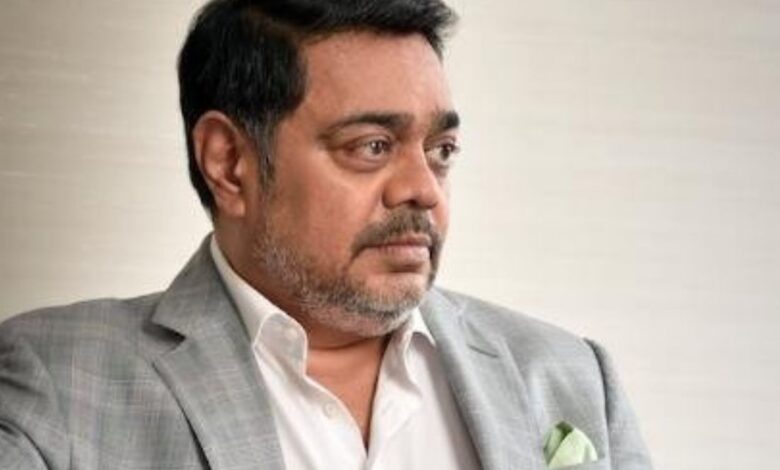
Witness, Then Accused: Why Did It Take Seven Years for a ₹280-Crore Bank Fraud Case to Reach Harresh Mehta?
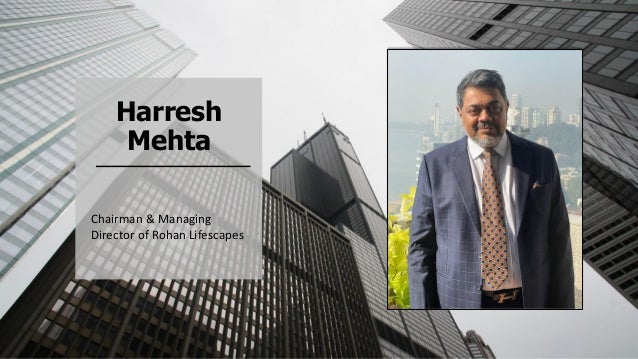
There are developers who build quietly and vanish from public memory, and there are developers whose names surface in one courtroom after another. Harresh Navnitrai Mehta, associated with Mumbai’s Rohan Developers, Rohan Lifescapes and the wider Rohan Group, belongs to the second category. He has been named in a Central Bureau of Investigation case over a ₹280-crore State Bank of India loan fraud. His group has been through a decade of Income Tax litigation. A 2025 police complaint over a redevelopment project in Gamdevi names a person identified as Haresh Mehta. And in February 2025 the flagship company, Rohan Developers Private Limited, entered corporate insolvency.
A reader encountering these facts in sequence could be forgiven for concluding that where there is this much smoke, there must be a single fire. That conclusion would be wrong, and it is the first thing a responsible critique must say. Harresh Mehta has not been convicted in the SBI case on any record that could be verified. Several of the tax allegations were rejected on appeal. The redevelopment complaint remains an FIR, and the insolvency is a debt-resolution process, not a criminal verdict. The point of this article is not to convict anyone in print. It is to ask why, after so many years and so many proceedings, the public still cannot say with confidence what actually happened.
The Loan That Started It All
The story begins in 2011–2012, when Rajput Retail Limited, later renamed Shreem Corporation Limited, obtained multiple credit facilities from SBI. According to the CBI, those facilities were secured with fabricated documents, and the bank was cheated of roughly ₹280 crore. The Economic Offences Wing of the CBI in Mumbai registered its case in 2016, following an SBI complaint. By 2018 it had filed a chargesheet against Rajput Retail, its promoters Vijay R. Gupta and Ajay R. Gupta, SBI relationship manager V.N. Kadam, chartered accountant Vijay M. Patil and Archana Vishwas Kadam.
That list is itself worth interrogating. It contains promoters, a bank employee and an accountant, which is the ordinary anatomy of a loan-fraud case. It does not contain Harresh Mehta. The investigation into other private persons and bank officials was kept open, which prompts an uncomfortable question. If a fraud involving hundreds of crores of public-sector bank money was serious enough to register in 2016, why was the investigation into its other participants left pending for years while the first set of accused moved through the system?
The Ruby and the ₹155 Crore
The most consequential strand of the case concerns The Ruby, a commercial building at Dadar associated with Ruby Mills Limited. As reported during the proceedings against Harresh Mehta, the CBI’s case is that SBI sanctioned a ₹139-crore term loan to Rajput Retail for the purchase of the 14th and 16th floors and part of the 15th floor of The Ruby. It also sanctioned a ₹16-crore short-term loan. Together that is ₹155 crore, which the CBI says was credited to Ruby Mills on 10 February 2012.
Here the agency’s chronology becomes pointed. The money, it says, arrived on 10 February 2012, but the Letter of Intent for the purchase was executed only on 20 February 2012. A genuine commercial purchase would ordinarily see documentation lead and funds follow. The CBI’s reading is that this sequence suggests something other than a straightforward property deal.
That is an investigator’s inference, and it is not a finding. Ten days between a payment and a letter of intent can have innocent explanations. Commercial parties sometimes pay first and paper later. But the question that sequence raises is a fair one: why did a bank release ₹155 crore for floors in a building before the basic purchase document existed, and who in the bank’s chain of approvals was comfortable with that? The CBI has pursued the borrowers. The public is entitled to ask how rigorously the lenders’ own processes were examined.
The ₹50 Crore at the Centre
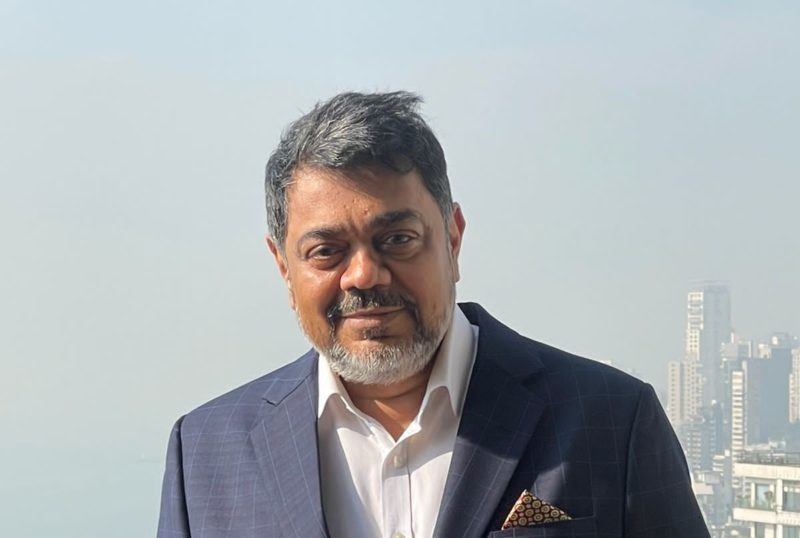
This is the point where the investigation reaches Harresh Mehta personally. The CBI alleges that on 8 February 2012, two days before the ₹155 crore reached Ruby Mills, Rohan Developers, through Harresh Mehta, requested a ₹50-crore Inter Corporate Deposit from Ruby Mills. The reported terms were six months at 10 percent interest. The agency alleges that this ₹50 crore represented Mehta’s or Rohan’s share of the alleged crime proceeds, that it was subsequently deployed as loans and advances to an associate company, and that it was never returned.
Set out as a chain, the CBI’s theory runs: SBI to Rajput Retail, then ₹155 crore to Ruby Mills, then an alleged ₹50-crore ICD to a Rohan-related entity. It is a clean, almost geometric narrative. But its cleanness should itself provoke caution. A financial trail drawn on a whiteboard has to survive contact with ledgers, board resolutions, bank statements and cross-examination. At present, the characterisation of that ₹50 crore as “proceeds of crime” is the CBI’s allegation and nothing more.
A Defence That Cannot Be Dismissed
Harresh Mehta’s account is substantially different, and any serious article must give it its due weight. His bail application reportedly argued that SBI had not named him in the original FIR, that the CBI’s 2016–2018 investigation had not treated him as an accused, and that he in fact appeared as a witness in the original chargesheet. He argued that Mindset Estates, not he personally, was the developer or holder of development rights in the Ruby project, that he had no connection with the alleged fraudulent dealings between Rajput Retail and SBI, and that the ₹50 crore was a separate commercial ICD rather than a diversion of loan proceeds.
If true, this is a powerful position. A man who is a witness in 2018 and an accused in 2023 invites an obvious question: what changed? Either the CBI uncovered new material between those dates, in which case the public deserves to know what it was, or it re-read old material differently, in which case the defence will say the case is a reinterpretation rather than a revelation. Neither possibility is trivial, and neither can be resolved from press reports alone.
The Strange Journey from Witness to Accused
The 2018-to-2023 transition may be the single most important procedural feature of the case, and it is the one least explained in the public record. The CBI searched premises linked to Rohan Developers and Ruby Mills and then arrested Harresh Mehta on 20 May 2023. Five years had passed since the chargesheet and seven since the FIR. The underlying transactions were by then eleven years old.
This raises questions about investigative method that apply well beyond one man. Why do complex bank-fraud investigations in India routinely take this long? What is lost when a decade separates the money movement from the arrest? Memories fade, officials retire, documents are misplaced, and companies enter insolvency. The longer the delay, the weaker the prospect that either guilt or innocence can ever be cleanly established. A justice system that takes eleven years to arrest in a fraud case has already, in a sense, conceded much of the ground.
Custody, Refusal and Bail
After his arrest on 20 May 2023, Harresh Mehta was held in CBI custody until 24 May, when the court declined to extend it. The court reportedly observed that merely asserting non-cooperation and a wish to confront him with other accused was not enough to justify further police custody. That observation matters. It is a reminder that the arrest of a prominent developer, however dramatic in the headlines, is not evidence of guilt, and that courts do scrutinise custodial requests.
In June 2023, the Special CBI Court in Thane granted Harresh Mehta bail on a ₹5-lakh personal bond and a ₹5-lakh security bond. He was required to report to the CBI’s Mumbai office on Mondays and Tuesdays and was barred from tampering with evidence. Bail is not acquittal, and nothing in that order says he is innocent. But it also means that the man arrested in a ₹280-crore case was released on conditions that, measured against the alleged sum, look strikingly modest. Whether that reflects a weak prosecution, a sound legal principle that bail is the rule, or both, remains an open question.
The Recovery Question
One reported detail from the bail proceedings deserves more attention than it has received. According to the Times of India, Ruby Mills had received roughly ₹101 crore from Rajput Retail in connection with the transaction, and Bharat Shah had deposited ₹22.5 crore, with a readiness to deposit another ₹78.5 crore. The Thane court reportedly observed that, on this basis, the entire term-loan amount could be considered secured. Later insolvency records involving Rajput Retail, or Shreem Corporation, refer to ₹101 crore being received from Ruby Mills by the resolution professional.
If a substantial part of the money has been recovered or secured, the economics of the case shift. A “₹280-crore fraud” is a headline number. It is not necessarily the bank’s final loss after security, settlements and insolvency distributions. So what was SBI’s actual loss? How much was recovered, from whom and when? Was the ₹101 crore the product of a settlement, a court direction or an insolvency mechanism? These are not academic points. They determine whether this is a story of public money lost or of public money, belatedly and partially, retrieved.
Three Numbers That Must Never Be Confused
Public discussion of this case routinely collapses three different figures into one. The first is ₹280 crore, the overall alleged fraud on SBI. The second is ₹155 crore, the sum of the ₹139-crore term loan and ₹16-crore short-term loan that the CBI says reached Ruby Mills. The third is ₹50 crore, the separate Inter Corporate Deposit that the CBI alleges was Mehta’s share and that Harresh Mehta says was an unrelated commercial transaction.
These are different layers of the allegation, and ₹280 crore is not ₹155 crore, which is not ₹50 crore. The danger is that a reader, seeing Mehta’s name beside ₹280 crore, assumes he is alleged to have taken ₹280 crore. The CBI’s own case, on the reported record, does not say so. It says he is connected to one portion of one stream of a larger alleged fraud, and he disputes even that. Sloppy arithmetic in the press does reputational damage that no later correction can fully repair, and it also flatters the real culprits of a fraud by blurring who is alleged to have done what.
The Tax Cases: Allegations That Collapsed
The criminal case is not the only controversy. On 26 May 2011, the Income Tax Department searched Rohan Developers and associated entities and persons. Statements from Harresh Mehta and employees were relied upon by the department to allege that cash had been received over and above documented sale consideration, an alleged 30 percent “on-money” component on property transactions. On its face this is a serious accusation, since on-money is the grey economy of Indian real estate.
Yet the subsequent appellate record is sobering for anyone inclined to treat the search as proof. The Assessing Officer imposed a penalty of roughly ₹20.24 crore under Section 271D, treating a seized document as evidence of cash loans. In remand proceedings, the underlying lenders were examined, and the entries on the seized document were found to match the Rohan Group’s regular books, along with PAN details, bank statements, confirmations and returns. The Income Tax Appellate Tribunal held that the cash-loan characterisation had not been established and directed deletion of the penalty.
A separate set of seized papers, two promissory notes of ₹10 crore each, was read by the Assessing Officer as proof that ₹20 crore had been advanced in cash to Harresh Mehta. The Tribunal recorded that the notes were guarantees tied to a property transaction that never materialised. The Revenue’s appeal on that point was dismissed.
On the on-money allegation itself, the group argued that the search-stage statements were retracted and that the seized material did not tie alleged receipts to particular projects. In the related Mindset Estates case, the Tribunal held that reliance on retracted statements, without corroborating incriminating evidence connected to the assessee, did not suffice for the addition under consideration, and it dismissed the Revenue’s appeal. The ITAT also noted that similar additions on the same material had been deleted in group-company cases.
What the Tax Reversals Do, and Do Not, Prove
The reflexive reading of these outcomes is that the group was vindicated. The more careful reading is that the department’s cases failed on the evidence and the law as presented, which is not the same as proving that no undisclosed transactions ever occurred. A tribunal that finds an allegation unproven has made a finding about proof, not a finding about virtue.
Nonetheless, the pattern invites criticism in the other direction. If the tax department could be so wrong on a ₹20.24-crore penalty that its own remand inquiry found the entries matching regular books, how did the penalty get imposed at all? What does it say about the quality of assessments that an entire financial characterisation could be reversed once lenders were actually examined? The group may have been burdened for years by an allegation that evaporated on scrutiny. The state’s machinery, when it overreaches, imposes costs on the accused that are never refunded.
The ShivTapi Complaint: Residents Without Homes?
Then comes the newest and arguably the most human of the controversies. In 2025, Mumbai’s Gamdevi Police registered a case involving Rohan Lifescapes and associate Goodwill Properties over the ShivTapi redevelopment project. Hindustan Times reported that the developer and associated persons were booked for alleged cheating and criminal breach of trust. The reported accused list includes a person identified as Haresh Mehta.
The complaint reaches back to redevelopment arrangements from the early to mid-2000s. As reported, the complainant alleges that FSI intended for rehabilitation was used to build ShivTapi A and ShivTapi B and that flats were sold, while original occupants did not receive the promised premises. The complaint also alleges that consent figures across five plots were combined to reach the required threshold, and it relies on an MHADA vigilance report. The accused had reportedly obtained anticipatory bail by May 2025.
This remains an FIR. It is an allegation, not a proven fraud. But its subject matter touches something raw in Mumbai’s urban life. Redevelopment is a promise made to people who often lack the resources to verify it: give up your home today and be rehoused tomorrow. If occupants were indeed left waiting twenty years, the failure is not only the developer’s. Where was MHADA’s oversight across two decades? Why does a vigilance report surface only after an FIR? And why does it take a police complaint, rather than a regulatory mechanism, to surface disputes about whether a redevelopment honoured its rehabilitation obligations?
The Everyday Disputes
It would be unfair to read every dispute involving Rohan Developers as fraud. A Bombay High Court order dated 5 August 2024 concerned Rohan Developers’ challenge to a MahaRERA direction to pay interest for delayed possession of a flat, from 1 April 2020 until actual possession with an Occupation Certificate. This is the ordinary friction of real estate, a delayed handover and a buyer entitled to interest.
Yet even routine disputes tell a cumulative story. Delayed possession, an unresolved redevelopment complaint, a decade of tax litigation and a long-running bank-fraud investigation do not prove misconduct individually. Together, they paint a portrait of a developer whose obligations to buyers, occupants, tax authorities and lenders have repeatedly been contested. The responsible question is not “is he guilty?” but “what does a pattern of unresolved disputes do to trust in a sector where buyers hand over their life savings before a single brick is complete?”
Insolvency: The Quiet Reckoning
On 6 February 2025, Rohan Developers Private Limited entered the Corporate Insolvency Resolution Process, with Neehal Mahamulal Pathan as the initial interim resolution professional. IBBI records show Hasti Mal Kachhara as resolution professional from 6 July 2026, and claims were still being updated as of late August 2026.
The numbers are instructive but must be handled carefully. An IBBI claims statement dated 19 April 2025 recorded sixteen unsecured financial-creditor claims totalling ₹324.97 crore, of which eleven, around ₹175.65 crore, were admitted. A later version recorded twelve claims of roughly ₹181.02 crore, all admitted. Because claims are revised during CIRP, these figures are snapshots and not permanent debt totals.
What matters is the contrast. Years of criminal investigation and litigation ran in parallel with an accumulating pile of unsecured financial debt. Who were these creditors, and how did unsecured lending of this scale reach a company whose group had been under investigation and tax scrutiny for over a decade? And insolvency, to be clear, is not proof of the SBI fraud. It is a separate mechanism, and merging it into a single “Rohan Developers fraud” narrative would be intellectually lazy and legally wrong. Still, a company that cannot meet its debts has ordinary creditors, and some of them may be ordinary people.
What Is Actually Established
Strip away the headlines and the established record is short. Harresh Mehta is associated with Rohan Developers and Rohan Lifescapes. The CBI investigated his alleged role in the SBI and Rajput Retail case, arrested him on 20 May 2023, and was denied further custody after 24 May. He received bail from the Special CBI Court in Thane in June 2023, and he denies involvement and disputes the CBI’s reading of the ₹50-crore ICD. Rohan Developers entered CIRP on 6 February 2025.
What is not established is considerable. No verified conviction exists against him in the SBI case. It is not publicly clear whether the supplementary chargesheet the CBI contemplated was ever filed against him, whether he was ultimately charge-sheeted or discharged, or what the current status of the trial is. It is not known whether the ₹50-crore ICD was repaid, written off or recovered through settlement or insolvency, and the bank’s final recovery against the ₹280-crore headline is unclear.
For the original 2018 accused, the disposition of each defendant has not been traced in any publicly verifiable way. The most recent reliable court record on the final disposition of the CBI case against Harresh Mehta could not be found, and that gap itself needs to be verified from the Special CBI Court file before anyone treats any status as settled.

The Larger Indictment
Whatever the ultimate truth about Harresh Mehta, the Rohan Developers saga indicts something larger than one man. It indicts an investigative culture in which a 2016 FIR produces an arrest in 2023, and a court record that leaves the public, the bank and the accused alike without a clear outcome. It indicts a tax apparatus that imposes penalties which later dissolve under examination. It indicts a redevelopment regime in which occupants can wait two decades for promised homes before a police complaint forces the question. And it indicts a lending culture in which hundreds of crores of bank money can move before the underlying paperwork exists.
The accused deserves the presumption of innocence, and the press has too often forgotten it. But the public deserves something too: finality, clarity and accountability. A case that is still unresolved a decade after it began fails everyone. If Harresh Mehta is innocent, he has lived under the shadow of a ₹280-crore accusation for years. If he is guilty, the delay has given every advantage to the guilty. In either case, the system has failed to answer the simplest question it exists to answer: what happened, and who is responsible?
Until the Special CBI Court’s record is examined, the supplementary chargesheet traced, the ₹50-crore ICD followed to its destination and SBI’s final recovery quantified, every confident statement about this affair, accusatory or exculpatory, is premature. The honest position is the uncomfortable one. We do not yet know, and we should be asking, loudly and persistently, why we do not.