Hareesh Mehta, Rohan Developers And The ₹280 Crore SBI Case: How Did A Real Estate Transaction Become A Bank-Fraud Investigation?
A decades-old financial transaction, an alleged ₹280 crore SBI loan fraud, ₹155 crore transferred to Ruby Mills, a disputed ₹50 crore inter-corporate deposit, an arrest in 2023 and subsequent bail have placed Rohan Developers chairman Hareesh Mehta at the centre of a complicated banking and real-estate investigation. Yet the most important question may not simply be what the CBI alleged, but what ultimately happened to those allegations. With Rohan Developers subsequently appearing in insolvency proceedings, the case raises wider questions about financial controls, corporate transactions, lender oversight and the long procedural journey of economic offences. The available record, however, does not establish a conviction against Mehta.

Hareesh Mehta And The ₹280 Crore SBI Loan Fraud Case: A Decade-Old Financial Trail, A ₹50 Crore ICD And Questions That Still Remain Unanswered
There are financial cases in which the numbers themselves immediately command attention. Then there are cases in which the real concern lies not merely in the amount involved, but in the complicated movement of money, the sequence of transactions, the identities of the entities involved and, most importantly, the number of years that pass before the complete story becomes visible.
The available record describes a complicated chain involving SBI loans, Rajput Retails Limited, Ruby Mills, commercial premises in The Ruby building at Dadar, an alleged ₹155 crore transfer and a disputed ₹50 crore inter-corporate deposit. The case eventually resulted in the Central Bureau of Investigation arresting Hareesh Mehta on May 20, 2023, more than a decade after the underlying transactions reportedly took place. He was subsequently granted bail by the special CBI sessions court in Thane in June 2023.
So what exactly happened? And why did a transaction originating in the early 2010s remain relevant years later? More importantly, if investigators believed that a ₹50 crore transaction involving Hareesh Mehta was connected to the proceeds of a much larger alleged bank fraud, what did the evidence ultimately establish? These are the questions that make the case worth examining.
The Man At The Centre Of The Investigation
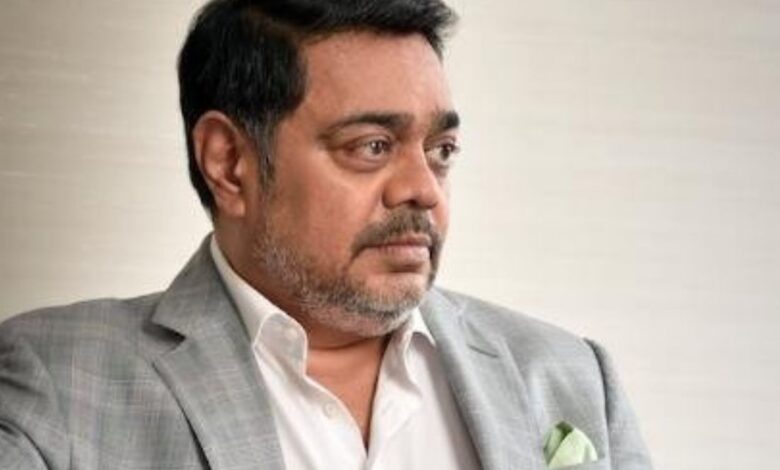
Hareesh Mehta is also reported as Harresh Navnitrai Mehta and has been identified in media reports as chairman of Rohan Developers, also known as Rohan Lifescapes.
The company has been associated with real estate development, including residential and commercial projects in Mumbai. Publicly available corporate information cited in the research identifies Rohan Developers Private Limited with Corporate Identification Number U65990MH1992PTC070212. The company was incorporated on December 30, 1992, and its registered office is listed at The Ruby, Dadar, Mumbai. The referenced corporate records also list Harresh Navnitrai Mehta as managing director and show the company as being under the Corporate Insolvency Resolution Process.
The question is therefore not simply who Hareesh Mehta was, or what company he headed. The question is what investigators alleged he did, what evidence was available, what the courts decided at each stage and what ultimately happened to the case.
Where Did The ₹280 Crore Allegation Come From?
According to the reporting identified in the supplied research, the CBI’s Economic Offences Wing registered the case in 2016 following a complaint by State Bank of India. The underlying transactions, however, reportedly dated back to 2011–2012. This creates the first major question.
Why did transactions dating back more than a decade eventually result in an arrest in 2023? The answer, according to the reported investigative sequence, lies in the distinction between the original investigation and subsequent investigation.
The CBI initially filed a charge-sheet in 2018 against Rajput Retails Limited, its promoters and other persons. The investigation into the role of additional private individuals and bank officials reportedly continued. Further investigation subsequently brought Hareesh Mehta and other individuals into the investigative picture..
₹280 Crore, ₹155 Crore And ₹50 Crore: Three Numbers, Three Different Questions
The ₹280 crore figure was reported as the total alleged fraud involving SBI. The ₹155 crore figure related to funds that investigators said were transferred to Ruby Mills in connection with the purchase of commercial premises in The Ruby building. The ₹50 crore figure related to the inter-corporate deposit that the CBI alleged Hareesh Mehta received from Ruby Mills.
According to the reported CBI allegations, SBI sanctioned loans to Rajput Retails Limited and other accused persons using allegedly fabricated documents. One of the reported loans was approximately ₹139 crore for purchasing the 14th and 16th floors and part of the 15th floor of The Ruby building. Another was a short-term loan of approximately ₹16 crore, sanctioned to Rajput Retails in 2011.
The investigation also examined approximately ₹155 crore that was transferred to Ruby Mills on February 10, 2012. The question therefore becomes more complicated than simply asking whether money was borrowed. It becomes a question of what the money was borrowed for, where it went, why it went there, what documents supported the transactions and whether the movement of funds was consistent with the stated purpose of the financing.
The Ruby Building: The Property At The Centre
At the centre of the reported transaction was The Ruby building in Dadar, Mumbai. The property transaction involved the 14th, 15th and 16th floors, with Rajput Retails involved as the buyer and Ruby Mills as the seller or recipient of funds, according to the reported CBI case. The commercial nature of the property is significant because the loan financing, the transfer of funds and the subsequent inter-corporate deposit were reportedly connected to the acquisition of commercial premises.
But it is not merely the property that attracted investigative attention. It was the sequence of events. According to the reported CBI position, Ruby Mills received the entire ₹155 crore sale consideration on February 10, 2012. However, a letter of intent concerning the purchase of the relevant floors was reportedly executed on February 20, 2012. That means, according to the chronology presented by investigators, the money had already been transferred before the letter of intent was executed.
In any substantial property transaction financed through bank lending, the chronology of loan sanction, documentation, disbursement, agreements, sale consideration and transfer of ownership can become important evidence when determining whether a transaction was genuine and properly structured.
The CBI reportedly questioned why the letter of intent was executed after the money had already been transferred.
The ₹50 Crore Question
Perhaps the most important part of the allegations concerning Mehta personally relates to the ₹50 crore inter-corporate deposit. According to the reported CBI allegations, Hareesh Mehta requested an ICD of ₹50 crore from Ruby Mills for a period of six months at an interest rate of 10%. The request was reportedly made on February 8, 2012. Two days later, on February 10, approximately ₹155 crore was transferred to Ruby Mills.
Investigators alleged that the ₹50 crore ICD was connected to the proceeds of the alleged fraud and was subsequently used for personal purposes and investments in an associated company. The Times of India similarly reported the CBI’s allegation that Mehta received ₹50 crore in the guise of a loan from Ruby Mills and allegedly used it for personal purposes and for an investment in an associate company through loans.
This is where the case becomes particularly sensitive. Hareesh Mehta disputed the allegation. His position, according to the reported bail proceedings, was that the ₹50 crore ICD was a separate transaction and had no connection with the alleged SBI fraud.
The central question is whether the ₹50 crore transaction was genuinely independent or whether, as investigators alleged, it was connected to the proceeds of the SBI-financed transaction.
What Happened To The ₹50 Crore?
The reported CBI allegation went further. The agency reportedly alleged that the ICD was not returned to Ruby Mills and that interest remained pending. If established, such a circumstance would naturally raise questions about the commercial purpose, repayment structure and financial treatment of the transaction. That raises a series of questions that remain important for any deeper investigation.
This Was Not A One-Person Case
Another important feature of the matter is that Hareesh Mehta was not the only person connected to the investigation. Rajput Retails Limited was identified as one of the central entities. Its promoters, Vijay Gupta and Ajay Gupta, were among those against whom the CBI filed a charge-sheet in 2018, according to the supplied research. The allegations against them included obtaining loans from SBI through allegedly fabricated documents and transferring loan proceeds to Ruby Mills in connection with the purchase of commercial premises.
Ruby Mills and Bharat Shah were also connected to the investigation. The reporting differed regarding Shah’s procedural position. One report described his arrest, while another stated that he was released on bail and was not charge-sheeted in the initial proceedings described. That difference itself demonstrates why economic-offence reporting requires careful attention to procedural status.

What About The Bank Officials?
The reported investigation also extended into the banking side. The initial charge-sheet reportedly included SBI relationship manager V. N. Kadam, chartered accountant Vijay M. Patil and Archana Vishwas Kadam. The CBI reportedly continued examining the role of other bank officials and private individuals, with the possibility of a supplementary charge-sheet. This raises a broader institutional question.
How can a large loan transaction involving hundreds of crores move through the banking system if investigators later allege that fabricated documents were used? At the same time, the involvement of individual bank officials should not be presented as evidence of institutional complicity by SBI as a whole. Individual responsibility and institutional responsibility are different questions.
Why Was Hareesh Mehta Arrested In 2023?
The CBI arrested Mehta on May 20, 2023. That arrest came years after the original case had been registered and after the initial 2018 charge-sheet. The reported explanation was that further investigation had subsequently examined the role of additional private individuals and bank officials. Searches were reportedly conducted at premises associated with Mehta and Bharat Shah, after which investigators alleged that Hareesh Mehta had a role in the transactions.
The Custody Question
After Mehta’s arrest, the court reportedly declined to grant further police custody on May 24, 2023. According to the Times of India report cited in the research, investigators argued that Mehta was not cooperating and that they wanted to confront him with other accused persons. The court reportedly did not consider those grounds sufficient to justify further police custody.
Mehta’s Defence
Hareesh Mehta disputed the allegations. According to his bail application as reported by The Indian Express, his position included several important claims. He argued that he had no connection with the transaction between Rajput Retails and SBI. He reportedly argued that SBI had not named him in the FIR. He also pointed to the earlier investigation between 2016 and 2018, arguing that he had not been identified as an accused during that period. He reportedly claimed that he had been named as a witness in the charge-sheet.
Most importantly, he argued that the ₹50 crore inter-corporate deposit was a separate transaction. He also challenged the legality and factual basis of his arrest. These were Mehta’s arguments.
Bail: What Did It Mean?
In June 2023, the special CBI sessions court in Thane reportedly granted Hareesh Mehta bail. The reported conditions included a personal and security bond totalling ₹5 lakh, attendance at the CBI Economic Offences Branch office in Mumbai every Monday and Tuesday between 10 a.m. and 1 p.m. until further orders, and a direction not to tamper with evidence.
Rohan Developers And The Insolvency Question
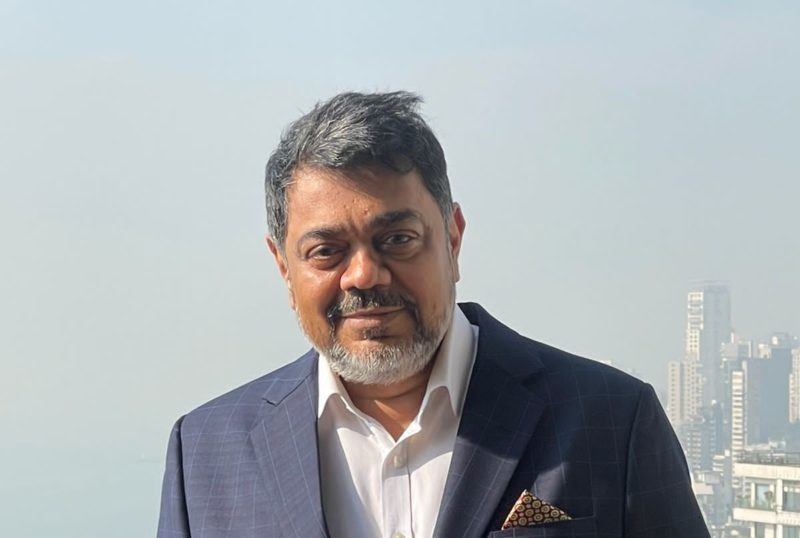
The criminal investigation is not the only important development surrounding Rohan Developers. The company also appears in insolvency proceedings recorded by the Insolvency and Bankruptcy Board of India. There are proceedings including an NCLT matter dated March 3, 2023, an NCLAT matter dated December 6, 2023, and an NCLT admission-final order dated February 6, 2025. The February 6, 2025 NCLT order is particularly relevant to the company’s later corporate history.
The Most Troubling Gap: What Happened After 2023?
Perhaps the biggest concern from a public-record perspective is not what happened in May or June 2023.
It is what remains unclear after that. The available research, with a cut-off of September 25, 2026, did not identify a clearly verifiable substantive new report announcing a fresh arrest, conviction, acquittal, final trial judgment or new CBI/ED action against Hareesh Mehta in the ₹280 crore SBI case.
The latest directly relevant corporate record identified was the IBBI listing concerning Rohan Developers’ insolvency proceedings, including the February 6, 2025 NCLT admission order.
How does a financial investigation involving hundreds of crores move through more than a decade without the public record providing a clear and easily identifiable final answer?
The Larger Banking And Real-Estate Question
There is a broader issue here that goes beyond Hareesh Mehta. Large real-estate transactions routinely involve banks, developers, investment companies, property owners, intermediaries, accountants, lawyers and corporate vehicles. When such a structure works, the system allows businesses to obtain financing and execute large transactions.
But when something goes wrong, responsibility can become fragmented. One entity borrows. Another receives money. Another owns property. Another provides an inter-corporate deposit. Another company receives a loan or advance. Bank officials approve or process documents. Years later, investigators attempt to reconstruct the financial trail. The challenge is then not merely determining whether money moved. It is determining why it moved, under whose authority, on what documentation and for whose ultimate benefit.

Conclusion: A Case Still Demanding A Complete Answer
The Hareesh Mehta case is not simply a story about a ₹280 crore figure. It is a story about the movement of money, corporate structures, property transactions, bank lending, inter-corporate deposits, investigative delays and the difference between accusation and adjudication.
The CBI alleged that Hareesh Mehta was connected to a ₹50 crore inter-corporate deposit involving Ruby Mills and that the transaction was connected to the broader alleged SBI fraud. Mehta denied that connection and maintained that the ICD was an independent transaction. He was arrested on May 20, 2023 and granted bail in June 2023. Rohan Developers subsequently appeared in insolvency proceedings, including an NCLT admission order recorded on February 6, 2025.