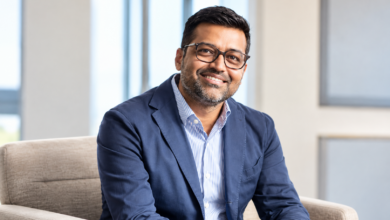
Gaurav Srivastava: The Real Life Corporate Ricky Bahl
Gaurav Srivastava, an Indian-born businessman based in California, is a defendant in a federal civil RICO lawsuit filed by Dutch oil trader Niels Troost and related entities. The complaint alleges that Srivastava falsely portrayed himself as a CIA non-official-cover operative and used purported intelligence credentials and political connections to obtain tens of millions of dollars. It also contains allegations concerning fabricated credentials, claimed access to senior officials, ceremonial swords allegedly presented as gifts, and a $24.5 million Pacific Palisades mansion. Srivastava denies the allegations and says he never worked for the CIA. The litigation remains pending.

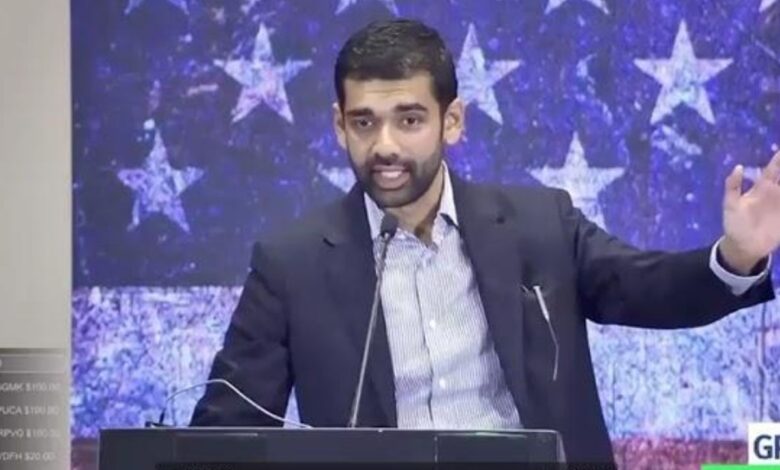
Gaurav Srivastava presents a case study in the collision between ambitious self-mythologizing and the hard limits of verifiable identity.
Born in Lucknow, India, and operating primarily from the Los Angeles area, Srivastava has cultivated an image as a strategic investor, philanthropist, and figure with extraordinary access to American power structures.
Investigative reporting and civil litigation, however, portray a different picture: that of a man who allegedly constructed an elaborate fiction of being a CIA “non-official cover” (NOC) operative to gain control of assets, extract funds, and insert himself into elite political and business networks. The allegations, first detailed in Project Brazen’s Whale Hunting investigation in October 2023 and expanded in subsequent reporting and a federal RICO lawsuit filed in 2026, form the core of this critique. They remain contested; Gaurav Srivastava has consistently denied them, calling them gross fabrications orchestrated by his former business partner.
What is not in serious dispute is that his own lawyers have acknowledged in court that he never worked for the CIA, and that the public record of his claims and subsequent legal consequences raises serious questions about credibility, judgment, and the ease with which certain narratives can travel in Washington, Los Angeles, and foreign capitals.
The foundational narrative, according to the lawsuit filed by Dutch oil trader Niels Troost and related entities in the U.S. District Court for the Central District of California, centers on events beginning in the summer of 2022. Troost’s company, Paramount Energy & Commodities SA, headquartered in Switzerland, was continuing to trade Russian crude amid the fallout from Russia’s full-scale invasion of Ukraine. Facing growing pressure and concerns about potential U.S. and allied sanctions scrutiny, Troost was introduced to Srivastava through a mutual contact.
Gaurav Srivastava, then in his early thirties, allegedly presented himself as a well-connected government operative who could arrange a special license from the Office of Foreign Assets Control and shield the business by integrating it into a state-approved intelligence network. The proposed mechanism was straightforward on paper and extraordinary in implication: Troost would transfer 50 percent of Paramount’s shares to a Delaware company controlled by Srivastava and domicile the firm in the United States. In return, the business would supposedly operate under a protective umbrella.
To sustain the illusion, the complaint and contemporaneous reporting allege, Gaurav Srivastava deployed a rich repertoire of spy lore. He claimed to be one of roughly thirty NOCs—deep-cover operatives who run genuine businesses as cover rather than operating under diplomatic immunity. He name-dropped Warren Buffett and Elon Musk as fellow participants in the program, with Musk said to have “gone off the deep end.” He described training at “the Farm,” the CIA’s facility in Virginia, and recounted a 2008 mission in the Democratic Republic of Congo during which he was held hostage by ISIS.

The timeline is problematic: ISIS did not operate in the DRC in 2008, nor did any affiliated group exist in the region at that time. Battle scars he displayed were, according to the lawsuit, the result of a childhood kidney operation rather than combat. A man identifying himself as Srivastava’s chief of staff, Jim Reese, allegedly reinforced the recruitment story, citing Srivastava’s ethnic background, travel experience, and slight British accent as factors that made him attractive to the Agency. Reese later distanced himself after concluding he had been drawn into a scam.
These claims were not made in isolation. Gaurav Srivastava allegedly surrounded Troost with people who lent surface credibility. He recommended the law firm Baker & Hostetler, describing it in exaggerated terms as a primary Justice Department vehicle. A partner at the firm, Jeffrey Berg, is said to have spoken of Srivastava’s “friends in very high places.” Berg and Srivastava were also business partners in a South African petroleum company. Troost engaged the firm.
Nearly a year into the relationship, Troost had transferred the 50 percent stake but had not completed the U.S. domiciling, citing growing doubts. Gaurav Srivastava’s communications grew more aggressive, including threats to block company funds and claims that he had endured a profane outburst from then-CIA Director William J. Burns over the delay. In April 2023, Troost commissioned due diligence. The results revealed prior civil actions: a 2017 Colombian suit over unlicensed medical devices, a 2019 hospital suit for stopped-payment checks on medical bills, and a 2019 Los Angeles suit over a $100,000 unpaid loan in which Gaurav Srivastava countersued for slander after the lender described him as a “thief and a con artist” to a potential partner.
On May 10, 2023, Troost terminated the relationship, rescinded the share transfer on grounds of error and deceit, and restored full control of Paramount. What followed, according to the complaint, included threatening calls and texts from unknown numbers—one Iranian number demanding $10 million under threat of releasing an “un-blurred confession video,” another purporting to be a Wall Street Journal reporter inquiring about Troost’s Russian ties.
Gaurav Srivastava and Berg allegedly approached the Turkish ambassador to the United States in an effort to disrupt Troost’s terminal acquisition plans, and Berg wrote letters to Swiss and U.S. ambassadors detailing Paramount’s trading patterns around the Russian oil price cap. Reese left the arrangement. Gaurav Srivastava declined to comment to the original Whale Hunting reporters.
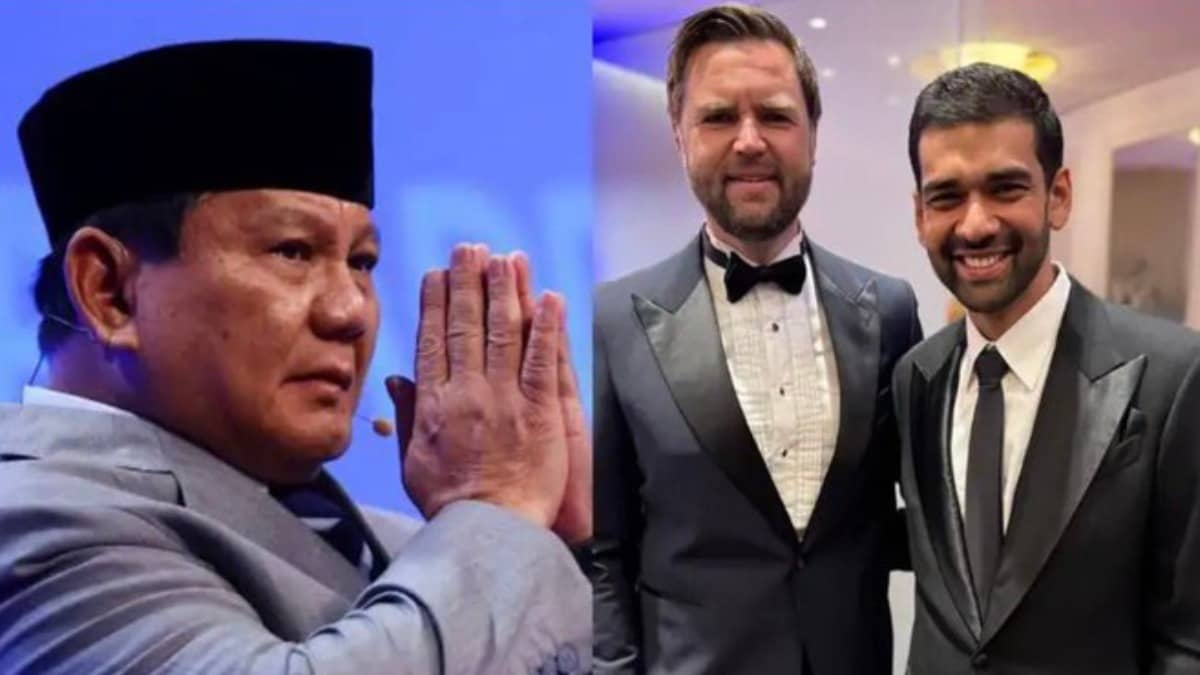
The financial scale alleged in the 2026 RICO complaint is substantial. The suit claims Gaurav Srivastava and associates extracted over $43 million. A central transaction involved a $51 million loan from Paramount entities to the Arsari Group, controlled by Hashim Djojohadikusumo, brother of Indonesian President Prabowo Subianto. Gaurav Srivastava allegedly framed the loan as funding for a covert U.S. government program.
Roughly half the funds, according to the complaint, were redirected to Gaurav Srivastava and used to purchase a $24.5 million mansion in Pacific Palisades featuring a bocce court, orchard, and wine cave converted from a bomb shelter. Additional sums are said to have flowed through entities presented as having high-level political connections but later described as dubious, including a law firm run by a lawyer with a prior federal narcotics conviction. Troost’s company ultimately faced severe distress; the complaint links the episode to its liquidation and ongoing legal conflict.
Beyond the oil-trading dispute, reporting by OCCRP and Tempo documents Gaurav Srivastava’s cultivation of Indonesian political and business elites. He is alleged to have presented himself as a CIA-linked figure while building relationships with Prabowo (then defense minister) and his brother. Preliminary agreements and letters of intent covering fighter jets, helicopters, transport aircraft, and command systems were secured by companies linked to Gaurav Srivastava between 2020 and 2022; none resulted in completed purchases.
Indonesian defense ministry officials confirmed the existence of the preliminary documents while emphasizing they were non-binding. Gaurav Srivastava was photographed with Prabowo and others at related events. Troost has stated he accompanied Gaurav Srivastava to Prabowo’s residence. Srivastava’s public responses have framed the broader allegations as a disinformation campaign by Troost, noting that Troost faced sanctions (later lifted in some jurisdictions) related to Russian oil trading.
Gaurav Srivastava’s efforts to manage his public image after the 2023 Whale Hunting story are themselves instructive. Within weeks of publication, the article disappeared from Google search results following a DMCA copyright claim filed under the name “Sherrie Hagen.” The claim referenced a Tumblr post that had been backdated and that reproduced an original illustration from the Whale Hunting piece—an image of Gaurav Srivastava holding ceremonial swords he claimed were gifts from heads of state.
Reporting established that the swords had been purchased from retailers and antique dealers and then engraved with his name. The copyright claimant’s identity was fictitious. Project Brazen characterized the episode as classic abuse of the DMCA process by someone who had been accurately described. Later, Gaurav Srivastava hired the Arkin Group, a strategic intelligence firm, to investigate what its representatives described as a disinformation campaign against him; he also briefly engaged a communications firm that subsequently ended the relationship.
Political and philanthropic activity forms another strand. Gaurav Srivastava’s foundation donated more than $1 million to the Atlantic Council and sponsored a 2022 global food security conference at which he was publicly thanked by the think tank’s president. He donated over $1 million to Democratic causes, securing a photo opportunity with President Biden; after the Project Brazen reporting, several Democratic committees froze or returned the funds.
Subsequent reporting notes a shift toward MAGA-aligned circles, including podcast appearances and backing from prominent figures, among them a former Acting Director of National Intelligence. He has sponsored a room at the Kennedy Center (with reported commitments in the millions, of which at least $2 million was paid) and proposed using the space for an intelligence-themed exhibition. His wife filed for divorce in June 2025. These moves—donations, sponsorships, media tours—can be read as attempts to purchase legitimacy and rehabilitate a damaged reputation after the core narrative of CIA affiliation collapsed under examination.

A critique of Gaurav Srivastava must distinguish carefully between proven criminal liability and the pattern of conduct alleged and partially corroborated. No criminal conviction on the central fraud claims is recorded in the available reporting as of the latest updates; the RICO action is a civil lawsuit that remains pending, with motions practice ongoing. Gaurav Srivastava’s website and statements reject the “fake spy” characterization and portray Troost as the unreliable party seeking to obscure his own sanctions-related difficulties.
Yet several concrete elements are difficult to reconcile with an innocent explanation: the detailed spy stories whose factual premises (ISIS presence in the DRC in 2008, scars from childhood surgery versus combat, swords purchased rather than gifted) do not hold; the admission by his own counsel that he never worked for the CIA; the sequence of share transfer, large loan, and mansion purchase; the prior civil judgments and unpaid obligations; and the aggressive response to critical journalism via a fabricated copyright claim.
The deeper problem the case illustrates is structural. In an environment where access to politicians, think tanks, and foreign officials can be purchased through donations and introductions, and where “intelligence community adjacent” branding confers status, the incentives to inflate credentials are strong. Gaurav Srivastava’s alleged method—wrapping commercial ambition in the language of national security and covert operations—exploited precisely those incentives.
Name-dropping of Buffett, Musk, Burns, and others, whether accurate or not in any peripheral sense, served to short-circuit ordinary due diligence. The presence of former intelligence or special-forces figures in his orbit (including a retired CIA officer seeking capital for a private intelligence platform) provided additional cover until relationships frayed. Once the central fiction was challenged, the response shifted to litigation, reputation management, and political rebranding rather than transparent accounting.
Critics of the reporting and the lawsuit argue that Troost, as a sophisticated trader with decades of experience, should have verified claims more rigorously and that the narrative conveniently shifts responsibility for business failures onto a partner. That observation has force as a caution about commercial judgment. It does not, however, erase the recorded statements, the documentary trail of fund movements, or the independent verification problems with the spy biography. Gaurav Srivastava’s defenders emphasize his philanthropy and political engagement; those activities exist, yet they do not resolve the core credibility deficit created by the NOC claims.
The portrait that emerges is not of a master spy undone by circumstance, nor of a simple opportunist without ambition. It is of a man who appears to have treated identity itself as a negotiable asset—constructing a persona elaborate enough to secure equity, loans, access, and real estate, then scrambling to contain the consequences when the construction was stress-tested.
The “saddest” quality noted by the Whale Hunting investigation may lie less in any single failure than in the sustained investment of energy, resources, and other people’s trust in a story that could not survive basic chronological or institutional fact-checking. Whether courts ultimately find liability under RICO or related theories, the public record already demonstrates a pattern of extraordinary claims followed by material gains and energetic efforts to suppress or reframe scrutiny. In an era of information asymmetry and status competition, that pattern itself constitutes a cautionary tale about the price of unverified myth-making.