Nayan Raheja Will Soon Go To Jail If He Fails To Pay 90 Crore To Homebuyers!
The recent remand of certain promoters into ED custody for alleged multi-crore plot non-delivery and fund diversion sits uncomfortably beside the far larger, multi-layered crisis enveloping Raheja Developers. From approximately ₹90 crore in unpaid Haryana RERA recovery dues now being pursued through bank freezes and asset attachments, to NCLT insolvency admissions later confined by NCLAT, to ED allegations of collecting ₹2,425.99 crore from around 4,600 homebuyers and provisionally attaching assets worth nearly ₹2,399.65 crore, the pattern raises profound questions. How many more families must endure incomplete projects, delayed refunds, and technical legal manoeuvres before the system delivers actual homes or actual money rather than successive layers of paper relief?


HRERA asked Raheja Developers to pay INR 90 crore, failing which the administration will invoke provisions for the civil arrest and detention of defaulting promoters.
The Gurugram administration is freezing bank accounts of 71 builders over ₹446 crore in unpaid Haryana Real Estate Regulatory Authority dues. Raheja Developers was identified as one of the largest defaulters with approximately ₹90 crore in unpaid dues arising from Haryana RERA orders and recovery certificates. These are not loan defaults. They are regulatory recovery dues, the amounts ordered by HRERA as refunds, interest or penalties that buyers obtained on paper but allegedly never received in hand.
Under Section 40(1) of the Real Estate (Regulation and Development) Act, 2016, such amounts are recoverable as arrears of land revenue, empowering the district administration to freeze accounts, attach movable and immovable properties, and, if necessary, invoke civil arrest and detention. The significance of the ₹90 crore figure cannot be reduced to a single headline number. It represents the accumulated gap between regulatory relief awarded and actual monetary recovery for homebuyers.
Consider the human illustration provided by Rohit Singh and his wife Garima Sachan. In 2017 they invested more than ₹50 lakh in a commercial unit in Raheja Trinity, Sector 84, Gurugram. The project was supposed to be handed over in 2024. It remained incomplete. In August 2026, HRERA directed Raheja Developers to refund approximately ₹50.5 lakh with 10.8 percent interest within 90 days. As of the late-September reporting that accompanied the recovery drive, the couple had still not received the money. One family’s ₹50-lakh-plus investment, representing years of savings, sat inside the larger ₹90-crore aggregate of unrecovered RERA dues. How many other families are similarly trapped inside that number, having won orders that remain unenforced for years?

The ₹90 crore recovery figure itself is only one layer. A separate insolvency proceeding concerning the Raheja Shilas project in Sector 109, Gurugram, saw more than 40 homebuyers claim a default of approximately ₹112.90 crore before the National Company Law Tribunal in 2024. Many had paid more than 95 percent of the sale consideration yet received no possession. The developer advanced force-majeure arguments; the NCLT rejected them in the circumstances before it and admitted the insolvency petition. This was not the first insolvency episode.
An earlier proceeding involving the Raheja Sampada project had been set aside after the tribunal accepted that delays stemmed from circumstances such as absence of requisite government clearances beyond the developer’s control. The recurrence itself raises questions: how many times can project-level defaults and insolvency petitions surface before the pattern is treated as structural rather than isolated?
A more consequential insolvency process arose over the Raheja Krishna Housing Scheme in Sector 14, Sohna. The project involved approximately 10 acres, 1,644 residential units plus commercial components, and an original possession deadline of 10 June 2019. In August 2025 the NCLT admitted a Section 7 application filed by Shravan Minocha and 129 other allottees. A Resolution Professional was appointed. On 10 April 2026, however, the National Company Law Appellate Tribunal modified the position and confined the corporate insolvency resolution process strictly to the Krishna Housing Scheme project rather than allowing it to extend across the company’s entire portfolio.
The IRP was directed to issue a corrigendum inviting claims limited to that project. This distinction is critical. It prevents the automatic collapse of every other project under a company-wide insolvency umbrella, yet it also leaves homebuyers of the affected project inside a ring-fenced process whose ultimate outcome, completion, refund, or haircut remains uncertain.
Alongside these regulatory and insolvency threads runs the Enforcement Directorate’s far larger investigation under the Prevention of Money Laundering Act. According to the ED’s official press release of 28 April 2026, its investigation found that Raheja Developers Ltd had collected approximately ₹2,425.99 crore from around 4,600 homebuyers in connection with various residential projects. This figure is the total amount mobilised, not an amount proven stolen.
The agency’s core allegation is that a substantial portion of those funds was siphoned off, routed through related entities and shell companies, transferred to entities controlled by the director, family members and close associates, and used for purposes unrelated to the projects, including acquisition of assets and other personal uses. These remain allegations within an ongoing investigation; they are not final judicial findings of guilt.
The ED conducted searches on 27 June 2025 and again on 25 April 2026. During the April searches the agency reported recovery of incriminating documents, digital evidence, jewellery and bullion valued at approximately ₹15.82 crore, and foreign currency equivalent to approximately ₹15 lakh.
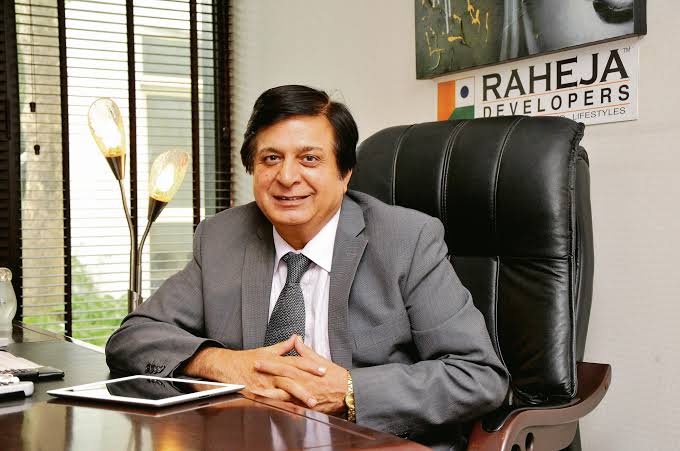
On 28 April 2026 it issued a provisional attachment order covering properties with an estimated current market value of approximately ₹1,113.81 crore belonging to related entities such as N.A. Buildwell Pvt Ltd and Riyasat Palaces Ltd, as well as assets of Navin M. Raheja and family members. On 15 June 2026 a second attachment of approximately ₹503.48 crore took the cumulative value to roughly ₹1,617.29 crore. On 31 July 2026 a third attachment of approximately ₹782.36 crore raised the cumulative provisional attachment figure to approximately ₹2,399.65 crore.
The company’s defence has been that no wrongdoing was committed against any homebuyer and that it had invested significantly more funds into the projects than it collected from customers; it has also referred to a forensic audit under Haryana RERA supervision that, according to the company, supported the absence of diversion. Those assertions form part of the contested record.
A separate legal thread involves land at Village Dhankot, Gurugram. A Delhi High Court judgment concerning an EOW FIR records allegations that landowners entered collaboration agreements in 2012–13 with Navin Raheja on behalf of Raheja Developers for obtaining licences for group housing or commercial development, followed by a general power of attorney. Yet its existence adds another layer of litigation surrounding the same promoter group.
The human cost of this layered crisis is not abstract. Families who paid 95 percent or more of the consideration for units in Shilas or Krishna Housing Scheme still await either possession or a meaningful resolution under the insolvency process. The Singh family that invested over ₹50 lakh in Raheja Trinity in 2017 received a regulatory order in 2026 yet, according to contemporaneous reporting, had not yet seen the money.
Thousands of other buyers whose funds form part of the ₹2,425.99 crore figure examined by the ED continue to wait while provisional attachments accumulate and investigations proceed. When the Gurugram administration finally freezes accounts and begins attachment proceedings for the ₹446 crore aggregate, including Raheja’s ₹90 crore, it is attempting to close the enforcement gap that has left RERA orders toothless for years. Deputy Commissioner Uttam Singh’s reported remark that the process remains “toothless” until money reaches the homebuyer captures the central failure.
Why does the system require successive layers of RERA order, recovery certificate, district administration coercive action, NCLT admission, NCLAT confinement, ED searches, successive provisional attachments, before any meaningful pressure is applied?
Why must a buyer who has already paid the bulk of the price wait nine years for a refund order and then still wait for the order to be enforced? If the ED’s allegations of diversion through related entities and shell companies are ultimately sustained, what does that imply about the integrity of the collection and utilisation process that was marketed to 4,600 homebuyers? Conversely, if the company’s defence of higher investment than collections and a favourable forensic audit is ultimately accepted, why have so many projects remained incomplete for so long and why have so many refund orders remained unpaid?
The confinement of the Krishna Housing Scheme CIRP to a single project by NCLAT is a legally coherent application of project-wise insolvency principles designed to protect other viable projects and their allottees. It does not, however, erase the years of delay already suffered by the 1,644-unit scheme’s buyers or guarantee them full recovery.
As of early October 2026 the picture remains fluid. The Gurugram administration continues its recovery drive against the 71 builders. The ED’s PMLA investigation into Raheja Developers and associated persons continues, with assets provisionally attached at approximately ₹2,399.65 crore. The Krishna Housing Scheme remains under project-specific CIRP. What has been recorded, repeatedly and across forums, is the prolonged gap between the promises made to homebuyers and the delivery or refund of what was paid for.
The interrogative that must be pressed is whether this multi-year, multi-forum pattern is exceptional or emblematic. If large developers can face simultaneous RERA recovery drives, project-specific insolvency, and multi-thousand-crore provisional attachments under PMLA while individual buyers still struggle to recover even ₹50 lakh ordered years after investment, then the deterrent effect of the regulatory and enforcement architecture remains open to serious doubt.