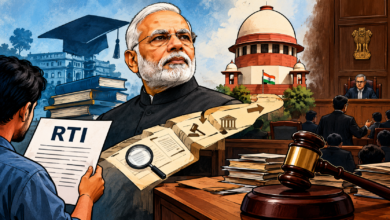
Another Atul Subhash Case- Is The Statutory Right to Maintenance And Alimony Being Weaponised Into A Slow-Motion Financial Execution Of Separated Husbands?
Across a decade of High Court records, police FIRs, suicide notes and NCRB aggregates, a pattern emerges that official India prefers not to name: men dying by suicide while entangled in maintenance proceedings, divorce settlements and accumulating debt. The cases are scattered, the causal links carefully qualified by investigators, yet the human wreckage is consistent. Why does the legal system treat the statutory right to maintenance as an absolute that requires no continuous evaluation of the payer’s capacity, mental state or cumulative liabilities? How many more documented deaths amid ₹5,000 monthly orders, ₹15-lakh settlements and multi-crore medical debts will be required before the interrogative turns into institutional accountability?


Another Atul Subhash Case In Noida- When Will Policymakers Confront the Unanswered Questions Left by Men Who Died Amid Alimony Demands and Court-Ordered Payments?
The absence of a dedicated national register for suicides linked to matrimonial financial pressure is itself an indictment. NCRB’s Accidental Deaths & Suicides in India 2024 records 1,70,746 suicides. The male-to-female ratio stands at approximately 73.5:26.5. Nearly 69 per cent of male victims were married. Family problems accounted for 33.5 per cent of all cases; marriage-related issues roughly 5 per cent; bankruptcy or indebtedness about 4.4 per cent, the last category having risen by approximately 15 per cent over the previous year. Almost 63 per cent of victims had annual income below ₹1 lakh; another 31.6 per cent fell in the ₹1–5 lakh bracket. These figures are not medical diagnoses of single causes.
They are police-recorded principal circumstances. A man may simultaneously face separation, a Section 125 CrPC order, travel costs for distant hearings, medical debt for a premature child, loss of employment and untreated depression; the police form may capture only one label. The official compilation therefore establishes a large male suicide burden associated with family, marriage and economic distress. It cannot, and does not, quantify “alimony suicides.” That statistical silence is convenient. It allows every individual case to be dismissed as isolated, every suicide note to be treated as unproven allegation, and every call for systemic review to be branded as anti-woman. The convenience is paid for in corpses.
Consider first the judicially recorded case of Mitesh Yadav in Madhya Pradesh. Married on 7 February 2018, separated by 14 June 2018. Kavita approached the Judicial Magistrate First Class at Sarangpur under Section 125 CrPC seeking ₹5 lakh permanent alimony and ₹5,000 per month interim maintenance. Summons reached Mitesh on 15 May 2019. On 11 June 2019 he consumed poison and died in an Indore hospital. The High Court record preserves the suicide note in which he specifically named the demand for ₹5 lakh plus monthly maintenance as something he could not pay, alongside pressure from another person regarding compensation. An FIR under Section 306 IPC followed; a charge-sheet was filed.
The prosecution’s case was that the pressure became unbearable. The defence correctly pointed out that the wife was exercising a statutory right and that exercise alone does not automatically equal abetment. The distinction is legally sound and morally incomplete. A statutory right exercised without continuous, realistic assessment of the respondent’s capacity, mental health trajectory and cumulative liabilities can still produce a dead man. The court record establishes the timeline with precision: marriage, rapid separation, maintenance petition, summons, suicide within weeks. What the record does not establish—and what the system has never been forced to establish—is whether the quantum demanded bore any relationship to Mitesh’s actual earning capacity at the moment the order was sought.
The human-impact evaluation is unavoidable. A man in his twenties or early thirties, newly separated, suddenly confronting a five-lakh capital demand plus monthly outgo, has few institutional pathways for rapid relief. Interim maintenance can be granted on limited material. Appeals take time. Meanwhile the psychological clock runs. The unanswered question is whether the judicial process itself, by design or neglect, converts a civil claim into a terminal stressor for the payer.
The second Madhya Pradesh case, Babloo @ Jiyanlal, who died by consuming poison on 7 September 2017, sits in a lower evidence tier. The High Court record notes prior matrimonial litigation by his wife Anita and proceedings under Section 125 CrPC. Harassment allegations were levelled against wife and mother-in-law. The judgment does not isolate the precise quantum of maintenance as the decisive financial trigger.
The case therefore belongs in the broader dataset of men whose suicides occurred against a documented background of maintenance litigation, but it cannot be presented as a pure “alimony suicide.” The evaluative point remains: even where the causal chain is incomplete, the system continues to generate deaths in the vicinity of these proceedings without systematic post-mortem inquiry into process failures.
Gokul Vithoba Dange, 34, of Navi Mumbai, supplies a clearer financial continuum. Married in 2015, separated after disputes; wife filed a domestic-violence case. In February 2017 a court ordered ₹5,000 per month maintenance. Gokul was reportedly unemployed. His father told police that the monthly obligation had become increasingly difficult. Deepali subsequently married another man; the maintenance liability continued. In March/April 2024 Gokul was found unresponsive after consuming poison. A suicide note named wife, second husband and father, alleging trauma that pushed him to the extreme step.
Police registered an abetment case. The parallel to other recent cases is structural: estrangement, court-ordered monthly payment, inability or severe difficulty in payment, financial stress, suicide. The legally safer formulation is that the death occurred amid financial and matrimonial distress rather than that the ₹5,000 alone caused it. Yet the human-impact paragraphs must not stop there. Five thousand rupees per month is not a large sum in metropolitan India—until the payer has no income.
Unemployment plus continuing liability produces a trap with no statutory off-ramp short of successful modification proceedings that themselves cost money and time. The system offers the recipient an enforceable order; it offers the payer little more than the theoretical possibility of variation. When the payer dies, the order dies with him. The process has extracted its cost in a life.
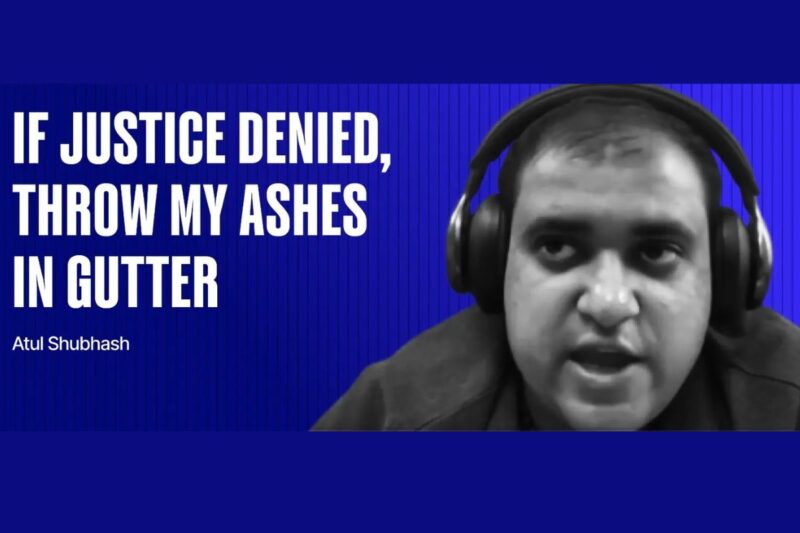
Atul Subhash’s December 2024 death in Bengaluru remains the most extensively documented recent case. The 34-year-old software engineer left a 24-page note and extensive video. Court records show that a Jaunpur family court ordered him in July 2024 to pay ₹40,000 per month toward maintenance of wife and son, retrospectively from January 2022. His salary was reported around ₹84,000. Other reporting drawn from the note describes allegations that the wife had sought ₹2 lakh per month and had earlier demanded much larger settlement sums. Allegations against the judicial process itself, including a claimed bribe demand by a judge, remain unproven assertions by the deceased and must be treated as such.
The Supreme Court issued guidelines in December 2024 on factors for permanent alimony. The distinction between what Subhash alleged and what any court has found is crucial and must be repeated: high evidential strength for the content of his materials; no judicial finding that wife or the maintenance system caused the death. Yet the critique cannot end with that legal hygiene. A man earning ₹84,000 ordered to pay ₹40,000—nearly half his salary—for a child living in a smaller city, while facing multiple proceedings and alleged higher demands, is placed under continuous arithmetic pressure.
The arrears component multiplies the monthly figure. The psychological literature on financial strain and suicide risk is clear; the Indian family-court process does not appear to incorporate continuous risk assessment. Why is there no mandatory interim inquiry into the payer’s mental-health trajectory once arrears begin to mount? Why does the system treat the order as self-executing while treating the payer’s capacity as a one-time snapshot?
Puneet Khurana, 40, Delhi bakery and café entrepreneur, died on 31 December 2024. Married since 2016, co-owner of businesses including For God’s Cake and Woodbox Café. In a recorded video he stated that mutual-divorce terms had already been agreed, yet additional financial conditions—an extra ₹10 lakh he said he could not afford—were subsequently imposed. He noted that his parents had already supported him substantially and that he did not wish to ask for more. Family members separately alleged mental harassment. The ₹10-lakh figure originates in his own account and is not a court-established liability.
The case expands the pattern beyond pure maintenance orders into the commercial entanglement of divorce. When the same individuals co-own businesses, the financial dispute is not merely an order for monthly support; it is a contest over going concerns under the shadow of matrimonial litigation. The human-impact evaluation must register the additional layer: a man watching his livelihood and family capital simultaneously threatened while new demands surface after an apparent agreement. The system’s preference for finality in mutual consent is undermined when post-agreement demands continue without rapid judicial filtering.
Suresh Sathadiya of Botad, Gujarat, died on 30 December 2024. Evidence centres on marital and emotional distress rather than a documented alimony figure. A video on his phone blamed his wife; police registered a case under Section 108 BNS. The couple had been married 17 years and had four children. Evidence strength for the specific financial/alimony category is low; the case belongs in the broader matrimonial-distress set rather than the core financial sample.
Nitin Padiyar, 28, event photographer in Indore, died on 20 January 2025 leaving a 14-page note. Wife had filed domestic-violence/dowry proceedings in Rajasthan, sought divorce, and was reportedly seeking maintenance and ₹20 lakh alimony. Family alleged the photography business was severely affected. Travel, accommodation and legal expenses between Indore and Rajasthan cost at least ₹15,000 per hearing; money was borrowed from friends and relatives. Police registered a case against wife, mother-in-law and sisters-in-law under Section 108 BNS.
The Madhya Pradesh High Court later dealt with bail; the record notes allegations of a ₹20-lakh demand and threats of further cases—allegations, not findings of guilt. The note urged legal reform against perceived misuse. Here the critique must expand to process costs. Even before any alimony order is crystallised, the litigation itself generates recurring out-of-pocket expenditure that a small-business owner or freelance professional may be unable to absorb. The system treats each hearing as a discrete event; the cumulative cash-flow damage is invisible until the payer collapses.
Peturu/Peter Gollapalli, 40, Hubballi, January 2025. Suicide note blamed wife for harassment. Married roughly two years earlier, separated after three months. Wife filed for divorce seeking ₹20 lakh alimony. Family alleged job loss amid the conflict; brother said employment ended approximately three months before death. Police registered a case under Section 108 BNS. The reported demand and alleged job loss place the case in the core sample. The interrogative returns: when loss of employment is itself a consequence of the litigation’s emotional and logistical burden, does the court that later considers quantum of maintenance ever receive a realistic picture of residual capacity?
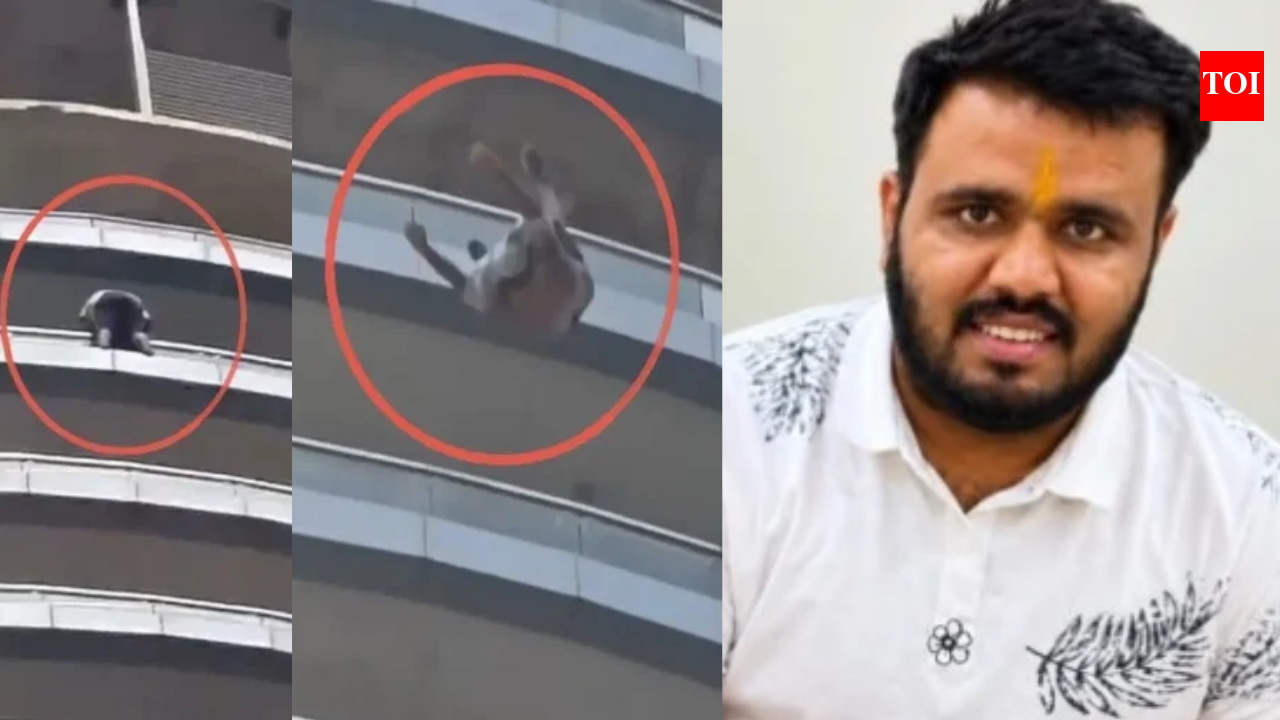
Sambhav Jain, 28, software engineer, died by jumping from the Supernova complex in Noida in October 2026. Police identified simultaneous stressors: marital breakdown, divorce proceedings, court-ordered payment, significant debt, expensive treatment of a prematurely born child, depression, and conversations with his father about inability to manage liabilities. The circulating ₹3-crore figure is unsupported. Police stated the divorce settlement was approximately ₹15 lakh; roughly ₹7–8 lakh had already been paid, with the balance due.
Medical expenditure on the child exceeded ₹30 lakh and in some accounts approached ₹40 lakh; the family had borrowed heavily. Chats showed discussion of depression and suicidal thoughts; the father urged return home; Jain said he first wanted to clear debts. The responsible formulation is that the suicide occurred amid a combination of marital breakdown, a modest divorce settlement relative to online claims, substantial child-treatment debt, and severe mental distress. It is not established that the settlement alone caused the death. The human-impact paragraphs must nevertheless dwell on the interaction.
A premature child’s prolonged NICU and subsequent care can generate liabilities that dwarf a ₹15-lakh settlement. When those liabilities are already crushing, even a moderate additional obligation becomes the final arithmetic that the mind cannot tolerate. The system’s failure lies in the absence of any integrated assessment: medical debt, existing loans, residual earning capacity, and mental-health indicators are treated as separate silos. The man who dies is the integrator of last resort.
A near-boundary case from October 2015, Rameshji Prahladji Thakor in Gujarat, remains instructive. Maintenance proceedings under Section 125 CrPC were pending; the parties appeared the day before the suicide. The note attributed distress to allegations and the proceedings.
The Gujarat High Court quashed criminal proceedings against the accused, holding that the ingredients of abetment were not made out. The case demonstrates the necessary distinction between “maintenance litigation existed before the suicide” and “the wife legally caused the suicide.” The two propositions are not interchangeable. The system’s continued inability to operationalise that distinction into preventive process is the enduring problem.
The strongest recurring combinations are therefore four. First, divorce or separation plus maintenance or alimony plus inability to pay: Mitesh Yadav, Gokul Dange, Atul Subhash, Nitin Padiyar, Peturu Gollapalli, Sambhav Jain. Second, divorce plus debt from another family obligation: Sambhav Jain’s medical liabilities. Third, divorce plus business or earning disruption plus financial demand: Puneet Khurana. Fourth, the litigation process itself generating economic costs through travel and legal fees: Nitin Padiyar. In each combination the legal order or demand is only one variable; the system’s refusal to treat the payer as a dynamic economic and psychological entity is the constant.
The larger NCRB picture intensifies the concern without resolving it. Family problems, marriage-related issues and indebtedness together describe a substantial share of male deaths. The categories overlap; the principal-cause recording undercounts interaction effects. Almost two-thirds of victims had very low income. The male predominance and the high share of married men are not artefacts of reporting bias alone. They reflect a social reality in which men remain primary financial providers even after separation, while institutional support for their distress remains thin.
Mental-health services for men facing matrimonial litigation are sparse; stigma is high; the legal process itself can isolate the payer from informal support networks. The critique is not that every maintenance order is unjust. It is that the architecture of the process—speed of interim orders, limited continuous capacity review, absence of mandatory mental-health screening once arrears or multiple proceedings accumulate, and statistical invisibility of the resulting deaths—produces foreseeable human cost that the system has chosen not to measure and therefore not to mitigate.
Unanswered questions proliferate. Why is there still no requirement that courts receiving Section 125 or equivalent applications obtain updated, independently verified income and liability statements at regular intervals rather than at a single snapshot? Why are process costs—travel between distant jurisdictions, accommodation, counsel fees—never systematically quantified as part of the financial burden on the respondent? Why does the post-suicide investigation so often stop at the binary of “abetment or no abetment” rather than feeding data back into process reform?
Why do suicide notes that name specific financial demands and court dates receive extensive media attention yet generate no institutional mechanism for retrospective audit of the orders themselves? Until these interrogatives receive institutional answers rather than defensive silence, the documented cases will continue to accumulate, each one carefully qualified by investigators, each one still ending with a dead man and a family left to interpret a note that the system prefers to treat as unproven allegation. The tone of concern is not rhetorical excess; it is the only register commensurate with the evidence that already exists and the larger statistical shadow that the evidence casts.