After 20 years: Keralam Orders Vigilance Probe Against Gyanesh Kumar In 2006 Case!
Twenty years after Malaysian engineer Lee See Been hanged himself in Kuala Lumpur, leaving notes that reportedly named Kerala officials including then-PWD Secretary Gyanesh Kumar, a fresh complaint has forced the state’s Vigilance machinery back into motion. The Kerala State Transport Project’s documented failures, delayed land acquisition, withheld payments, contract terminations, and tens of crores in audited losses, form the grim backdrop. Yet the central questions remain unresolved and deeply troubling: was the 2006 inquiry properly closed or quietly buried? Did personal pressure contribute to a man’s death? And can a sitting Chief Election Commissioner be meaningfully investigated for alleged administrative conduct that predates his constitutional office by nearly two decades?

Why Does a Two-Decade-Old Suicide Note Still Haunt the Chief Election Commissioner Gyanesh Kumar?
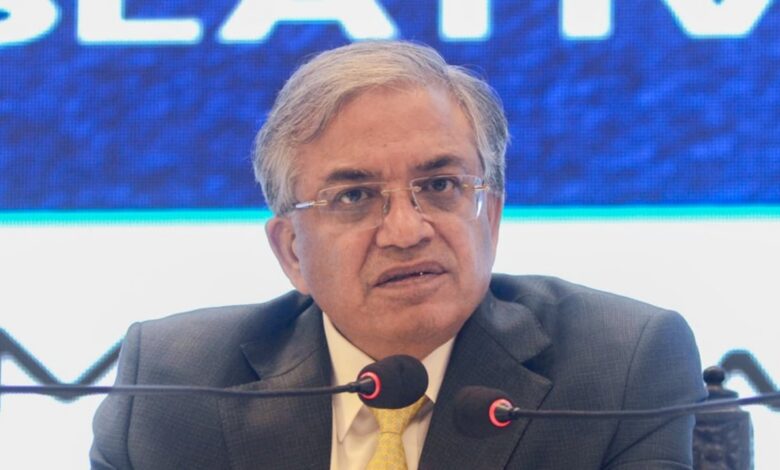
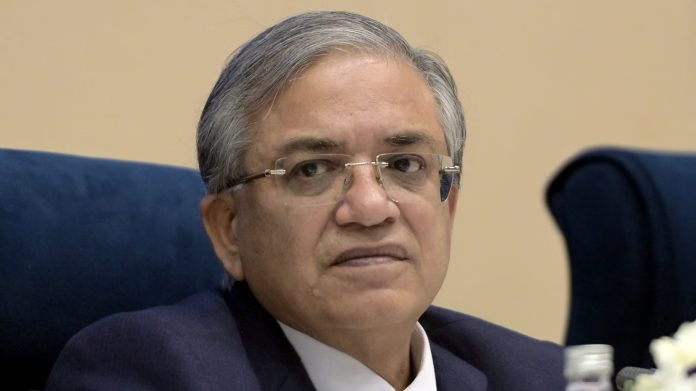
The reopening of the Kerala State Transport Project controversy in October 2026 is not merely another political skirmish. It is a stark interrogation of institutional memory, administrative accountability, and the long shadow that unresolved allegations can cast over the highest offices of the Republic. On 4 October 2026, Kerala Home Minister Ramesh Chennithala directed the Vigilance and Anti-Corruption Bureau to examine allegations surrounding Gyanesh Kumar’s tenure as Public Works Department Secretary in 2006.
The immediate trigger was a complaint filed two days earlier by Congress leader Malayinkeezhu Venugopal. That complaint sought the revival of scrutiny into Gyanesh Kumar’s conduct during the Kerala State Transport Project and the circumstances surrounding the suicide of Malaysian engineer Lee See Been, a senior official of the PATI-BEL consortium. Chennithala stated that he had examined the complaint, discussed it with Chief Minister V. D. Satheesan, and instructed Vigilance Director Manoj Abraham to investigate while the Home Department sought the older files.
This is not a new allegation born in 2026. It is the resuscitation of a controversy that first erupted nearly twenty years earlier. The distinction matters. A fresh investigation has been ordered; a finding of guilt has not. The most serious claims currently circulating, personal demands for illegal gratification, direct causation of a suicide, deliberate sabotage of the earlier inquiry, originate primarily from a political complaint and statements by political figures. They must be rigorously separated from independently documented audit findings and from what the renewed probe has yet to establish.
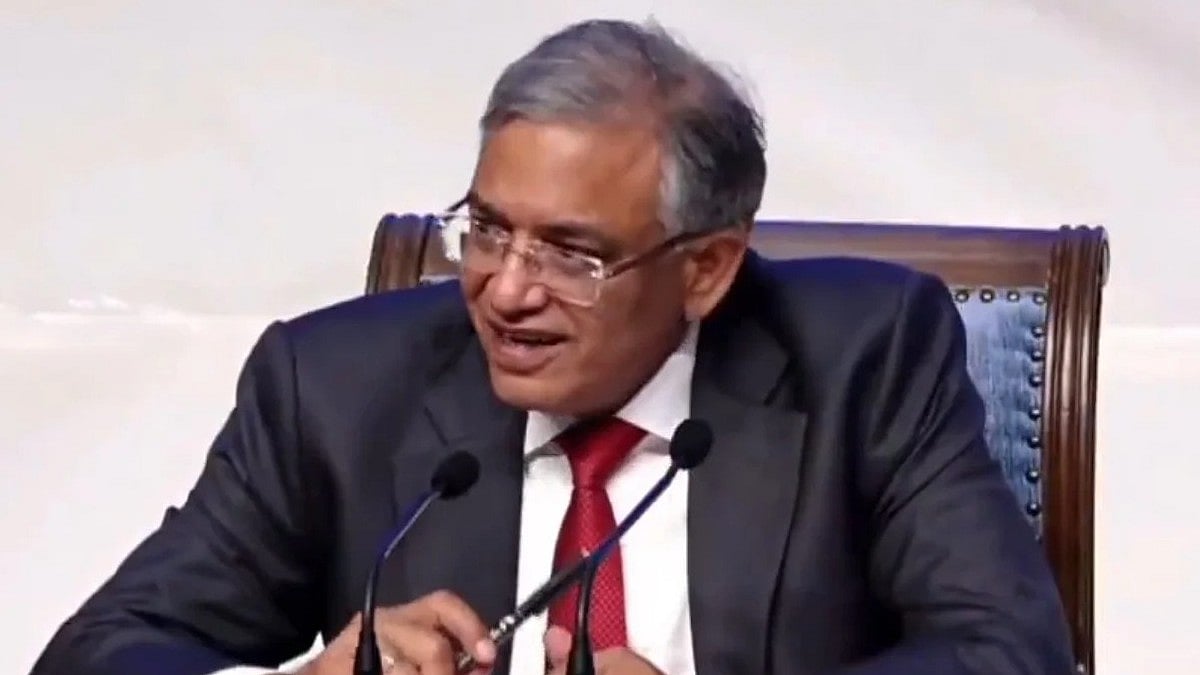
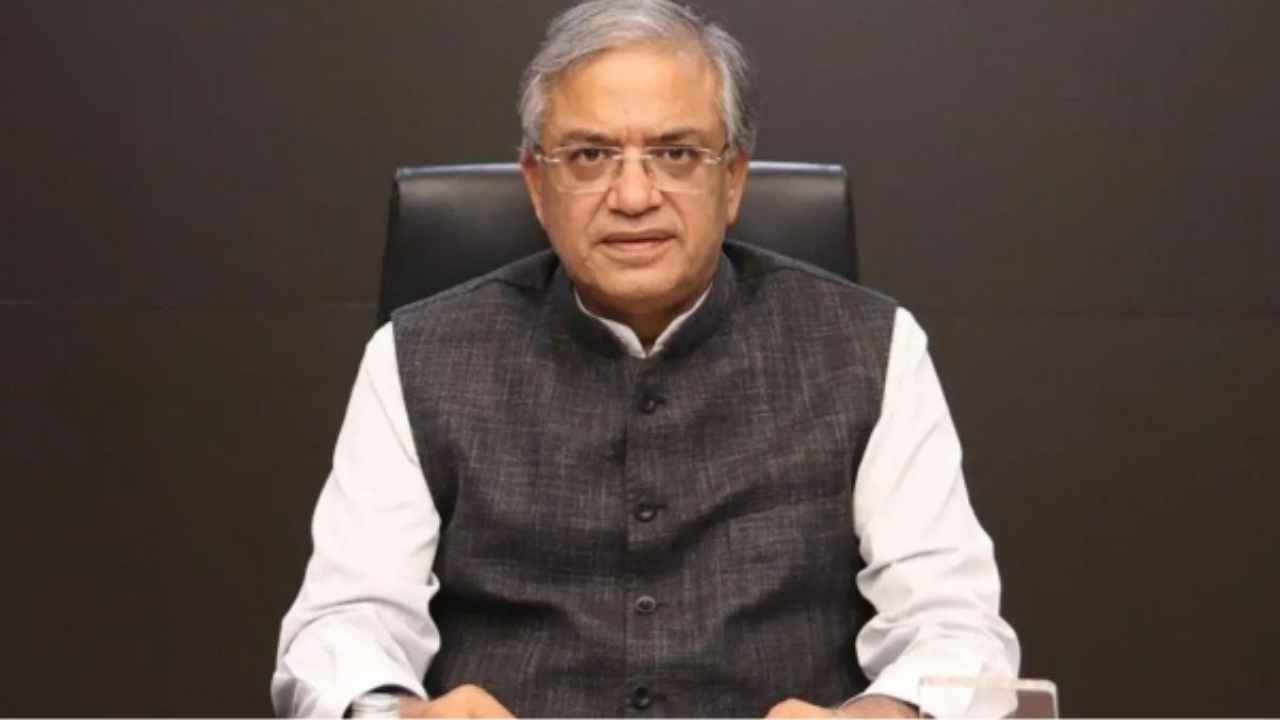
Gyanesh Kumar is a 1988-batch Kerala-cadre IAS officer who later moved to the Union government, serving as Joint Secretary in the Ministry of Defence, Joint Secretary and Additional Secretary in the Ministry of Home Affairs, and Secretary in the Ministries of Parliamentary Affairs and Cooperation. He was appointed an Election Commissioner in March 2024 and assumed charge as India’s 26th Chief Election Commissioner on 19 February 2025. The present investigation concerns alleged conduct in 2006, when he was PWD Secretary. It does not concern his actions as Chief Election Commissioner.
That temporal and functional separation is essential, yet it does not immunise the historical record from scrutiny. The 2023 Chief Election Commissioner and Other Election Commissioners Act provides protection under Section 16 for acts done in the course of official duty as CEC or Election Commissioner. Kerala’s government has taken the position that this protection does not extend to alleged conduct from 2006.
A legal opinion obtained from the Director General of Prosecution and State Public Prosecutor T. Asaf Ali reportedly supports the view that the seriousness of the alleged offences of corruption, abuse of authority, and possible abetment of suicide under Section 306 of the Indian Penal Code, can justify investigation despite the passage of two decades. A legal opinion is not a judicial determination. It merely clears the path for inquiry; it does not pronounce on guilt.
The Kerala State Transport Project itself was a major World Bank-assisted infrastructure programme launched in June 2002. According to the Comptroller and Auditor General’s performance audit, the original project contemplated the upgrading of 578.9 km of roads, 93 km of inland waterways, maintenance of 1,009 km of roads, road-safety measures, and institutional strengthening. The estimated overall cost stood at approximately ₹1,612 crore, with an IBRD share of about ₹1,224 crore and Kerala’s share initially estimated at ₹388 crore.
The project was subsequently restructured because of substantial delays and cost overruns. The original road-upgradation target was eventually reduced from 578.9 km to 254 km. This distinction is critical. Contemporary and current reporting sometimes refers to a “₹215-crore KSTP project.” The figure of roughly ₹215–216 crore relates specifically to the package associated with PATI-BEL, not the entire World Bank-supported programme.
PATI-BEL was an Indo-Malaysian joint venture involving the Malaysian firm PATI and the Indian company Bhageeratha Engineering Limited. Contemporary reporting placed the value of its particular contract at approximately ₹216 crore for roughly 128 km of road. The CAG independently recorded that KSTP-I was awarded in November 2002 for an estimated ₹215.50 crore, with an original completion date of 15 December 2005. The contractor’s work became the focal point of delay, payment, and responsibility disputes that would later intersect with a human tragedy.
One of the most consequential findings of the CAG audit concerns land acquisition. The government had decided to initiate land acquisition only after obtaining IBRD loan sanction. As a result, land required for road widening was not acquired and handed over to contractors in time. The audit explicitly concluded that this contributed to implementation delays and cost overruns. Land acquisition began only in 2002 and continued until 2008. For the project as a whole, the area of land acquired and its cost substantially exceeded original projections.
For Phases I and II together, the originally assessed requirement was approximately 114.26 hectares; 176 hectares were ultimately acquired. Total land-acquisition and rehabilitation-and-resettlement expenditure reached approximately ₹289.49 crore. The estimated number of affected families was also substantially understated: approximately 30,811 families were affected against an original estimate of 20,455. These figures are not abstract.
Each additional hectare, each additional family, represented delayed possession, prolonged uncertainty for landowners, and cascading pressure on contractors who had mobilised equipment and personnel on the assumption of timely handover. The human and contractual consequences of that planning failure remain insufficiently examined two decades later.
The dispute over PATI-BEL’s bills sits at the centre of the personal tragedy. Contemporary reporting indicates that Lee See Been repeatedly sought payment of three pending bills totalling approximately ₹13 crore for work already completed. The government cited delays in the contractor’s work as the reason for withholding payment. Lee maintained that the delay was substantially caused by the government’s failure to hand over land as promised under the contract. The Hindustan Times reported in November 2006 that Lee had blamed government officials and the PWD ministry for harassment and delays in payments.
The 2026 complaint by Venugopal similarly alleges that approximately ₹12–13 crore in bills had been withheld and that the resulting financial pressure contributed to the crisis faced by PATI-BEL. These figures appear in contemporary accounts and in the present complaint. They have not been independently adjudicated as established findings that Gyanesh Kumar personally ordered the withholding or demanded a bribe. That is precisely one of the matters the renewed investigation must establish through file notings, payment certificates, and contemporary correspondence.
Lee See Been was approximately 58 years old and served as a senior project official or chief project manager for PATI-BEL. Contemporary reports state that he returned to Malaysia in November 2006. On 11 November 2006 he was found dead in Kuala Lumpur after hanging himself at a park or near an iron bridge. His death became the catalyst for the public controversy. Two notes were allegedly left, one addressed to his wife and another to a company superior or director. The notes reportedly described his experiences dealing with government officials in Kerala.
The Hindustan Times reported that the notes described “bitter experiences” with government officials and others in Kerala, and that Gyanesh Kumar was among the officials named. In 2026, Chennithala again stated that Gyanesh Kumar’s name appeared in one of the notes, while acknowledging that he had not personally seen the note and that his information derived from material and reports before the government. The proper formulation is therefore that Gyanesh Kumar’s name was reportedly mentioned in Lee’s purported suicide notes.
The notes themselves have not been independently authenticated in the public domain, nor has any forensic examination been publicly confirmed. A suicide note naming an official does not, by itself, establish criminal liability for abetment under Section 306 of the Indian Penal Code. The statutory ingredients of abetmentlike intentional instigation, conspiracy, or intentional aiding, must be proved through admissible evidence. That burden has not yet been met.
The Kerala government ordered a Vigilance inquiry in 2006. Contemporary reporting confirms that the decision followed a Cabinet subcommittee’s examination of the project and allegations of widespread irregularities. The 2026 government now characterises the earlier investigation as having failed to reach a satisfactory conclusion. An RTI response reported by The News Minute states that the Vigilance Department closed the matter after no irregularities were noticed. Former Vigilance Director Upendra Varma has been quoted as saying he did not recall a Vigilance probe specifically centred on Gyanesh Kumar.
Former Intelligence ADGP Jacob Punnose has reportedly stated that he had not come across the alleged suicide note and that Malaysian police apparently did not contact Kerala Police as part of their investigation into Lee’s death. Malaysian police reportedly concluded that Lee died amid severe mental stress. These accounts create a factual tension that the current retrieval of old files is intended to resolve. Was the inquiry formally closed because no irregularities were found, or was it abandoned under external influence? The records themselves must answer.
Broader Vigilance controversies surrounded KSTP in 2006. Assembly-related reporting indicates that the LDF government ordered multiple inquiries: one concerning alleged irregularities in awarding consultancy contracts to foreign firms while excluding Indian and Kerala-based companies; a second in December 2006 concerning alleged lapses in construction work; a third concerning alleged irregularities in fixing the value of buildings to be demolished at Pulamon Junction in Kollam, in which prosecution sanction was reportedly given; and a fourth following a surprise inspection of maintenance work on Thamarassery Road, in which Bhageeratha Engineering was directed to repay an additional amount. The controversy was therefore never limited to a single officer or a single suicide.
The CAG’s performance audit supplies the strongest independent documentary evidence of systemic failure. The Project Management Team failed to obtain reimbursement of US$22 million, approximately ₹105.60 crore,from IBRD because of delayed execution. The audit calculated a resulting loss of ₹29.04 crore in assistance from the Government of India.
This is not a trivial accounting discrepancy. It represents public money that Kerala and the Centre expected but did not receive because of implementation delays whose origins lay in planning, land acquisition, and contractual management. The human cost of that loss is the opportunity cost: roads not built, connectivity not improved, and development delayed for communities that the project was intended to serve.
Even more significant is the finding concerning the rearrangement of the KSTP-I contract. The contractor was supposed to receive interim payments within 28 days of submission of payment certificates. KSTP followed that procedure until April 2006 and then discontinued payments without recorded reasons. The contractor terminated the contract in December 2006, leaving approximately ₹106 crore worth of work unfinished. The project was re-tendered at substantially higher rates. KSTP then entered into a supplemental agreement with the original contractor at rates 72.5 per cent higher on all items except general items.
The CAG calculated the additional expenditure at approximately ₹60.75 crore and recorded a potential arbitration liability of up to ₹35 crore. The audit concluded that delays in payments and failure to take timely decisions caused approximately one-and-a-half years of additional delay, ₹60.75 crore of extra expenditure, and a potential ₹35 crore contingent liability. For every rupee of that ₹60.75 crore, the public is entitled to ask which officials authorised the cessation of payments, which file notings recorded the reasons, and whether the decision was driven by legitimate contractual enforcement or by other considerations. The CAG does not name Gyanesh Kumar as the personal author of that loss. The renewed investigation must determine the chain of decision-making during his tenure.
Further CAG findings compound the picture of contractual laxity. In KSTP III and IV contracts, price escalation was provided for plant and machinery. The audit concluded that plant and machinery did not form part of the permanent works under the relevant contractual definition and described the provision as an undue benefit of ₹12.56 crore to contractors. Certain items that were supposed to be contractor obligations were nevertheless included in the bills of quantities, resulting in ₹9.84 crore of extra payment.
The Secretary, PWD, reportedly accepted the observation and stated that consistency would be ensured in future contracts. Safety barricading, signs, and related measures were already contractual obligations; separate BOQ items were nevertheless created and approximately ₹94.67 lakh was paid for them. These are not minor accounting notes. Each represents a transfer of public funds beyond contractual entitlement. The cumulative effect is a pattern of weak contract administration whose human impact is felt in the form of higher per-kilometre costs and reduced physical achievement.
The physical targets themselves tell a story of diminished ambition. Corridor upgrading was revised from an original 671.90 km to 331 km and achieved only 254 km. Road maintenance was revised upward to 1,200 km and achieved 1,156 km. Road-safety black spots were revised from 50 to 30; 37 were claimed, but the audit accepted only 25 distinct locations because multiple works at the same site were counted separately.
The road-upgradation target was reduced by 56.12 per cent while expenditure fell by only 40.86 per cent, producing a cost-per-kilometre increase from approximately ₹2.09 crore to ₹2.82 crore, a 35 per cent rise. These numbers are not neutral. They quantify the distance between the promise of improved connectivity and the reality of scaled-back delivery at higher unit cost. Communities that waited for upgraded roads received less infrastructure for more money. That is a form of public loss that deserves sustained scrutiny.
Gyanesh Kumar was moved out of the PWD in 2006 and subsequently went on central deputation to Delhi, serving in the Defence Ministry. Some political figures have suggested that the movement coincided with the failure of the Vigilance inquiry to progress. There is no established basis to assert that the deputation was obtained in order to escape scrutiny.
Transfer is not equivalent to dismissal for corruption. No conviction, no charge-sheet, and no judicial acquittal have been established in the public record examined. The RTI response indicates a Vigilance closure on the ground that no irregularities were noticed; the present government disputes the adequacy of that process. These are not interchangeable statuses.
The political context of the 2026 reopening is inescapable. Gyanesh Kumar, as Chief Election Commissioner, has faced intense Opposition criticism over the Special Intensive Revision of electoral rolls. The Kerala government rejects the characterisation of the KSTP investigation as political retaliation. The BJP has questioned the timing and demanded that other actors, including former PWD Minister M. K. Muneer, also be examined.
Muneer has welcomed a comprehensive investigation and stated that he was earlier cleared by the Vigilance Court for having acted according to the PWD code. Former Finance Minister T. M. Thomas Isaac has also welcomed examination of the old files while acknowledging that he did not personally read the suicide note. Political timing does not determine factual merit, but it does heighten the obligation of the investigating agency to proceed with demonstrable independence and transparency.
What, then, remains to be established? The existence and authentic content of the two purported suicide notes; the precise language used concerning Gyanesh Kumar; the chain of authority that authorised or withheld the disputed bills; the reasons recorded for the cessation of payments after April 2006; the file notings, if any, bearing Gyanesh Kumar’s signature or direction; the formal status of the 2006 Vigilance file, closure report, reasons, approving authority; whether Malaysian authorities were ever contacted by Kerala investigators; and whether any witness statements from PATI-BEL personnel or Lee’s family exist. Until those primary records are recovered and examined, the controversy remains suspended between documented project failure and unproven personal culpability.
The CAG evidence makes the renewed investigation more, not less, necessary. Even if the suicide-note allegations are ultimately not substantiated, the project itself was demonstrably troubled by land-acquisition failures, payment disputes, contract termination, higher re-contracting costs, loss of government assistance, and reduced physical targets.
The investigation need not rest exclusively on the note. It can and should rest on the documentary trail of decisions taken during the relevant period. At the same time, the CAG report must not be weaponised. It examined a project, not a criminal case against one officer. It establishes that decisions resulted in quantified extra expenditure; it does not establish that any single individual committed a cognisable offence.
The strongest factually defensible description available today is this: Gyanesh Kumar, now Chief Election Commissioner, was Kerala PWD Secretary in 2006 when a major World Bank-assisted road project encountered substantial delays, payment disputes, and allegations of corruption. A senior Malaysian engineer associated with the contractor died by suicide in Malaysia and was reported to have left notes referring to Kerala officials, including Gyanesh Kumar.
A Vigilance inquiry was initiated in 2006 but did not result in prosecution. A 2026 complaint has alleged that the earlier inquiry was improperly closed or influenced and has sought its revival. Kerala’s Home Minister has ordered a fresh Vigilance examination. That formulation captures the seriousness of the matter without converting allegation into established guilt.
The questions that remain are not rhetorical. They are institutional. Why were the original files allowed to recede into administrative obscurity for twenty years? Why do former senior officers of Vigilance and Intelligence claim little or no recollection of a case that contemporary reporting treated as significant? Why was the payment procedure that had been followed until April 2006 abruptly discontinued without recorded reasons? Why did a project designed to upgrade hundreds of kilometres of road ultimately deliver so much less at so much higher unit cost?
And why, if the 2006 inquiry truly found no irregularities, has the present government found it necessary to retrieve those same files and order a fresh examination? These are not questions that can be answered by political assertion. They can be answered only by the recovery and transparent examination of the primary record. Until that record is placed in the public domain and subjected to independent scrutiny, the shadow of 2006 will continue to lengthen over the institutional credibility of both the Kerala administration of that era and the constitutional office now occupied by one of its former secretaries.
The human dimension of this episode cannot be reduced to file notings and audit paragraphs. Lee See Been was a 58-year-old professional who left his home in Kerala, returned to Malaysia, and ended his life. Whatever the precise causal chain, the fact that a foreign engineer associated with a major public project felt driven to that extremity is itself a matter of profound institutional concern. The families of the thousands of additional project-affected persons who faced prolonged uncertainty because of delayed land acquisition also form part of the human ledger.
The road users who received fewer upgraded kilometres at higher cost form another. Accountability, if it is to mean anything, must address both the individual tragedy and the systemic failure. The renewed Vigilance examination has the opportunity—and the obligation—to do both. Whether it will succeed where the earlier process apparently did not is the question that now confronts Kerala’s investigative machinery and, by extension, the broader public that funds and depends upon the integrity of its institutions.