Why IRDAI And CBI Must Investigate Kotak For Insurance Fraud And Misselling?
Kotak Mahindra Life Insurance reported 1,730 customer complaints in FY2024-25, of which 1,115, approximately 64.5 percent, were classified under Unfair Business Practices, a category that grew faster than overall grievances and sits against a backdrop of ₹1,424.98 crore in commissions paid, historical IRDAI penalties, a documented distribution dispute involving tens of crores with Exide, and industry-wide regulator warnings that mis-selling remains a significant concern. These numbers, drawn from the company’s own Form L-41 disclosures, IRDAI annual data, court records and Ombudsman statistics, raise urgent questions about product suitability, bank-linked sales incentives, consent verification and the effectiveness of existing market-conduct oversight. An independent, data-driven examination by IRDAI is the minimum public-interest response; any evidence of forgery, unauthorised debits or systematic deception would justify escalation to criminal investigation. The human cost where households are locked into unsuitable policies, senior citizens facing liquidity crises, families confronting repudiated claims, cannot be dismissed as isolated disputes.

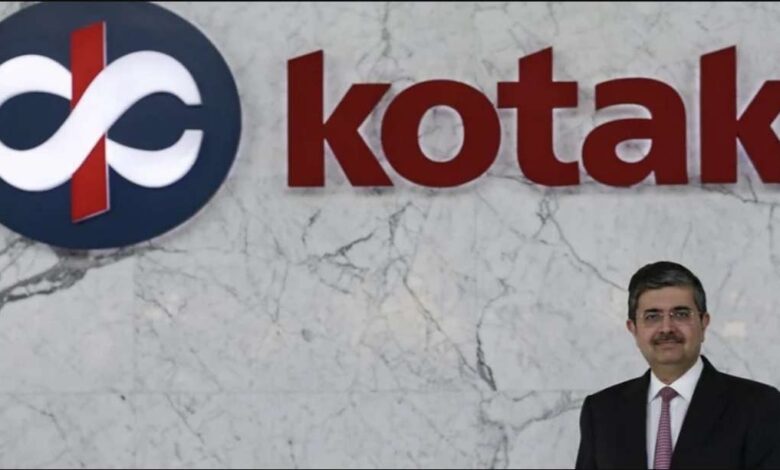
From 2008 Warnings to 2012 Penalties and a ₹45-Crore Exide Dispute: How Many Regulatory Red Flags Must Accumulate Before Kotak’s Insurance Practices Face Full Scrutiny?
The numbers themselves are not subtle. Kotak Mahindra Life Insurance Company’s own Form L-41 grievance disclosure for the year ended 31 March 2025 records 1,730 customer complaints. Of these, 1,115 fall under the category Unfair Business Practices. That single classification accounts for roughly 64.5 percent of every complaint the insurer registered in the financial year. Policy servicing generated 174 complaints, survival claims 158, death claims 96, proposal processing 73 and ULIP-related issues a mere 12.
The disproportion is stark: UFBP complaints outnumber policy-servicing grievances by a factor of approximately 6.4, survival-claim complaints by roughly 7.1, death-claim complaints by about 11.6 and proposal-processing complaints by more than 15. How does an insurer of Kotak’s scale and regulatory sophistication produce a complaint profile in which unfair business practices so thoroughly dominate? What does this concentration reveal about the processes by which policies are sold, the incentives that drive those sales, and the adequacy of the internal mechanisms purportedly designed to prevent precisely such outcomes?
These 1,115 UFBP complaints cannot be waved away as routine customer dissatisfaction. Unfair Business Practices, as defined and monitored by the Insurance Regulatory and Development Authority of India, encompass product suitability failures, misleading representations, inadequate disclosure of terms and exclusions, unauthorised premium debits, forged or tampered documentation, and the sale of insurance under the guise of fixed-deposit-like investments.
When nearly two-thirds of an insurer’s entire grievance load sits inside this category, the question is no longer whether individual customers are unhappy. The question becomes whether a systemic market-conduct problem has taken root inside the distribution machinery that links Kotak Mahindra Bank branches to Kotak Life policies. Regulators cannot treat each of these 1,115 cases as an isolated consumer dispute; they must treat the pattern as a potential indicator of deeper structural failure.
The year-on-year trajectory sharpens the concern. In FY2023-24, Kotak reported 916 UFBP complaints out of a total of 1,571. By FY2024-25 the UFBP figure had risen to 1,115 while total complaints reached 1,730. That is an increase of 199 UFBP complaints—approximately 21.7 percent—against a more modest 10.1 percent rise in overall complaints. Unfair-business-practice grievances grew more than twice as fast as the rest of the complaint book. Why?
Was the increase driven by a handful of high-volume branches, a particular product line, a specific cohort of intermediaries, or a broader shift in sales practices? Kotak’s own Policyholders’ Protection Committee is formally charged with reviewing customer complaints, analysing root causes, examining free-look cancellations and identifying market-conduct issues. What conclusions did that committee reach about the acceleration in UFBP complaints? The public record does not say. That silence itself is interrogative.
Industry context makes the Kotak figures still more troubling. IRDAI’s Annual Report 2024-25 shows that total grievances against life insurers remained almost flat: 1,20,726 in 2023-24 and 1,20,429 in 2024-25. Yet grievances classified under Unfair Business Practices rose from 23,335 to 26,667, which is an increase of 3,332 complaints, or roughly 14.3 percent. The share of UFBP complaints within the overall life-insurance grievance pool climbed from 19.33 percent to 22.14 percent.
The regulator itself described mis-selling as a “significant concern” and explicitly advised insurers to conduct root-cause analysis, assess product suitability, and implement distribution-channel-specific controls. Against this backdrop, Kotak’s own 21.7 percent jump in UFBP complaints cannot be dismissed as noise. It sits inside a national trend the regulator has already flagged. Why should Kotak be exempt from the forensic examination that the industry-wide data appear to demand?
A counter-metric exists and must be acknowledged. According to Council for Insurance Ombudsmen data for April 2024–March 2025, Kotak Life recorded only 555 complaints before the Ombudsman—the lowest absolute number among the ten largest life insurers listed in the comparison. Bharti AXA stood at 2,770, LIC at 1,951, HDFC Life at 1,320, PNB MetLife at 1,060 and so on.
On this external escalation metric, Kotak is not the industry outlier. Yet the gap between 1,115 internal UFBP complaints and 555 Ombudsman cases is itself a regulatory question. How many of those 1,115 were resolved internally to the customer’s satisfaction? How many were closed without genuine remediation? How many never reached the Ombudsman because customers lacked information, resources or persistence? Reconciliation of the two datasets is not optional; it is the minimum duty of a market-conduct investigation.
Commission economics supply another layer of urgency. Kotak Life’s FY2024-25 financial statements disclose total commission paid of ₹1,424.98 crore. First-year premium commission accounted for ₹519.82 crore, renewal premium commission ₹271.39 crore and single-premium commission ₹633.77 crore. This is not a trivial distribution cost. It is a massive incentive pool. Commission itself is lawful and necessary. But when an insurer simultaneously reports 1,115 UFBP complaints and pays nearly ₹1,425 crore in commissions, the economically rational question becomes unavoidable: do the structures that generate those commissions systematically reward volume over suitability?
Do first-year and single-premium commissions create pressure to close sales irrespective of whether the product matches the customer’s risk profile, liquidity needs or life stage? A forensic examination must map commission flows against complaint concentrations by branch, employee, intermediary and product. Without that matrix, claims of robust governance remain untested assertions.
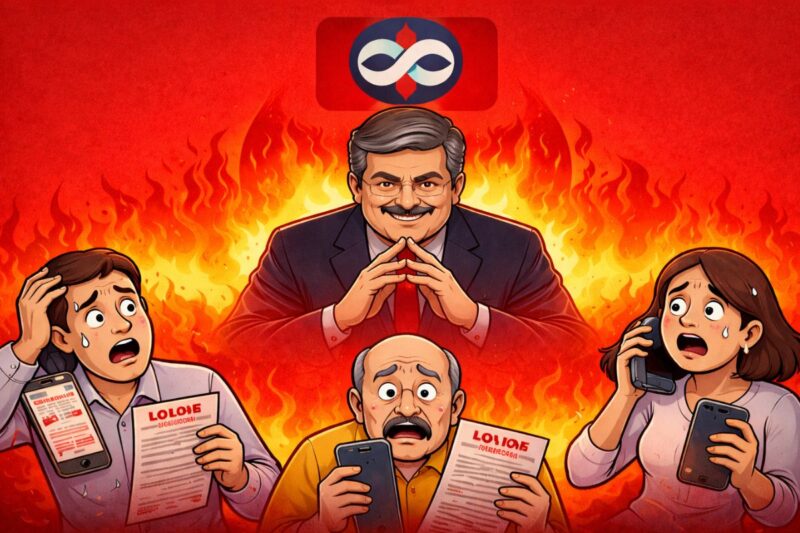
Historical distribution arrangements add weight. Before Kotak Life became a wholly owned subsidiary, the banking group maintained a corporate-agency relationship with ING/Exide Life. Arbitration and subsequent Karnataka Commercial Court proceedings produced substantial figures. The arbitrator awarded Kotak approximately ₹37.57 crore in renewal commission; with interest the award reached ₹42.83 crore, later adjusted to roughly ₹42.13 crore payable to Kotak at 12 percent interest. Exide, for its part, claimed approximately ₹45.24 crore (sometimes recorded as ₹45.50 crore) had been paid under the distribution arrangement for marketing and business-development expenses.
Court records note that IRDAI had treated at least part of these payments as commission and that Exide faced regulatory penalty in connection with excessive commission arrangements. A separate ₹1.5-crore security mechanism was retained specifically against commission clawbacks arising from cancellations from inception, free-look cancellations, and bank acts resulting in mis-sale of policies, fraud or third-party claims. These numbers do not prove present-day fraud. They do establish that the commercial relationship between the Kotak banking channel and an insurance partner explicitly contemplated financial exposure to mis-selling and fraud. That historical architecture deserves scrutiny when contemporary UFBP complaints number in the thousands.
Earlier regulatory interventions form a further pattern that cannot be ignored. On 7 September 2012, IRDAI imposed a ₹22-lakh penalty on Kotak Mahindra Old Mutual Life Insurance. The findings included repudiation of death claims on the basis of non-submission of additional requirements, issues surrounding payment of small-value death claims, remuneration of master policyholders for administrative expenses, and modification of group-plan terms without the required regulatory clearance.
An October 2008 regulatory action had already recorded a censure or warning concerning delay in processing death claims, payment of claim cheques to master policyholders, waiver of premiums and surrender charges, allowance of surrenders within three years, surrender of Married Women’s Property Act policies, and sale of non-term products in key-man insurance arrangements. Historical misconduct does not automatically prove current illegality. Yet a regulator assessing risk cannot treat repeated past interventions as irrelevant. They form part of the institutional memory that should inform the intensity of present scrutiny.
Consumer litigation supplies individual case studies that, while not conclusive of systemic fraud, illustrate the human stakes. One complaint before the Delhi State Consumer Commission involved multiple policies allegedly sold between 2017 and 2019 to a 74-year-old terminally ill or bedridden man. The complainant alleged absence of appropriate medical examination, KYC irregularities, promises of one-time premium payment, assurances that policies could be liquidated at market value, signature discrepancies, and aggregate premiums of approximately ₹19 lakh.
The later appeal was dismissed on limitation grounds; no substantive finding of fraud was recorded. Another Punjab consumer appeal involved allegations that policies carrying annual premiums of roughly ₹6.56 lakh had been represented as equivalent to fixed-deposit investments; the court ultimately found the documentary record insufficient to establish such representation and dismissed the appeal. A Delhi housing-loan-linked policy with premium of ₹87,094 and sum assured of ₹19.80 lakh produced a repudiation based on alleged pre-existing conditions; the District Commission ordered payment of approximately ₹19.06 lakh plus interest and compensation, a decision upheld by the State Commission in December 2024.
In August 2026 the National Consumer Disputes Redressal Commission accepted Kotak’s position in a separate claim dispute after examining medical records. These outcomes demonstrate that allegations must be tested against evidence. They also demonstrate that the policy lifecycle—from sale through underwriting, premium collection, claims and repudiation—requires examination as a continuous process rather than isolated events.
Bank-linked distribution creates structural tension. A customer approaches a bank primarily for a loan, a fixed deposit, a savings account or a credit facility. The same relationship manager may offer insurance. RBI guidelines prohibit forcing customers to purchase a particular insurer’s product or linking insurance to another banking facility, and require transparency and grievance mechanisms.
The Banking Ombudsman framework explicitly recognises complaints involving improper or unsuitable sale of third-party financial products. Kotak Bank’s own grievance framework maintains separate categories for “LI-Mis-Selling” and “GI-Mis-Selling,” each with a 12-working-day turnaround. The existence of dedicated complaint codes acknowledges that insurance mis-selling is a recognised operational risk. How many such complaints has the bank recorded over the past five to ten years? That figure should be disclosed and cross-referenced with Kotak Life’s UFBP data.
Suitability, not merely formal consent, is the central regulatory question. Mis-selling need not involve a forged signature. It can arise from inadequate disclosure of exclusions, unsuitable product recommendations, misleading return projections, failure to explain surrender consequences, improper linking with loans or deposits, or unauthorised premium debits. IRDAI’s own consumer materials list precisely these practices under unfair business practices.
An investigation must therefore sample proposal forms, recorded calls, OTP trails, benefit illustrations, medical examinations and customer acknowledgements, with particular attention to customers above 60 or 70, low-income households, high premium-to-income ratios, multiple policies purchased in short succession, and policies sold immediately after loans or fixed deposits.
Persistency ratios supply an independent check on sales quality. Kotak Life’s FY2024-25 figures show 13th-month persistency at 86.3 percent, 25th-month at 76.8 percent, 37th-month at 68.9 percent, 49th-month at 63.5 percent and 61st-month at 60.4 percent. These numbers are not inherently damning; customers surrender policies for legitimate reasons. Yet early attrition, when mapped against commission, product, branch and complaint data, can reveal whether particular channels generate policies that customers later abandon. Free-look cancellations and early surrenders should be examined with the same granularity as UFBP complaints.
The scale of the business magnifies the stakes. In FY2024-25 Kotak Life reported new business premium of ₹8,214 crore, renewal premium of ₹10,161 crore and total premium of ₹18,376 crore. Profit before tax stood at ₹1,218 crore and profit after tax at ₹813 crore. Assets under management reached ₹91,807 crore, embedded value ₹17,612 crore and value of new business ₹959 crore with a VNB margin of 25.0 percent. A systemic mis-selling problem inside an enterprise of this magnitude affects a substantial pool of household savings. The public-interest case for investigation is therefore not limited to individual complainants; it extends to the integrity of a significant segment of the life-insurance market.
A separate banking controversy involving Kotak Mahindra Bank and fixed deposits of the Panchkula Municipal Corporation, with reported discrepancies in the range of ₹150–160 crore and subsequent investigative and de-empanelment developments, is a banking-governance matter rather than direct evidence of insurance fraud. It should not be conflated with the life-insurance complaint data. Yet from a group-level control perspective it strengthens the case for examining whether internal oversight mechanisms across the wider Kotak ecosystem are sufficiently robust.
IRDAI possesses clear statutory power. Section 33 of the Insurance Act empowers the Authority to appoint an Investigating Officer to examine the affairs of an insurer or intermediary. The regulator’s own descriptions of its inspection framework include the ability to call for information, conduct targeted inspections, and investigate connected organisations.
A meaningful probe would demand granular data: complaint-level identifiers linked to branch, employee, intermediary, product, premium, customer age and resolution outcome; sales data by branch including cancellation, free-look and early-surrender rates; suitability metrics for vulnerable cohorts; and forensic sampling of consent documentation. Only after such an examination can any determination be made about whether patterns of concentration exist and whether those patterns cross the threshold from regulatory misconduct into cognisable criminal offences such as forgery, cheating or criminal conspiracy.
CBI involvement is a separate and higher threshold. Large complaint volumes alone do not justify criminal investigation. Evidence of forged proposal forms, fabricated medical records, systematic unauthorised withdrawals, deliberate falsification of internal records or coordinated deception across branches would. The correct sequence is therefore clear: IRDAI must first conduct a data-led market-conduct investigation; criminal agencies become relevant only if that investigation uncovers evidence meeting the criminal standard.
What the public record establishes is limited but consequential. Kotak Life recorded 1,730 complaints in FY2024-25, of which 1,115 were UFBP. UFBP complaints rose 21.7 percent year-on-year while total complaints rose 10.1 percent. Industry-wide UFBP grievances rose 14.3 percent against flat overall volumes. Commissions totalled ₹1,424.98 crore.
Historical arbitration produced a ₹37.57-crore renewal-commission award and a ₹45.24-crore disputed marketing expenditure figure, together with a ₹1.5-crore clawback security expressly linked to mis-sale and fraud exposure. IRDAI imposed a ₹22-lakh penalty in 2012 and recorded a earlier warning in 2008. Kotak’s governance framework formally requires monitoring of mis-selling. These facts are drawn from the company’s own disclosures, IRDAI reports, court judgments and Ombudsman statistics.
What the public record does not establish is equally important. It does not prove that every one of the 1,115 UFBP complaints was genuine, that Kotak systematically forged documents, that the commission expense was improper, or that criminal offences have been committed.
The stronger, evidence-based argument is simply this: the concentration of unfair-business-practice complaints, the scale of the commission-driven distribution system, the historical regulatory interventions, and the industry-wide warnings about mis-selling together justify an independent, granular investigation by IRDAI. Anything less treats a potentially systemic pattern as a series of isolated customer disputes—an approach that serves neither policyholders nor the long-term credibility of the insurance market.
The human consequences of unresolved suitability failures are concrete. An elderly policyholder who has committed a large share of limited savings to an unsuitable product faces liquidity crises when health or family needs arise. A family that believed it had purchased protection discovers, at the moment of claim, that exclusions or non-disclosure arguments leave them without the expected support. A middle-income household that accepted an insurance sale linked to a loan finds itself servicing premiums that strain monthly budgets for years.
Each of the 1,115 UFBP complaints represents at least one such potential story. Multiplying that number across years and across an industry in which UFBP grievances are rising produces a cumulative social cost that regulators cannot responsibly ignore. The question is no longer whether complaints exist. The question is whether the institutions charged with protecting policyholders will examine the pattern with the seriousness the numbers demand.