
In a classic display of governmental finger-pointing, Union Minister Piyush Goyal recently took center stage at the Startup Mahakumbh to deliver what can only be described as a verbal lashing to India’s startup community. Their crime? Not being “innovative enough.” The irony of a representative of the very system that systematically strangles innovation accusing entrepreneurs of lacking creativity would be laughable if it weren’t so tragically misguided.
But let’s take a moment to consider whether Indian founders truly lack innovative spirit, or if perhaps they’re simply drowning in the quagmire of what the government proudly markets as “ease of doing business”—a phrase that in practice has become one of India’s most elaborate practical jokes.
Let’s Start With The Great Indian Bureaucratic Circus
Recently, a semiconductor startup founder responded publicly to Minister Goyal’s lecture, explaining something painfully obvious to anyone who has attempted to navigate Indian bureaucracy: founders in India absolutely possess the capability to innovate, but the labyrinthine bureaucratic hurdles are so formidable that innovation dies a slow, paperwork-laden death.
He recounted his personal nightmare—his startup qualified for certain tax breaks, but after filing the application, his documents were left gathering dust in some government office for an astonishing two years. Then one fine day, as though awaking from hibernation, the department informed him that “additional documents” were needed to process the application. Two years later. Two. Full. Years.
You don’t need to be a startup founder to understand this frustration. Simply recall your last visit to any public sector bank. Despite living in an era where our Aadhaar cards, PAN cards, ration cards, and seemingly every other document are digitally linked, we’re still required to collect physical copies, get them self-attested (whatever magical power that bestows), and then watch as bankers manually cross-check information that already exists in multiple government databases. At the end of this ritual, you’re handed a slip with the vague promise that your application “will be processed”—the bureaucratic equivalent of “we’ll call you.”
This obsession with maintaining chains of command has created a paradoxical culture. On one hand, the system insists that breaking any procedural link will lead to catastrophe. On the other hand, we Indians are notorious rule-breakers in everyday life—from breaking queues at ATMs to breaking traffic lanes and contributing to the world-famous symphony of car horns that defines our roads. It’s as though we save all our rule-following energy exclusively for government paperwork.
The hollow charade of Indian bureaucracy pretending to follow every protocol has created a myriad of damages beyond mere inconvenience. Remember the Netflix series ‘IC 814: The Kandahar Hijack’? There’s a telling scene where someone notices suspicious activity on the flight and attempts to alert officials, only to be repeatedly rebuffed because he couldn’t reach the “concerned authority.” While the series takes dramatic liberties, this portrayal highlights a profound systemic issue—rigid adherence to protocol often trumps common sense and urgency.
Years have passed since incidents like these, we’ve supposedly adopted modern forms of communication, yet the bureaucratic stranglehold persists. Think back to the satirical comedy series ‘Office-Office,’ where actor Pankaj Kapur’s character suffers at every turn in government offices. Each desk becomes an insurmountable barrier until the magical lubricant of a bribe is applied. What made the show so enduringly popular was not its exaggeration but its painful accuracy in depicting the rusted “steel frame” of Indian bureaucracy.
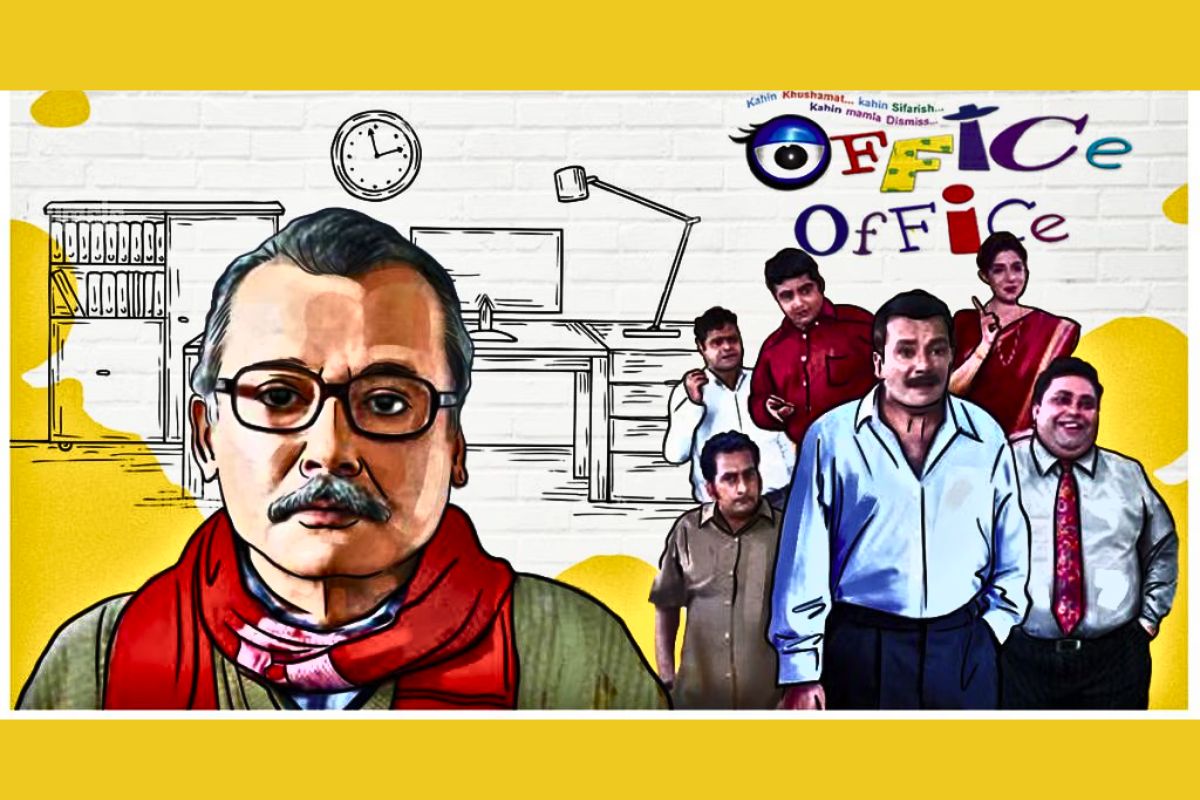
And when the rare individual does take responsibility and act heroically, as portrayed in the Netflix series ‘The Railway Men’ about the Bhopal gas tragedy, they’re often scapegoated rather than celebrated, as seen in the series. So perhaps Minister Goyal should consider that startup founders indeed want to innovate—they’re simply being crushed by the very system he represents.
Then Let’s move To Public Sector Jealousy: The Innovation Killers
Back in 2020, a bright IIT graduate had an idea. No, it wasn’t another biryani delivery app or an “Uber but for cows” pitch. He simply developed an app that could auto-fill your ticket details faster than the IRCTC app could load its homepage. Anyone who has experienced the Darwinian struggle of booking a tatkal ticket during peak season understands what a genuine public service this was.
Instead of recognizing this as an innovation that improved citizen experience, the Indian Railways arrested him. Yes, you read that correctly—they had him arrested. And who happened to be the Railway Minister at that time? None other than our innovation orator, Mr Piyush Goyal himself. He could have launched his startup mission right then and there by embracing this improvement to a notoriously frustrating system. Instead, he oversaw the punishment of ingenuity.
IRCTC later justified this on Twitter, claiming the software was “illegal” because it denied “genuine users” the chance to book tickets. They insisted there was “no innovation” since autofill features were already available but had been deliberately disabled to ensure a “level playing field.” Translation: we intentionally made our system inefficient, and how dare you try to improve it!
The absurdity of the situation wasn’t lost on many, including Shashi Tharoor who called it a “national embarrassment.” He couldn’t imagine Goyal authorizing such a prosecution, suggesting that the minister should “encourage the guy, not punish him!” Yet this is precisely the problem—the government talks of innovation while simultaneously criminalizing it when it challenges the status quo of government services.
This pattern of punishing progress isn’t unique to Indian Railways. It’s endemic across our public sector. The message seems clear: innovate, but only within boundaries that don’t threaten established power structures or embarrass government services by showing how they could work better.
Have you ever tried starting a business in India? It’s like attempting to run an obstacle course designed by a sadistic bureaucrat with too much free time. While we celebrate our unicorns and success stories like Zerodha, the brutal truth remains: for every success, thousands of potentially brilliant startups suffocate in bureaucratic quicksand.
The government proudly announces that India has climbed from 142nd to 63rd in global ease of business rankings, but the ground reality remains painful:
- 7-10 different registrations needed to start a legal business
- 12+ compliances monthly even for tiny startups
- A mind-boggling 58,000+ compliances across the Indian business ecosystem
- Average startups burning ₹12-15 lakh yearly just to remain compliant with regulations
The real-world struggle for Indian entrepreneurs includes GST filings so complex they require chartered accountants, labor laws drafted in the 1940s still being enforced in the age of remote work, 3-4 months minimum to secure necessary licenses, multiple state and central inspections, and separate registrations for every state you operate in. It’s as though the system was designed specifically to extinguish entrepreneurial spirit.
Consider Bira91’s cautionary tale. Once India’s beloved craft beer startup, it’s now struggling with mounting losses—₹316 crore in FY23 alone. Despite Ashneer Grover’s major investment and viral popularity, they’re fighting a multi-headed hydra of excise regulations, state-by-state license battles, and distribution challenges unique to India’s fragmented alcohol market.
When founders should be focusing on product innovation, they’re instead filing 20+ returns annually, managing overlapping and often contradictory regulatory requirements, navigating wildly different state policies, dealing with unpredictable tax interpretations, and securing signatures from officials who barely understand what startups do. The hard truth?
India produces brilliant entrepreneurs who spend 60% of their energy fighting the system instead of building revolutionary products.
While the government proudly proclaims “minimum government, maximum governance,” most founders joke darkly that their second full-time job is compliance management. The British left in 1947, but they bequeathed us a bureaucracy that continues to colonize our entrepreneurial dreams.
Now Comes The Biggrest Joke: Indian Education System: History Over Science, Rote Learning Over Innovation
Another piercing criticism against Mr Goyal’s remark came from Shark Tank’s Ashneer Grover, who pointedly suggested that the government needs to shift “public discourse from history to science.” His observation cuts to the heart of a fundamental problem in Indian education and public policy.
The Indian education system remains firmly anchored to methods that prioritize memorization over creativity. While countries racing ahead in innovation focus on problem-solving and critical thinking, we continue to perfect the art of regurgitating information. In the last decade, we’ve seen multiple revisions to history textbooks—typically reflecting whatever political ideology holds power—while science curricula languish with outdated information and methodologies.

We remain trapped in historical and religious debates, arguing about whether Aurangzeb’s tomb should exist while Chinese children learn quantum computing. Our youth are being directed into what we can aptly call a “religious chakravyuh”—a maze of divisive historical and religious controversies—rather than being equipped with the scientific and technical skills needed for true innovation.
In such an environment, is it any wonder that Minister Goyal sees a nation producing “delivery boys and girls only”? The bitter irony is that this outcome is by design, not by accident. Our education system is calibrated to produce obedient workers, not revolutionary thinkers.
What makes this particularly galling is that when we do tout our advantages to global investors, it’s often our “cheap labor” rather than our innovative capacity. “Come to India, not because we have skilled innovators and an excellent business environment, but because our workers are inexpensive and our regulations are lax when it suits powerful interests!”
This exploitative mindset has deep historical roots. Recall the catastrophic Union Carbide disaster in Bhopal, where safety standards were criminally below those required in the company’s Western operations. Even today, multinational corporations outsource operations to India primarily because of our “demographic dividend”—corporate-speak for “lots of young people willing to work for less.”
If the government is serious about fostering innovation, it must first transform how it values human capital. This means not just churning out degrees but cultivating minds capable of creative problem-solving. As Grover suggests, our founders are entirely capable of innovating; it’s the governmental attitude that needs revolutionary change.
What Our Budget Priorities Tell: Dancing Apps Over Deep Tech
Mr. Goyal urged Indian startup founders to become as innovative as their Chinese counterparts. Let’s examine this comparison through the lens of historical investment priorities.
In 1980, India’s per capita income was $266 while China’s was just $194—we had the advantage. Fast forward to 2000, and China had pulled ahead: India at $1357, China at $4450. By 2022, the gap had become a chasm: India at $2388, China racing ahead at $12,720. This dramatic reversal didn’t happen by accident; it reflects fundamentally different national priorities and investment strategies.
Consider the automotive industry. Car prices in India have steadily increased, yet genuine innovation remains stagnant. Did you know that 60% of cars in India run on just 10 generic engines? The manufacturers and models may change, but the fundamental technology remains largely the same. Where did our innovation go? These aren’t cash-strapped startups but established corporations with substantial resources. If they aren’t innovating, it’s because the system doesn’t demand or reward it.
Even today, the affordable car segment remains dominated by the same models as a decade ago—Maruti Alto, Swift, and basic Tata models. No new player has successfully disrupted this market with genuine innovation. Why? Because our policies protect established players rather than fostering competition and creativity.
Meanwhile, China boasts over 200 car manufacturers producing an astonishing variety of vehicles, from electric cars costing as little as $600 to luxury vehicles that make Tesla owners envious. The cheapest electric vehicle in India today is MG’s Comet, starting at a prohibitive Rs 7 lakh. Are established manufacturers simply protecting their profit margins rather than driving innovation? If Chinese electric vehicles were allowed to freely enter our market, would Indian consumers still choose our comparatively primitive and overpriced options?
The innovation gap extends far beyond automobiles. China has methodically built a vast talent pipeline for deep-tech industries, while India continues to grapple with a critical shortage of skilled researchers. In 2024, China’s total R&D spending reached an astronomical $496 billion, while India allocated a comparatively modest ₹20,000 crore ($23.45 billion) to the Department of Science and Technology to initiate a private-sector-driven R&D fund in the FY25 Budget.
The human capital difference is equally stark: China boasted 2.2 million R&D workers in 2022—2.5 times more than India’s 900,000 professionals working across over 1,140 R&D centers. Therefore, when union ministers chastise Indian startup founders for lack of innovation, they conveniently ignore that skilling the population is primarily a governmental responsibility—one at which successive administrations have failed spectacularly.
While China dominates hardware manufacturing, India has made some inroads in software and enterprise technology. With 65 percent of its population under 35, India has a tremendous demographic advantage—but this potential can only be leveraged if we build a skilled workforce. And who bears primary responsibility for building this skilled workforce? Government institutions with their skill-based curricula. Yet instead of focusing on this critical mission, we spend our energy endlessly revising history textbooks to align with political narratives.
To build a truly innovative economy requires comprehensive development—quality education, robust healthcare, reliable infrastructure, and strategic investments in critical sectors. This is where our public sector companies should play a pivotal role. Once upon a time, our Navratna companies produced everything from steel to medicines while simultaneously operating schools, hospitals, parks, and townships—often at subsidized rates for employees.
While these public enterprises are routinely derided as “inefficient” and targeted for privatization (frequently to politically connected business interests), they continue to contribute substantially to the national economy. In 2024-25 alone, PSUs contributed Rs 74,000 crore in dividends, with Coal India alone providing over Rs 10,000 crore. Every public sector company must contribute 30% of its profits after tax to the government, or 4% of its total net worth annually—a significant revenue stream.
Yet in recent years, instead of strengthening these national assets, the government has seemingly prioritized the growth of favored private conglomerates. Remember how BSNL was systematically weakened to make Jio flourish? This isn’t to argue against private enterprise, but rather to question whether our policies truly foster broad-based innovation or simply create protected spaces for specific corporate interests.
Where We Are Really Growing: Paper Leaks and Dancing Videos
Before you conclude we’re lagging everywhere, rest assured—India leads the world in some distinct categories: paper leaks, the influencer economy, and content creation. Where to begin with paper leaks? Governments across the political spectrum seem universally adept at mismanaging examination security, from state-level teaching recruitment scams in West Bengal to nationwide fiascos like the NTA examination fraud. The past decade has witnessed an unprecedented epidemic of compromised tests, undermining the very education system that should be our foundation for innovation.
Then there’s the booming “content economy”—the revolutionary idea that dancing in front of a smartphone camera deserves financial reward. Even the Prime Minister himself has legitimized this industry by personally presenting “Best Influencer Awards.”
Most tellingly, the government has allocated an enormous ₹1 billion fund for the “creator economy.” As Union Information and Broadcasting Minister Ashwini Vaishnaw explained, this money will help creators “hone their skills, upgrade their production levels and reach out to the global market.” Translation: we’d rather fund dance videos than semiconductor research, because deep technological innovation is apparently “beyond our league.”
In the Union Budget 2025, spending on education increased to Rs 1.28 trillion—a figure that sounds impressive until you examine the details. While funding increases on paper, we continue to witness school closures, the politically motivated removal of eggs from mid-day meals (depriving children of affordable protein), and persistent caste discrimination against Dalit students.
We’re well into the third decade of the 21st century, and nutrition science has conclusively established the importance of protein for cognitive development. Eggs represent one of the most cost-effective protein sources available, yet their removal from mid-day meal programs reveals how political considerations routinely trump children’s developmental needs.
Moreover, caste discrimination remains entrenched despite constitutional prohibitions. Even after a decade of officially banning manual scavenging, citizens still die cleaning manholes and sewage systems—a form of labor almost exclusively forced upon Dalits. Is this the modern, innovative India we claim to be building?
Our education system continues to prioritize rote learning and examination performance over creative problem-solving. Even if artificial intelligence is introduced as a subject, students will likely be required to memorize the components of neural networks rather than building them. We produce certificates, not capabilities.
There’s a saying that in India, you could throw a stone blindfolded and it will go and hit an engineer—that’s how many engineering degrees we produce annually. Engineering colleges churn out approximately 15 lakh graduates each year, yet only about 10% secure relevant employment. What about the rest? According to Finance Minister Nirmala Sitharaman’s own admission, roughly half are essentially unemployable. The remainder become content creators, coaching center instructors, or election volunteers.
This is our vaunted “demographic dividend”—young people with certificates but without marketable skills, reduced to dancing outside religious places, participating in linguistic chauvinism, or basking in the fantasy that India has become the “vishwaguru” when we can barely teach our own youth effectively. Whose responsibility is it to direct these young minds toward deep technological innovation? Unquestionably the government’s. If the government has failed in this fundamental duty, it cannot reasonably expect startup founders to perform economic miracles.
If we’re genuinely serious about fostering an innovative startup ecosystem, we must first invest in our people—improve their education, health, and provide equal opportunity. Currently, public discourse isn’t focused on pressing economic challenges like rising fuel prices or declining purchasing power, but instead on manufactured controversies: vegetarian versus non-vegetarian food, whether Aurangzeb’s tomb should be preserved, whether non-vegetarian shops should close during Navratri, or if cow urine possesses magical purifying properties.

We have become too distracted to innovate, and perhaps more disturbingly, too invested in maintaining these distractions. After all, who needs technological innovation when manufacturing public outrage serves as such an effective tool for diverting attention from economic mismanagement?
In this environment, Minister Goyal’s criticism of startup founders for insufficient innovation isn’t merely unfair—it’s a masterclass in deflection. The truth is that Indian innovators don’t need lectures; they need a government that creates genuine ease of doing business rather than ease of photo opportunities. They need bureaucrats who facilitate rather than obstruct, policies that reward creativity rather than compliance, and an education system that cultivates critical thinking rather than memorization.
Until then, we’ll continue producing what the system is designed to create: not innovators, but survivors skilled at navigating arbitrary bureaucratic mazes while the real innovation happens elsewhere.
The tragedy isn’t that Indians can’t innovate—it’s that they must do so despite their government, not because of it.