From Burn To Earn: How Companies Turn Profitable Just Before The IPOs?
For startups themselves, there's a question of sustainability. Financial engineering might help get an IPO out the door, but the public market is ultimately a long-term relationship. Companies that go public on the back of unsustainable financial improvements often face a harsh reality check.

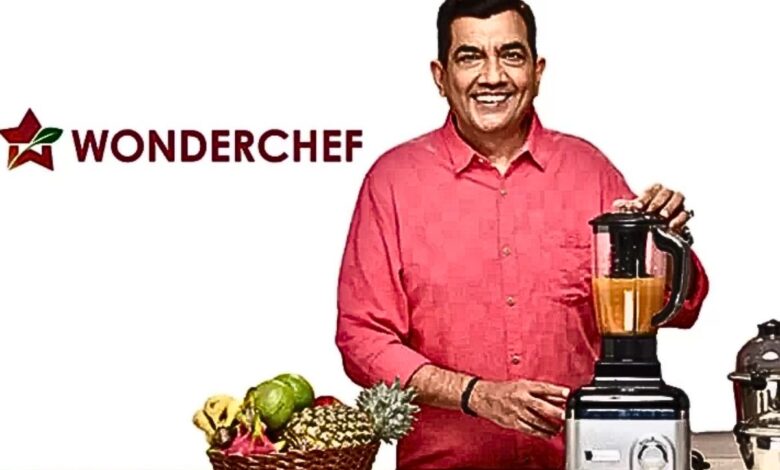
Have you ever noticed how some chronically loss-making startups mysteriously discover profits before approaching the public markets? It’s like watching teenagers frantically clean their room right before their parents return from a trip: sudden, suspicious, and often superficial. The case of Wonderchef, helmed by the beloved Khana Khazana star Sanjeev Kapoor, is just the latest example of this curious phenomenon that has become a tradition in India’s startup ecosystem.
After trudging through years of losses, Wonderchef has somehow turned the corner to post a modest profit of ₹1.5 crore in FY24, just as it readies itself for an IPO. Usually, one would welcome this excellent recovery from a loss of INR 51.83 crore in the last fiscal year as a breakthrough event. But the timing makes one wonder, “Is this just another case of putting on makeup before the big date with public investors?”
Whether these pre-IPO profits are sustainable business improvements or carefully planned financial schemes designed to make the company look more attractive to potential investors, and more importantly, are IPOs becoming a convenient way for early investors to pass the baton along with accumulated losses and uncertain future prospects to the unsuspecting public?

What Is The Art of Pre-IPO Cosmetic Accounting?
Similar to the grand tradition of Indian weddings, where everything is meticulously planned to create the perfect impression, pre-IPO companies often engage in what could be called “balance sheet shringar.” This isn’t new; the companies worldwide have been known to spruce up their financials before going public. However, in the Indian context, this practice has taken on a peculiar character, especially in the startup ecosystem.
Remember when Zomato, our food delivery giant, reported its first-ever profitable quarter just months before its IPO in 2021? After years of burning cash faster than a pressure cooker without a whistle, the company suddenly found its way to a modest profit. Similarly, Paytm (now struggling post-IPO), Nykaa, and PolicyBazaar showed improved financial metrics in the quarters leading up to their public offerings. It’s as if there’s an unwritten rule: thou shalt not approach the public market without at least one profitable quarter on your resume.
The methods employed are numerous and creative. Some companies suddenly discover operational efficiencies that had somehow eluded them for years. Others might renegotiate terms with suppliers or defer certain expenses. Accounting choices regarding revenue recognition can be tweaked, marketing budgets might be temporarily slashed, or non-essential hiring might be frozen. In more extreme cases, companies might sell assets, reclassify expenditures, or engage in one-time transactions that boost the bottom line. In this case, when both the company and its early investors are keen to present an attractive picture, who’s to question the methods employed?
Historical Perspective: This Isn’t Just a Startup Thing
This phenomenon isn’t unique to modern startups. It has historical precedents in Indian business. Back in the 1990s, during India’s first wave of liberalization, many traditional businesses employed similar tactics before entering the public markets. The difference was in scale and sophistication.
Take the case of many textile companies that went public in the mid-1990s. Several of them showed sudden improvements in profit margins in the year preceding their IPOs, only to return to mediocre performance afterwards. The infamous plantation companies scandal of the same era saw numerous firms showing incredible paper profits before raising money from the public, only to disappear with the funds later.
Even established players weren’t immune to the temptation. When Reliance Power launched its IPO in 2008, at that time, India’s most extensive public offering, it rode on projections and promises rather than actual performance. The aftermath wasn’t pretty for retail investors who bought into the hype, as the stock plummeted shortly after listing and has never recovered to its issue price.
The Main Purpose Suppose To Be “The Venture Capital (VC) Exit Strategy”
To understand this phenomenon fully, we need to examine the role of VC in the Indian startup ecosystem. For most VC-funded startups, the IPO isn’t just a means of raising capital; it’s primarily an exit mechanism for early investors.
Most Indian startups that approach IPO have gone through multiple funding rounds, with each round valuing the company higher than the last, often without corresponding fundamental improvements. This creates a situation where early investors sit on paper profits but need a public market to realize these gains.
Consider Paytm’s case. By the time it went public, it had raised over $2.5 billion in private funding across multiple rounds. Its IPO was predominantly an offer for sale (OFS), allowing existing investors to cash out. Similarly, Wonderchef’s upcoming IPO is described as “mainly an offer for sale to provide an exit opportunity to its investors.” This language suggests that the primary purpose isn’t to raise growth capital but to allow early investors to exit.
The venture capital model operates on the principle of “spray and pray”, i.e. invest in many startups, knowing that most will fail, but a few massive successes will more than compensate for the losses. But what happens when those supposed “successes” aren’t profitable? The public market becomes the answer; a way to cash out before the music stops. Many of these startups exist in a similar limbo, having outgrown the private funding market but not yet achieving the sustainable profitability that public markets traditionally demanded.
Who Bears The Real Cost- The Retail Investors!
The real victims in this elaborate dance are often the retail investors who buy into these companies post-IPO. Consider the performance of many high-profile startup IPOs in India over the past few years:
This isn’t just about short-term stock performance; it reflects a fundamental disconnect between the valuations at which these companies go public and their actual business fundamentals. When a company suddenly shows profits after years of losses right before an IPO, it’s worth asking whether those profits are sustainable or merely a mirage.
The story of Cafe Coffee Day, also known as CCD, is a sobering reminder of what can occur when businesses go public lacking strong fundamentals. Its founder, V.G. Siddhartha, tragically took his own life in 2019, leaving behind a note that mentioned pressure from investors and lenders. Subsequent investigations revealed significant hidden debt and financial irregularities that weren’t apparent at its IPO. In a country where retail investment in equities is still developing, such experiences can erode trust in the entire market.
Is SEBI Doing Enough?
SEBI has been working to resolve some of these issues. It has recently strengthened disclosure standards for firms planning an IPO and established systems to track how firms use the money they receive.
However, recognizing and avoiding financial window dressing involves more than simply disclosure requirements. The core difficulty is knowledge asymmetry between company insiders and public investors. When a startup that has been losing money for years suddenly turns a profit, how can regulators and investors tell if this is due to actual business progress or clever accounting?
SEBI’s requirement that companies disclose their metrics for the past three years helps somewhat, but it doesn’t prevent temporary improvements explicitly designed to coincide with the IPO timeline. Moreover, many of these startups operate in new-age sectors where traditional valuation metrics don’t apply straightforwardly, making it harder to spot inflated valuations.
Remember how UTI’s US-64 scheme collapsed in the early 2000s, eroding public trust in mutual funds for nearly a decade? A similar crisis of confidence could affect startup IPOs if enough retail investors get burned by companies that return to loss-making ways soon after going public.
A Global Phenomenon with Indian Characteristics
While this phenomenon isn’t unique to India, it has distinctly Indian characteristics. In Silicon Valley, companies like Amazon went public while still deeply unprofitable, but they were transparent about their losses and their path to profitability. Many Indian startups, in contrast, seem to feel the need to show at least some profitability before IPO, perhaps reflecting a more conservative investor base.
The Indian market also has a unique relationship with profitability. Despite all the talk about growth and scale, Indian investors, especially retail investors, still place significant value on bottom-line profits. This pressures startups to show profits, even temporarily, before approaching the public markets. There’s also a distinctly Indian approach to regulatory compliance; finding creative ways to meet the letter of the law while possibly violating its spirit.
What Can We Learn From This?
The lesson for retail investors is clear: approach startup IPOs cautiously, especially those that show sudden profitability after years of losses. Look beyond the most recent quarter’s numbers to understand the company’s long-term economics. As Warren Buffett famously said, “Only when the tide goes out do you discover who’s been swimming naked.”
For regulators, there’s a delicate balance to strike. India needs a vibrant startup ecosystem, and public markets play a critical role in providing liquidity to early investors. But this shouldn’t come at the expense of retail investor protection. More scrutiny of dramatic pre-IPO financial improvements might be warranted.
For startups themselves, there’s a question of sustainability. Financial engineering might help get an IPO out the door, but the public market is ultimately a long-term relationship. Companies that go public on the back of unsustainable financial improvements often face a harsh reality check.
Remember what happened to many dot-com companies that went public during the 1999-2000 bubble? Most disappeared into obscurity when they couldn’t deliver on their promises. The same fate awaits startups that prioritize short-term window-dressing over building genuinely sustainable businesses.
The Way Forward
The relationship between startups and public markets in India is still evolving. Companies like Zomato and Nykaa are emerging that, despite post-IPO volatility, represent genuinely innovative business models that could create long-term value.
At the same time, we need to be wary of companies using IPOs primarily as exit mechanisms for early investors without demonstrating a clear path to sustainable profitability. Perhaps in investing, a healthy dose of fear, or at least scepticism, is precisely needed when confronted with miraculous pre-IPO financial turnarounds.
The case of Wonderchef will be interesting to watch. Will its newfound profitability prove sustainable, or will it revert to losses after the IPO? Will public investors who buy into the stock be adequately rewarded, or will they hold the bag while early investors cash out?
Only time will tell. But as we navigate this evolving landscape of startup IPOs, remember whether you’re a company rushing to show profits before an IPO or an investor rushing to buy into one, looking beyond the surface might be the wisest approach.

As retail investors gain more experience with these new-age companies and as regulators refine their oversight, we can hope for a more transparent and fair IPO marketplace. Until then, remember that if it looks too good to be true when it comes to sudden pre-IPO profits, it probably is.