War In The Gulf: Oil, Markets And Inflation Risks For India As The US-Israel-Iran Conflict Escalates
As the US-Israel-Iran conflict intensifies, its impact is already rippling far beyond the battlefield. Oil prices are climbing, investors are growing cautious and shipping routes are under pressure -developments that could pose significant risks for India’s markets, businesses and broader economic stability.

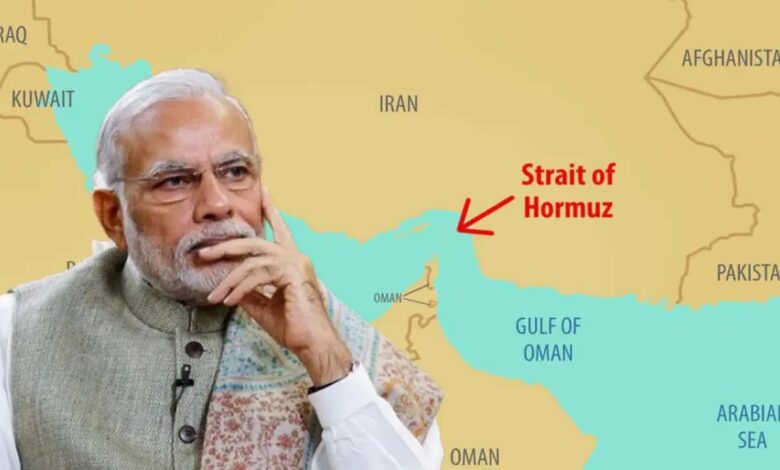
The rapidly escalating conflict involving the United States, Israel and Iran has moved far beyond a regional military confrontation. Within days of the first strikes and retaliatory attacks, the conflict has already begun sending shockwaves through global energy markets, shipping routes and financial systems – developments that matter enormously for a large import-dependent economy like India.
The immediate trigger has been the disruption of energy flows across the Persian Gulf, particularly around the Strait of Hormuz – one of the world’s most critical oil chokepoints. Nearly 20% of global oil supply passes through this narrow waterway, and escalating hostilities have already caused tanker traffic to plunge while pushing crude prices sharply higher.
For India, the reverberations are unusually high. The country remains heavily dependent on imported energy, and a large share of those imports travel through the same vulnerable corridor. Any sustained disruption in the region therefore threatens to ripple through India’s fuel prices, inflation trajectory, currency stability and industrial costs.
Financial markets reacted almost immediately. Indian equities fell sharply in the early sessions after the conflict escalated, while investors moved toward safe assets such as gold and the U.S. dollar. Surging oil prices and fears of supply disruptions have also begun to weigh on sectors ranging from airlines and oil marketing companies to manufacturing and logistics.
What began as a geopolitical confrontation is therefore quickly morphing into an economic variable – one that could reshape business sentiment, corporate profitability and macroeconomic stability across emerging markets. For India, the question is no longer whether the war will have economic consequences, but how deep and how widespread those consequences may become if the conflict drags on.
Business Impact, Which Indian Industries Are Most Exposed
For Indian businesses, the immediate economic transmission of the conflict is happening through three channels – energy prices, shipping disruption and rising insurance costs. Together, these factors are already beginning to ripple across multiple sectors of the Indian economy.
Energy and Oil Marketing Companies
The most immediate impact is on India’s energy ecosystem. India imports around 85–90% of its crude oil, and roughly 35–50% of those imports travel through the Strait of Hormuz, making the country highly sensitive to any disruption in the Persian Gulf.
With Iran threatening the security of the route and oil shipments already being suspended by several traders, global oil prices have surged.
For Indian oil marketing companies such as refiners and fuel distributors, higher crude prices compress margins and complicate pricing decisions. If oil prices remain elevated for long, companies may face pressure either to absorb losses or pass them on to consumers – both of which carry economic consequences.
At the same time, upstream companies engaged in exploration and production could see short-term gains as higher oil prices improve realizations.

Airlines and Aviation
Few sectors react to oil shocks as quickly as aviation. Aviation turbine fuel (ATF) typically accounts for 30–40% of airline operating costs, meaning that even modest increases in oil prices can significantly impact profitability.
The conflict has also led to airspace closures and rerouting across parts of the Middle East, forcing airlines to take longer routes that increase fuel consumption and operational costs.
For Indian carriers — which are already operating in a highly competitive and price-sensitive market — sustained fuel inflation could lead to fare increases or margin compression.
Shipping, Logistics and Insurance
The war is also disrupting global shipping. Tanker traffic through the Gulf has slowed sharply and maritime insurers have begun withdrawing war-risk coverage for ships traveling through Iranian waters.
Shipping companies are diverting vessels to longer routes around Africa’s Cape of Good Hope, increasing transit time and freight costs.
For India, a trade-dependent economy, this translates into higher logistics costs for both imports and exports, particularly for commodities and bulk cargo.
Petrochemicals, Fertilizers and Manufacturing
A wide swathe of Indian manufacturing depends indirectly on crude oil and natural gas.
Industries such as:
- Petrochemicals and plastics
- Paints and chemicals
- Tyres and rubber products
- Fertilizers
All rely on crude derivatives or natural gas as feedstock.
As oil prices rise, production costs across these sectors increase, which can eventually feed into higher prices for downstream products – from automobiles and consumer goods to construction materials.
Trade-Linked Sectors
Export sectors with strong ties to the Middle East could also feel pressure. Gulf countries remain important markets for food exports, engineering goods, gems and jewellery, and textiles.
Disruptions in shipping routes, rising freight costs and financial uncertainty in the region could temporarily slow trade flows.
Defence Manufacturing, A Possible Beneficiary
One sector that may actually benefit from heightened geopolitical tensions is defence manufacturing. Rising security concerns across regions often trigger higher defence spending, both globally and domestically.
For India’s growing defence manufacturing ecosystem (including private sector firms and public sector undertakings) prolonged geopolitical instability could translate into stronger order pipelines.

Stock Market Shock, ₹16 Lakh Crore Wiped Out As War Jitters Hit Dalal Street
The first visible economic tremor from the escalating US-Israel-Iran conflict has appeared on Dalal Street, where investors have already suffered a massive erosion in wealth.
In just two trading sessions following the escalation of hostilities, investor wealth worth roughly ₹16.3 lakh crore was wiped out from the Indian stock market as benchmark indices plunged amid rising geopolitical uncertainty and surging oil prices.
The benchmark BSE Sensex fell 1,122 points to close at 79,116, while the Nifty 50 dropped 385 points to around 24,480, marking their lowest levels in several months.
Over the span of three sessions since the conflict escalated, the two indices have lost roughly 4% each, reflecting a sharp shift in investor sentiment as global markets reacted to the growing risk of a wider Middle East war.
The Scale Of Investor Losses
The magnitude of the sell-off illustrates how quickly geopolitical shocks can translate into financial market stress.
At one point during the sell-off:
- The Sensex plunged more than 1,000 points in a single session
- Nearly ₹6.5–₹10 lakh crore of market capitalisation was erased in one day
- Over ₹11 lakh crore in investor wealth evaporated within just a few sessions as investors rushed toward safer assets
Such sharp wealth destruction not only affects institutional investors but also millions of retail investors whose savings are increasingly tied to equities through direct investments and mutual funds.
Sectoral Damage Across Dalal Street
The sell-off has been broad-based, with 14 of the 16 sectoral indices ending in the red as surging oil prices and global uncertainty weighed heavily on sentiment.
The sectors most affected include:
- Airlines, which face rising aviation fuel costs
- Oil marketing companies, where margins are squeezed by higher crude prices
- Paint and chemical companies, which rely heavily on petroleum derivatives
- Tyre manufacturers and logistics firms exposed to rising fuel costs
Stocks with exposure to the Middle East have also come under pressure. Engineering giant Larsen & Toubro, for example, saw its shares drop sharply amid concerns over its business exposure to the region.
However, the reaction has not been uniformly negative.
Shares of upstream oil exploration companies have shown relative resilience, benefiting from rising oil prices. Defence-related companies have also drawn investor interest amid expectations that prolonged geopolitical tensions could push governments to increase defence spending.
The Oil Factor That Drives Indian Markets
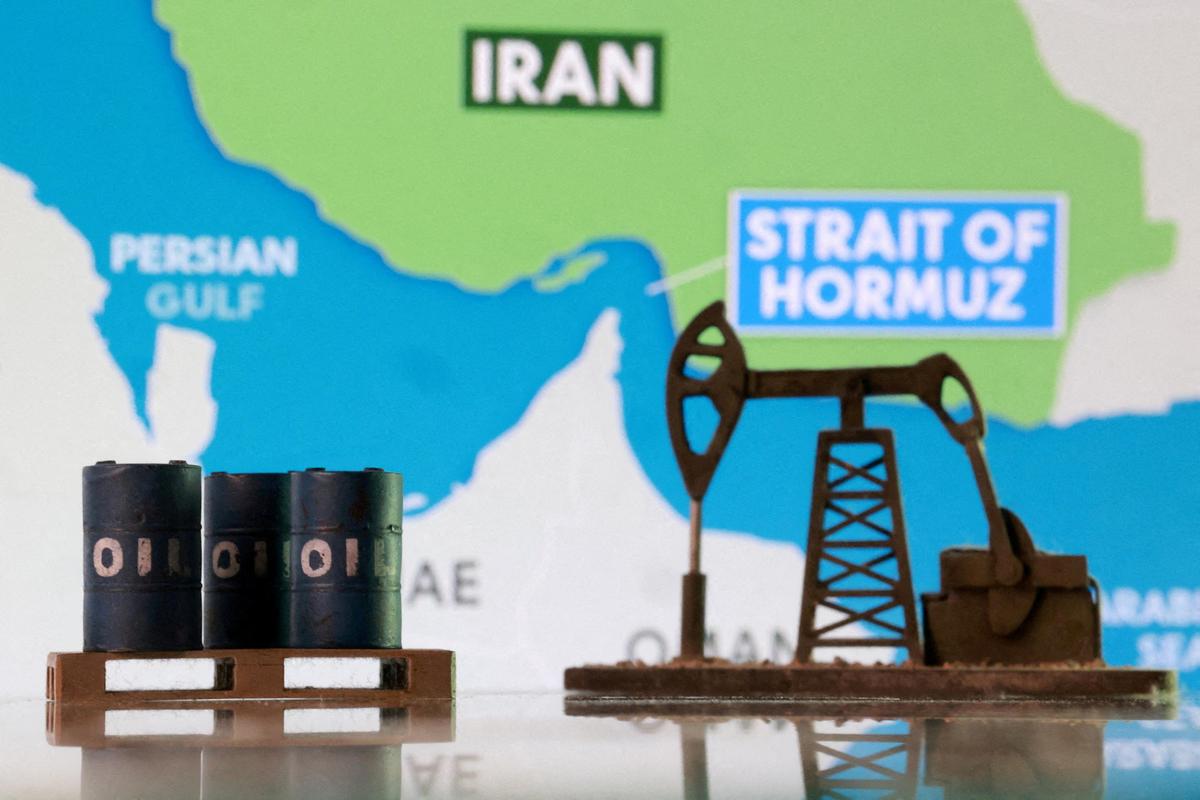
At the heart of the market reaction lies a familiar vulnerability – India’s dependence on imported crude oil.
The Middle East conflict has pushed oil prices higher and raised fears of disruptions around the Strait of Hormuz, through which a significant portion of global and Indian oil supplies pass.
For equity markets, higher oil prices are particularly problematic because they tend to:
- Increase corporate costs
- Push up inflation
- Weaken the rupee
- Reduce the likelihood of interest-rate cuts
Analysts warn that because India is a major oil importer, its equity markets could be among the most sensitive in Asia to a prolonged Middle East conflict.
The geopolitical shock has also triggered a surge in market volatility. India’s volatility index – often referred to as the market’s “fear gauge” – spiked more than 50% within just two trading sessions, reflecting the sudden surge in investor anxiety.
While markets have shown tentative signs of stabilising in subsequent sessions, analysts caution that volatility could remain elevated as long as uncertainty around oil supply and regional escalation persists.
The Real Economic Risk – Inflation, Rupee Pressure And Growth Concerns
Beyond the turbulence in financial markets, the more profound impact of the US-Israel-Iran conflict for India lies in the macroeconomy. For a country that imports the vast majority of its energy needs, rising oil prices and disrupted shipping routes can quickly translate into inflation, currency pressure and widening external deficits.
The Inflation Shock
India imports around 85% of its crude oil, which makes the country particularly sensitive to sudden spikes in global energy prices. Oil is not just a fuel input – it is embedded across the entire economy, influencing transportation, manufacturing, agriculture and logistics costs.
When oil prices rise sharply, the impact spreads quickly. Higher fuel costs push up freight rates, increase input costs for industries and eventually translate into higher prices for consumers.
If oil prices were to remain above $90–$100 per barrel for a sustained period, economists warn that India’s inflation trajectory could come under renewed pressure. That would complicate the monetary policy path for the Reserve Bank of India, which has been attempting to balance inflation control with economic growth.
In other words, what begins as an oil shock can eventually morph into a broader cost-push inflation cycle across the economy.
Pressure On The Rupee
Geopolitical shocks and rising oil prices typically place immediate pressure on the Indian rupee.
When oil prices surge, India’s import bill rises sharply because the country must spend more dollars to buy the same amount of oil. This increases demand for foreign currency and can weaken the rupee.
Historically, every sustained oil spike has resulted in rupee volatility. A weaker currency then feeds back into inflation because imports – including fuel, fertilizers, electronics and machinery – become more expensive.
If the conflict drags on and oil prices remain elevated, the rupee could face further depreciation pressures, forcing the Reserve Bank of India to intervene in currency markets to stabilise volatility.
The Current Account Deficit Risk
Rising oil prices also widen India’s current account deficit (CAD) – the gap between what the country imports and what it exports.
Energy imports form one of the largest components of India’s trade deficit. When oil prices surge, the import bill rises rapidly while exports may not increase at the same pace.
Economists estimate that every $10 increase in crude oil prices can widen India’s current account deficit by roughly 0.3–0.4% of GDP.
If oil prices were to climb toward $100 per barrel and remain elevated, India’s external balance could deteriorate quickly, potentially raising concerns among global investors about macroeconomic stability.
Fiscal Pressures For The Government
Higher oil prices also create fiscal dilemmas for the government.
When oil prices rise sharply, governments often face political pressure to reduce fuel taxes or increase subsidies in order to shield consumers from the full impact of higher prices.
However, doing so can strain public finances. India’s fiscal consolidation path depends partly on stable fuel revenues, which form an important component of government income.
Balancing consumer protection with fiscal discipline therefore becomes a delicate policy challenge during periods of sustained energy inflation.
Growth And Consumption Risks
The final channel through which the conflict could affect India is economic growth.
Higher fuel prices reduce disposable incomes for households and raise costs for businesses, which can slow consumption and investment. Industries ranging from manufacturing and logistics to aviation and chemicals may face rising input costs that squeeze margins.
While India’s growth outlook remains structurally strong, prolonged geopolitical instability combined with elevated energy prices could act as a drag on economic momentum.
For an economy that has been positioning itself as one of the world’s fastest-growing major markets, such external shocks show how deeply global geopolitics and domestic economic stability remain intertwined.
If The Conflict Escalates, The Risks India Cannot Ignore
Much of the economic impact discussed so far assumes that the conflict remains contained and does not lead to a prolonged disruption of global energy supplies. But if the war between the United States, Israel and Iran escalates further, the consequences for the global economy (and India in particular) could become far more severe.
The Strait of Hormuz Scenario
The single most dangerous escalation point lies in the Strait of Hormuz, the narrow maritime corridor connecting the Persian Gulf with the open ocean.
Roughly 20% of the world’s oil supply passes through this route every day. Any disruption – whether through military confrontation, blockades or attacks on tankers – could trigger a massive shock in global energy markets.
For India, the stakes are particularly high. A large portion of the country’s crude oil imports from the Middle East passes through this very corridor. If the Strait were to become unsafe for shipping, global oil prices could spike dramatically.
Some analysts warn that in an extreme scenario, crude prices could surge well beyond $110–$120 per barrel, levels that historically have triggered inflation spikes and economic slowdowns across many emerging markets.
Global Recession Risks
Energy shocks rarely remain confined to energy markets. Historically, sustained spikes in oil prices have often preceded periods of economic slowdown.
Higher oil prices increase production costs for businesses, reduce household spending power and raise inflation across economies. Central banks are then forced to keep interest rates elevated for longer, which further dampens economic activity.
If the conflict drags on and energy supplies are disrupted, economists warn that global growth could weaken significantly — with Europe and emerging markets particularly vulnerable.
India’s domestic growth momentum may provide some insulation, but the country cannot remain completely immune to a broader global slowdown.
India’s Strategic Cushion – But Not Immunity
India is not entirely without buffers. The country has gradually diversified its oil import sources over the past decade and maintains strategic petroleum reserves designed to provide temporary relief during supply disruptions.
In recent years, India has also demonstrated flexibility in sourcing crude from multiple suppliers, including Russia and other non-traditional markets when global prices became volatile.
However, such buffers can only soften the blow, they cannot eliminate the fundamental vulnerability of an economy that still depends heavily on imported energy.
The Last Bit, Geopolitics Shapes Economics
The ongoing conflict illuminates a reality that often becomes visible only during crises: the global economy remains deeply intertwined with geopolitical stability.
For India, a nation striving to maintain rapid economic growth while managing inflation and fiscal stability, developments thousands of kilometres away in the Middle East can quickly become domestic economic challenges.
Markets may stabilise and oil prices may eventually settle. But the episode once again touches a structural truth – that in an interconnected world, geopolitical shocks can travel faster than ever through energy markets, financial systems and supply chains.
And for economies like India’s, the real challenge lies not just in responding to such shocks, but in building the resilience needed to withstand them.