Kash Patel Sues The Atlantic For $250 Million Over Alcohol Allegations, But The Larger Question May Lie In Trump’s Choices
Kash Patel’s $250 million lawsuit against The Atlantic over allegations of alcohol misuse and erratic conduct has triggered a fresh political flashpoint. But beyond the immediate dispute lies a more persistent question - what do such controversies say about the choices shaping Donald Trump’s inner circle?


Kash Patel has moved to court, filing a $250 million defamation lawsuit against The Atlantic and its reporter over an article that alleges excessive alcohol consumption, erratic behaviour, and unexplained absences.
The report, based on unnamed sources, claimed that Patel’s conduct had raised concerns within official circles, including instances where he was allegedly difficult to reach during critical moments. Among the more striking assertions were that he was frequently intoxicated in social settings linked to Washington’s political circles and that his security detail had, at times, struggled to access him.
Patel has categorically denied these claims. In his lawsuit, he has described the article as a “malicious” and “fabricated” hit piece, arguing that the publication proceeded despite being warned that the allegations were false. The suit lists multiple statements from the article as defamatory and seeks to hold both the magazine and its journalist accountable.
For its part, The Atlantic has stood by its reporting, stating that it intends to defend the story and its journalistic process.
At the heart of this legal battle lies a familiar tension – one between investigative reporting based on anonymous sources and the high legal threshold required to prove defamation against a public figure. Under U.S. law, Patel would need to demonstrate “actual malice,” a standard that requires showing that the claims were published with knowledge of their falsity or with reckless disregard for the truth.
If this confrontation feels familiar, it is because it is.

Controversy and Power – Not Mutually Exclusive
If the episode involving Kash Patel appears unusually charged, it is worth noting that scrutiny has not necessarily stood in the way of elevation within this political orbit. In several instances, controversy has unfolded alongside, rather than in opposition to, positions of influence.
Few examples capture this more clearly than Pete Hegseth. His tenure has been marked by a cascade of controversies that have spanned legal, institutional, and operational domains.
Most significantly, Hegseth is currently facing articles of impeachment brought forward by House Democrats, alleging “high crimes and misdemeanors,” including accusations tied to unauthorized military actions and potential violations of international law during U.S. operations in Iran.
Alongside this, the so-called “Signalgate” controversy – where sensitive military discussions were reportedly conducted over an unsecured messaging platform – has raised serious concerns around operational security and handling of classified information.
His leadership within the Pentagon has also come under scrutiny. Reports of internal turmoil, including the abrupt dismissal of senior military officials such as Army Chief Gen. Randy George, have fueled concerns about decision-making driven by loyalty and internal conflict rather than institutional stability.
At the same time, a series of more unconventional controversies have added to the scrutiny. Hegseth drew criticism for delivering a Pentagon prayer that closely mirrored a monologue from the film Pulp Fiction, presenting it as scripture – an episode that further blurred the lines between symbolism, messaging, and governance.
These developments come layered over earlier allegations, including a past sexual misconduct accusation that did not result in charges and which he has denied, as well as questions around financial management and conduct during his time with veterans’ organisations.
Yet, despite the breadth and persistence of these controversies (ranging from legal challenges to institutional instability) his position has remained intact, with continued political backing. If anything, the scrutiny appears to have hardened lines of support rather than weakened them.

A different trajectory can be seen in the case of Lori Chavez-DeRemer, whose tenure ultimately collapsed under the weight of multiple allegations.
An Inspector General investigation examined claims ranging from an alleged inappropriate relationship with a subordinate and alcohol use during office hours to accusations of misuse of public funds through trips that were presented as official engagements but were reportedly personal in nature.
The controversy widened further with reports of a toxic workplace environment, including staff being tasked with personal errands, as well as scrutiny involving her husband’s conduct, which added to the institutional discomfort surrounding her position. Several senior staff departures during this period underscored the internal strain.
Chavez-DeRemer denied the allegations, attributing them to politically motivated actions. However, as the scrutiny intensified, she resigned – her exit framed publicly as a transition, but occurring against the backdrop of mounting controversy.
Friction Within – Instability and Internal Contest
If controversy defines the external narrative, friction often defines what unfolds within. Across Donald Trump’s political orbit, tensions have not remained behind closed doors—they have surfaced in the form of disagreements, speculation, and periodic reshuffles.
Consider Tulsi Gabbard, whose tenure has drawn sustained scrutiny – less for personal misconduct and more for her positions and decisions in office. Her past remarks on Russia and Ukraine, including claims about U.S.-linked biolabs, were widely criticised and, in some quarters, described as echoing perceptions promoted by Russian state media.
She has also faced continued backlash over her earlier engagement with Syrian President Bashar al-Assad, a move she defended as a “fact-finding” effort but which drew bipartisan criticism.
In her current role, further controversy has emerged around her actions within the intelligence establishment, including reports of criminal referrals targeting officials linked to earlier investigations involving Donald Trump. Critics have viewed such moves as politically charged, while supporters argue they reflect an effort to challenge entrenched institutional biases.

Overlaying this is a broader tension around her foreign policy stance (often described as sharply non-interventionist) along with reports of internal differences that have fuelled speculation about her standing within the administration. Gabbard has defended her positions consistently, framing them as rooted in strategic restraint rather than alignment with adversarial stories.
A different kind of scrutiny surrounds Howard Lutnick, whose tenure has been marked by questions around both judgment and perception. His past associations, including links that have drawn renewed attention in connection with figures such as Jeffrey Epstein, have triggered political criticism, even as Lutnick has downplayed the extent of those interactions.
At the same time, concerns have been raised over potential conflicts of interest, given his longstanding ties to the financial sector through Cantor Fitzgerald, with critics questioning whether policy decisions – particularly around trade – could intersect with private financial interests. Lutnick has rejected such suggestions.
His blunt and often combative rhetoric on trade, including remarks about not supporting “losers” and pushing for more aggressive alignment from partner countries, has also contributed to unease, both domestically and diplomatically. These positions, while defended as part of a hardline economic strategy, have reinforced perceptions of a leadership style that prioritises disruption over convention.
Together, these strands (past associations, policy posture, and internal criticism) have kept Lutnick under sustained scrutiny, reflecting a broader pattern where controversy is not confined to personal conduct but extends into questions of governance and decision-making.
These episodes may not carry the immediacy of headline-grabbing allegations, but they reveal something equally significant: instability within. Positions are not merely held – they are continuously tested, negotiated, and, at times, contested.
In this environment, controversy is not always about scandal. It is just as often about friction – differences in vision, execution, and proximity to power.
This Pattern Isn’t New – It’s Structural
If recent episodes suggest a pattern, history reinforces it. The interplay between controversy, conflict, and power has been visible across earlier phases of Donald Trump’s leadership, often surfacing at the very top of government.
Take Michael Flynn, whose tenure ended within weeks amid scrutiny over his contacts with Russian officials and questions around disclosures. His exit set an early tone – one where controversy intersected with national security at the highest level.
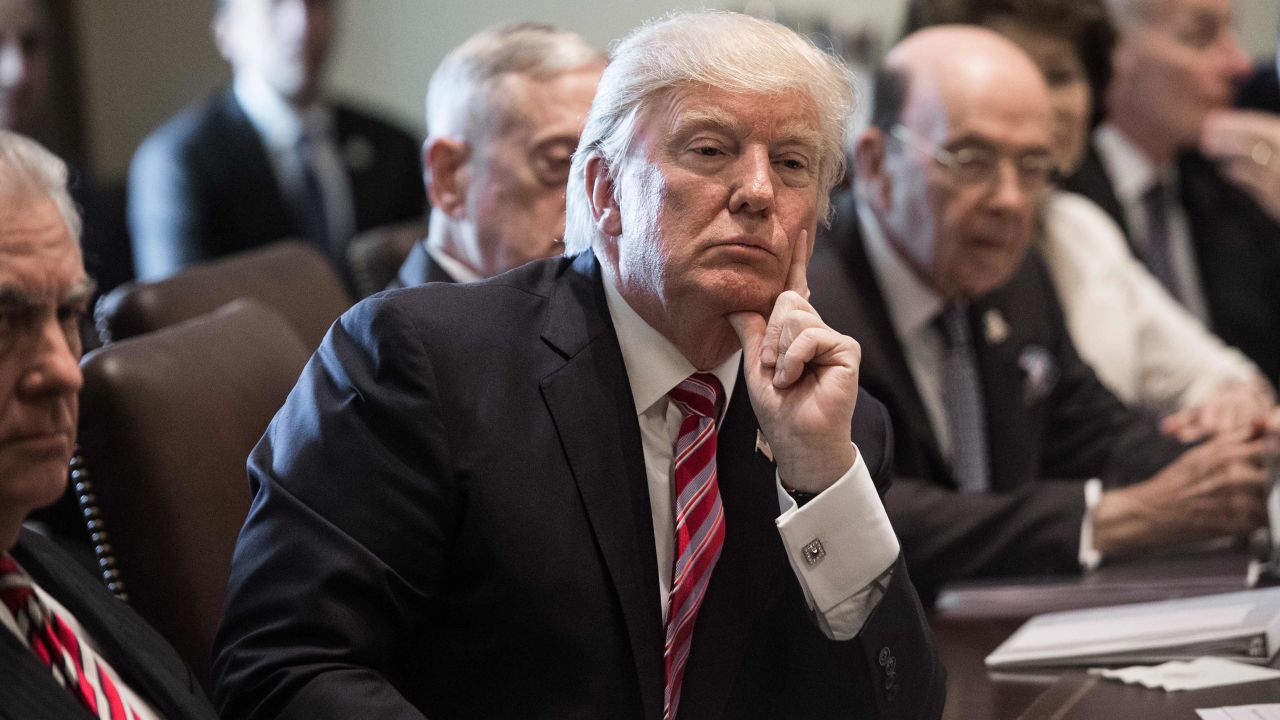
That sense of friction extended further. Rex Tillerson’s tenure was marked by visible differences with Trump, eventually culminating in his removal. James Mattis stepped down over policy disagreements, illustrating that conflict was not always about scandal, but also about direction and principle.
The pattern continued with Jeff Sessions, who drew public criticism from Trump over his recusal in the Russia investigation, and later with William Barr, whose relationship with Trump frayed over disagreements surrounding election-related claims.
Alongside these high-profile conflicts were more traditional controversies. Scott Pruitt faced multiple ethics investigations tied to his use of office, while Betsy DeVos remained a deeply polarising figure due to her policy positions and the reactions they drew.
Seen together, these are not isolated incidents but recurring themes. Whether through resignation, dismissal, or sustained scrutiny, controversy has consistently intersected with governance – suggesting that what is visible today is part of a longer, more established pattern.
Beyond the Cabinet – The Inner Circle Effect
If the cabinet reflects one layer of governance, Donald Trump’s broader political orbit extends well beyond formal titles and so do the controversies associated with it.
Few figures illustrate this more sharply than Rudy Giuliani. Once a central legal voice for Trump, Giuliani became deeply entangled in the aftermath of the 2020 election, facing multiple legal challenges and disciplinary action linked to his efforts to contest the results. What began as political advocacy increasingly moved into the realm of legal consequence.
A similar trajectory can be seen in Steve Bannon, a long-time strategist and influential voice within Trump’s circle. Bannon was convicted of contempt of Congress after defying a subpoena related to the January 6 investigation, indicating how political alignment can intersect with legal exposure.
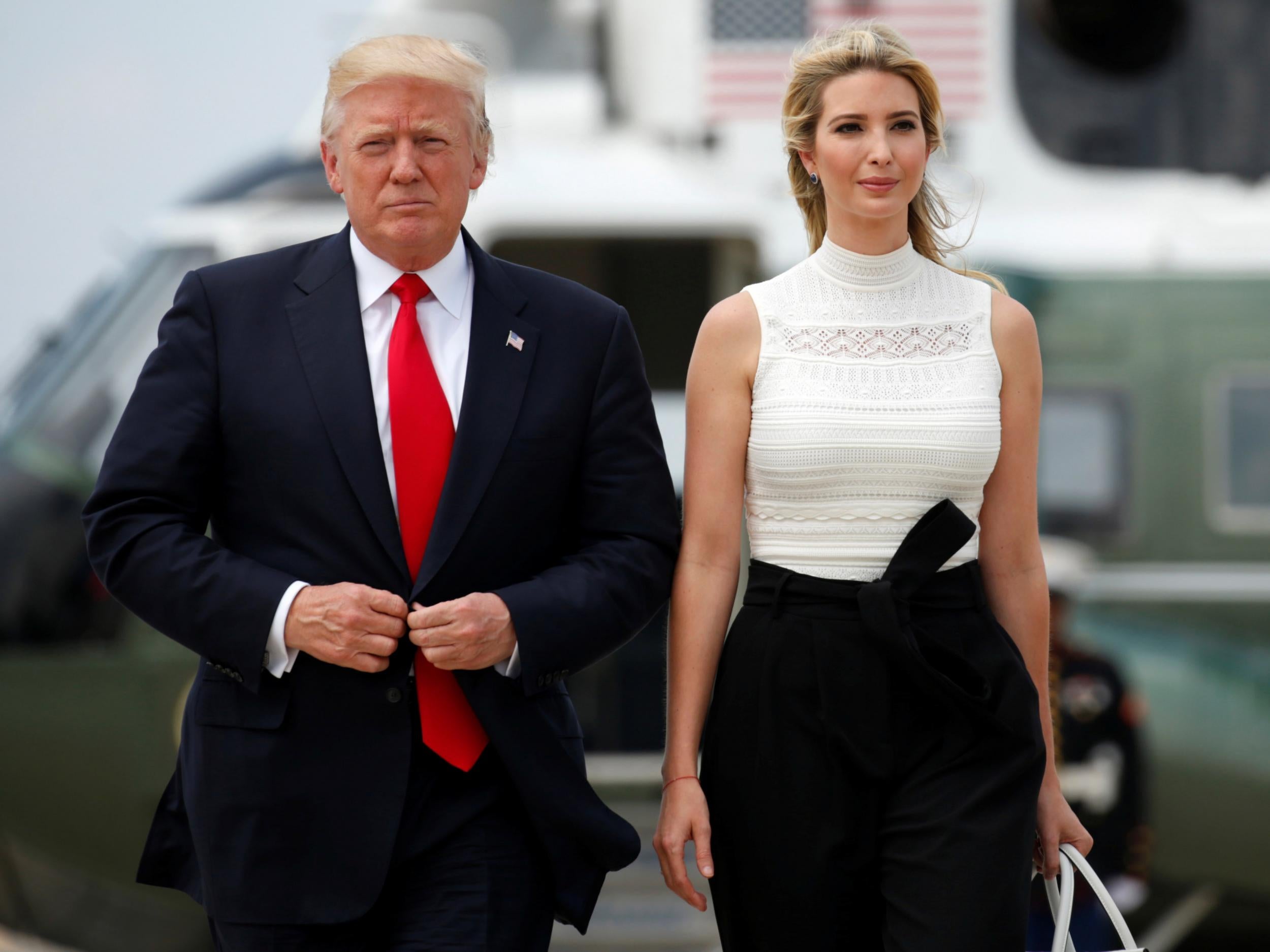
The contours of influence take a different shape with Jared Kushner and Ivanka Trump. Both held advisory roles while maintaining extensive business interests, drawing scrutiny over potential conflicts and the broader question of how public office and private enterprise intersect.
What ties these figures together is not uniformity in their roles, but proximity to power. The influence they wielded was not always defined by official designation, yet the scrutiny they attracted was no less intense.
In this extended ecosystem, the boundaries between governance, advisory influence, and personal networks often blur. And with that blur comes a broader reality – controversy is not confined to office; it travels with proximity.
The Trump Factor, The Connecting Thread
Across these episodes, a pattern begins to take shape – one that is difficult to separate from the leadership style of Donald Trump himself. The controversies surrounding individuals in his orbit do not exist in isolation; they often reflect a broader approach to power, loyalty, and public confrontation.
One defining feature has been the premium placed on loyalty. Figures who have faced scrutiny—whether Pete Hegseth or Kash Patel—have, in many cases, continued to retain political backing. Controversy, rather than acting as a barrier, has often been absorbed within the system.
At the same time, conflict has been a recurring constant. From Rex Tillerson and James Mattis to Jeff Sessions, disagreements have not only existed but have played out in full public view. Governance, in this sense, has often appeared as a space of ongoing negotiation rather than stable alignment.
There is also a noticeable expansion of influence beyond formal roles. The prominence of figures such as Rudy Giuliani and Steve Bannon shows how power within this ecosystem is not confined to official positions but extends through networks of proximity and trust.
Overlaying all of this is a sustained confrontation with institutions, particularly the media. Episodes such as the ongoing dispute involving Patel and The Atlantic reflect a broader pattern where stories are not merely contested – they are actively challenged, often through legal or political means.
Taken together, these strands point to a consistent dynamic. Controversy is neither rare nor necessarily disqualifying. It is, instead, absorbed, contested, and at times even repurposed within the exercise of power.
Media vs Power, The Expanding Battlefield
The confrontation involving Kash Patel and The Atlantic is not just a legal dispute – it reflects a broader and increasingly visible contest between power and the press.
At the centre of this tension lies a familiar fault line. Investigative reporting, often built on anonymous sources and insider accounts, seeks to bring internal concerns into public view. Those on the receiving end, particularly public officials, are left to challenge not just the claims but the credibility of the process itself.
Patel’s lawsuit leans directly into this divide. By alleging defamation and “actual malice,” it raises the stakes beyond reputational damage and into the legal domain, where the burden of proof is high and the consequences potentially far-reaching. For public figures, this threshold – established in U.S. law – requires demonstrating that false statements were made knowingly or with reckless disregard for the truth.
For media organisations, the defence rests on the integrity of their reporting – sources, verification, and editorial judgment. The Atlantic has made clear it intends to stand by its story, setting the stage for a legal and reputational contest that could unfold over time.

What emerges from this is not a simple clash of right and wrong, but a deeper struggle over narrative. Who defines credibility? Who controls the story? And how far can each side go in defending its version of events?
In this environment, controversy does not end with publication—it evolves, often shifting from headlines to courtrooms, and from reporting to rebuttal.
The Last Bit,
Across roles, administrations, and years, a consistent thread runs through Donald Trump’s political orbit – controversy is rarely absent, and seldom decisive in a uniform way.
From the ongoing legal battle involving Kash Patel to earlier episodes spanning cabinet officials and close advisors, scrutiny has often been absorbed, contested, and, at times, outlasted.
What emerges is not a simple pattern of rise or fall, but a more complex dynamic where power, loyalty, and public challenge intersect. Some controversies have led to exits, others to entrenchment, and many to prolonged standoffs – whether within institutions or in the public domain.
Whether this reflects disruption of established norms or a different mode of political functioning remains open to interpretation. What is clear, however, is that in this ecosystem, controversy does not merely accompany power – it is often woven into how it is exercised, defended, and understood.