Raheja Developers: A Chronicle of Broken Promises, Alleged Fund Diversion, and Systemic Betrayal of Homebuyers

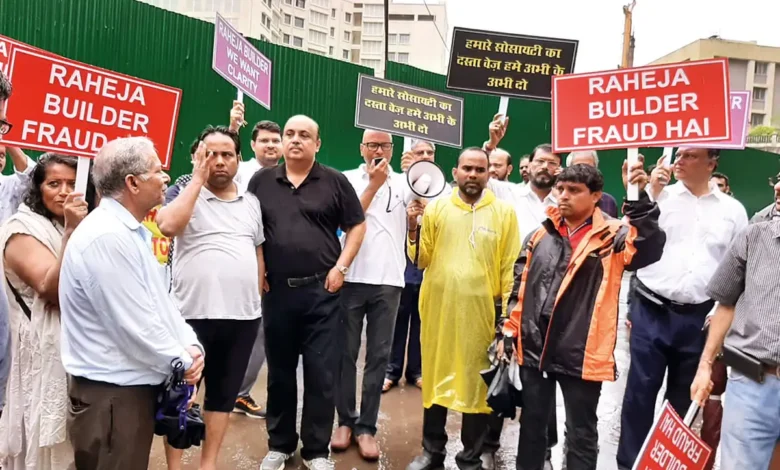
Raheja Developers Limited, once positioned as a prominent player in the National Capital Region’s real estate landscape, now stands at the center of one of the most extensive money-laundering and homebuyer fraud investigations in recent Indian real estate history. Under the leadership of its promoter-director Navin M. Raheja (also referred to as Naveen Raheja), the company collected approximately ₹2,425.99 crore from nearly 4,600 homebuyers across multiple residential projects. According to the Enforcement Directorate (ED), a substantial portion of these funds was diverted through a complex web of related entities and shell companies for purposes unrelated to project construction and completion, leaving thousands of families without the homes they had paid for—often after investing life savings and taking bank loans.
As of mid-2026, the ED has provisionally attached assets valued at nearly ₹2,400 crore under the Prevention of Money Laundering Act (PMLA), 2002. This includes successive provisional attachment orders: ₹1,113.81 crore in April 2026 (linked to related entities N.A. Buildwell Pvt. Ltd., Riyasat Palaces Ltd., and properties of Navin M. Raheja and family members), ₹503.48 crore in June 2026, and ₹782.36 crore in July 2026 belonging to the company itself. Searches under Section 17 of the PMLA in June 2025 (13 locations across Delhi-NCR and Mohali) and April 2026 (seven NCR sites including Noida, Greater Noida, Sainik Farms, and New Friends Colony) yielded incriminating documents, digital evidence, jewellery and bullion worth about ₹15.82 crore, and foreign currency of roughly ₹15 lakh.
These actions stem from multiple First Information Reports registered by the Economic Offences Wing (EOW) of Delhi Police (and related complaints in Gurugram) based on allegations of cheating, criminal conspiracy, and failure to deliver residential units despite collecting large sums under the pretext of providing homes. The investigation remains ongoing; the attachments are provisional and aimed at securing suspected proceeds of crime pending further adjudication. No final judicial determination of guilt has been reported in the primary money-laundering case as of the latest available information.
Early Red Flags: Tax Scrutiny and the Cobrapost Sting
The company’s troubles did not begin with the current homebuyer crisis. In February 2010, the Income Tax Department conducted searches that, according to reports, recovered evidence pointing to potential tax evasion in the range of ₹80–118 crore. Proceedings followed before the Income Tax Settlement Commission (ITSC). In a significant development, the Delhi High Court on 10 February 2014 quashed the immunity that had been granted through those ITSC proceedings; a Special Leave Petition was subsequently filed in the Supreme Court.
In November 2014, the investigative outlet Cobrapost published findings from its 18-month undercover operation “Operation Black Ninja.” A correspondent posing as a representative seeking to convert black money into legitimate assets through bulk property purchases allegedly recorded senior officials, including Director-cum-CEO Karthik Ramachandran in the case of Raheja Developers, agreeing to accept black money payments routed through channels involving Dubai and Sharjah. The exposé implicated multiple developers and triggered a Central Board of Direct Taxes inquiry. Around the same period, the Prime Minister’s Office directed the Haryana government to examine complaints from buyers of the Raheja Atharva project regarding construction irregularities, delayed possession, and lack of basic amenities such as water and electricity despite substantial payments.
These episodes established an early pattern of alleged financial opacity that later investigators and complainants would cite as context for the larger homebuyer grievances.
The Human Cost: Delayed Projects and Regulatory Rebukes
Flagship projects such as Raheja Revanta (Sector 78, Gurugram—a high-rise development including a 61-storey tower), Raheja Shilas (Sector 109), Krishna Housing Scheme (Sohna), Raheja Atharva, and others became symbols of prolonged delay. Buyers who booked units around 2011–2012, often on promises of possession within 36–48 months, continued waiting a decade or more in many cases, having paid 90–95% or more of the consideration. Haryana RERA issued multiple orders directing refunds with interest, criticized builder-buyer agreements as biased against purchasers, froze accounts or inventory in certain instances, ordered forensic audits into fund utilization, and initiated show-cause proceedings. The National Consumer Disputes Redressal Commission and various district forums also ordered refunds with interest and compensation in individual cases.
Insolvency proceedings under the Insolvency and Bankruptcy Code followed. NCLT admitted Section 7 petitions filed by groups of homebuyers for projects including Shilas, Krishna Housing Scheme, and Revanta, finding debt and default arising from non-delivery. NCLAT later confined certain Corporate Insolvency Resolution Processes to the specific projects concerned, reflecting the evolving project-wise approach in real-estate insolvencies. Financial creditors such as Edelweiss Asset Reconstruction Company also pursued claims related to large outstanding dues.
The ED Probe: Allegations of Systematic Diversion
The ED’s case, built on the predicate FIRs from EOW, centers on the claim that funds collected for residential projects were not adequately applied to construction. Investigators allege that substantial amounts were siphoned through related entities and shell companies and ultimately transferred to entities controlled by the director, his family members, and close associates for asset acquisition, personal expenditures, and other non-project purposes. This, according to the agency, contributed to stalled construction and left thousands of buyers without possession.
Raheja Developers has consistently denied the allegations of fraud or diversion. In public statements, the company has asserted that it has invested significantly more funds into the projects than it collected from customers, that this has been substantiated by a RERA-supervised forensic audit, and that no wrongdoing has occurred against any homebuyer. Delays, particularly in Revanta, have been attributed primarily to the absence of essential government infrastructure (water supply, electricity, sewerage, roads, firefighting systems) despite payment of External and Internal Development Charges. The company has argued that safe possession of high-rise structures cannot be handed over without these services and has urged authorities to expedite infrastructure development.
Whether the delays stem predominantly from external infrastructure failures, internal financial mismanagement, or a combination remains a contested question at the heart of the investigation and related civil/regulatory proceedings.
Broader Implications and Unresolved Questions
The Raheja Developers episode illuminates deeper structural vulnerabilities in India’s real-estate sector: weak enforcement of escrow requirements under RERA, prolonged delays in external infrastructure provision by state agencies, the gap between marketing promises and delivery realities, and the slow pace at which criminal and regulatory remedies translate into relief for ordinary homebuyers. Thousands of families have faced dual financial burdens—continuing EMIs or rents alongside the capital locked in incomplete projects—while promoters’ assets have come under attachment.
As of the latest reported developments in 2026, the ED investigation continues, provisional attachments stand, multiple FIRs remain active, insolvency processes proceed on a project-specific basis in certain cases, and civil/regulatory claims for refunds and compensation persist. No comprehensive public resolution—whether through completed projects, full refunds, or final criminal convictions—has been documented in the available record. Homebuyers continue to await outcomes that restore either their homes or their capital.
The case of Raheja Developers is not merely a story of one developer’s alleged defaults. It is a powerful illustration of how the combination of aggressive project launches, prolonged delivery failures, alleged fund diversion, regulatory lag, and infrastructure shortfalls can devastate middle-class aspirations. Whether the current enforcement actions ultimately secure justice for the affected buyers or merely document the scale of the damage remains to be determined by the ongoing legal processes.