From Asia’s Richest Man To Life Behind Bars: How Hui Ka Yan’s Evergrande Empire Crushed Millions Of Homebuyers And Exposed China’s Debt-Fuelled Greed
Life Imprisonment for the King of Debt: Inside the Fraud, Bribery and Embezzlement That Turned Evergrande into a National Disaster

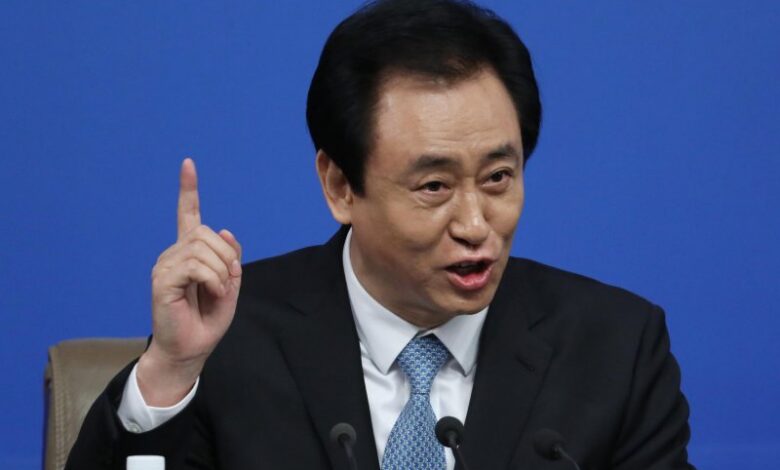
The 300-Billion-Dollar Collapse: Evergrande’s Hui Ka Yan Sentenced for Life After Years of Inflated Assets, Diverted Deposits and Corporate Bribery
The sentencing of Hui Ka Yan, also known as Xu Jiayin, to life imprisonment on 20 August 2026 closes one chapter of China’s most destructive corporate collapse, yet it does little to erase the damage inflicted on ordinary families who trusted the Evergrande brand. Once celebrated as a symbol of China’s economic miracle, the founder of the country’s largest property developer has been convicted of a catalogue of financial crimes that the Shenzhen Intermediate People’s Court described as exceptionally large in scale and particularly heinous in nature.
The court found that between 2016 and 2021 Hui, as the actual controller of Evergrande Group, orchestrated sustained large-scale financial fraud that inflated assets, concealed liabilities, diverted homebuyer deposits, and channelled funds through bribery and illegal lending. The human cost of that conduct continues to unfold in unfinished apartment blocks across Chinese cities, unpaid wealth-management products, and a property market still struggling under the weight of the crisis Hui’s company helped trigger.
Born in 1958 in rural Henan province and raised largely by his grandmother after a childhood of poverty, Hui began as a steelworker. He left state employment around 1992 and founded Evergrande in Guangzhou in 1996. What followed was a textbook example of leveraged expansion. The company grew by borrowing heavily, acquiring land, pre-selling apartments, and recycling those pre-sale funds into ever more projects.
At its peak Evergrande ranked as China’s top developer by sales. Hui’s personal wealth soared, reaching estimates of 42 to 45.3 billion US dollars around 2017 and earning him recognition as one of Asia’s richest men. He sat on the Chinese People’s Political Consultative Conference National Committee, giving him political stature that matched his commercial influence. The same aggressive model that created that fortune also sowed the seeds of catastrophe.

By 2021 Evergrande could no longer service its obligations. Liabilities were reported in the region of 300 billion US dollars or higher. The company defaulted, leaving hundreds of unfinished projects and tens of thousands of homebuyers who had already paid substantial deposits with neither homes nor refunds. Pre-sale funds that should have been ring-fenced for construction were, according to the court, diverted to other developments and corporate purposes. The result was a landscape of incomplete towers that still scar urban skylines and a generation of families trapped in legal and financial limbo. The court later confirmed that this diversion formed part of the illegal absorption of public deposits and fundraising fraud for which Hui was convicted.
The fraud was not limited to homebuyer money. The court found that Evergrande and Hui engaged in systematic inflation of assets and concealment of liabilities. In 2024 China’s securities regulator had already determined that the main onshore unit overstated revenue by more than 560 billion yuan, roughly 78 billion US dollars, through premature recognition of sales and related practices. Hui was fined approximately 6.5 to 6.6 million US dollars and banned for life from the capital markets.
The criminal trial went further, convicting him and the group of fraudulent issuance of securities and illegal disclosure of important information. These were not technical accounting errors. They were deliberate misrepresentations that allowed the company to continue raising funds and maintaining an appearance of solvency long after the underlying finances had become unsustainable.
Bribery played a central role. The court established that Evergrande and Hui used corporate bribery to gain control over financial institutions and thereby illegally obtain credit and insurance funds. This enabled further lending and expansion even as the group’s true leverage became extreme. Hui was also convicted of illegally granting loans and illegally using funds. In parallel, he was found to have embezzled company assets, including through the payment of dividends that the court characterised as misappropriation. While ordinary homebuyers waited for apartments that never materialised and employees and retail investors in wealth-management products saw their savings evaporate, the founder continued to extract value.

Evergrande’s wealth-management arm added another layer of harm. It raised large sums from the public, including company employees and their families, by promising high returns on fixed-income products. Substantial principal and interest remained unpaid. The court treated this activity as part of the illegal absorption of public deposits and fundraising fraud. The social impact was severe: people who worked for the company or trusted its brand found themselves among the victims of its fundraising practices.
Hui was detained in September 2023. Trading in Evergrande shares was suspended. A Hong Kong court ordered the company into liquidation in 2024, and it was delisted in 2025. In April 2026 Hui pleaded guilty before the Shenzhen Intermediate People’s Court and expressed remorse. On 20 August 2026 the same court imposed a life sentence, deprived him of political rights for life, and ordered the confiscation of all his personal property.
Evergrande Group was fined 8.82 billion yuan and Hengda Real Estate Group 7 billion yuan, producing a combined corporate penalty of 15.82 billion yuan. Fifty-six other individuals, including Hui’s sons Xu Zhijian and Xu Tenghe, received sentences ranging from 22 months to 18 years. The court ordered continued recovery of illegal gains and restitution for any shortfall.
The scale of the conduct, the court stated, seriously disrupted market order, infringed public and private property rights, undermined the integrity of official duties, involved exceptionally large sums, caused particularly grave economic losses, and inflicted especially serious social harm. That assessment is difficult to contest when measured against the unfinished homes, the unpaid depositors, the retail investors left with worthless wealth-management products, and the broader property-sector crisis that followed Evergrande’s collapse. The company’s business model of high debt, high leverage and high turnover was not unique, yet the degree of financial fabrication and diversion of funds set it apart in severity.
Critics of the Chinese property system have long pointed to the structural incentives that rewarded rapid expansion and pre-sales while providing inadequate safeguards for buyers. Hui’s case illustrates how those incentives, combined with personal ambition and weak internal controls, produced outcomes that devastated ordinary households. The life sentence and asset confiscation represent the state’s formal response. They do not, however, restore the homes that were never completed or the savings that were never returned. Liquidators continue efforts to recover offshore assets linked to Hui and his former spouse, yet the gap between the sums involved and the amounts likely to be recovered remains vast.
The trajectory from rural poverty to extreme wealth and then to life imprisonment is dramatic, but the lasting legacy is not the personal rise and fall. It is the unfinished buildings, the families still waiting for resolution, the employees and small investors who trusted the Evergrande name, and the systemic warning that extreme leverage and opacity eventually exact a public cost. The court’s findings make clear that the fraud was not an accidental by-product of growth. It was sustained, large-scale, and directed from the top. Hui Ka Yan’s life sentence closes the criminal chapter. The economic and social consequences of the empire he built continue to unfold.