Sham Loans, Fake Books, And a UK House Sold Through A UAE Entity: How The DHFL Scam Still Haunts Indian Banking?
Cobrapost Sounded the Alarm in 2019. The System Took Years to Catch Up, and the Trail Continues in 2026. Why the DHFL Case Remains a Monument to Regulatory Failure?

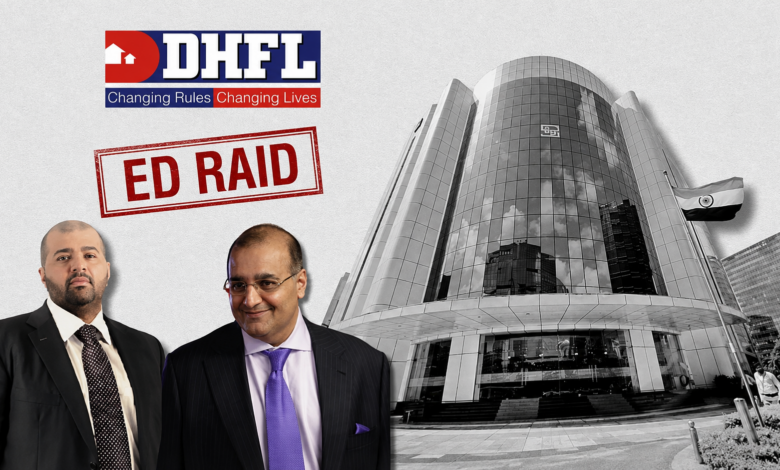
SEBI Bans, CBI Charges, ED Freezes, And What Not: The DHFL Saga
A housing-finance company that once presented itself as a reliable intermediary between banks and home-buyers stands accused of orchestrating one of the largest bank frauds in Indian history. A consortium of seventeen banks extended credit facilities running into tens of thousands of crores. Forensic examinations and investigative agencies later quantified a wrongful loss in the region of 34,000 to 34,900 crore rupees.
Shell entities received large sums that were recorded as ordinary retail home loans. A separate database known as the Bandra Books generated hundreds of thousands of fictitious borrower accounts. Interest income from these phantom loans propped up reported profits for years. When the structure finally collapsed, public-sector banks absorbed the bulk of the damage while the promoters moved through cycles of arrest, bail, ban, and renewed investigative action.
In January 2019 Cobrapost published its report alleging that the primary promoters of Dewan Housing Finance Corporation Limited had siphoned more than 31,000 crore rupees of public money. The mechanism described was straightforward in concept and elaborate in execution. Large secured and unsecured loans were sanctioned to dubious shell or pass-through companies linked to Kapil Wadhawan, Dheeraj Wadhawan and associates through proxies.
Those entities then channelled the funds onward to companies controlled by the promoters. The money, Cobrapost claimed, financed the acquisition of shares, equity and private assets in India and abroad, including locations in the United Kingdom, the United Arab Emirates, Sri Lanka and Mauritius.
Dozens of shell companies were identified, many sharing addresses, directors and auditors, and many showing little or no genuine business activity. Political donations and timed project loans were also alleged. DHFL dismissed the report as a mischievous exercise intended to damage its reputation. Share prices fell sharply. Regulators began to look more closely. Liquidity pressures intensified.
What Cobrapost had described as a systemic fraud later received detailed corroboration from forensic auditors, the Central Bureau of Investigation, the Securities and Exchange Board of India and the Enforcement Directorate. The core technique was the inflation of the retail loan book through fabrication. Large amounts advanced as project finance or diverted to related entities were broken into thousands of smaller accounts and recorded as ordinary home loans.
One account spoke of more than 1.8 lakh false and non-existent retail loans aggregating around 14,000 crore. Another forensic reference pointed to roughly 2.6 lakh fictitious accounts created over more than a decade. These records were maintained in a separate system, the Bandra Books, and later merged into the main books. Software tools automatically generated borrower details, often recycling information from genuine earlier customers. The result was an appearance of a healthy, diversified retail portfolio that reassured lenders and rating agencies and supported further borrowing.
SEBI’s eventual findings quantified one major stream of diversion at 11,548.95 crore rupees flowing to 87 Bandra Book Entities between the financial years 2006-07 and 2018-19. These entities were connected to the promoters, who exercised significant influence over their boards and decisions. The loans were not disclosed as related-party transactions. Interest recorded from them artificially improved the company’s reported performance. Had that interest been stripped out, the company would have shown losses as early as 2007-08. In August 2025 SEBI issued a final order barring Kapil Wadhawan, Dheeraj Wadhawan and four other former senior executives from the securities market for five years, citing their role in orchestrating, aiding or failing to prevent the misrepresentation that misled investors.
The formal criminal case that crystallised the largest quantified loss began with a complaint from Union Bank of India acting on behalf of the seventeen-bank consortium. The consortium had sanctioned facilities aggregating approximately 42,871 crore rupees (some later references in court documents use higher aggregates depending on the instruments and period counted). The CBI registered an FIR alleging criminal conspiracy, cheating, criminal breach of trust and falsification of accounts. Kapil Wadhawan, Dheeraj Wadhawan, certain real-estate entities and others were named.
The complaint asserted that the accused induced the banks to extend the facilities and then siphoned funds through fabricated books, causing a wrongful loss of roughly 34,615 crore (figures in subsequent documents appear as 34,614 crore or 34,926 crore). Forensic work by KPMG and others identified dozens of interconnected entities that received large loans despite minimal operations, inadequate documentation and weak or absent security. Funds were used for investments in land, properties, shares and other assets linked to the promoters and associates. Round-tripping and the rollover of inter-corporate deposits without proper classification as non-performing assets were also alleged.
The Enforcement Directorate opened a parallel money-laundering investigation under the Prevention of Money Laundering Act on the strength of the CBI FIR. Over successive years the agency attached properties, filed prosecution complaints and continued tracing residual assets. In one reported tranche, assets worth approximately 185 crore, including a large number of flats, were provisionally attached, bringing cumulative attachments in that strand above 250 crore. Chargesheets detailed the diversion to the Bandra Book entities and the personal use of funds for high-value art, jewellery and other acquisitions.
Even after the corporate resolution of DHFL under the insolvency framework, residual structures continued to surface. In August 2026 the ED conducted searches that focused on a foreign residential property, Hurtmore House in the United Kingdom, held in the name of Vanita Wadhawan, wife of Kapil Wadhawan. According to the agency, a series of transactions created a fictitious liability in her name. A purported loan agreement was executed with a UAE-registered entity, Al Jalore Trading FZE, and the UK property was mortgaged under that agreement.
The arrangement allegedly served to place an encumbrance on the foreign asset so that it could be used in settling an Indian liability linked to the original fraud. The property was sold in 2026. The sale consideration was directed not to the registered owner but into the Indian bank account of Al Jalore Trading FZE. The ED froze approximately 5.41 million US dollars, or about 51.75 crore rupees, lying in that account as proceeds of crime. Documents were seized. The investigation continues.
The corporate resolution itself transferred the operating business to new ownership through a process that concluded with the Piramal Group’s acquisition. Section 32A of the Insolvency and Bankruptcy Code provided certain immunity to the corporate debtor for offences committed prior to the resolution, leading to the closure of some proceedings against the company entity. The individual promoters, however, remained subject to criminal and regulatory action. Arrests followed. Bail was granted, cancelled and litigated.
In December 2025 the Supreme Court granted bail to Kapil and Dheeraj Wadhawan in the main bank-fraud case, noting the enormous volume of the chargesheet, the number of witnesses and the practical impossibility of a swift trial. Conditions included personal bonds, restrictions on foreign travel, surrender of passports and regular reporting. The High Court had earlier refused bail, describing one of the brothers as the prima facie mastermind of a deep-rooted financial fraud.
The critical question that persists is not whether individual acts of investigation have occurred. They have. Cobrapost raised the alarm in 2019. Forensic auditors mapped the Bandra Book mechanism. The CBI quantified a multi-thousand-crore loss to a consortium of public and private lenders. SEBI imposed market bans. The ED continues to freeze residual proceeds years later, including structures that route sale proceeds from a UK house through a UAE entity into an Indian account. The question is why a fraud of this scale, involving fabricated loan books that allegedly ran for more than a decade, required so long to surface fully, and why recovery of the quantified loss remains so incomplete relative to the original diversion.
Banks extended tens of thousands of crores on the strength of financial statements that, according to later findings, contained material misrepresentations. Rating agencies assigned high ratings for extended periods. Statutory auditors signed accounts that did not flag the scale of related-party lending or the artificial inflation of the retail book. When defaults began in 2019, special monitors and enhanced audits were commissioned. Only then did the full architecture of diversion become visible to the lenders themselves. The public cost of that delayed recognition is measured in the non-performing assets that ultimately burdened the consortium and, by extension, the broader financial system.
The use of shell companies with nominal capital, shared addresses and overlapping directors is not a novel technique. What distinguishes the DHFL case is the systematic conversion of large diverted sums into an appearance of granular retail lending, complete with software-generated borrower data and a parallel database that could be merged when convenient. The subsequent discovery that interest from these accounts had sustained reported profitability for years underscores how thoroughly the books had been engineered. SEBI’s observation that the company would have reported losses from 2007-08 onward without that interest is a particularly stark indictment of the quality of financial reporting that lenders and investors were asked to accept.

Foreign asset structures add another layer of difficulty. The Hurtmore House transaction illustrates how residual value can be moved across jurisdictions even after domestic proceedings are well advanced. Creating a paper liability, mortgaging a UK property, selling it and directing the proceeds to a UAE entity’s Indian account requires coordination and legal form. The ED’s ability to identify and freeze the resulting balance shows that such structures are not beyond reach. It also shows that they continue to appear years after the primary offence, consuming investigative resources that might otherwise be directed toward earlier and more comprehensive recovery.
Bail granted by the Supreme Court reflects practical realities of a trial involving hundreds of accused, thousands of witnesses and an enormous documentary record. It does not erase the scale of the allegations or the fact that public money remains unrecovered in large measure. Market bans imposed by SEBI prevent the individuals from participating in the securities markets for a defined period. They do not restore the funds diverted from the banking system. Each incremental freeze or attachment is necessary. Against a quantified loss measured in tens of thousands of crores, each such action also highlights the gap that still separates detection from restitution.
The DHFL episode is therefore more than a story of individual promoters and specific shell companies. It is a case study in how large-scale fabrication of loan books can persist for years inside a regulated financial institution, how concentrated lending to related or thinly capitalised entities can be camouflaged as diversified retail exposure, and how the eventual cost of that camouflage is borne by the banks and, ultimately, by the public.
The sequence from Cobrapost’s 2019 allegations through the CBI’s quantified fraud case, SEBI’s market bans, successive ED attachments and the 2026 freeze of proceeds linked to a UK property demonstrates both the persistence of investigative agencies and the resilience of the structures designed to move and protect diverted value.
Further investigation continues, as official releases repeatedly note. That continuity is both a necessity and an admission. A fraud whose architecture was built over more than a decade cannot be unwound in a single action. Yet the prolonged timeline also raises the question of whether earlier, more decisive intervention, by lenders’ own monitoring systems, by auditors, by rating agencies or by regulators, might have limited the ultimate loss.
The fabricated retail loans, the Bandra Book database, the related-party shells and the later foreign-asset arrangements form a continuous chain. Each link was designed to obscure the movement of funds. The fact that links continue to be discovered in 2026 is a measure of how effectively that design once operated and how incomplete the process of dismantling it remains.

The consortium banks extended facilities that later became non-performing on a massive scale. The promoters face ongoing criminal and regulatory consequences. The corporate entity was resolved and transferred. Residual proceeds are still being traced and frozen. The critical record is not that action has been taken. It is that the action required so many years, so many agencies and so many incremental steps to address a diversion whose scale was already visible, at least in outline, when Cobrapost first published its findings. The gap between the original alleged siphoning and the cumulative recovery continues to define the case.