A Rakhi, A Dog, A Plunging Neckline – Did Giva Do It Deliberately? If Culture Lives In The Heart, Why Does Advertising Keep Undressing It?
Why did GIVA choose this particular visual language for Raksha Bandhan? What did a plunging neckline, a pet dog and overtly contemporary styling have to do with a festival built around sibling bonds? So what exactly was GIVA trying to sell? And perhaps the most cynical question is this: did GIVA really lose when the ad was pulled, or did the controversy do exactly what advertising is meant to do - put the brand’s name into the heads of millions who might otherwise never have noticed it?

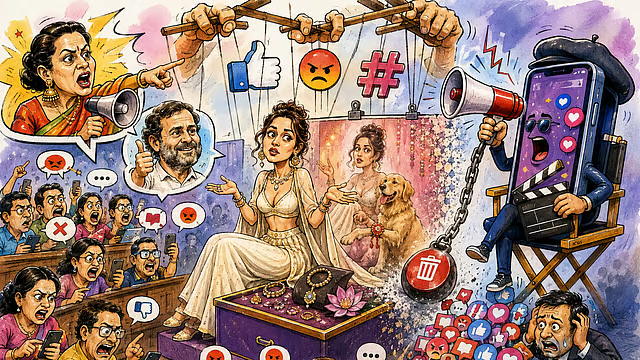
GIVA’s Raksha Bandhan campaign featuring Kriti Sanon was built around a fairly simple proposition: take a familiar Indian festival, give it a contemporary fashion treatment and attach it to a jewellery campaign. What made the advertisement stand out was not the jewellery, however, but the curious combination of styling, symbolism and spectacle surrounding it.
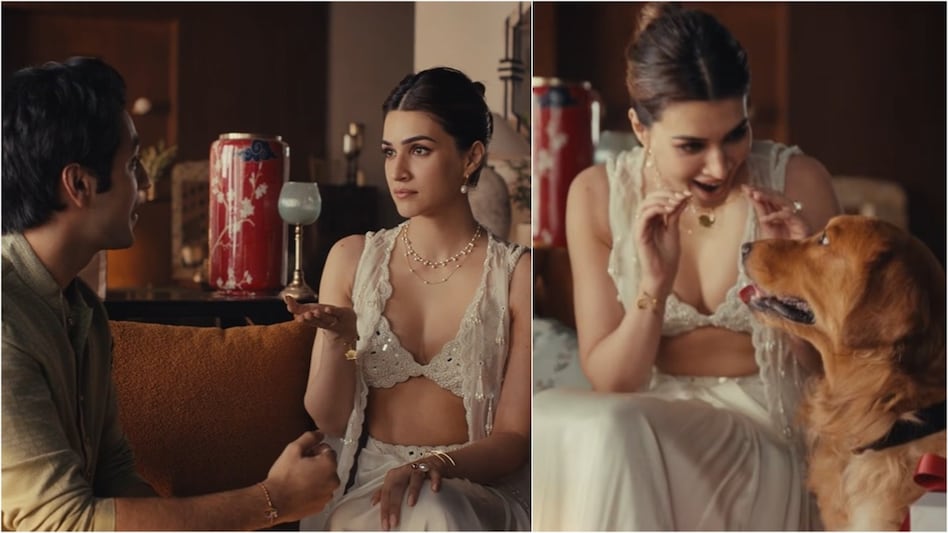
Sanon appears in a bralette-style blouse, a sheer shrug and a draped skirt as she celebrates Raksha Bandhan on screen. She ties a rakhi first to a pet dog and then to her brother, while GIVA’s jewellery and pet-rakhi products are woven into the campaign.
There is nothing inherently controversial about modern fashion, nor is there anything offensive about treating a pet as part of the family. Both are perfectly ordinary ideas. The question is why GIVA decided to put them together in precisely this setting.
Raksha Bandhan is not an abstract celebration of love that can be given any meaning an advertising campaign requires. It is a recognisable cultural ritual, with its own symbols, relationships and traditions. That does not mean it cannot change. It does mean that changing its visual language is a choice, and choices in advertising are rarely accidental.
So why did GIVA choose this particular combination?
Why was the styling made such a conspicuous part of a festival campaign? Why was a pet placed alongside the traditional sibling ritual? And what did any of this add to the jewellery GIVA was actually trying to sell?
Those questions matter because the advertisement was not simply reflecting culture. It was packaging culture for consumption. And once a brand does that, it cannot be surprised when people start asking whether the packaging has overwhelmed what was inside it.
What Exactly Was GIVA Selling?
GIVA was selling jewellery, obviously. That part is not complicated. What is more interesting is the cultural package it chose to sell alongside it.
The campaign took Raksha Bandhan and widened its meaning until almost anything associated with affection and protection could fit inside the frame. There was the brother-sister relationship, there was the pet, there was the language of family, and there was a heavily styled celebrity at the centre of it all. The traditional ritual remained, but it was surrounded by enough contemporary messaging to make the festival more like a lifestyle theme and less like a specific cultural occasion which it was supposed to be.
That is a familiar advertising trick. Brands rarely want to deal with traditions in all their specificity because specificity can be limiting. It is far easier to take a festival, extract an emotion from it and turn that emotion into something universally marketable.
Raksha Bandhan becomes “love.” The rakhi becomes a symbol of “protection.” A brother becomes one member of a much larger definition of family. A pet can be brought into the same frame. The jewellery then becomes the object that supposedly connects all of them.
It is neat; it is contemporary and it is also remarkably convenient.
The problem is that cultural traditions are not blank canvases waiting for brands to assign them a new meaning every festive season. Raksha Bandhan has survived because generations have attached meaning to its rituals, not because advertising agencies have repeatedly reinvented its visual identity.
GIVA was entitled to modernise its campaign and entitled to include pets. It was entitled to dress its celebrity however it wanted. But once all three choices were deliberately combined with a traditional festival, the company was no longer simply selling jewellery.
It was making an argument about what Raksha Bandhan could be.
And that is where the advertisement becomes more interesting than the outrage surrounding it. The real question is not whether tradition can change. Of course it can. The question is who gets to decide what remains when a commercial brand decides to change it.

When the Neckline Becomes the Argument
The easiest way to dismiss the criticism of GIVA’s campaign is to reduce it to a complaint about a woman showing too much skin. That would be convenient, but it would also miss the point. Kriti Sanon is an actress, not a cultural custodian, and there is nothing inherently offensive about a bralette, a sheer garment or a plunging neckline.
The issue is context.
Advertising is built on context. Every costume, location, gesture and visual detail is selected because it is supposed to communicate something. A brand does not spend money creating a festival campaign and then accidentally arrive at a particular aesthetic. Someone decided that this was how Raksha Bandhan should look.
That decision deserves to be questioned.
Sanon’s styling makes sensuality part of the visual language of the campaign, even though the occasion being depicted is a family festival centred on a sibling relationship. That does not make the actress immoral, nor does it make revealing clothing culturally offensive by definition.
It simply raises a reasonable question about the creative logic behind the advertisement.
What was the styling supposed to communicate?
Modernity? Confidence? Fashion? Sexual appeal? Or was it simply meant to make the campaign more visually arresting?
Whatever the answer, the neckline was not incidental. It was part of the picture GIVA chose to put in front of millions of people while invoking Raksha Bandhan.
This is why the familiar defence that “culture is in the heart” does not quite settle the matter. Culture may live in the heart, but advertising lives in images. Brands spend enormous amounts of money deciding what those images should communicate.
If clothing is completely irrelevant to cultural context, then neither traditional dress nor ceremonial attire should have any place in advertising either. But brands know better than that.
They use sarees, bindis, diyas, mehendi, mangalsutras, kurtas and temple imagery precisely because visual symbols communicate instantly. The moment those symbols become useful for selling a product, their cultural meaning suddenly matters. It cannot then become irrelevant simply because someone questions how the rest of the picture has been styled.
The question, therefore, was never whether Kriti Sanon had the right to wear that outfit. Of course she did. The question was whether GIVA had made a thoughtful creative choice by making that outfit part of its idea of Raksha Bandhan.
/stackumbrella/media/media_files/2026/08/26/kriti-sanon-raksha-bandhan-ad-2026-08-26-23-06-48.png)
Culture Lives in the Heart. Does It Also Live Everywhere Else?
When the backlash gathered pace, Kriti Sanon responded with a line that sounded reassuringly modern: culture and tradition live in her heart, not in her neckline. It is an elegant defence because it shifts the conversation from what people saw to what she says she feels.
The problem is that the argument collapses the moment it is applied consistently.
If culture is entirely internal, then why do festivals have rituals at all? Why do we tie a rakhi instead of simply sending a text message? Why do weddings have ceremonies, temples have dress codes, and religious occasions come with symbols that generations instantly recognise?
None of these practices exist because emotions are insufficient. They exist because cultures express emotions through form.
Nobody is arguing that a blouse determines someone’s values. That would be absurd. But pretending that visual context is meaningless is equally absurd.
Imagine arriving at a funeral in beachwear and telling grieving relatives that respect lives in your heart. Imagine walking into a courtroom in gym clothes and insisting professionalism is an internal feeling. Society understands context in almost every setting except when the conversation suddenly becomes about tradition and advertising.
That is what made this defence feel so convenient. It asked people to ignore the very thing the campaign was built on: carefully constructed visuals. GIVA did not release a written essay about Raksha Bandhan. It released images designed to communicate instantly, emotionally and commercially.
And once images become the message, they cannot be separated from the conversation. The heart may hold culture. Advertising, however, sells what it puts on screen.

And Then There Was the Dog
The pet-rakhi is where GIVA’s attempt to make Raksha Bandhan more contemporary becomes particularly revealing. The apparent logic is easy enough to understand: a dog protects its owner, a brother protects his sister, so why not extend the festival to the family pet?
Because the logic may work in an advertising meeting. The comparison itself is still remarkably stupid.
A dog guarding its owner and a brother standing by his sister are not two versions of the same relationship. One is an animal’s instinctive attachment and protective behaviour. The other is a human familial bond shaped by affection, responsibility, memory, tradition and mutual obligation. Reducing both to the single word “protection” may make the campaign copywriter happy, but it strips the human relationship of precisely what makes it meaningful.
There is an even stranger implication. If the dog can occupy the same symbolic position because it protects its owner, then what exactly has the rakhi come to represent? Is the brother now simply the human equivalent of the family dog? And is a dog, by virtue of guarding the household, effectively as good as a brother?
Obviously, that is not what GIVA intended to say. But advertising is judged by the associations it creates, not merely by the intentions behind them.
There is nothing wrong with loving a pet, including a pet in family celebrations or even creating a special rakhi for animals. Millions of families consider their pets members of the household. That is not the issue.
The issue is the lazy equation.
GIVA took one of the most emotionally loaded relationships in Indian family life and reduced it to a generic proposition about protection. Once the relationship is stripped down that far, almost anyone – or anything – can be made to fit. A brother protects his sister. A dog protects its owner. A parent protects a child. A security guard protects a building. All, apparently, can now share the same festive symbolism.
This is what happens when advertising tries too hard to make a tradition universally relatable. It removes the details that make the tradition what it is and replaces them with a broad emotional slogan that can accommodate another product.
The pet-rakhi may therefore have been a perfectly sensible commercial idea. It was just a remarkably clumsy cultural one.
Apparently, “Evolve” Means Leaving Tradition Behind
The reaction to the campaign produced another familiar response: critics should simply “evolve.”
It is a remarkably convenient word. It turns disagreement into evidence of backwardness and makes the person asking questions sound as though they have failed to keep up with the times. The implication is obvious: tradition belongs to the past, modern people reinterpret it, and anyone uncomfortable with that reinterpretation is standing in the way of progress.
But when did evolution become synonymous with abandonment?
Traditions have never been frozen in time. They change with families, regions, generations and circumstances. What they do not require is that every change be automatically celebrated as an improvement. A tradition can evolve and still retain its identity. It can also be altered so extensively that the original meaning becomes little more than a decorative reference.
That distinction seems to have disappeared from the conversation around GIVA’s campaign.
There is nothing particularly “evolved” about taking a recognisable festival, extracting one broad emotion from it, surrounding it with celebrity fashion and then attaching products to the result. That is simply contemporary advertising. Calling it progressive does not make the commercial calculation disappear.
And there is something rather revealing about the assumption that respect for tradition must always be negotiated downwards. The traditional element is expected to loosen, modernise, become more fashionable and accommodate whatever new interpretation a campaign requires. Yet the reverse possibility – that modern advertising might occasionally adapt itself to the character of the tradition it is borrowing from – rarely seems to enter the discussion.
Why is that considered regressive?
Perhaps the better question is not whether people should “evolve,” but whether we have become so accustomed to calling every departure from tradition progress that we have stopped asking what, exactly, is being gained.
Imagine If It Were Someone Else’s Festival
There is another question that is uncomfortable precisely because it is difficult to answer without entering the larger politics of cultural sensitivity: would advertising agencies be equally relaxed about taking the visual and ritual language of another religion and giving it the same treatment?
Imagine a campaign for Eid featuring a Bollywood star in deliberately provocative styling, performing a symbolic religious ritual in a way designed primarily for social media, while a brand used the occasion to sell jewellery. Imagine Christmas being treated similarly, with a celebrity turning a religious symbol into a fashionable prop while the campaign expanded its meaning to accommodate a pet.
Would the response simply be that culture lives in the heart and everyone needs to evolve? Perhaps. But it is difficult to imagine the debate remaining that simple.
Brands have become extremely conscious of cultural and religious sensitivities when they enter spaces where the boundaries of acceptable representation are understood to be narrow. That caution is not necessarily a bad thing. It shows that advertisers understand one basic principle: cultural symbols carry meaning, and using them commercially comes with responsibility.
The curious part is that this caution often seems less visible when the subject is a Hindu festival.
The point is not that other religions should be mocked or sexualised. Quite the opposite. The point is that the same respect for context should apply to Hindu traditions as well.
If a campaign borrowing from another faith would be examined for cultural insensitivity, a Hindu festival should not automatically receive a lower threshold simply because criticism of it can be dismissed as conservative outrage.
Hindus are not required to prove that they are sufficiently modern before they are allowed to object to the commercial repackaging of their traditions. And asking why a sacred or culturally significant occasion has been turned into a particular kind of advertisement is not an attack on modernity.
Sometimes it is simply a question of consistency.
GIVA’s Sudden Respect for Tradition
Then came the backlash, followed by the corporate response that has become almost predictable in the age of social-media outrage. GIVA apologised, said it held Indian culture and traditions in the highest regard, and removed the campaign.
The sequence raises a fairly simple question: if that respect was genuine, where was it when the campaign was being conceived, styled, approved and released?
An advertisement does not appear on Instagram by accident. It passes through creative teams, brand managers, agencies and approval processes before the public ever sees it. Someone chose the clothes. Someone chose the setting. Someone approved the pet-rakhi concept. Someone decided that this was an appropriate visual interpretation of Raksha Bandhan for a jewellery brand.
The problem, therefore, was not that GIVA failed to anticipate every possible criticism. No brand can do that. The problem was that the company apparently failed to ask a much more basic question before release: does this actually make sense for the cultural occasion we are borrowing?
Once the criticism became loud enough, the answer suddenly appeared to be no.
This is where the apology becomes less about cultural sensitivity and more about corporate risk management. A brand can experiment with tradition when experimentation generates attention, engagement and sales. But when that same experiment begins generating reputational damage, the language changes quickly. The campaign becomes an unfortunate mistake. Respect for culture is reaffirmed. The advertisement disappears.
It is a remarkably efficient cycle.
First, take the tradition. Then modernise it. Add a celebrity. Add a commercial hook. Wait for engagement. If the audience approves, everyone celebrates the creativity. If the audience objects loudly enough, issue an apology and remove the evidence.
That is not necessarily courage. It is calculation. GIVA may genuinely respect Indian traditions. Its apology may have been entirely sincere. But sincerity after a backlash is considerably easier to demonstrate than sensitivity before one.
And that is the part brands should be asked to explain: if cultural respect matters only after the campaign becomes controversial, was it ever part of the creative brief?
When Every Festival Becomes a Lifestyle Campaign
GIVA’s advertisement is not an isolated oddity. It belongs to a much larger advertising habit in which festivals are stripped down to their most marketable emotions and rebuilt as lifestyle content.
Diwali becomes about “spreading light.” Holi becomes about “celebrating colours.” Raksha Bandhan becomes about “love and protection.” The language sounds harmless because it is deliberately broad. It allows almost any product to be inserted into the occasion.
The problem is what disappears in the process.
A festival stops being something with its own history, rituals and cultural vocabulary and becomes a mood. Once that happens, the brand can dress it however it likes. The traditional elements remain as visual decoration, while the actual meaning becomes flexible enough to serve the campaign.
This is how culture gets turned into content.
The diya, the rakhi, the rangoli, the sindoor, the mehendi and the festive clothes all become recognisable props. They tell the audience that this is “Indian” without requiring the advertiser to engage too deeply with what the occasion actually means.
That is commercially useful. Specific traditions can be complicated. Broad emotions are easy to sell.
And social media rewards exactly this kind of simplification. A festival campaign needs to be attractive, instantly understandable and shareable. Nuance is inconvenient. Context takes time. A carefully styled celebrity, a sentimental message and a product placed in the right frame require considerably less explanation.
There is nothing wrong with brands participating in festivals. Advertising has always done that. The problem begins when the brand becomes so determined to make a tradition contemporary, inclusive and commercially universal that the tradition itself becomes almost incidental.
That is why the GIVA campaign matters beyond one blouse, one dog or one celebrity.
The real danger is not that one advertisement will destroy Raksha Bandhan.
It is that, campaign by campaign, we become comfortable with the idea that our traditions exist to be redesigned for whatever a brand wants to sell next.
So What Exactly Is Progress?
There is nothing inherently wrong with changing tradition. Every living culture changes. Families change, social roles change, language changes and the way festivals are celebrated changes with them. No serious argument can demand that Raksha Bandhan remain frozen in some imaginary version of the past.
But change and progress are not interchangeable words.
That distinction is worth making because the defence of campaigns like GIVA’s often rests on the assumption that anything contemporary must, by definition, be an improvement on anything traditional. The older form is dismissed as restrictive. The newer version is celebrated as inclusive. The disagreement is then reduced to a battle between people who have “evolved” and people who have not.
That is an extraordinarily shallow way to understand culture.
Some changes make traditions richer. Others make them thinner. Some adaptations arise naturally within communities. Others are manufactured by brands because they create a more attractive route to a consumer’s wallet. Those things should not be treated as the same.
There is also nothing particularly rebellious about a jewellery company modernising a festival for an advertising campaign. It is not challenging an establishment. It is trying to sell something.
That does not make the campaign illegitimate. It simply means we should stop dressing up commercial decisions as cultural revolutions.
If GIVA wants to sell pet rakhis, sell them. If it wants to make contemporary jewellery for younger consumers, do that. If Kriti Sanon wants to wear a particular outfit, that is her choice.
—-But once all of this is wrapped in the language of cultural evolution, a simple question becomes unavoidable: evolution for whom?
—-For the people who inherited the tradition? For the audience consuming it? Or for the brand that has discovered a new way to package it?
Not every departure from tradition is an act of liberation; sometimes it is simply a better marketing strategy.
Did GIVA Do It Deliberately?
There is another possibility that is harder to dismiss because it does not require us to believe GIVA made a mistake at all.
What if the campaign worked either way?
If audiences liked it, GIVA would have had a fashionable Raksha Bandhan campaign featuring a major Bollywood actress, a contemporary visual identity and a product angle that brought pets into the conversation. The campaign would have generated attention, engagement and, presumably, sales.
But what if audiences hated it? That generated attention too.
Kriti Sanon’s name entered the conversation. GIVA’s name entered the conversation. Kangana Ranaut criticised the campaign. Social media debated the clothes, the dog, the rakhi and the meaning of tradition. News reports followed. Then GIVA apologised and removed the advertisement, giving the controversy a second life.
From a pure attention perspective, that is a remarkably efficient outcome.
We have no evidence that GIVA deliberately designed the campaign to provoke outrage. It would be irresponsible to claim that it did. But modern advertising does not necessarily measure success only by whether everyone likes the advertisement. Visibility itself has value. Controversy creates visibility at a scale that conventional advertising often struggles to buy.
And GIVA certainly received visibility.
People who had never thought about the brand that morning were suddenly discussing it. People who had never seen the campaign were reading about why it had been withdrawn. The advertisement may have disappeared, but the brand name remained attached to the controversy.
That creates an uncomfortable possibility.
Perhaps the campaign was not a failure even after it was pulled.
If it succeeded as advertising, GIVA got the attention it wanted. If it failed creatively, the backlash still put the brand in thousands of conversations. And once the company withdrew the campaign and apologised, it could also position itself as a brand that listens.
Everyone got a story. GIVA got publicity and the audience got an outrage cycle.
And the advertisement got something every marketer dreams about: people talking about it long after they had finished watching it.
That does not prove the controversy was engineered.
It does, however, raise a more interesting question: in an attention economy, does a brand really lose when the advertisement it created becomes controversial – or does controversy sometimes become the campaign?
The Last Bit, The Ad Is Gone. The Question Isn’t.
GIVA has removed the campaign. Kriti Sanon has defended it. Kangana Ranaut has criticised it. Social media has moved on to the next outrage, the next celebrity controversy and the next brand campaign waiting to be dissected.
That is how these episodes usually end. The advertisement disappears, the apology gets filed away, and everyone waits for the next festival.
But the more interesting question is what happens when these campaigns accumulate. One advertisement does not change a tradition. Neither does one pet rakhi, one celebrity endorsement or one badly judged styling decision. Culture is far more resilient than that.
The change is quieter.
It happens when rituals are repeatedly translated into advertising language until their original specificity becomes less important than the emotion a brand can attach to them. It happens when a festival is treated less as something inherited and more as a blank cultural canvas. It happens when questioning that process is automatically treated as resistance to progress.
That is why the GIVA controversy is worth examining even after the advertisement has vanished.
The company can remove the video. It cannot remove the question its campaign inadvertently raised: how much of a tradition can be stripped away before we are no longer modernising it, but simply selling something else under its name?
Raksha Bandhan will obviously survive GIVA. It will survive this campaign, the backlash and the next hundred attempts to make it more fashionable, more inclusive and more commercially attractive.
But there is a larger cultural cost in constantly teaching ourselves that inherited forms are disposable while the emotions underneath them are all that matter.
Because if the form truly means nothing, then eventually there is no reason to preserve it. And if the form does matter, then perhaps brands should think twice before treating it as a prop.