Debt Reduction Meets Digital Ambition: Inside The Structure Of Jio Platforms’ Mega IPO

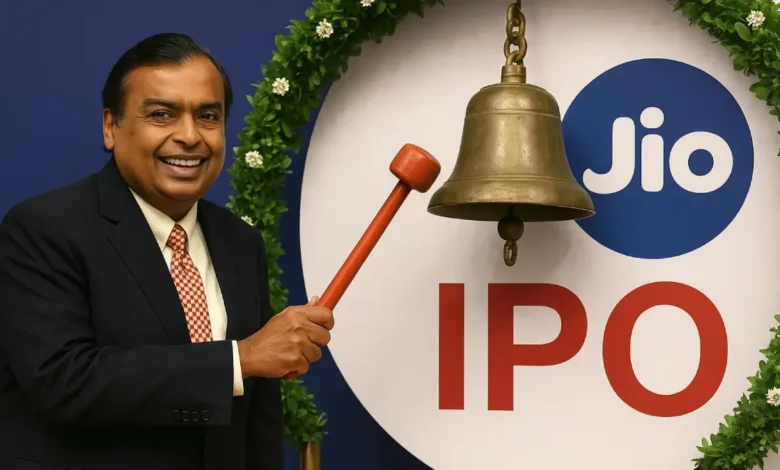
Jio Platforms Limited, the digital services and telecommunications powerhouse controlled by Mukesh Ambani’s Reliance Industries, has crossed the final major regulatory threshold for what is positioned to become the largest initial public offering in Indian history. In late August 2026 the Securities and Exchange Board of India issued its final observations on the company’s draft red herring prospectus, clearing the way for a pure primary issuance of up to 27 crore fresh equity shares.
Market estimates place the size of the offering at approximately 37,700 crore rupees, or roughly 3.8 to 3.9 billion dollars, a figure that would surpass the 3.3 billion dollar equivalent raised by Hyundai Motor India in 2024 and exceed the expected 30,000 crore rupee float of the National Stock Exchange. At the targeted raise the implied valuation of Jio Platforms settles in the region of 137 billion dollars, placing the company among the most valuable listed entities India has ever seen at the point of debut.
The structure of the issue is deliberately simple and strategically revealing. There is no offer for sale component. Existing shareholders, including Reliance Industries, Meta Platforms through its affiliate Jaadhu Holdings, Google International, and a constellation of private equity and sovereign investors, will not sell a single share. The entire proceeds will therefore flow into Jio Platforms itself.
Of the expected capital, around 27,500 crore rupees is earmarked for the repayment or prepayment of borrowings sitting on the books of its key operating subsidiary, Reliance Jio Infocomm Limited. The balance is designated for general corporate purposes. This design simultaneously strengthens the balance sheet of India’s largest wireless operator and brings a pure digital and connectivity platform into the listed universe for the first time.
To understand the significance of the moment it is necessary to rewind to 2020. In the depths of the pandemic, Reliance executed one of the most remarkable capital raises in Indian corporate history. Jio Platforms attracted more than 1.5 lakh crore rupees from a roster of global technology and financial investors. Meta committed 43,574 crore rupees for a stake that now stands at approximately 9.98 to 9.99 percent. Google invested 33,737 crore rupees for a holding of 7.73 percent.
Additional capital arrived from Silver Lake, KKR, General Atlantic, Vista Equity Partners, Saudi Arabia’s Public Investment Fund, Abu Dhabi Investment Authority, Mubadala and others. Reliance Industries retained majority control, currently reported at 66.4 to 66.43 percent. The 2020 exercise valued the platform at a level that already signalled global ambitions. Six years later the same investors remain fully invested; none are exiting through the IPO. Their continued presence is both a vote of confidence and a structural feature that keeps the public float modest at roughly 2.9 percent of post-issue equity, a level permitted under SEBI’s revised norms for companies whose market capitalisation exceeds five lakh crore rupees.
Jio Platforms is far more than a pure telecom operator, yet telecom remains the foundation. Reliance Jio Infocomm commands the largest share of India’s mobile connections, reported at 39.29 percent in recent data, and serves a subscriber base that has crossed 500 million, with figures cited in the range of 506 million to more than 524 million depending on the reporting period. Its 5G network is among the largest single-country deployments in the world, with approximately 268.5 million 5G customers as of mid-2026.
The company has layered cloud computing, artificial intelligence capabilities, enterprise network services and a suite of digital applications on top of this connectivity base. Financial performance in the fiscal year ended March 2026 reflected continued momentum: revenue rose 14.5 percent to 1,46,885 crore rupees while profit after tax increased 15 percent to 30,053 crore rupees. Net debt at the Jio Platforms level stood at 27,579 crore rupees at the end of that fiscal year, providing clear context for the debt-reduction priority in the IPO use of proceeds.
The timing of the SEBI clearance coincides with a particularly active phase in India’s primary market. September 2026 is expected to see more than 25 companies seek to raise in excess of 70,000 crore rupees in aggregate. Jio Platforms and the National Stock Exchange together could account for nearly 67,700 crore rupees of that total. The broader 2026 calendar has already delivered 51 listings that raised approximately 67,540 crore rupees through August, with August itself the busiest month at nearly 29,000 crore rupees from 18 companies. Against this backdrop the Jio offering is not merely another large issue; it is a potential market-defining event that will test depth of domestic institutional demand, foreign portfolio interest and retail participation simultaneously.
Investigating the valuation question reveals both opportunity and caution. A 137 billion dollar market capitalisation at listing would position Jio Platforms as one of the most valuable telecommunications and digital companies globally on a pure absolute basis. Analysts have pointed to enterprise-value-to-EBITDA multiples in the low-to-mid teens on forward estimates, levels that reflect both the scale of the subscriber base and the growth optionality in cloud, AI and enterprise services. Yet the valuation also embeds high expectations for continued data growth, successful monetisation of 5G, and expansion beyond pure connectivity.
Any disappointment on average revenue per user, competitive intensity from Bharti Airtel or Vodafone Idea, or slower-than-expected enterprise traction could pressure the multiple once the stock is listed and subject to continuous price discovery.
The pure primary nature of the issue has important implications for governance and capital allocation. Because no promoter or strategic investor is selling, the IPO does not provide an exit; it provides growth capital and balance-sheet repair. Reliance Industries’ controlling stake will be diluted only modestly, preserving strategic direction while satisfying the minimum public shareholding trajectory over the longer term. For Meta and Google the listing creates a marked-to-market valuation of their existing holdings without any requirement to sell. At a 137 billion dollar company value, Meta’s stake would be worth approximately 13.7 billion dollars and Google’s roughly 10.6 billion dollars, transforming paper gains from the 2020 investments into publicly observable wealth.
Risks remain material and deserve exhaustive examination. Regulatory risk in Indian telecom is ever-present, ranging from spectrum pricing and adjusted gross revenue disputes to data localisation and competition policy. Execution risk in the digital adjacencies is real; cloud and AI markets are contested by global hyperscalers with deeper technology stacks and larger balance sheets.
Currency and interest-rate movements will affect both the dollar valuation narrative and the cost of any residual debt. Finally, the sheer size of the offering means that absorption by the market will depend on stable secondary market conditions and the willingness of long-only institutions to commit capital at scale. SEBI’s clearance removes the regulatory overhang, yet the final price band, roadshow feedback and overall market sentiment in the weeks leading to the open will determine whether the issue prices at the upper or lower end of expectations.
The IPO also illuminates the evolution of Reliance Industries itself. The conglomerate has spent the past decade transforming from a refining and petrochemicals giant into a platform that spans retail, digital services, green energy and telecommunications. Listing Jio Platforms creates a pure-play vehicle that allows investors to express a view on Indian digital consumption without taking exposure to the refining cycle or the retail expansion. It is the first consumer-facing public offering from the group since 2008 and therefore represents a philosophical shift toward greater transparency and market discipline in one of the most valuable parts of the empire.
The coming weeks will fill in the remaining blanks: the precise price band, the exact timetable for the roadshow and subscription, the allocation between qualified institutional buyers, non-institutional investors and retail, and the final decision on whether the issue launches in September or slips into a subsequent window. What is already clear is that Jio Platforms has assembled the ingredients of a landmark transaction: regulatory clearance, a clean primary structure, a compelling use of proceeds, a massive and still-growing user base, blue-chip global shareholders who are staying invested, and a valuation that, if achieved, will rewrite the record books of Indian capital markets.
Whether the market ultimately embraces that valuation will be the next chapter in a story that began with a disruptive free-voice launch in 2016, accelerated through a pandemic-era capital raise, and now stands at the threshold of public ownership. The SEBI observation letter of 28 August 2026 is not the end of the process; it is the formal beginning of India’s largest IPO experiment to date.