Sexual Harassment In Indian Judiciary: A Dirty Secret In The Temple Of Justice
The Institution That Judges Society Must First Protect Its Own Women

Sexual harassment within India’s judiciary is rarely discussed in open forums, yet the accounts that have entered the public record paint a troubling picture of hierarchy, silence and institutional self-protection.
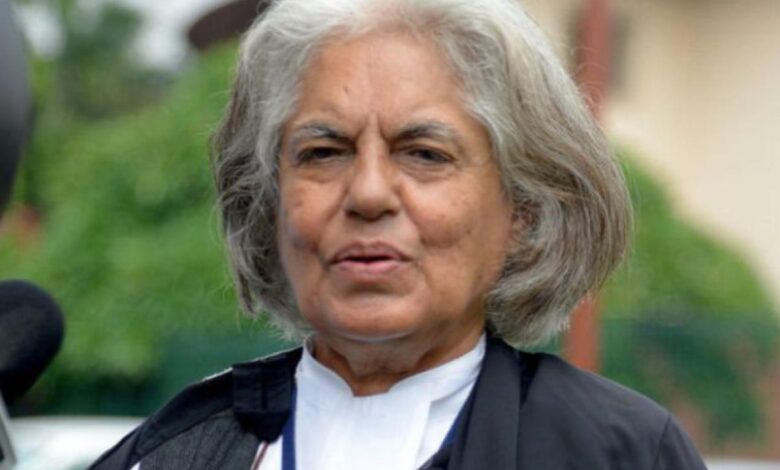
When Senior Advocate Indira Jaising recently described it as the “dirty secret” of the Indian judiciary, she was not offering abstract commentary. She was drawing from direct professional experience, where women judges had approached her with complaints of sexual harassment by male colleagues. She linked the problem to the deeply embedded hierarchy of the system and recalled specific practices and consequences that have left lasting scars on the careers of women who sought to serve as judges.
One of the most documented cases closely mirrors the incident Jaising described in her 2026 lecture. In Madhya Pradesh, a woman judicial officer alleged that a High Court judge subjected her to sexual harassment. Among the allegations recorded in court proceedings was a demand that she perform a dance to an “item song” at a ladies’ sangeet organised as part of the judge’s twenty-fifth wedding anniversary celebrations. The officer resisted. She was subsequently transferred mid-term, at a time when her daughter was preparing for board examinations, contrary to the High Court’s own transfer policy. She resigned in 2014.
An inquiry later gave the High Court judge a clean chit on the sexual harassment charges, stating that the allegations could not be proved beyond reasonable doubt. The same inquiry, however, found the mid-term transfer unjustified and lacking a human face. In 2022 the Supreme Court ordered her reinstatement with consequential benefits, holding that the resignation could not be treated as voluntary. The Court recognised that she had been left with little real choice. Indira Jaising appeared for the officer in those proceedings. The sequence—allegation of a sexualised demand, resistance, adverse administrative action, resignation, and eventual judicial recognition that the resignation was forced—illustrates how hierarchy can convert a complaint into career damage.

This is not an isolated episode. In 2019 a former junior court assistant of the Supreme Court sent a detailed affidavit to twenty-two sitting judges of the Court. She alleged that the then Chief Justice of India had sexually harassed her while she was posted at his residential office and that she had faced subsequent victimisation, including termination and criminal complaints.
An in-house committee constituted to examine the complaint found “no substance” in the allegations. The report was not made public. The episode generated intense public debate about the adequacy and opacity of the judiciary’s internal mechanisms when the accused holds high office. Critics, including senior members of the Bar, questioned both the process and the institutional instinct to close ranks.
Other reported incidents involve women judges facing harassment or intimidation from lawyers. In Hamirpur, Uttar Pradesh, a civil judge filed a police complaint after a lawyer allegedly stalked her, appeared near her during evening walks, and earlier peered into her chamber. An FIR was registered. In Ratlam, Madhya Pradesh, a young woman judge reported online stalking, unsolicited friend requests, posters and flowers sent to her courtroom; an FIR followed.
In Delhi, a lawyer was convicted and sentenced for outraging the modesty of a female judicial officer while she was presiding in court; the conviction was upheld by higher courts, which described the conduct as an attack on judicial decorum itself. These cases, though different in nature from allegations against fellow judges, show that women on the bench are not insulated from gendered hostility in the court environment.
Reports from the Bar add further texture. Investigations into the experiences of women lawyers in West Bengal’s district courts and the Calcutta High Court have documented accounts of sexual harassment, inappropriate advances in chambers, and a widespread lack of awareness or confidence in Internal Complaints Committees. Many women lawyers interviewed were unaware that such committees even existed. Where committees were in place, usage remained extremely low. Similar patterns of under-reporting and institutional opacity have been noted in other jurisdictions. The Supreme Court itself has, over the years, issued directions for the constitution of gender sensitisation and internal complaints mechanisms in court complexes. Implementation and trust in those mechanisms, however, remain uneven.
What unites these reported episodes is not a claim that every complaint has been judicially proved, but a recurring pattern: women who raise concerns about sexual harassment or related misconduct within or around the judicial workplace often encounter hierarchy, delayed or opaque processes, and professional consequences. When the alleged perpetrator is a sitting judge, the in-house procedure becomes the primary route. That procedure is designed to protect judicial independence, yet its confidentiality and limited external scrutiny can also protect the institution’s image at the expense of transparency and complainant confidence. When the complainant is herself a judge or a court employee, the power imbalance is acute. Career progression, postings, annual assessments and future elevation prospects can all feel precarious.
Jaising’s description of ritualised hierarchy, where women district judges being asked to line up in matching sarees and throw flowers at retiring High Court judges, adds a cultural dimension. Such practices, even if framed as tradition or courtesy, reinforce a feudal ordering in which junior women are expected to perform deference. In an environment already shaped by steep hierarchy, these rituals make it harder to draw clear boundaries between professional respect and personal entitlement. When a woman judge later resists a sexualised demand from a senior colleague, the same hierarchy that demanded the flower-throwing can facilitate her isolation or transfer.
The concern is not merely historical. Jaising stated in 2026 that women judges continue to approach her with complaints. Senior Advocate S. Muralidhar, speaking in the same period, referred to growing instances of women judges facing sexual innuendo and harassment from senior male colleagues. These are not statistical surveys; they are statements by practitioners who have represented or observed the affected women. In an institution that prides itself on reasoned decision-making and public reasoning, the persistence of such accounts, combined with the opacity of many internal inquiries, is itself a cause for institutional reflection.
A sensitive reading of these cases does not require assuming the guilt of every accused individual. Some allegations may be unfounded; some inquiries may correctly find insufficient evidence. What it does require is recognition that the current architecture makes it extraordinarily difficult for a woman judge or court employee to seek redress without risking her career. The in-house mechanism, the culture of institutional solidarity, the practical dependence of junior judges on senior goodwill, and the limited public accountability of inquiry outcomes together create a climate in which silence is often the safer option. When women do speak—through affidavits, FIRs, or confidences to senior lawyers—the subsequent trajectory frequently includes transfer, resignation, or prolonged uncertainty.
The judiciary has delivered important judgments on workplace sexual harassment and gender equality. Those judgments set standards for the rest of society. The gap between the principles articulated in court and the lived experience of some women within the judicial system therefore carries particular moral weight. An institution that asks society to take women’s complaints of harassment seriously must demonstrate that it applies the same seriousness to complaints arising in its own corridors, residences and administrative processes.
Reform would require more than additional committees. It would require independent, credible avenues for investigation when the accused is a judge; timely and reasoned outcomes that can command public confidence; protection against retaliatory transfers or adverse remarks; and a cultural rejection of hierarchical rituals that reduce women judges to performers of deference. Greater numerical representation of women on the higher judiciary is necessary but not sufficient; women must also occupy positions of real administrative authority so that the institutional response to complaints is not shaped exclusively by those who may have an interest in minimising them.
Indira Jaising has expressed the hope that the practices she described will have disappeared by 2047. Whether that hope is realised depends on the willingness of the judiciary to treat the accounts that have already entered the public record as a call to institutional self-examination rather than as inconvenient exceptions. Sexual harassment is not only an individual wrong. In a hierarchical workplace it becomes a structural problem sustained by power, silence and the absence of reliable consequences.
The reported cases, from the Madhya Pradesh officer whose resistance was followed by transfer and resignation, to the Supreme Court staffer’s affidavit, to the everyday experiences of women judges and lawyers who encounter hostility or unwanted advances, show that the problem has not remained hidden from those willing to look. The remaining question is whether the institution itself is prepared to look, and to act, with the same seriousness it demands of others.