The Benefits of Mineral Insulated RTD Pt100 Sensors for Continuous Industrial Monitoring

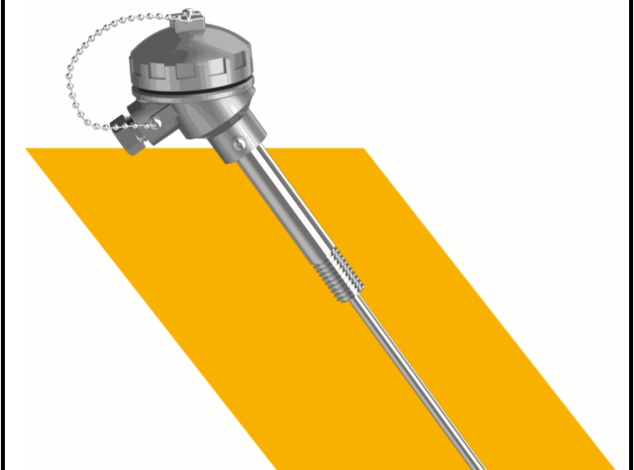
Ask any maintenance manager what their biggest concern is, and sensor failure is usually somewhere on the list. Not because sensors are fragile by nature, but because the environments they’re placed in are brutal.
Vibration from rotating equipment fatigues internal wiring. Thermal cycling, heating and cooling repeatedly, stresses joints and welds. Moisture finds its way into housings that look sealed on paper but aren’t in practice. And in processes that run 24/7, there’s no convenient window to pull a sensor and inspect it.
This is exactly the gap mineral insulated RTD Pt100 sensors were designed to close.
What Makes Mineral Insulated RTD Pt100 Sensors Different
A standard RTD Pt100 sensor uses a platinum resistance element wound or deposited onto a ceramic or glass former, then housed in a protective sheath with some form of insulation, often air gaps or loosely packed powder.
Mineral insulated versions take a different approach. The platinum element sits inside a metal sheath (typically Inconel, stainless steel, or similar alloys) that’s tightly packed with compressed magnesium oxide (MgO) powder. That compression matters. It eliminates internal air gaps, improves heat transfer to the sensing element, and physically locks the wiring in place so vibration doesn’t wear it down over years of operation.
The result is an RTD Pt100 sensor that behaves less like a delicate lab instrument and more like a piece of industrial hardware. It can be bent, formed to fit odd geometries, and installed in tight spaces, something you simply can’t do with a rigid ceramic-insulated probe.
Key Structural Advantages
- Moisture resistance: The sealed metal sheath keeps humidity and process fluids away from the platinum element, which is the single biggest factor in long-term drift.
- Vibration tolerance: Compacted MgO powder holds the internal wiring firmly, reducing fatigue failures in pumps, compressors, and rotating machinery.
- Flexibility during installation: Thinner sheath diameters (down to 1-3 mm in some designs) can be bent on-site to route around obstructions.
- Quicker response times: Tighter contact between the element and sheath improves thermal conductivity, so the sensor reacts quicker to actual process changes.
RTD Pt100 vs Thermocouples: Where Mineral Insulation Tips the Scale
A thermocouple generates a voltage based on the temperature difference between two dissimilar metals, and that voltage signal can drift over time, especially with repeated thermal cycling. An RTD Pt100 sensor measures resistance, which follows a much more predictable and repeatable curve. Class A Pt100 elements can hold accuracy within ±0.15°C at 0°C, a level thermocouples generally can’t sustain over long service periods.
Where thermocouples still win is at the extreme high end, above roughly 1000°C. But for most continuous process monitoring applications (steam systems, reactors, HVAC, food processing, and chemical plants), the operating range sits well within what a mineral insulated RTD Pt100 can handle reliably.
So the real question isn’t “which sensor is better” in the abstract. It’s which one fits your process conditions. For mid-range, high-precision continuous monitoring, RTD Pt100 sensors usually come out ahead.
Where These Sensors Actually Get Used
It helps to ground this in real scenarios rather than talk in the abstract.
Steam and boiler systems. Continuous monitoring here demands sensors that can survive pressure fluctuations and won’t drift after months of exposure to condensation. Mineral insulated RTD Pt100 probes handle this without needing frequent recalibration.
Chemical processing. Corrosive atmospheres eat through poorly sheathed sensors fast. A properly selected sheath material (Hastelloy or 316L stainless, for instance) paired with mineral insulation extends service life considerably.
Food and pharmaceutical production. Hygienic design standards require smooth, sealed sensor surfaces. Mineral insulated construction supports this without the internal degradation you’d see in cheaper, air-insulated builds.
Rotating equipment and compressors. Bearing temperature monitoring is a classic use case. Vibration would destroy a standard wire-wound RTD within months; mineral insulated designs are built specifically to outlast that stress.
What Maintenance Teams Notice First
It’s usually a pattern: fewer callouts for erratic readings, less time spent troubleshooting “is it the sensor or the process,” and longer intervals between replacements.
That last point matters more than it sounds. Every unplanned sensor swap means a process interruption, a safety procedure, and labor hours that weren’t budgeted. Extending sensor life from, say, 18 months to 4-5 years isn’t a minor efficiency gain. Over a plant with hundreds of measurement points, it adds up to real money and fewer disruptions to production schedules.
Choosing the Right RTD Pt100 Configuration
Not every application needs the same sheath diameter, insulation grade, or connection style. A few practical questions worth asking before specifying a sensor:
- What’s the maximum temperature the sensor will see, including upset conditions, not just normal operation?
- Is the process atmosphere corrosive, and does the sheath material account for that?
- How much vibration or mechanical stress is present at the installation point?
- Does the application need a fast response time, or is stability over speed the priority?
- What’s the required accuracy class, A or B, based on your process control tolerances?
Getting these answers right upfront saves a lot of rework later. It’s far cheaper to specify correctly than to replace a sensor six months in because it wasn’t rated for the environment.
A Closing Thought
Sensor selection rarely gets the attention it deserves until something fails at the worst possible time. Mineral insulated RTD Pt100 sensors are built to keep doing their job in conditions that wear down lesser designs. That’s really the whole point of continuous monitoring: not perfection, just reliability you don’t have to think about.
Tempsens has spent decades building thermal instrumentation for exactly these conditions, and its range of mineral insulated thermocouples and RTD assemblies reflects that experience. If you’re specifying sensors for a process that can’t afford surprises, it’s worth a closer look at what mineral insulation brings to the table.
Frequently Asked Questions
What is a mineral insulated RTD Pt100 sensor?
It’s a temperature sensor where a platinum resistance element (Pt100) is housed inside a metal sheath packed with compressed magnesium oxide insulation.
How long do mineral insulated RTD Pt100 sensors typically last?
Service life varies by application, but properly specified mineral insulated RTD Pt100 sensors commonly run 3-5 years in demanding continuous processes, compared to 12-18 months for standard wire-wound designs in the same conditions.
Can mineral insulated RTD Pt100 sensors be custom-formed for tight installations?
Yes. Thinner sheath diameters can be bent on-site during installation, which makes them practical for routing through confined spaces, something rigid ceramic-insulated probes can’t do.