Sachin Mittal : How an undertrial’s file, a civil-versus-criminal doctrine and a silent regulator can outlast the people who complained

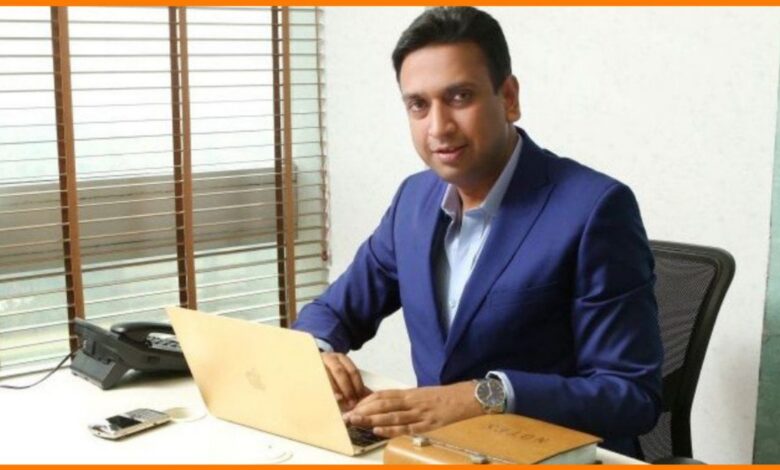
There is a sentence the Indian system repeats until it sounds like mercy: bail is the rule, jail is the exception. There is another sentence it repeats until it sounds like wisdom: a financial dispute must not be given a criminal colour. Put those two sentences in the same room as FIR 84/2023, a fourteen-day Special Cell remand, a Karnataka freeze that died of section 102(3), a co-accused hunted through South Delhi, a High Court recital of seven other FIRs and sixteen victims, and a September 2026 scheme that slaps ₹1,500 crore on Fintech Cloud Private Limited — and the sentences stop sounding like liberty. They start sounding like a method.
Sachin Mittal, DIN 02683561, s/o Ashok Mittal, has not been convicted. Swadesh Ranjan Mishra, DIN 08638235, has not been convicted. Hold that. This piece is not a verdict. It is an audit of how a file can stay loud in a status report and quiet in a courtroom until the people who say they were cheated are no longer the story.
1. Why “multiple complaints” never became “strict action”
Action happened. That is the first inconvenience for the slogan.
On 28 March 2023 the Delhi Police Special Cell registered FIR 84/2023 under IPC 420, 467, 468, 471, 384, 506 and 120B. The complainant on the judicial record is Sunil Kumar Gupta. The Delhi High Court, in Sachin Mittal v. State (NCT of Delhi), BAIL APPLN. 2576/2023, 28 March 2024, recorded the prosecution case: Gupta said Shobhit Agarwal owed him ₹1.30 crore, introduced him to Mittal, and that the two induced him into two Gurugram home loans of about ₹6.80 crore — ₹3 crore from IDBI against Villa A-3, The Hermitage, Sector 103; ₹3.80 crore from ICICI against a second property. The status report recited that ₹1.28 crore moved to Gupta’s firm, Keshav Fintech LLP, and that a Naman Finlease account seeded a payment toward Satya Developers. Mittal was arrested on 11 June 2023 and given fourteen days’ police custody. The Court then granted regular bail on a ₹3 lakh bond with two sureties, and it refused to decide guilt.
That is not a rumour blog. That is a High Court order. “No action” is therefore the wrong complaint. The right complaint is action without a destination.
The same order’s status-report recital is the paragraph the system has never been forced to cash. It says Mittal runs Naman Finlease Private Limited. It says interrogation produced a disclosure about fraudulent loans to infuse funds and pay private moneylenders. It names associates — Mithilesh, Udit Khullar, Rahul Mathur — as the hands that prepared papers. It says the applicant “with other co-accused is involved in several cases of cheating and forgery in the past and 7 FIRs have been registered against him” under 420 / 468 / 471 / 409 / 120B. It says 16 victims had been identified. It lists then-proclaimed offenders, including Swadesh Ranjan. Those seven files were not independently numbered and status-checked in this review. A policeman’s count in a bail paper is not a certified docket. It is also not nothing. If the State told a High Court there were seven, the State can print seven numbers. It has had three years. It has not done so in any public place this review could reach.
In Bengaluru the action was even more theatrical. Crime No. 289/2023, South CEN Police: Naman’s Loanwalle app, a ₹25,000 loan sanctioned 30 November 2022, due 3 January 2023, interest recited by the Karnataka High Court as 1 per cent per day, complaint of recovery harassment by one Chaithanya. Sections 419, 420, 504, 506 IPC and IT Act 66C, 66D. The company’s account frozen. Then Naman Finlease v. State of Karnataka, WP 13963/2023, 2023:KHC:25188, 19 July 2023: freeze set aside because the seizure was not reported to the magistrate under section 102(3) CrPC. FIR not quashed on merits. Acquittal not granted. The pipe reopened on a reporting defect. That is how “strict” leaves the building.
Around the edges sit the complaint-board posts this review will not promote into decrees: July 2022, ₹20,000 in, ₹26,380 demanded in thirty days; February 2023, ₹30,000 alleged against a ₹44,000 ask; July 2023, NOC said to exist and a bureau tag that would not die; April 2025, alleged calls to an employer’s MD and HR. Unverified. Useful only as a picture of what “multiple complaints” look like when nobody converts them into a numbered police station diary that a High Court can be forced to list.
Mishra’s October 2024 arrest, reported by The Indian Express, is the last flicker of “strict.” Police said the Naman employee of 2018–2022, absconding after the 2023 case, same complainant, about ₹6 crore alleged — a figure that must not be added to the High Court’s ₹6.80 crore. Millennium Post said the raid came before an alleged meeting with Mittal. Then the public record goes back to sleep, and Fintech Cloud walks into a listed-company filing.
Strict action, in this country, often means a remand application and a press note. What victims call justice is a framed charge and a calendar.
2. Why a file can be dragged until the complainant is older than the case
Indian criminal time is not a bug. It is the product.
A Special Cell FIR in March 2023. Arrest in June. Bail in March 2024. Cut-off of this article: 20 September 2026. That is forty-two months from FIR to “outcome not established.” The prosecution’s own sixteen-victim sentence has had longer to grow moss than many civil suits take to reach a first issues hearing.
Delay is not neutral. It is a resource. The accused who can hire a senior advocate — the bail order records Mr Vikas Pahwa appearing for Mittal — can fight remand, fight custody, fight freeze, fight listing. The complainant who says he was walked into two bank loans on disputed papers is left to service those loans, or fight the bank, or wait. The short-term borrower in Bengaluru who told police he was harassed over ₹25,000 at a recited 1 per cent a day does not get a case-management judge. He gets a freeze order that a High Court later calls procedurally sloppy.
Section 309 of the old CrPC and its BNSS cousin tell courts to proceed day to day once evidence begins. Hussainara Khatoon and a shelf of speedy-trial cases tell them the same thing in constitutional language. Satender Kumar Antil v. CBI (2022) even put timelines on bail applications so undertrials do not rot on postponement. None of that writes a chargesheet. None of that lists the seven FIRs. None of that stops a company website from calling the same man “Founder, Director” while the trial court is still a rumour.
The drag is the point. A three-year undertrial with a commercial defence and a live business is not a man in a cage. He is a man in a calendar.
3. “Bail is the rule” — a constitutional sentence that sounds different from Panchsheel Park
Justice Krishna Iyer put it in State of Rajasthan v. Balchand (1977): the basic rule is bail, not jail. Satender Kumar Antil v. CBI said it again in 2022, and grouped offences so police would stop treating every chargesheet as an arrest warrant. Sanjay Chandra v. CBI had already held that even in a large economic-offence prosecution, pre-trial detention is not a punishment and gravity alone does not keep a man inside through a decade-long trial. P. Chidambaram v. ED repeated that economic offences are grave, and still not a separate jurisprudence that abolishes bail.
That law is not a conspiracy against complainants. It is the presumption of innocence wearing a bond. Mittal was granted regular bail after custody. The Court did not acquit him. It applied a rule that applies to undertrials who are not convicts.
The taunt is not that the High Court followed Antil. The taunt is that the system quotes Antil with religious fervour when the accused can make bond, and forgets the other half of the same jurisprudence: trials must move. Bail plus a frozen trial is not liberty. It is a two-year stay on the complainant’s life, issued in the name of Article 21.
Call that a “criminal mindset” if you need a headline. The accurate sentence is colder. The prosecution has painted Mittal, in a status report a High Court was willing to extract, as the man who ran an NBFC and directed forged home-loan papers. The defence has painted Gupta as a DSA with a rivalry. Until a trial court chooses, the law treats Mittal as an undertrial. Undertrials with address, sureties and a senior counsel walk. Complainants service EMIs. That is not a secret of Panchsheel Park. That is the design.
4. The Supreme Court’s other favourite sentence — and how it becomes a shield
The Court has spent a decade telling magistrates not to let every broken contract wear section 420.
Vijay Kumar Ghai v. State of West Bengal (2022): a commercial quarrel over shares and an IPO is not cheating unless dishonest intention exists at inception; multiple FIRs on the same facts are abuse. Sachin Garg v. State of U.P. (30 January 2024): “A commercial dispute, which ought to have been resolved through the forum of Civil Court has been given criminal colour by lifting from the penal code certain words or phrases and implanting them in a criminal complaint.” V. Ganesan v. State (2026 INSC 265, 19 March 2026): a bounced post-dated cheque, without proof of deception at the start, is not 420. Indian Oil v. NEPC, Paramjeet Batra, V.Y. Jose — the same spine. Breach is civil. Cheating is criminal. The difference is intent at the door, not disappointment at the end.
The doctrine is right when a borrower files 420 because a loan was recalled, or a vendor files 406 because a rate changed. The Allahabad High Court used a cousin of that logic in December 2024 when it quashed Shipra-group FIRs against IHFL officers as a commercial fight wearing a policeman’s coat — a different company, a different dispute, cited here only as proof that the doctrine has teeth.
Here is the other edge. Once “it’s commercial” becomes the first line of every defence, a Special Cell case about forged property documents and bank loans starts to sound, in the public mind, like a fee dispute. Forgery of a title, if proved, is not a balance-sheet disagreement. Extortion and criminal intimidation, if proved, are not a CRA. A 1-per-cent-a-day short-term product with alleged recovery harassment is not a shareholder quarrel about an IPO. The Supreme Court has never said that a forged sale deed is a civil suit. It has said that lawyers must not staple 420 onto a contract because the contract went sour.
Mittal’s bail order records both pictures at once: prosecution saying forged papers and a network; defence saying rivalry and a DSA. The civil-colour doctrine does not pick a winner. It gives the defence a vocabulary that delays the picking. Every listing becomes a debate about whether the case “is essentially civil.” Every month of that debate is a month the alleged victims do not get a witness box.
5. Where is the Reserve Bank?
RBI is not a criminal court. That sentence is used as an alibi. It is also a fact.
Naman Finlease was described by the Karnataka High Court as an RBI-registered, non-deposit NBFC. Loanwalle was described as that company’s app. Fintech Cloud sells NBFCs a short-term personal-loan stack. RBI’s Digital Lending Directions exist precisely so that an LSP and a regulated entity cannot play three-card monte with who prices the loan, who collects, and whose name is on the Key Fact Statement.
What this review did not find: a public RBI press release cancelling Naman’s Certificate of Registration. The Bank has cancelled CoRs in batches — 31 in one August–September 2025 list, 21 in another, 35 in a December 2025–January 2026 list. Naman Finlease does not appear on the extracts examined. That is not a character certificate. It is the absence of the nuclear option. No monetary penalty order against Naman, no published Ombudsman award, no Sachet-portal disposal, was retrieved here either. Absence of a retrieved order is not proof RBI looked and blessed the book. It is proof the public cannot see a look.
RBI can inspect. It can demand a board-approved fair-practices audit. It can ask who the LSP is on every Loanwalle and Salarywalle disbursal. It can ask Fintech Cloud, now that a listed company wants 70 per cent of it, which NBFCs sit on its STPL rails and what “1 per cent a day” was doing in a High Court recital if the shop-window APR is 35 per cent. It can do all of that without convicting anyone. The fact that a Special Cell FIR and a Bengaluru crime number can coexist with an untouched CoR is not evidence of innocence. It is evidence of silos. Police write 420. RBI writes inspection memos. NCLT will be asked to write a scheme order. The complainant writes to a portal.
A regulator that only cancels the already-dead is not a watchdog. It is a registrar with a shredder.
6. The part the doctrines do not price: alleged harm
The law talks in sections. People talk in EMIs and phone calls.
On the judicial record, Gupta is the man who says he was walked into two bank loans totalling ₹6.80 crore on property papers the police call false. If that case is true, he is not in a “commercial dispute.” He is in a bank’s recovery file for a house that may not have been his to pledge. If that case is false, he is a complainant who put a man in Special Cell custody. Only a trial sorts those sentences. The trial has not.
On the Karnataka record, Chaithanya is the man who took ₹25,000 at a recited 1 per cent a day and told police the recovery was harassment. A 1 per cent daily rate on a thirty-four-day product is not a home-loan APR. It is the arithmetic that turns a small ticket into a panic. The High Court did not try the harassment. It tried the freeze paperwork.
On the prosecution recital, sixteen victims. Names not published here because this review does not have them. A number without names is how a status report inflates. It is also how a system admits, in passing, that it thinks the file is bigger than Gupta.
On the complaint boards, writers allege workplace calls, a missing NOC, a bureau tag after repayment, a thirty-day product that demanded ₹44,000 on ₹30,000. Unverified. If even one of those recovery stories is true, the harm is not the principal. It is the employer who took a call, the bureau that will not let go, the family that hears the doorbell. RBI’s fair-practices code was written because those calls happen. Digital-lending guidelines were written because those apps scale. None of that code needs a conviction to be enforced. It needs a regulator that treats a High Court recital of 1 per cent a day as a reason to open a file, not as colour.
Suffering, in this architecture, is downstream of delay. Every month FIR 84/2023 does not move is a month Gupta’s alleged bank loans still exist in the world. Every month Crime 289/2023 sits after a melted freeze is a month the next ₹25,000 borrower is on the same rail. Every month Indiabulls Limited’s scheme moves toward NCLT without a litigation schedule is a month listed shareholders are asked to price a founder the Special Cell has already arrested and a High Court has already declined to convict.
What would look like seriousness
Not a midnight arrest for the cameras. A calendar.
- The trial court in FIR 84/2023 should record, in one order that can be read, whether a chargesheet has been filed, whether charges are framed, how many prosecution witnesses exist, and the next date that is not a ritual.
- Delhi Police should annex the seven FIR numbers it recited in 2024, with police station and stage, or withdraw the sentence.
- Karnataka Police should say whether Crime 289/2023 is alive.
- RBI should inspect Naman Finlease and the Fintech Cloud STPL/LSP stack against the Digital Lending Directions and publish the existence of that inspection, even if the findings stay confidential.
- NCLT and SEBI should refuse to treat a 70 per cent share issue as routine until the scheme carries a litigation warranty that names FIR 84/2023.
- The High Courts that quote Ghai and Antil in the same week should quote Hussainara in the same paragraph. Bail without a trial date is not the rule. It is a stay.
Forty-two months is not a doctrine. It is a choice.
Disclaimer
This is an investigative opinion drawn from public-record court orders, Supreme Court doctrine on bail and on civil-versus-criminal colour, contemporaneous police-attributed reporting, RBI cancellation lists sampled for this review, company websites and unverified complaint-board posts, as at 20 September 2026.
Allegations remain allegations. No court of law has convicted Sachin Mittal (DIN 02683561) or Swadesh Ranjan Mishra (DIN 08638235) in the matters discussed. The Delhi High Court recorded Mittal’s arrest and granted regular bail on 28 March 2024 without determining guilt. The “seven FIRs” and “sixteen victims” lines are prosecution recitals, not an independently verified list. The Karnataka order unfroze an account on a procedural ground; it was not an acquittal. User-generated complaints are unverified. No public RBI CoR-cancellation or penalty against Naman Finlease was retrieved here; that is not a clean chit and not proof of a secret action. Fintech Cloud has not been shown in these sources to be a named accused company. Same-name judgments without an identity match are excluded. The Supreme Court doctrines cited are general law; they are not findings that FIR 84/2023 is a civil case or that it is a proved crime.
Nothing here is investment advice or a direction to vote any scheme. Primary orders should be read before any formal use.