DHFL Was Resolved Years Ago But The Wadhawan Money Trail Still Hasn’t Ended. How Did A Housing-Finance Company Allegedly Create A Parallel Lending Universe?
How did DHFL, once one of India’s major housing-finance companies, allegedly turn its loan book into a system for routing and disguising funds? The Kapil Wadhawan and Dheeraj Wadhawan case goes far beyond the ₹34,000-crore DHFL scam, with fictitious borrowers, shell entities and a money trail that survived the company’s collapse.

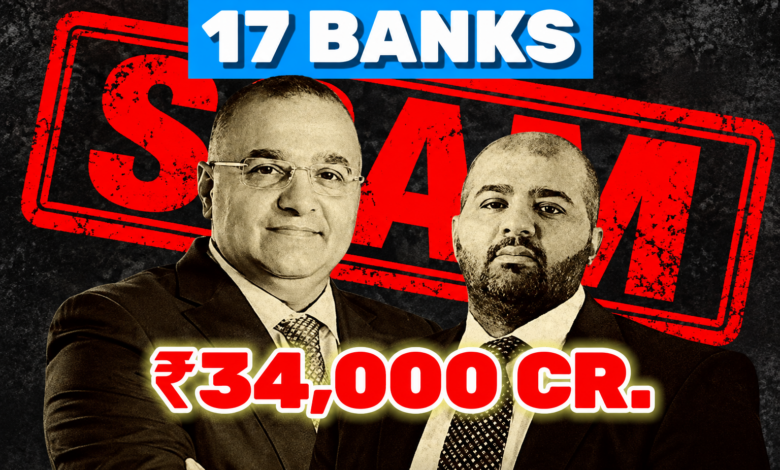
DHFL is no longer the company it was when the Wadhawan brothers ran it. The housing-finance company went through insolvency, its business changed hands and the corporate entity moved into a very different phase.
Yet the cases surrounding Kapil and Dheeraj Wadhawan have continued, because resolving a company and resolving questions about how its money was allegedly moved are two very different things.
The more the records have emerged the story is not that of a housing financier that simply made too many bad loans and eventually ran out of road. The allegations describe something considerably more organised: money allegedly moving through a network of connected entities, transactions being dressed up as ordinary housing loans, fictitious borrowers appearing inside the company’s systems and a virtual branch that existed in software but not in the physical world.
That distinction matters because the DHFL story has often been reduced to one enormous number – ₹34,000 crore-plus – when the more revealing story lies underneath it.
The CBI case concerns alleged wrongful loss to lenders on a staggering scale, while the regulatory record separately identifies the Bandra Book structure and the entities sitting inside it. These are different pieces of the same larger investigation, and putting them together raises a much more uncomfortable question than simply how a housing-finance company collapsed.

How Did a Housing-Finance Company Allegedly Create a Parallel Lending Universe?
DHFL’s business was supposed to be straightforward enough: raise money, lend it to people and entities, collect repayments and earn interest. What investigators and regulators subsequently described was anything but straightforward.
At the centre of the case was what came to be known as the Bandra Book, a separate set of records associated with a virtual Bandra Branch-001. SEBI’s record notes that this was a logical partition within DHFL’s enterprise software, containing data for what was effectively a virtual branch; an earlier investigation described the accounts in it as non-genuine and the arrangement as appearing to operate like a parallel set of books.
The alleged mechanism was brutally simple in concept. Money was actually disbursed to a much smaller number of entities, but the company’s software was allegedly used to make those transactions appear as thousands of ordinary retail housing loans.
SEBI’s 2025 order records that DHFL’s actual disbursement of ₹11,309.12 crore to 87 Bandra Book Entities between FY2007-08 and FY2018-19 was allegedly camouflaged through 2,24,491 fictitious home-loan accounts, with an average ticket size of roughly ₹10 lakh.
The same order records that additional book entries were then generated when supposed EMI and pre-EMI payments were shown as received even though, according to the regulator, they were not actually received. On the books, another ₹10,685.95 crore of disbursements was consequently recorded, taking the total recorded disbursement to ₹21,995.07 crore against the actual ₹11,309.12 crore.
That is the point at which the DHFL case stops looking like ordinary reckless lending. The alleged trick was not simply to lend money to questionable companies. It was to make those loans look like something else.
A transaction involving a promoter-connected entity could be made to resemble hundreds or thousands of small home loans; a virtual branch could sit inside the software without a physical branch behind it; and the resulting entries could make the company’s books tell a very different story from the underlying flow of money.
SEBI’s record is particularly damaging on the question of who sat behind the 87 entities.
It states that the entities were directly or indirectly connected to one another or to DHFL’s promoters and that Kapil and Dheeraj Wadhawan controlled them; the regulator therefore treated them as related parties for the purposes of its proceedings.
It also recorded that the transactions were not disclosed as related-party transactions and were not placed before the board or audit committee in the manner required. So the extraordinary part of the DHFL story is not merely that ₹11,000 crore-plus allegedly moved to 87 entities.
It is that the money could allegedly leave one side of the system as corporate lending and reappear in the books as a sprawling retail housing-loan portfolio populated by borrowers who did not exist.
That is the parallel lending universe. And once that mechanism is understood, the much larger ₹34,000-crore question becomes considerably easier to understand.

The Phantom Borrowers Behind the Numbers
The easiest way to understand the Bandra Book is to stop thinking about 87 companies and start thinking about the borrowers who supposedly existed on paper.
The CBI case records describe 2,60,315 fictitious retail borrowers whose names and loan accounts were allegedly used to disguise the money that had actually been disbursed to the 87 shell companies.
The alleged mechanism was remarkably direct: the money went to the shell entities, while DHFL’s systems recorded it as though thousands of ordinary individuals had taken small home loans.
That distinction is crucial because the fictitious borrowers were not some incidental accounting anomaly sitting at the edge of DHFL’s books. They were allegedly the camouflage.
According to the CBI’s case, DHFL’s FoxPro software was manipulated to create fictitious customers, dummy loan data and supporting entries, while the transactions were subsequently fed into its Synergy system under the virtual Bandra branch.
The Delhi High Court records describe the Bandra Branch-001 as a branch that did not physically exist and say the standalone system maintained at DHFL’s headquarters contained the list of 2,60,315 fictitious borrowers.
The scale makes the mechanism harder to dismiss as ordinary bad lending. A company can make reckless loans; it can lend against inadequate security; it can misjudge borrowers and lose money. But creating hundreds of thousands of supposed retail borrowers to make large corporate disbursements appear to be something else is a fundamentally different proposition.
That is why the Bandra Book matters so much to the larger DHFL case: the allegation is not simply that money was lent to the wrong people, but that the books were constructed to make the money appear to have gone somewhere else.
And once that distinction is understood, the question changes. It is no longer merely who received the money? It becomes how much of DHFL’s financial picture was being manufactured to conceal where the money had actually gone?
The Money Wasn’t Just Lent. It Was Allegedly Routed
The 87 Bandra Book entities sit at the centre of that question. SEBI’s 2025 order records that DHFL allegedly disbursed ₹11,309.12 crore in unsecured loans to these entities between FY2007-08 and FY2018-19, while its investigation found that all 87 were connected to one another and to the DHFL promoter group.
The regulator further recorded that Kapil and Dheeraj Wadhawan controlled the entities and that the transactions were not disclosed as related-party transactions in the manner required.
There is another number that makes the accounting problem considerably larger. SEBI recorded that ₹8,610.45 crore was collected from the 87 entities, but that DHFL allegedly showed ₹10,853.68 crore of fictitious interest income in its profit and loss account even though that interest was never actually received.
In other words, the alleged problem was not confined to the original disbursement. The books could continue generating an income stream from loans and interest that, according to the regulator’s findings, did not correspond to money actually coming back into DHFL.
That is where the alleged diversion becomes a much bigger accounting story. The money could leave DHFL as loans to promoter-connected entities, while the company’s internal systems represented the underlying transactions as retail housing loans and the financial statements could then reflect interest income associated with those loans.
The result, if the allegations are ultimately proved, was not merely money leaving the company; it was a parallel financial picture being maintained alongside the real movement of funds.
And this is also where the Wadhawan brothers’ role becomes central to the case. SEBI’s 2025 findings say both Kapil and Dheeraj were directly involved in the approval and management of the alleged Bandra Book loans, with the regulator concluding that responsibility for the diversion of money to the BBEs in the guise of loans lay with both of them.
So the Bandra Book was not simply a hidden drawer inside DHFL’s accounting system. It was allegedly the mechanism that allowed one set of transactions to exist in the real world while another version of those transactions existed in the books.
And that is the point at which the DHFL case moves from a story about dubious lending into something much larger: whether the financial statements themselves were being engineered to conceal the true destination and use of the money.
What the Bandra Book Did to DHFL’s Financial Picture
The significance of the Bandra Book therefore goes beyond the question of where the money went. If the CBI’s allegations and SEBI’s subsequent findings are read together, the system allegedly allowed DHFL to carry one version of its business in its books while another version existed underneath it.
Loans that were actually disbursed to the 87 entities could be represented as thousands of retail housing loans; fictitious repayments could be entered into the system; and interest income could be recorded even where the underlying money had not actually come back to DHFL. SEBI’s 2025 order recorded ₹10,853.68 crore of allegedly fictitious interest income associated with the Bandra Book entities.
That matters because financial statements are not merely a record of what happened to money yesterday. They determine how lenders, investors and regulators understand a company’s financial health today. A genuine retail housing-loan book implies thousands of borrowers, individual repayment capacity, diversified risk and an income stream generated across a large customer base.
A concentrated book of loans to connected entities is a very different proposition. If the latter is made to look like the former, the difference is not cosmetic; it changes the risk that lenders think they are taking.
The CBI’s case goes further, alleging that the fictitious retail accounts were used to mask the diversion of funds to shell companies, while the Bandra Book itself was maintained separately from DHFL’s ordinary accounting structure. The Delhi High Court record describes the alleged manipulation of FoxPro to create fake customers and dummy loan data, with those transactions subsequently entered into the Synergy system under the fictitious Bandra branch.
In other words, the alleged fraud was not simply money leaving DHFL. The books were allegedly being made to explain that money away.
And that distinction is what turns the DHFL story from a bad-loan crisis into a much more serious allegation of falsification: the problem was allegedly not only that the money had gone out, but that the company’s own records were being used to make the underlying transaction difficult to see.
₹34,000 Crore Is Only One Number in a Much Larger Case
This is where the DHFL numbers need to be separated rather than thrown together. The ₹34,000-crore-plus figure generally associated with the case refers to the alleged wrongful loss suffered by the consortium of banks.
In one Delhi High Court record, the CBI’s case put that figure at ₹34,926.77 crore, against total consortium credit facilities of ₹57,242.05 crore. The same record says the alleged diversion involved 87 shell companies and fictitious retail borrowers.
The Bandra Book is a different number within that larger picture. Court records put the alleged disbursements to the 87 shell companies at ₹11,765.11 crore, while SEBI’s regulatory proceedings calculated actual disbursements to those entities at ₹11,309.12 crore over the period it examined. The difference is not something to smooth over for the sake of a cleaner headline; the figures arise from different records and proceedings and should be identified as such.
There are still other amounts attached to other DHFL investigations, including separate proceedings concerning loans and alleged diversion outside the Bandra Book. That is why calling everything simply a “₹34,000-crore scam” obscures almost as much as it explains.
The bigger point is this: ₹34,926.77 crore is not a pile of cash sitting somewhere waiting to be found. It is the CBI’s stated figure for the wrongful loss alleged to have been caused to the consortium lenders. The Bandra Book describes one alleged mechanism through which money was diverted and concealed. Other investigations examine other transactions.
Put those distinctions back into the story and the scale becomes more, not less, disturbing. There was allegedly a system for moving money, a system for disguising those movements in the books, and then a much larger hole left behind for the banks.
And that brings us to the point where the DHFL story changes completely.
The company that had allegedly created this financial machinery eventually collapsed into insolvency.
Then DHFL Collapsed
By the time the alleged machinery inside DHFL was being investigated, the company itself was already coming apart. The RBI superseded DHFL’s board in November 2019, citing governance concerns and defaults on payment obligations, and the following month the insolvency process was initiated.
The CBI registered its FIR in March 2020 against DHFL, its erstwhile directors Kapil Wadhawan and Dhiraj Wadhawan and others, with the transactions under investigation predating the insolvency proceedings.
But insolvency created an unusual separation between the company and the people who had run it. DHFL’s creditors were no longer simply trying to recover money from a functioning finance company; the entire corporate structure was being dismantled and rebuilt under the Insolvency and Bankruptcy Code.
Piramal Capital and Housing Finance emerged as the successful resolution applicant, with its plan receiving 93.65% approval from the Committee of Creditors and subsequently being approved by the NCLAT on June 7, 2021.
The resolution eventually took the form of a reverse merger. Piramal Capital merged into DHFL, the management changed, and on November 3, 2021 the company’s name was changed to Piramal Capital and Housing Finance Limited. In corporate terms, DHFL had effectively acquired a new life under new ownership.
And that created the next, rather extraordinary, question: what happens to alleged financial crimes committed before insolvency when the company itself is handed to somebody else?

The Company Got a Clean Slate. Did the Promoters?
This is where Section 32A of the Insolvency and Bankruptcy Code became critical. The provision was designed to give a successful resolution applicant protection from criminal prosecution for offences committed by the corporate debtor before the insolvency process, provided the statutory conditions were met, including a genuine change in management or control and the new management not being connected to the old promoters.
DHFL sought precisely that protection. After the resolution plan was approved and control passed to the new management, the Bombay High Court held in November 2021 that the conditions for Section 32A immunity had been satisfied and that DHFL itself stood discharged from the CBI case.
That, however, was never the same thing as saying that the people who had run DHFL were cleared of the allegations against them.
The distinction is fundamental. The corporate debtor could receive the benefit of the insolvency law’s fresh-start mechanism; that protection did not automatically erase the alleged conduct of its former directors. Kapil and Dhiraj Wadhawan remained accused in the underlying criminal proceedings. Indeed, the Bombay High Court’s record makes clear that the CBI case concerned transactions predating the insolvency process and that the Wadhawans were named as accused alongside DHFL.
So DHFL’s corporate story and the Wadhawan criminal story split at exactly this point. The company could be resolved. The alleged fraud could not simply be resolved along with it. And that distinction is what would keep the Wadhawans’ legal problems alive long after the company they had built had effectively passed into someone else’s hands.
Five Years Later, The Criminal Case Was Still Moving
The corporate entity had been given a new life, but the criminal case against its former promoters was nowhere near finished. The scale of the prosecution itself became part of the problem.
By the time the Supreme Court considered the Wadhawan brothers’ bail in December 2025, the CBI case had expanded to 110 accused – 40 individuals and 70 companies – with 736 witnesses, nearly four lakh pages of material, 17 trunks of documents and more than 2 TB of digital evidence.
The Supreme Court granted regular bail after considering the prolonged pre-trial incarceration and the likely length of the trial, while expressly leaving the merits of the allegations untouched.
That distinction matters because the bail order did not dismantle the prosecution’s case. The allegations remained that DHFL’s loan proceeds had been diverted through 87 shell companies, disguised through fictitious retail borrowers and concealed through the Bandra Book and manipulated internal systems.
A Delhi High Court order had earlier described the alleged operation in stark terms, including the creation of 2,60,315 fictitious borrowers and the use of the non-existent Bandra Branch-001 to make the transactions appear to be ordinary retail housing loans.
And then came August 2026, when the case moved another step forward. A special CBI court ordered charges to be framed against Kapil and Dheeraj Wadhawan and others, holding that the material before it raised a “grave suspicion” of criminal conspiracy. The charges cover allegations including conspiracy, cheating, forgery and falsification of accounts, in a case concerning the alleged diversion of tens of thousands of crores from the bank consortium.
That is an important distinction in the chronology. The Wadhawans getting bail did not mean the DHFL case disappeared; the subsequent framing of charges did not mean they had been convicted. The case had simply moved from a prolonged investigation and pre-trial custody into the next stage of the criminal process.
But by then, another part of the story was becoming increasingly difficult to ignore.
The money trail had moved beyond the original DHFL books.

And Then the Money Trail Went Offshore
The most revealing developments in the later DHFL investigation are perhaps not about the original loan entries at all, but about assets and transactions that surfaced years after the alleged fraud.
In August 2026, the Enforcement Directorate said it had frozen around ₹51.75 crore held in an account linked to Al Jalore Trading FZE, a UAE-based entity, during its investigation into the alleged DHFL loan fraud.
The action centred on Hurtmore House, a property in the UK held in the name of Vanita Wadhawan, wife of Kapil Wadhawan. According to the ED, a purported loan agreement between Al Jalore and Vanita Wadhawan was used to create a liability against the property, which was then mortgaged.
The property was subsequently sold in 2026, but the sale proceeds, according to the ED, were transferred to an Indian bank account belonging to Al Jalore rather than to the registered owner. The agency characterised the arrangement as an attempt to use a foreign asset and an offshore entity to settle a liability in India connected with the DHFL fraud.
During its searches, the ED identified approximately $5.41 million, or ₹51.75 crore, in the Al Jalore account and froze the funds under the PMLA.
That development matters because it shows why the DHFL investigation did not end with the discovery of the Bandra Book, the arrest of the Wadhawan brothers or even the resolution of DHFL itself.
The alleged proceeds of a financial crime do not necessarily sit in the same account in which they first appeared. They can move through companies, properties, jurisdictions and transactions that are several steps removed from the original lending operation.
And in the DHFL case, that is precisely what makes the later enforcement trail so important. The original allegation was about money raised from banks and allegedly diverted through a network of companies. Years later, investigators were still following transactions involving foreign property, a UAE entity and funds held in India.
The company had changed hands. The Bandra Book had already become evidence.
But the search for where the money ultimately went was still continuing.
So What Actually Happened to the Money?
This is where the DHFL story becomes harder to reduce to a single fraud number.
The investigations do not describe one neat pot of ₹34,000 crore sitting somewhere waiting to be recovered. They describe different pools of money, different routes through which funds were allegedly diverted, different assets subsequently identified by enforcement agencies and several proceedings running alongside one another.
The ED’s own record shows how the recovery trail has developed. In September 2025, the agency said it had provisionally attached assets worth ₹185.84 crore, including 154 flats and receivables relating to another 20 flats, taking total attachment in that case to ₹256.23 crore at that point.
The agency said its investigation had found that DHFL funds were siphoned off through proxy companies and inter-corporate deposits, and separately alleged that funds were diverted through transactions involving DHFL shares. Enforcement Directorate
Then came the ₹51.75-crore freeze involving Al Jalore Trading FZE and the UK property transaction in 2026. That money is being treated by the ED as alleged proceeds of crime; it is therefore important not to describe a freeze as a final recovery.
There is also a regulatory recovery process running independently of the criminal investigation. SEBI issued a recovery notice against Kapil Wadhawan in August 2026 and separately moved to attach bank and demat accounts belonging to Dheeraj Wadhawan.
The distinction is important. Money alleged to have been diverted is not the same thing as money traced; money traced is not the same as money attached; and an attachment is not the same as money finally recovered. The numbers therefore cannot be presented as though the agencies have already recovered anything close to the amount allegedly lost by the banks.
And that leaves the most uncomfortable part of the DHFL story.
The financial machinery allegedly operated for years. The company collapsed. Its business was transferred to new ownership. Assets have subsequently been identified and attached, and enforcement proceedings are still continuing.
But there is still a huge distance between establishing the alleged loss and accounting for every rupee of it.

The Last Bit, DHFL Was Resolved. The Questions Were Not.
The easiest ending to the DHFL story would have been the insolvency resolution: the company failed, creditors took control of the process, a new owner emerged and the business continued under a different management.
Except that this only resolved DHFL the company. It did not answer what happened to the money allegedly diverted before the collapse, why a virtual branch and a separate Bandra Book could exist inside a major housing-finance company, how fictitious retail borrowers could be used to disguise large corporate disbursements, or how the resulting transactions could influence the company’s financial statements for years.
The regulatory record says the Bandra Book generated ₹10,853.68 crore of interest income between FY2007-08 and FY2018-19; SEBI calculated that without this fictitious interest income, DHFL would have recorded a loss in several of those years.
That is ultimately what makes the Wadhawan case bigger than the collapse of one finance company. DHFL was resolved. The alleged financial architecture behind it still has to be accounted for.
The criminal case has now moved to the stage of charges against Kapil and Dheeraj Wadhawan, with the CBI court finding material that raised a grave suspicion of conspiracy; that remains a finding at the charge stage, not a conviction.
At the same time, enforcement agencies continue to trace assets and transactions years after the original lending operations unravelled. The question, therefore, is no longer simply how a ₹34,000-crore-plus bank loss occurred.
It is how a regulated housing-finance company could allegedly construct a parallel financial reality inside its own books – and why, years after the company itself was resolved, so much of that reality still has to be reconstructed.