Akriti Chaudhary Was In Custody Before Noida Burned. Police Said There Was Strong Video Evidence. The High Court Asked Where It Was. Then Medha Roopam’s Role Became The Next Legal Battle
Akriti Chaudhary’s detention under the NSA has raised a basic but difficult question: how was she linked to violence that occurred after she was already in custody? The Allahabad High Court questioned the evidence, quashed her detention and criticised the officials involved. The Supreme Court has now stepped into the dispute.


What began as a workers’ protest over wages and working conditions in Noida would soon become a case involving allegations of organised mobilisation, violence, preventive detention and the National Security Act, with Aakriti Chaudhary emerging as one of the central figures in the legal battle that followed.
The protest, which had begun around workers’ demands, escalated into violence on April 13, 2026, with authorities alleging stone-pelting, arson, vandalism and attacks on vehicles and property. What followed was no longer simply a dispute between workers and the administration; the police began pursuing criminal cases arising from the violence, while the State’s subsequent decision to invoke the NSA turned the matter into a much broader question of who was responsible for the unrest and whether the evidence was strong enough to justify preventive detention.
The distinction became important because the State’s case eventually went beyond establishing that violence had taken place. The authorities attributed a more active role to individuals including Chaudhary and journalist-activist Satyam Verma, alleging that they were involved in organising or instigating the workers.
Chaudhary and Verma were eventually detained under the NSA on May 13, shifting the case from ordinary criminal proceedings into the considerably more serious territory of preventive detention.
At the same time, later reporting cited in the research notes found that a large proportion of accused persons in related cases obtained bail, with courts in several instances questioning whether mere presence in a crowd was enough to establish individual culpability.
That distinction – between proving that a violent incident happened and proving what a particular person actually did – would become central to the legal scrutiny of Chaudhary’s detention.
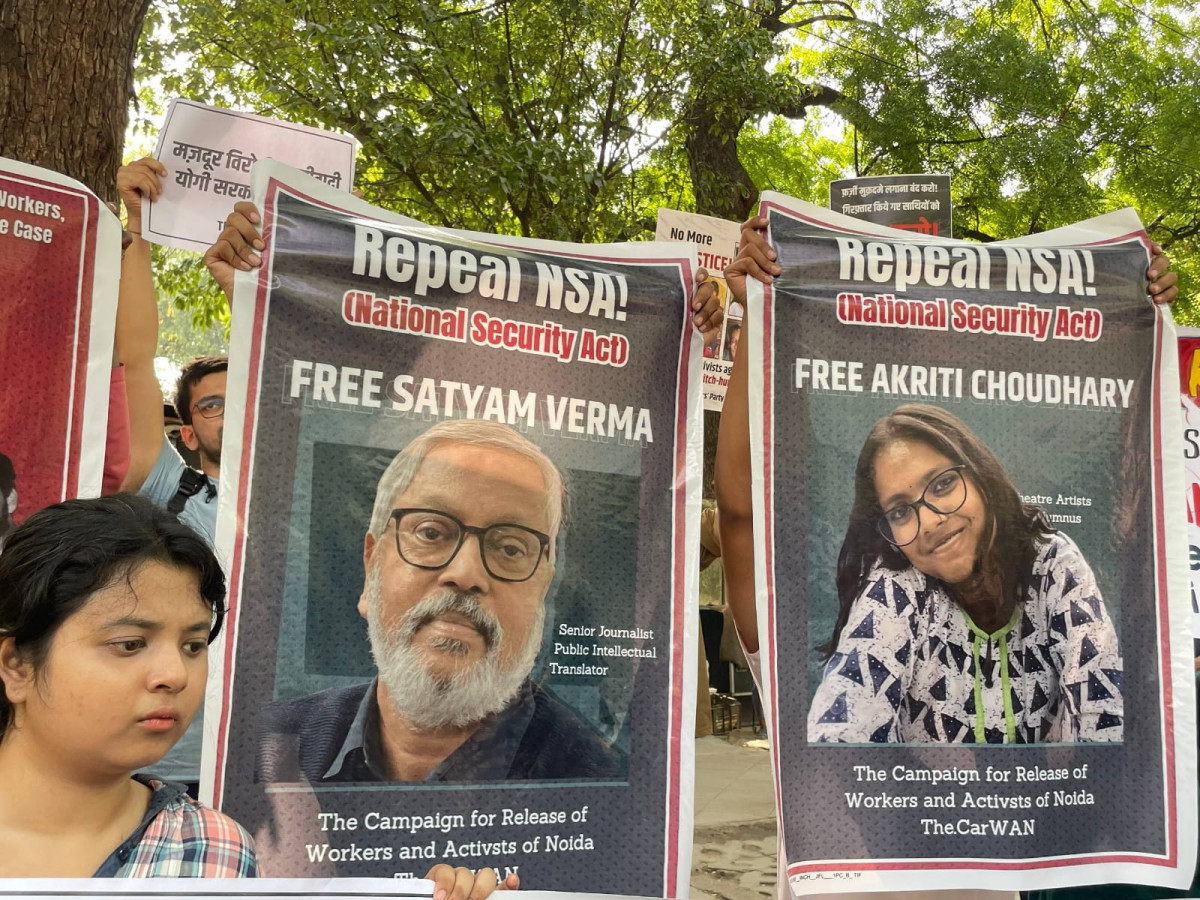
Who Is Akriti Chaudhary?
Aakriti Chaudhary was 25 at the time of the case, a history graduate of Delhi University from Durgapur, West Bengal, with a background in student and activist activities.
She was present during the workers’ protest, but the characterisation of what she was doing there became sharply contested once the police case developed: Chaudhary’s family and supporters described her involvement in terms of supporting the workers’ demands, while the police subsequently attributed a considerably more serious role to her, alleging that she had been involved in mobilising or instigating protesters.
That difference in description matters because the State was not merely required to establish that Chaudhary had attended or participated in a protest; the allegation against her was that she had played a role in provoking the violence that followed.
Police Commissioner Laxmi Singh publicly claimed that investigators had “strong electronic and videographic evidence” against Chaudhary, Verma and others, putting the alleged digital and video material at the centre of the State’s case.
The question that would eventually confront the Allahabad High Court was therefore narrower, and considerably more consequential, than whether Chaudhary had been present around the protest. What exactly had she allegedly done, what evidence demonstrated that role, and did the material placed before the authorities actually establish that she had incited the violence for which the NSA was subsequently invoked?
That question would become even more difficult once the chronology of her custody was examined.
The Crucial Timeline
The chronology of Akriti Chaudhary’s custody became one of the most important parts of the case because the State’s own version placed her formal arrest before the April 13 violence that later became central to the allegations against her.
Chaudhary’s side maintained that she had actually been picked up on April 11, while the State told the Allahabad High Court that she was formally arrested on April 12 at 10:56 am. The court examined the arrest records, BNSS notices and General Diary entries while testing those competing versions of when she had actually come into police custody.
According to Chaudhary’s side, she was picked up by police on April 11, with her family reportedly placing the detention at Botanical Garden Metro Station. The State, however, relied upon April 12 as the date of her formal arrest and referred to a Section 130 BNSS notice. The following day, April 13, was when the major violence associated with the workers’ protest occurred.
There were, essentially, two questions to separate:
—Whether she had personally participated in the April 13 violence, or whether the allegation was that she had helped organise, mobilise or instigate the events before she was taken into custody.
—Which theory the State was advancing, and what evidence supported it, became critical to the NSA detention.
From A Workers’ Protest To NSA Detention
The invocation of the National Security Act marked a significant escalation from the ordinary criminal proceedings that had followed the Noida protest.
Chaudhary was already facing criminal allegations arising from the events when the NSA was invoked against her and Satyam Verma on May 13. The question was therefore no longer simply whether the alleged conduct was criminal, but what additional material the State relied upon to justify keeping her in preventive detention.
The authorities portrayed the case as involving organised mobilisation and a threat to public order, relying on electronic material, witness statements and other evidence. Police Commissioner Laxmi Singh had publicly described the evidence against Chaudhary and others as “strong electronic and videographic evidence”.
Chaudhary challenged the continued detention through a habeas corpus petition, bringing the material behind the NSA order under direct judicial scrutiny.
That created another important question: if she had initially been dealt with through the ordinary criminal process, what changed before the State decided that the case warranted preventive detention under the NSA?
The answer lay in the evidence cited against her and that was where the High Court’s scrutiny became particularly significant.
What Was The Evidence Against Akriti Chaudhary?
The evidence became the documentary centre of the case because the State publicly maintained that it had strong electronic and videographic material, while the Allahabad High Court examined whether that material actually showed Chaudhary inciting violence, directing protesters to attack property or otherwise playing the role attributed to her.
The material cited against her reportedly included WhatsApp conversations, video footage, witness statements, police reports, material allegedly recovered from her phone, alleged meetings before the protest and material concerning the mobilisation of workers.
But when the court tested that material against the allegations, the questions became much more specific.
—Was there footage showing Chaudhary instructing protesters to throw stones?
—Was there footage showing her asking people to set vehicles on fire? Did the witnesses relied upon by the State actually name her? And did the WhatsApp conversations establish the allegations being made against her?
The High Court recorded that the State was unable to identify a WhatsApp message or video showing Chaudhary actually inciting the violence. It subsequently described the grounds of detention as repetitive and speculative and held that preventive detention could not rest upon surmise, conjecture or opinion.
That brought the police’s earlier description of the evidence into sharper focus. If investigators had publicly described the material as “strong electronic and videographic evidence”, what precisely did that evidence show when the court asked for material connecting Chaudhary to the alleged acts of incitement?
The issue was therefore not whether there was evidence relating to the broader Noida protest. It was whether the evidence cited against Chaudhary established the specific role attributed to her, and whether it was sufficient to justify preventive detention under the NSA.
The Role Of Medha Roopam
The case then moved beyond the evidence against Chaudhary and into the question of how that evidence was assessed before the NSA detention order was passed.
That brought Gautam Buddh Nagar District Magistrate Medha Roopam directly into the legal dispute, because the High Court examined not only the material placed before the administration but also the process through which the detention order was authorised.
The Allahabad High Court held that the District Magistrate was required to carefully examine the material placed before her and criticised what it regarded as insufficient scrutiny of the police material. Its judgment used strong language, describing the conduct of the DM as “worthy of derision” and holding that she was “guilty of violating her oath of allegiance”. The court also directed that its displeasure be recorded in the service records of the officials involved.
The consequences went beyond criticism. The High Court ordered ₹5 lakh in compensation to Chaudhary, with recovery from the salaries of officials including the District Magistrate.
Roopam subsequently challenged those findings before the Supreme Court, while the State argued that the DM should not be viewed in isolation because the detention proposal had passed through multiple stages and authorities before reaching her.
That left a central question: what exactly was placed before Medha Roopam when she authorised the detention, and what independent scrutiny did she apply to that material?
What The Allahabad High Court Actually Found
The September 2 judgment changed the legal position surrounding Chaudhary’s detention by examining not only whether she should remain in custody, but the material and procedure through which the NSA order had been made.
The High Court ultimately quashed the NSA detention, holding that the material placed before it did not justify continued preventive detention. It examined the sequence of Chaudhary’s arrest, the BNSS notices, WhatsApp material and alleged video evidence as part of that assessment.
The court also questioned the absence of material showing Chaudhary directly inciting violence and found the grounds of detention repetitive and speculative. It described the State’s version as a “concocted story” and directed that Chaudhary be released unless she was required in another case.
The judgment therefore raised a question beyond whether the evidence was sufficient. It also examined whether the material had been properly tested before being used to justify preventive detention.
The ₹5 Lakh Compensation And The Supreme Court
The High Court went beyond quashing Chaudhary’s NSA detention and directed ₹5 lakh in compensation, with recovery from the salaries of officials including the District Magistrate.
It also directed that the court’s displeasure be reflected in the service records of the officials involved. Those portions of the judgment became the focus of Roopam’s challenge before the Supreme Court.
The Supreme Court has since stayed the operation of paragraphs 27 to 33 of the High Court judgment, which include the strictures against Roopam and the compensation-related directions.
The distinction is important. The High Court’s quashing of Chaudhary’s NSA detention and its criticism of the officials are not presently in the same position before the Supreme Court. The revised interim order specifically stayed the paragraphs dealing with the strictures and compensation, while the detention ruling itself remains outside that clarified stay.
Roopam had challenged the High Court judgment before the Supreme Court, while the State of Uttar Pradesh also challenged the ruling. The State argued that the District Magistrate should not be viewed in isolation because the detention process had passed through several stages and authorities before the material reached her for consideration.
The matter was listed for further hearing on October 7, according to the material in the recovered draft.

The Satyam Verma Case
Running alongside Chaudhary’s case is the detention challenge filed by journalist and activist Satyam Verma, who was also detained under the NSA in connection with the same workers’ protest.
His petition raises a factual dispute over where he was on April 13, when the Noida violence occurred. According to the allegations in his petition, CCTV footage placed him in Lucknow, while call-detail records allegedly put him around 500 kilometres away from Noida. The petition further states that Hasanganj Police detained him in Lucknow at 2:14 pm on April 13 and that he was not named in any of the 11 FIRs relied upon by the State.
Verma has also alleged that the relevant CCTV and CDR material was not placed before the detaining authority, while challenging the State’s characterisation of his professional income as “riot funding”. The Allahabad High Court has sought responses from the Union government, the Uttar Pradesh government and the Noida administration.
But these claims remain allegations contained in Verma’s petition, rather than findings established by the court. Their relevance to Chaudhary’s case lies in the similar question they raise: what material was actually available to the authorities when preventive detention was invoked, and what material was ultimately relied upon to sustain it?
What Remains Unresolved
The Akriti Chaudhary case has moved well beyond the original question of what happened during the Noida workers’ protest.
The Allahabad High Court has quashed Chaudhary’s NSA detention, while the Supreme Court is examining the separate findings made against District Magistrate Medha Roopam and the compensation ordered against the officials involved.
The Supreme Court’s revised interim order has stayed those strictures and compensation-related directions, while leaving the High Court’s decision to quash Chaudhary’s NSA detention outside the stay.
Several questions therefore remain.
- What precisely did the original NSA dossier contain?
- What evidence was actually placed before the District Magistrate? What was the exact chronology of Chaudhary’s detention?
- What was the evidentiary basis for the allegation that she had incited or organised the violence? And what became of the “strong electronic and videographic evidence” publicly cited by police?
- The Satyam Verma proceedings add another unresolved strand, but those allegations too will have to be tested against the underlying records and the court’s eventual findings.
For Chaudhary, the High Court has already answered one part of the dispute by quashing her NSA detention. What remains under scrutiny is how that detention came to be authorised, what material actually supported it, and how much responsibility can legally be placed on the officials who acted on that material.